

Free visual inspection and a written scope of work before any mitigation begins - photos, moisture readings, and drying logs go in your claim file
The scope we write is the scope we bill. Anything new gets shown to you, in writing, before we touch it.






 Before
 After
After Before
 After
After Before
 After
AfterFast, Reliable Mold Remediation Across Little Silver
Mold remediation in Little Silver typically costs between $1,400 and $4,200 for a contained basement or crawl space job, and most projects are scoped, priced, and started within 72 hours of the first call. Little Silver sits directly along the Shrewsbury River, a tidal estuary, and that one fact changes how mold should be handled here. We’ve worked the riverside streets, the train station corridor, and the slab-on-grade ranches near Silverside Avenue long enough to know that a small-looking puddle in a Little Silver basement is rarely simple. Call (910) 613-6568 any hour, any day, and a live person answers.
Why Marsh Water Damage Restoration Is Little Silver’s Preferred Mold Remediation Company
We’re the restoration brand of the Threshold Group, founded in 2005, and every technician who walks into a Little Silver home is background-checked, identity-verified, and sent to you by name and photo before the visit. When the doorbell rings, the person standing there matches the badge you already saw. That’s the Threshold Standard, and it’s not a marketing phrase. It’s five printed steps stamped on every work order: background check, identity verification, name-and-photo dispatch, photo ID badge shown at the door, and a written price before any work begins.
Homeowners near the Shrewsbury River boat landings and along Sycamore Avenue call us because mold here doesn’t behave like mold in inland Monmouth County. Salt from tidal backwater changes the chemistry of the job. Tobias Reyner, who leads our technical team, reviews drying logs and scope documents for Little Silver projects personally. That’s not a figurehead role. It’s a second set of eyes on the exact failure modes this borough produces.
Mold Removal Service in Little Silver
Mold Removal Service in Little Silver means physically removing contaminated material, not spraying over it. When a homeowner near the train station corridor or along Branch Avenue finds black staining on drywall, baseboards, or the back side of a garage slab, our crew sets up containment to keep spores from moving through the house, removes the affected drywall and insulation, and treats the framing with antimicrobial agents. A typical single-room mold removal in Little Silver runs $1,200 to $2,800, depending on how far the growth has traveled behind the walls.
Containment and Material Removal
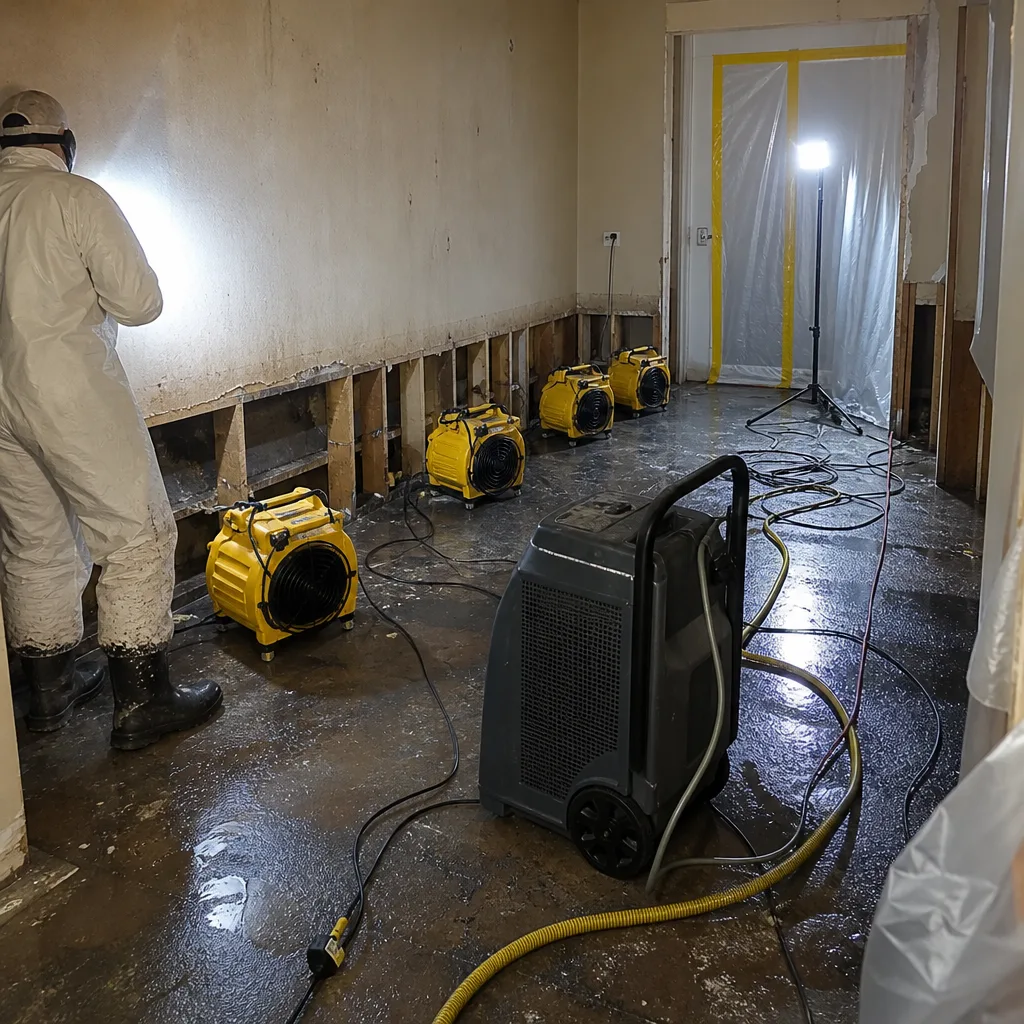
We build negative-air containment with HEPA-filtered air scrubbers before we cut anything. Old plaster-over-lath in 1920s homes absorbs moisture differently than drywall, so our techs read moisture beneath the surface, not just on it. Removing material too soon misses the salt crust and trapped moisture. Removing it too late spreads spores.
Post-Removal Drying and Verification
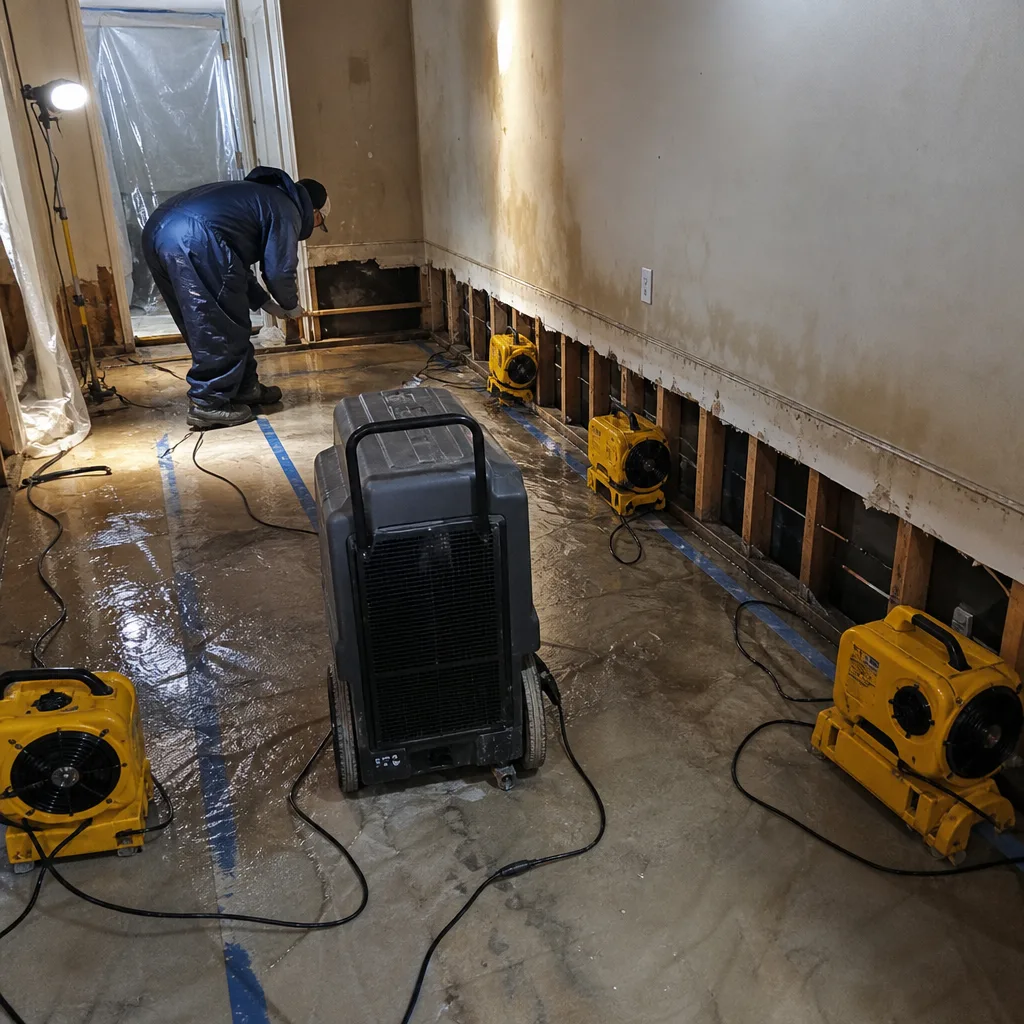
After removal, we run Dri-Eaz dehumidifiers and air movers until psychrometric readings (measuring the moisture in the air and materials) confirm the cavity is genuinely dry. We log daily readings and share them with you. You shouldn’t have to trust a verbal “it’s dry now.” You should see the numbers.
Mold Remediation Services in Little Silver
Mold Remediation Services in Little Silver go beyond removing what’s visible. They address why the mold grew and whether the conditions will return. Because this borough sits on a tidal river roughly five miles from Sandy Hook Bay, many Little Silver mold problems start as saltwater intrusion that never got treated correctly the first time. A full remediation project, including source correction, containment, removal, antimicrobial treatment, drying, and clearance testing, typically runs $2,000 to $4,200 in Little Silver. Smaller crawl space jobs start around $1,400.
Salt-Specific Antimicrobial Treatment
Nor’easters push brackish water up the Shrewsbury River into riverside basements even when the rest of Monmouth County stays dry. That water leaves a salt crust on framing that keeps wicking moisture for months. We apply antimicrobial treatment specifically rated for Category 3 water and the salt residue it leaves behind. Standard freshwater protocols don’t touch this problem.
Clearance Testing and Documentation
We don’t declare the job done because the area looks better. We run post-remediation verification and provide photo documentation of every step. If your insurance adjuster needs evidence, we coordinate directly with them and provide the written scope and drying logs. Insurance companies know what saltwater backwater looks like, and they respond to documentation, not claims.
What happens when you call
- 1
A real person answersNo phone trees - you reach a local pro.
- 2
You get an upfront price rangeHonest numbers before anyone is dispatched.
- 3
A background-checked tech heads outLicensed & insured, dispatched right away.
- 4
You approve before work beginsNothing starts until you say go.
Trusted Brands We Service in Little Silver
Our crews arrive in Little Silver with equipment from Dri-Eaz, Phoenix, and XPOWER, the same commercial-grade gear used on large coastal losses. We stock antimicrobial agents, HEPA filters, and containment materials on our trucks, so a job off Sycamore Avenue or near the Little Silver train station doesn’t stall waiting for parts. The equipment matters because salt-affected framing dries slower than freshwater-damaged framing, and undersized machines extend the job and the cost. We bring enough machine for the moisture load actually present, not an average from some other town.
Common Mold Remediation Problems We See in Little Silver Homes
- Salt crust wicked back into framing after a “finished” freshwater dry-out. A previous contractor treated a Shrewsbury River backwater flood as Category 1 or 2 water and skipped antimicrobial treatment. The puddle was small, but the salt residue kept pulling moisture into the wood, and mold returned within weeks.
- Plaster over lath dried to a surface reading while the cavity stayed wet. Homes built between the 1920s and 1950s near the train station corridor have plaster that reads dry on the surface while the lath cavity behind it holds 25% moisture or more. Hidden mold grows behind the wall, and nobody sees it until the smell gives it away.
- HVAC plenums and fasteners corroded months after the mold job closed out. Salt-affected basements put cast-iron and steel components under accelerated corrosion. We check plenums, fasteners, and garage-door hardware during the assessment because failure there shows up later and homeowners think the mold job failed.
- Recurring dampness in crawl spaces under garage slabs near the boat landing. The ground under riverside lots stays saturated after tidal events. Moisture rises through the slab and keeps the crawl space humid enough for mold, even after visible water is gone. Source control here means vapor barriers and drainage, not just drying.
Pricing for Mold Remediation in Little Silver, NJ
Here’s what Little Silver homeowners actually pay. A single-room mold removal with containment runs $1,200 to $2,800. A full basement remediation, including salt-specific antimicrobial treatment and post-remediation verification, runs $2,000 to $4,200. Crawl space treatments under garage slabs near the river start around $1,400. What moves the number: how much material must come out, whether the framing has salt crust, how long the drying takes, and whether reconstruction is needed afterward. We give you a written price before any work starts, and that price doesn’t balloon after demo begins. Call (910) 613-6568 for a free estimate based on an actual assessment of your home.
We Also Serve Cities Near Little Silver
If you’re in Fair Haven, Oceanport, Red Bank, or Eatontown, the same Threshold Verified crews and the same 365-Day Done Right Promise apply. We coordinate dispatch from our New York City office, and our technicians serve Little Silver and the surrounding Monmouth County boroughs locally. Learn more about our Mold Remediation team or what sets us apart across Little Silver.
Serving Little Silver, NJ - Our Local Coverage Area
We’re based in the Little Silver area and know this community well. Use the map below to see our service coverage - if you’re nearby, we can almost certainly help.
FAQs About Mold Remediation in Little Silver
Mold can start growing within 24 to 48 hours of a tidal backwater event, and because the Shrewsbury River pushes brackish water carrying organic matter and salt, the conditions are often more aggressive than a freshwater pipe break. The salt left behind keeps materials damp even after the standing water is gone, which extends the window in which mold can establish. That’s why we treat every riverside basement and crawl space call as a potential Category 3 job from the first moisture reading. Call (910) 613-6568 the moment water appears, and we’ll talk through what to do before we arrive.
No. Tidal saltwater from the Shrewsbury River is Category 3 water, which means it carries contaminants and leaves a salt residue that freshwater does not. That residue wicks moisture into framing for months and can cause mold to return even after a space reads visually dry. Our standard for Little Silver riverside properties includes salt-specific antimicrobial treatment and deeper drying targets than a typical freshwater job. Skipping that step is the single most common reason a Little Silver mold job fails within six months.
In most Little Silver cases we see, mold comes back because the original job was a freshwater dry-out applied to a saltwater problem. The surface looked dry, but the salt crust on the bottom plates and band joists kept wicking moisture out of the air and into the wood. Mold needs three things: moisture, food, and the right temperature. The salt crust supplies the ongoing moisture. We remove the salt, treat the framing, and verify with moisture readings before we call the job done. If mold returns after our work, the 365-Day Done Right Promise means we come back and make it right at no charge.
Yes. Many homes near the Little Silver train station corridor were built between the 1920s and 1950s with plaster-over-lath construction, original hardwood floors, and sometimes early cable wiring. Plaster absorbs moisture differently than drywall, and it often reads dry on the surface while the lath cavity behind it stays wet. Our techs drill small inspection ports and take readings inside the wall cavity, not just on the face. That’s the only way to know if mold is still active behind the plaster. The age of the home also affects how we match trim and millwork if any must come out.
Look for a white, crusty residue on concrete block, framing, or the bottom edges of drywall. That’s salt, and it’s the signature of Shrewsbury River tidal backwater, not a leaky pipe. You may also notice a persistent musty smell that returns after rain or high tides, or flaking paint and rusting fasteners near the floor. If any of that matches what you’re seeing, call (910) 613-6568 and we’ll send a technician to take moisture and salt readings. We’ll tell you what we found and what it costs to fix, in writing, before anything starts.
Contact Marsh Water Damage Restoration in Little Silver
If you’re dealing with mold in a Little Silver basement, crawl space, or garage, call (910) 613-6568. A live person answers. We’ll schedule an assessment, send you the name and photo of the technician before they arrive, and give you a written price before any work begins. Every job is backed by the 365-Day Done Right Promise. If the remediation is not right within a year, we make it right, including a free second visit. That’s not a slogan. It’s printed on the work order, and it’s been our standard since 2005.
Written by Tobias Reyner, Owner at Marsh Water Damage Restoration, serving Little Silver, NJ.