

Free visual inspection and a written scope of work before any mitigation begins - photos, moisture readings, and drying logs go in your claim file
The scope we write is the scope we bill. Anything new gets shown to you, in writing, before we touch it.






 Before
 After
After Before
 After
After Before
 After
AfterFast, Reliable Mold Remediation Across Long Island City
If you’ve found mold in a Long Island City apartment, condo, or converted loft, the core question is usually the same: how fast can someone get here, and what will it actually cost? Most mold remediation jobs in Long Island City run between $1,800 and $6,500 depending on square footage and whether we’re dealing with surface mold or deep moisture trapped in masonry. We dispatch crews to Long Island City every day from our New York City office, and a live person answers our phones around the clock. Call (910) 613-6568 and we’ll walk you through what you’re seeing, what it’ll take to fix it, and exactly who will show up at your door.
We’ve worked in Long Island City long enough to know that this neighborhood doesn’t behave like the rest of Queens. The old manufacturing buildings, the waterfront towers, the flood-zone basements off Vernon Boulevard and Hunters Point. Each one has its own way of holding water, and each one fails differently. Our Mold Remediation team treats every job here with that in mind, not as a generic checklist applied to a generic building.
Why Marsh Water Damage Restoration Is Long Island City’s Preferred Mold Remediation Company
Long Island City homeowners tell us the same thing over and over: the mold is bad enough, but the thought of letting strangers into their home makes it worse. That’s exactly why Marsh runs every job through the Threshold Standard. Every technician is background-checked and identity-verified. Before a crew arrives, you get the name and photo of each person coming. When they knock, they show a photo ID badge. You know who’s walking through your door before you open it.
We’ve been doing restoration work since 2005 as part of the Threshold Group family of companies. Our technicians carry IICRC, RIA, and IFA credentials, and they run equipment from Dri-Eaz, Phoenix, and XPOWER, the same gear you’d find on large commercial losses. But what matters more in Long Island City is that we know the buildings here. We know that a Court Square loft and a Hunters Point high-rise fail in completely different ways, and we scope each job accordingly. Tobias Reyner leads our team with a straightforward rule: diagnose accurately, price honestly, and never start work without a written scope the homeowner has approved.
Every job we do in Long Island City comes with three printed commitments: a written price before any work starts, a written guarantee on every repair, and our 365-Day Done Right Promise. If the repair isn’t right within a full year, we come back and make it right, including a free second visit. That’s not a promotional offer. It’s stamped on every work order.
Mold Removal Service in Long Island City
Mold removal service in Long Island City is the physical work of removing visible mold growth and the materials it has colonized, whether that’s drywall, baseboards, insulation, or surface growth on concrete. In most Long Island City homes, mold removal means cutting out affected drywall, HEPA-vacuuming framing, scrubbing hard surfaces with antimicrobial treatment, and bagging contaminated material for disposal. A modest bathroom or closet job in Long Island City typically runs $1,800 to $3,200. A larger basement or multi-room removal can reach $5,000 to $6,500 once containment, negative air pressure, and disposal are factored in.
How We Scope Mold Removal in LIC
Before we cut anything, we map the moisture. In converted lofts around Jackson Avenue, we routinely find that a wall that feels dry is still saturated at the core because the masonry is holding water from an event weeks ago. If we remove mold without addressing that hidden moisture, the mold returns in a month. That’s why a Marsh mold removal starts with moisture mapping, not demolition.
Containment and Disposal
Mold removal in an occupied Long Island City building means containment matters. We set up negative air pressure with HEPA-filtered exhaust so spores don’t migrate to neighboring units. In multi-family buildings, that protects your neighbors and keeps the building’s management from dealing with a spread problem. All contaminated material is double-bagged and hauled under waste protocols specific to mold remediation.
Mold Remediation Services in Long Island City
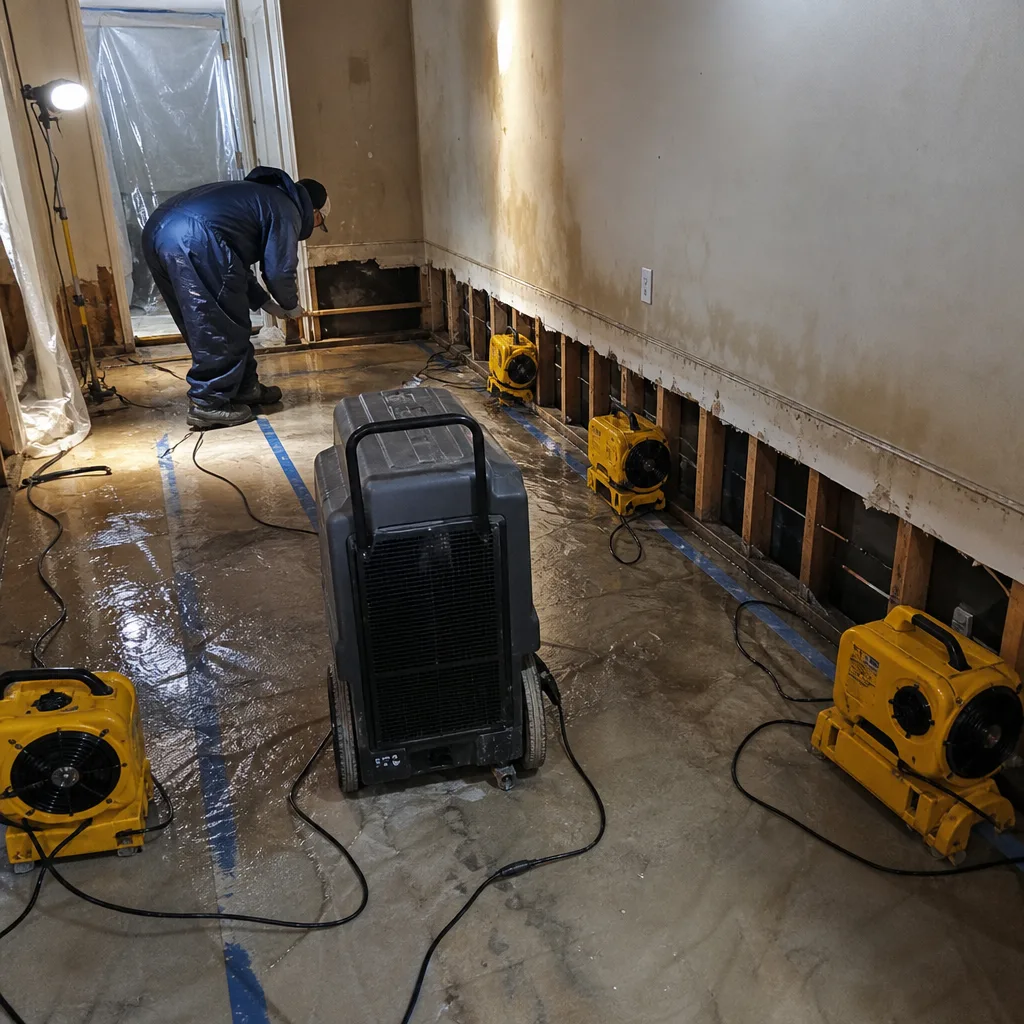
Mold remediation services in Long Island City go beyond removal to address the conditions that let mold grow in the first place: moisture source, humidity, airflow, and the materials that hold water. Remediation is the full process: identify the water source, dry the structure to the correct moisture content, remove contaminated material, treat surfaces, and restore the space to a condition where mold won’t return. A full remediation in a Long Island City basement or ground-floor unit typically falls between $3,500 and $6,500 depending on scope, with more complex jobs involving Category 3 protocols running higher due to containment and testing requirements.
The Difference Between Removal and Remediation
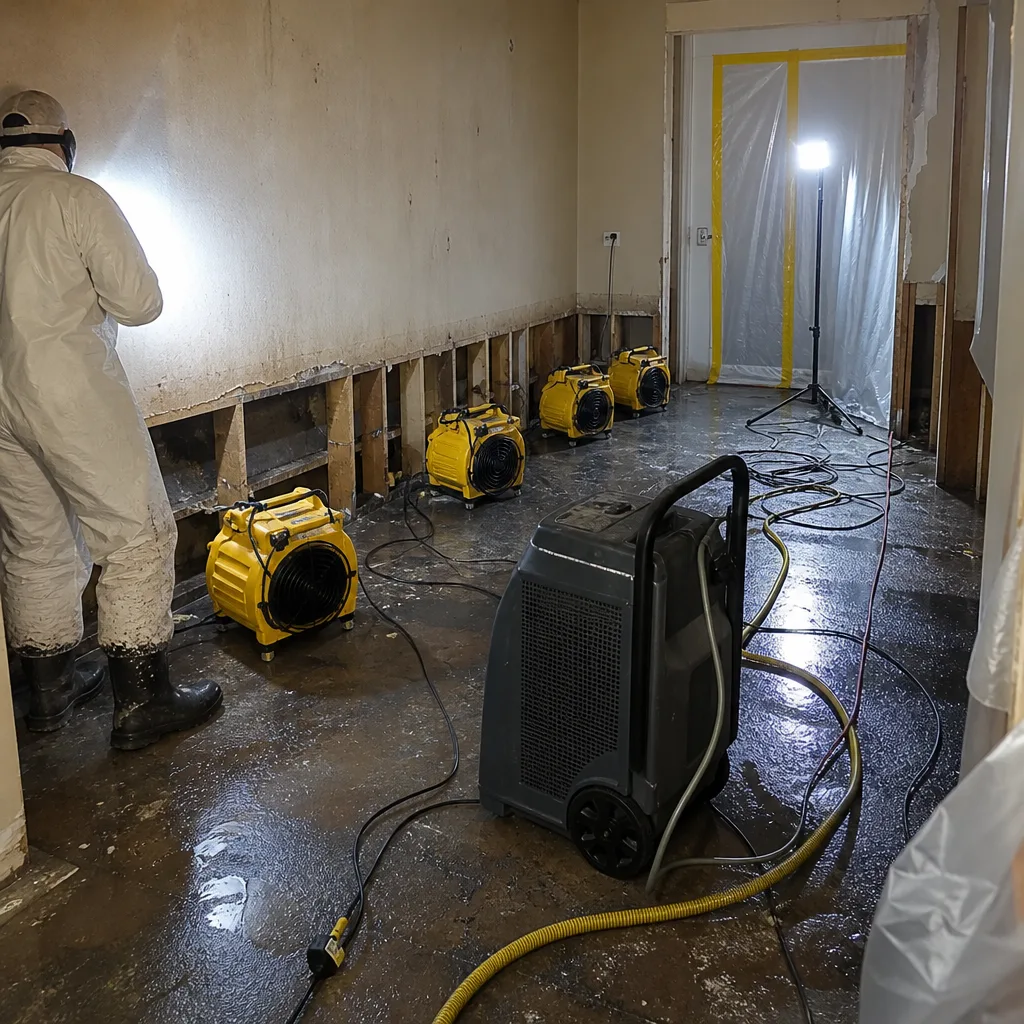
Think of removal as taking out what’s already ruined, and remediation as making sure the conditions that caused it are gone. In Long Island City, where concrete masonry and slab floors hold moisture for weeks, that means drying to a measured standard, not a visual one. We use penetrating and pin-type moisture meters to confirm the structure is genuinely dry before we sign off.
Air Quality Restoration After Remediation
Once the source is addressed and visible mold is removed, we clean the air. HEPA air scrubbers run during and after the work to pull spores from the air column. For Long Island City homeowners with respiratory sensitivities or young children, we also offer post-remediation air quality testing so you can see measured results, not just an assurance that “we got it all.”
What happens when you call
- 1
A real person answersNo phone trees - you reach a local pro.
- 2
You get an upfront price rangeHonest numbers before anyone is dispatched.
- 3
A background-checked tech heads outLicensed & insured, dispatched right away.
- 4
You approve before work beginsNothing starts until you say go.
Trusted Brands We Service in Long Island City
The equipment and tools in your Long Island City home matter when it comes to getting a dry, mold-free result. Our crews service and run professional-grade gear from Phoenix, XPOWER, and Dri-Eaz on Long Island City jobs, the same machines used on commercial restoration projects. We keep local inventory and parts within reach for Long Island City customers, so you’re not waiting on a shipment when your dehumidifier or air mover needs to be swapped mid-job. If a drying plan calls for specialty equipment like an Injectidry system for hard-to-reach cavities, we can deploy it here without days of delay. Fast turnaround on equipment means faster drying, and faster drying means less chance of mold returning.
Common Mold Remediation Problems We See in Long Island City Homes
- Weeks-old saturation in converted masonry walls. Concrete and brick walls in former factories and warehouses around Court Square and Jackson Avenue can hold moisture for three to four weeks after surfaces feel dry. Standard three-day drying timelines fail here, and signing off early is the number one cause of mold callbacks we see.
- Floodwater carrying Newtown Creek contaminants. Ground-floor units and basements in Long Island City sit in FEMA AE flood zones along the East River and border Newtown Creek, a federal Superfund site. Storm-driven water intrusion here is treated as Category 3, meaning environmental testing and hazmat protocols apply before any drying or mold work can legally begin.
- Stack failures cascading through high-rise units. A single failed plumbing stack or roof drain backup in a Long Island City tower can send water through dozens of stacked residential units. Each floor needs its own moisture mapping and drying log, and skipping that step leaves mid-floor cavities wet.
- No vapor barrier beneath slab-on-grade floors. Older Long Island City buildings often have concrete slabs poured directly on earth with nothing to block moisture wicking up from groundwater. The East River’s tidal influence shifts groundwater levels, so basement slabs can stay damp indefinitely even without a visible leak.
Pricing for Mold Remediation in Long Island City, NY
Here’s what Long Island City homeowners should expect to pay, based on the work we regularly scope in this neighborhood. Surface mold cleaning in a single bathroom or closet runs $1,800 to $3,200. Full remediation of a basement or ground-floor unit with containment and drying typically runs $3,500 to $6,500. Jobs requiring Category 3 protocols, environmental testing, or pack-outs of contaminated contents can exceed that range, which is why we provide a written price before any work starts. What affects cost in Long Island City specifically is the building type: masonry loft buildings take longer to dry, high-rise access requires coordination with building management, and flood-zone work carries testing and hazmat requirements inland Queens homes never face. Call (910) 613-6568 for a free estimate with a written scope you can review before committing to anything.
We Also Serve Cities Near Long Island City
Marsh Water Damage Restoration serves Long Island City and the surrounding western Queens neighborhoods, including Sunnyside, Woodside, Astoria, and Maspeth. If you’re in one of those areas and dealing with mold, water damage, or storm intrusion, the same Threshold Standard applies: named technicians, photo badges at the door, and a written price before work begins.
Serving Long Island City, NY - Our Local Coverage Area
We’re based in the Long Island City area and know this community well. Use the map below to see our service coverage - if you’re nearby, we can almost certainly help.
FAQs About Mold Remediation in Long Island City
Because thick masonry walls in converted Long Island City warehouses and lofts hold moisture long after surfaces look and feel dry, and we won’t sign off or start remediation until moisture readings confirm the structure is genuinely dry. Concrete and brick walls around Jackson Avenue and Court Square can still register saturated three to four weeks after a visible leak or flood, and starting mold work before that moisture is resolved just invites the mold back. Call (910) 613-6568 and we’ll explain what our moisture readings show in your building.
Yes, and the difference is legal as well as practical. Long Island City sits in FEMA AE flood zones along the East River and borders Newtown Creek, a federal Superfund site, so storm-driven floodwater is treated as Category 3 black water carrying industrial contaminants, not clean water. That means environmental testing, full containment, antimicrobial treatment, and hazmat disposal protocols before standard drying or mold remediation can begin. Inland Queens neighborhoods rarely require this step, but ground-floor and basement units in lower Long Island City almost always do.
We treat every floor as its own drying job, because a failed stack or roof drain backup in a Long Island City tower can send water through dozens of stacked units at once, and moisture doesn’t stop at the ceiling of one apartment. Each affected floor gets its own moisture mapping, containment where needed, and drying log. We also coordinate directly with building management for access, water shut-off confirmation, and common-area drying.
Because wood-frame drying math doesn’t apply to thick unreinforced masonry and slab-on-grade floors. Concrete and brick wick moisture slowly and release it even slower, and many older Long Island City buildings have no vapor barrier between the slab and the earth. We’ve seen walls test saturated three weeks after they felt dry to the touch. Signing off a converted loft at the three-day mark is how mold remediation callbacks happen, so our crews dry to meter readings, not to a calendar.
Our Long Island City crews run Dri-Eaz dehumidifiers, Phoenix drying systems, and XPOWER air movers, and we hold IICRC, RIA, and IFA credentials on our technical team. Every job follows the Threshold Standard: background-checked and identity-verified techs, photo ID at the door, a written price before work starts, and our 365-Day Done Right Promise printed on the work order. Call (910) 613-6568 and we’ll walk you through the exact plan for your building.
Written by Tobias Reyner, Owner at Marsh Water Damage Restoration, serving Long Island City since 2005.