

Free visual inspection and a written scope of work before any mitigation begins - photos, moisture readings, and drying logs go in your claim file
The scope we write is the scope we bill. Anything new gets shown to you, in writing, before we touch it.






 Before
 After
After Before
 After
After Before
 After
AfterFast, Reliable Mold Remediation Across West Point
Mold remediation in West Point typically runs between $1,800 and $6,500 depending on how far the colony has spread and whether it’s behind original plaster or inside a modern framed wall. We respond to West Point calls the same day, and we know the post’s access rules cold. If you’ve spotted black staining on a bathroom ceiling or smelled that musty odor in a basement, call (910) 613-6568 and a live person will answer, day or night.
West Point isn’t like the towns around it. The on-post housing stock includes 19th-century masonry buildings with horsehair plaster walls, and mold behaves differently inside those assemblies than it does in a 1990s Colonial in New Windsor. That’s why local experience matters more here than almost anywhere else in the Hudson Valley.
Why Marsh Water Damage Restoration Is West Point’s Preferred Mold Remediation Company
Our crews have worked on-post at West Point for years, which means we’ve already cleared the Army post-access vetting and we know how to route a work order through the Directorate of Public Works (DPW). That’s not something you learn on the job. A contractor who shows up at the Thayer Gate without credentials gets turned around. We don’t.
The Mold Remediation team at Marsh operates under the Threshold Verified standard. Before any tech arrives at your door in West Point, you get their name, photo, and background-check confirmation sent to your phone. They show a photo ID badge when they knock. Tobias Reyner, who leads our technical team, enforces that protocol on every single job, including the ones behind the gates on Washington Road and the ones in off-post rental housing near Highland Falls.
We’re not the cheapest outfit in the Hudson Highlands, and we’re not trying to be. We’re the team that shows up with a written scope, a documented price, and a 365-Day Done Right Promise printed on the work order. If mold returns within that year, we come back and fix it. No argument, no invoice for the second visit.
Mold Remediation Services in West Point
Mold Remediation Services in West Point mean something different depending on where you live. In a mid-1800s officers’ quarters along Washington Road, remediation often means saving original plaster rather than cutting it out. In privatized military family housing managed by third-party property firms, the process typically starts with a written work authorization through that management company before our crews can set up containment. Off-post homes in the wooded lots near the academy follow a more standard remediation path: assess, contain, remove, dry, and verify.
A typical containment-and-removal job in West Point for a 10×10 affected area runs $2,200 to $4,800. If the mold has spread into multiple rooms or behind cabinetry, expect $5,000 to $8,000 or more, especially when historic fabric is involved. Here’s what the work actually includes:
Containment and Pressure Control
We set up negative-air containment with HEPA-filtered exhaust before disturbing any moldy material. In older West Point buildings with lath and plaster ceilings, this step is non-negotiable. Disturbing one wall cavity without containment spreads spores through the entire structure, including into adjoining units.
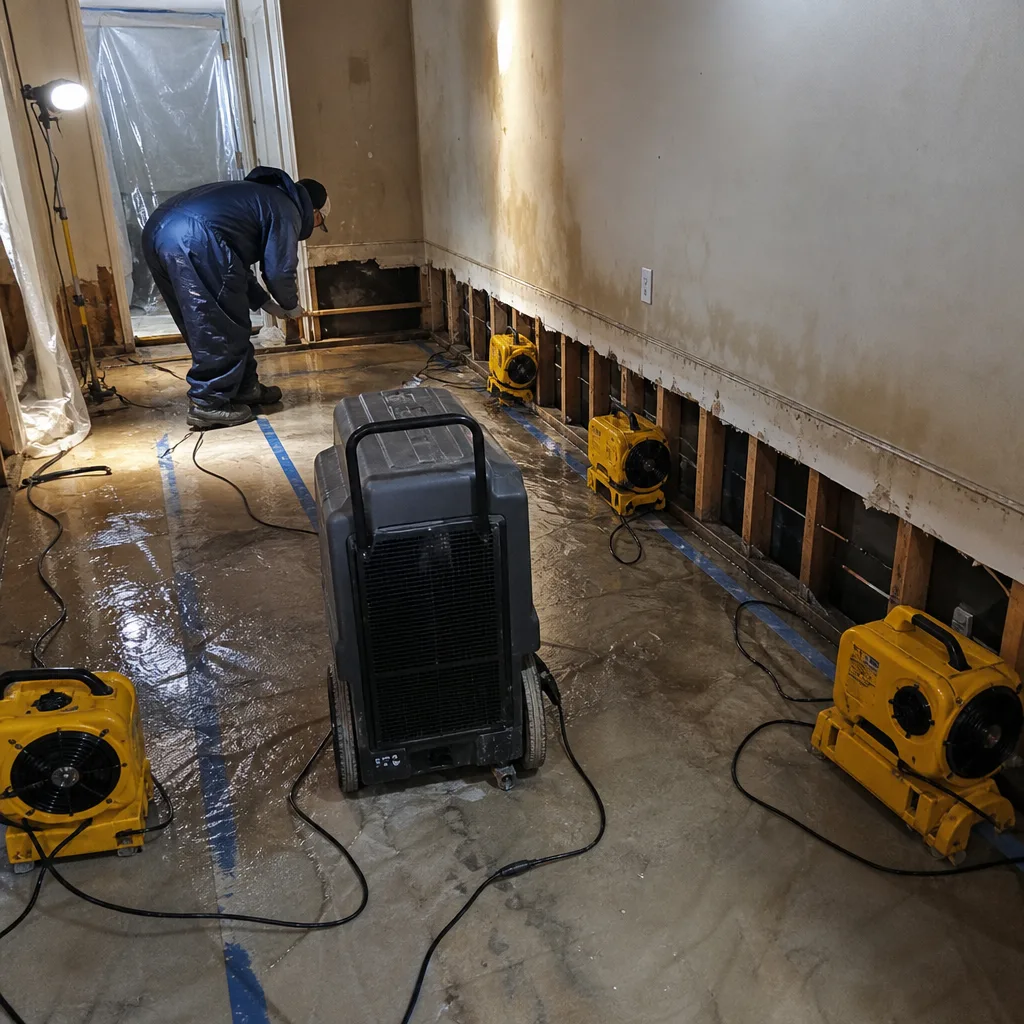
Source Removal or In-Situ Treatment
We determine whether the affected material can be treated in place or must be removed. Non-porous surfaces like sealed wood and tile can often be cleaned with antimicrobial agents. Saturated plaster, fiberglass insulation, and moldy drywall usually come out. On historic masonry, we often treat in place to preserve the fabric.
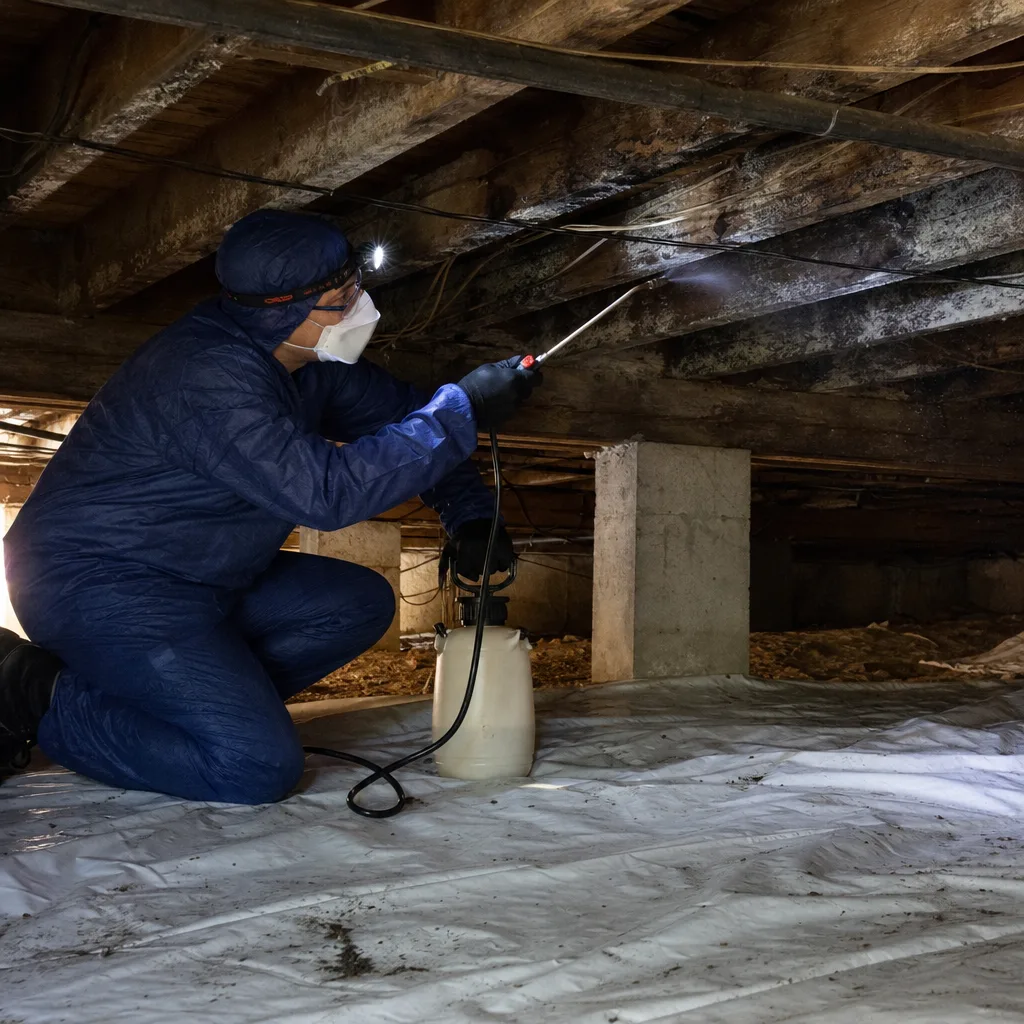
What happens when you call
- 1
A real person answersNo phone trees - you reach a local pro.
- 2
You get an upfront price rangeHonest numbers before anyone is dispatched.
- 3
A background-checked tech heads outLicensed & insured, dispatched right away.
- 4
You approve before work beginsNothing starts until you say go.
Professional Mold Removal in West Point
Professional Mold Removal in West Point has to account for the post’s unique review layer. When mold appears inside a historic masonry wall, you can’t just knock out the plaster and haul it to the dumpster. That plaster may be a regulated historic finish, and the State Historic Preservation Office (SHPO) can require documentation before and after disturbance. Our crews photograph every cavity, log all original materials, and pull substrate moisture readings before any wall is opened.
That step adds a day or two to a job, and it’s exactly why a contractor who normally works in Highland Falls can accidentally trigger a federal review by treating West Point like a standard dry-out. We’ve learned this the hard way, and now we build SHPO documentation into every on-post scope from the start.
Moisture Mapping Behind Old Plaster
We use moisture meters and thermal imaging to locate hidden mold without unnecessary demolition. Inside thick stone and brick walls, surface readings lie to you. The moisture sits deep in the substrate. That’s why our psychrometric readings (measuring moisture levels in air and materials) target the masonry itself, not just the room air.
Antimicrobial Treatment and Drying
After removal or in-situ cleaning, we apply EPA-registered antimicrobials and set Dri-Eaz and Injectidry drying equipment. On old masonry, this is a slow-dry process. Wood-framed walls release moisture in days; 18-inch stone walls can take weeks. Rushing it means the mold comes back, and that’s exactly what the 365-Day Done Right Promise is designed to catch.
Trusted Brands We Service in West Point
We stock replacement filters, hoses, and common drying components for the brands most homeowners on post already run or recognize, including Phoenix, XPOWER, and B-Air. If you’ve got a dehumidifier running in a damp basement near the river and it fails mid-remediation, we can often get the part from our local inventory the same day rather than waiting on a distributor. For West Point homes with crawl spaces, we source vapor barriers and drainage components sized to the narrow, rocky foundations common in the Highlands.
Common Mold Remediation Problems We See in West Point Homes
- Ice damming on slate and copper roofs. West Point’s freeze-thaw cycling is brutal on old roofing. Water backs up behind ice dams and drips into attics and top-floor walls, and by spring the mold has already established inside the cavity. We see this every March and April on the older quarters.
- Cast-iron and galvanized supply line failures. The original plumbing in many early-20th-century officers’ quarters is well past its service life. When a line lets go, the water travels through horsehair plaster and lath for hours or days before anyone notices. Hidden mold behind original plaster is the most common job we run on Washington Road.
- Humidity trapped in thick masonry walls. The Hudson River is tidal at West Point, and the fog that rolls up the Highlands keeps outdoor humidity high year-round. Stone walls absorb that moisture and hold it. We regularly find mold growing inside wall cavities where no leak ever occurred, just decades of ambient dampness.
- Skipped DPW and SHPO documentation. We’ve been called in to fix jobs where another contractor opened a wall on post without proper clearances. The work halts, the review panel gets involved, and the homeowner sits in a moldy house with plastic sheeting up for weeks. Doing it right the first time is faster than unwinding a compliance problem.
Pricing for Mold Remediation in West Point, NY
A small, contained mold issue in a West Point bathroom or closet typically runs $1,800 to $3,200. That covers containment, localized removal or treatment, antimicrobial application, and drying verification. A full-room remediation with multiple affected surfaces falls between $3,500 and $6,500. Historic plaster preservation, post-access delays, and SHPO documentation can push the upper range toward $8,000, but those are line-item costs you’ll see on the written estimate before we start, not surprises after demo begins.
We give every West Point homeowner a written price before any work begins. That price includes the 365-Day Done Right Promise and a free second visit if the mold returns within the year. Call (910) 613-6568 and we’ll schedule a walkthrough at your place on or off post.
We Also Serve Cities Near West Point
Our crews regularly work in New Windsor, Peekskill, Beacon, and Crompond, where the housing stock and building codes differ from what we handle on post. If you’re outside the gates but still in the Highlands, the same Threshold Verified standard applies. Learn more about our work across the region on our Mold Remediation in West Point hub page.
Serving West Point, NY - Our Local Coverage Area
We’re based in the West Point area and know this community well. Use the map below to see our service coverage - if you’re nearby, we can almost certainly help.
FAQs About Mold Remediation in West Point
Because most on-post buildings are historic masonry and plaster structures that require SHPO documentation before walls can be opened, plus DPW clearances before work begins. The actual labor isn’t slower; the compliance layer is. A job that takes three days in a Highland Falls wood-framed house might take five or six in an officers’ quarters on Washington Road, because we pre-photograph cavities, log original materials, and wait for approvals before touching historic fabric. Call (910) 613-6568 and we’ll walk you through the timeline for your specific building.
Not that day, but fast. Emergency water extraction can begin once post-access credentials are confirmed and the DPW work order is active, which usually happens within one business day. We keep our team’s post-access current specifically so West Point residents aren’t waiting on paperwork while mold colonizes behind plaster. If the leak is actively running, call us and we’ll coordinate with the property manager or DPW point of contact to get extraction started as soon as legally allowed.
We try to save it first. Original horsehair plaster on lath is a good substrate for in-situ antimicrobial treatment when the damage is superficial and the masonry behind it isn’t saturated. If the plaster is crumbling, delaminating, or has been wet for weeks, it usually comes out, but we document it thoroughly first and retain samples for SHPO review when required. Most of our West Point jobs end with more original plaster preserved than a standard restoration contractor would have kept.
We design every West Point drying plan around the river-driven humidity and the freeze-thaw cycles that push water into masonry joints all winter. That means longer drying targets, substrate-level moisture monitoring, and often a dehumidification phase that runs for weeks rather than days. The Hudson is tidal here, and the fog that sits in the Highlands keeps outdoor humidity high even when it’s not raining, so we don’t declare a structure dry until the substrate readings confirm it, not when the air feels dry to the touch.
Yes. Many West Point families live in housing managed by third-party property companies, and we work directly with those management offices on work orders, access, and billing. The process is a little more paperwork-heavy than a standard residential job, but we’ve handled enough of them that we can usually get the authorization moving within a day. Bring us the property manager’s contact information and we’ll handle the coordination.
Written by Tobias Reyner, Owner at Marsh Water Damage Restoration, serving West Point since 2005.