
IFA Water Damage Restoration in Los Angeles: A Homeowner’s Guide
IFA stands for Insurance Field Adjuster, and when that person shows up at your water-damaged home in Los Angeles, their job is to assess the damage, write a scope of work, and approve what your insurance policy will pay. In plain terms, the IFA is the person your insurance company sends to decide how much money gets spent fixing your house. Knowing how to work with that adjuster, and knowing what happens when their estimate doesn’t match reality, is the difference between a full restoration and an out-of-pocket surprise. If you’d rather skip the claims juggling entirely, Marsh Water Damage Restoration deals with adjusters every day, call (910) 613-6568.
Key Takeaways
- IFA means Insurance Field Adjuster – the person your insurer sends to inspect damage and approve payment.
- Their initial scope is an estimate, not a contract – hidden water is often found after demo starts, and you’re entitled to a supplement.
- You choose the restoration company – not the adjuster, not the preferred-vendor list.
- A written price protects you when the adjuster revises downward after work has begun.
- Documentation wins claims – photos, moisture readings, and line-item gaps matter.
What Does IFA Actually Mean for Your Claim?
When you file a water damage claim in Los Angeles, the insurance company assigns an IFA, an Insurance Field Adjuster, to visit the property. That adjuster’s report drives what the insurer initially agrees to pay. The IFA is not a restoration contractor. They may have general construction knowledge, but they are not the person tearing out drywall or setting drying equipment. Their job is to protect the insurance company’s financial exposure while documenting enough to close a claim. That’s not cynicism, that’s the structure of the arrangement. And it’s why the estimate they produce often reads low compared to what your restoration contractor finds on day two of the job.
In Los Angeles specifically, adjuster scopes frequently miss the cost reality of local labor. Union-scale wages, city permit requirements, and the sheer age of the housing stock, much of it built before modern moisture barriers existed, all push real restoration costs higher than the standardized pricing databases adjusters rely on. We’ll get into that in a moment.
How IFA Estimates Are Built (And Where They Fall Short in Los Angeles)
Most insurance adjusters nationwide, including the ones working Los Angeles claims, write their estimates in a software program called Xactimate. It’s a pricing database that assigns a dollar value to every line item: so many square feet of drywall removed, so many linear feet of baseboard detached, so many days of air mover rental. The software is useful. It standardizes claims. But it has a known weakness in high-cost metros like Los Angeles.
Xactimate’s default labor rates often lag behind what licensed Los Angeles tradespeople actually charge. The software applies a regional price modifier, but that modifier doesn’t fully capture union wage schedules in LA County, the cost of pulling city permits for structural drying in older homes, or the premium that comes with working in neighborhoods where parking a restoration truck means circling for 40 minutes. When a local contractor gives you a real bid, and the IFA’s Xactimate line item comes in 30 percent lower for the same task, the gap isn’t the contractor padding the bill. It’s the database undercooking the market. We see this most often on water damage restoration in Los Angeles where older plaster walls, not modern drywall, are involved. Plaster removal and repair is more labor-intensive, and Xactimate’s default plaster line items often undervalue the hand work required in pre-1960s LA housing stock.
Your Right to a Supplemental Estimate
Here’s the part most homeowners never learn until it’s too late: the IFA’s first estimate is not a final number. It’s an opening position. When your restoration contractor finds additional damage during the drying process, which happens constantly with water that’s traveled under flooring or wicked up inside wall cavities, you, and your contractor, have a clear right to submit a supplemental estimate. That supplement documents what was actually found versus what was originally scoped.
Documenting the gap takes three things:
- Photos before demo starts – wide shots of every affected room, close-ups of water lines on baseboards, and shots of any bubbling paint or warped flooring.
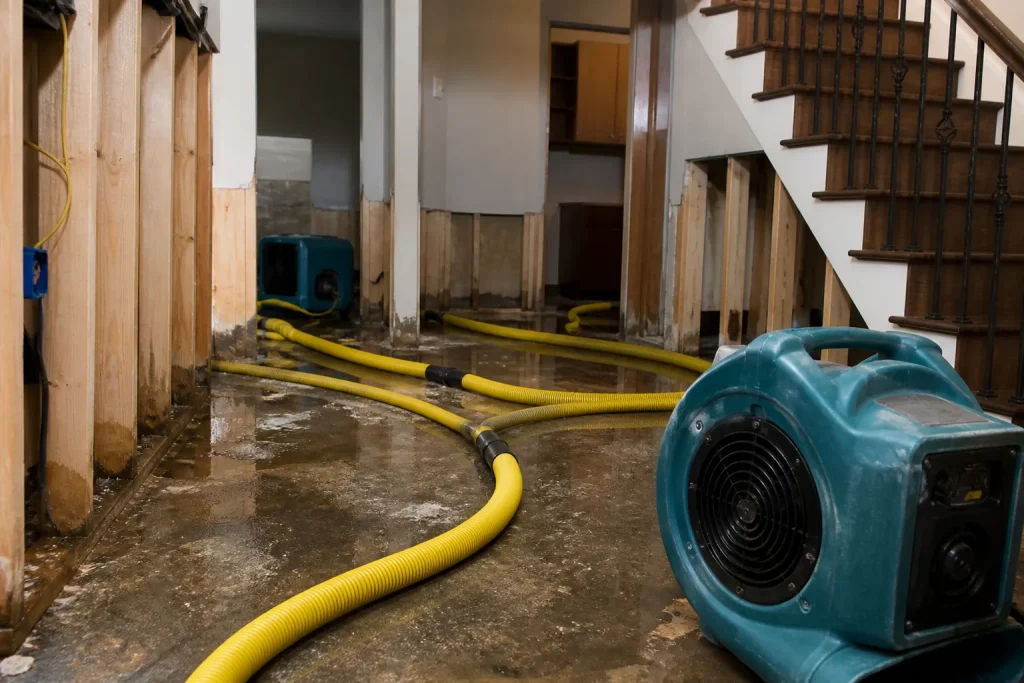
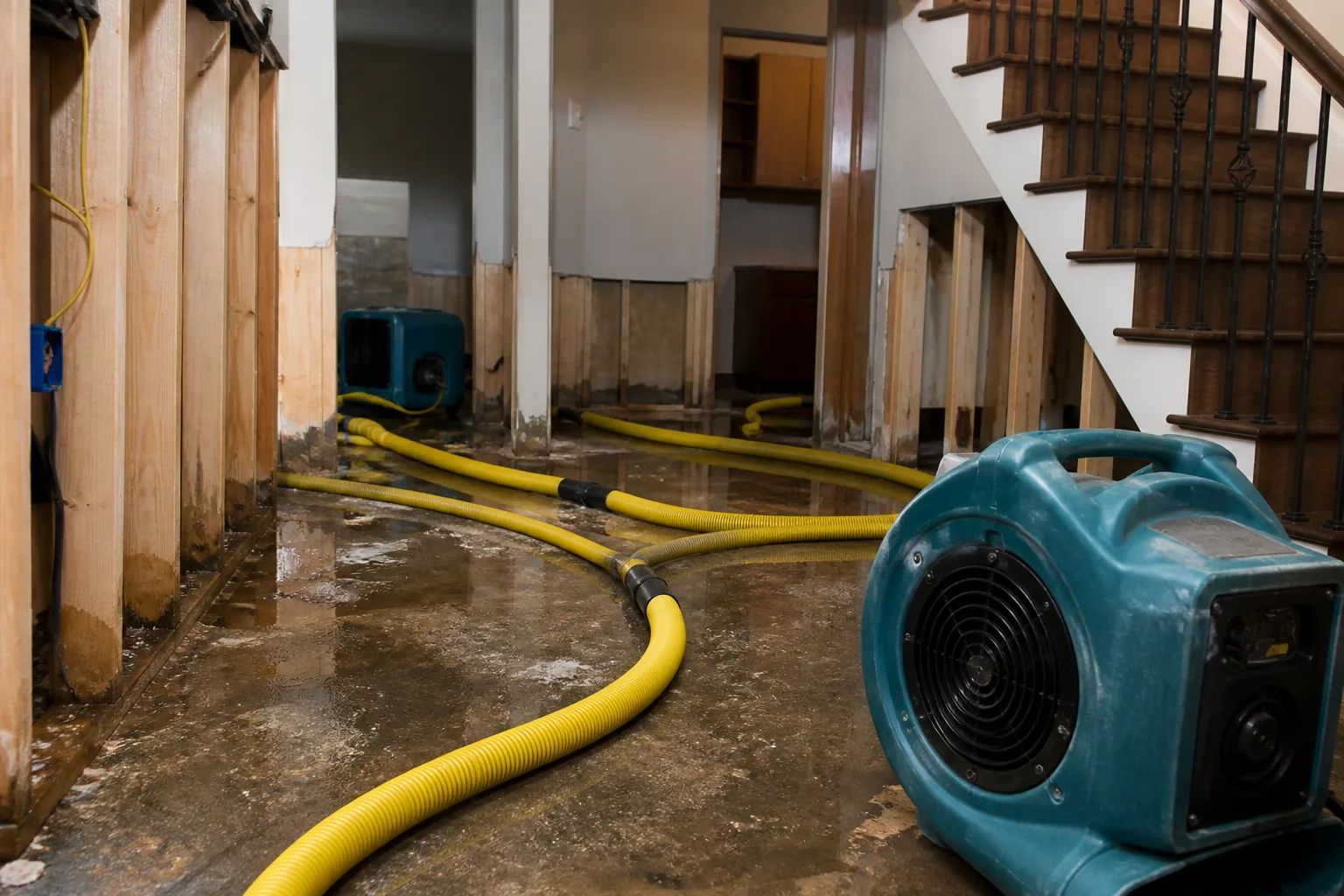
- Photos during demo – what the contractor exposes when drywall comes off or carpet is pulled back. This is where the IFA’s “category 1 clean water, minimal drying” scope often collapses into a “category 3 black water, full containment” reality.
- Moisture readings on paper – written psychrometric readings (measuring moisture in the air and materials) showing that the structure is still wet beyond what the original estimate assumed.
If the IFA refuses to authorize necessary supplemental work, you have the right to request a re-inspection, escalate to the adjuster’s supervisor, or file a complaint with the California Department of Insurance. The squeaky wheel principle applies here. Politely persistent homeowners with documentation get supplements approved. Silent homeowners eat the difference.
Who Does the Restoration Company Actually Work For?
This is the question that determines whether you get made whole or get managed. When you sign a work authorization with a restoration company, that company works for you. Not for the insurer. Not for the adjuster. Not for the preferred-vendor relationship that got their name on a list. You are the client, and the company’s legal and ethical duty runs to you.
But the preferred-vendor system quietly flips that loyalty. Some restoration companies in Los Angeles rely heavily on insurer referrals. When a company gets 60 or 70 percent of its jobs from adjuster recommendations, there’s a structural incentive to keep adjusters happy, which too often means agreeing to write scopes that fit the insurer’s initial estimate rather than the house’s actual condition. The company doesn’t want to lose the referral stream, so they trim days of drying, skip containment, or “work within the claim” rather than submitting a proper supplement. You can spot a loyalty switch when a contractor starts using phrases like “the adjuster won’t go for that” or “let’s just see what the claim approves” before they’ve even documented what the house needs. A restoration company that works for you says, “Here’s the full scope, here’s the price, and I’ll fight the supplement for you.” A company that works for the insurer says, “Here’s what we can do with what they’ll pay.” Those are different services. Only one fixes your house.
What a Written Price Means When the Adjuster Revises Downward
Mid-job estimate revisions are the moment homeowners get burned. It plays out like this: the claim is approved on a scope everyone agreed to, demolition starts, drying equipment goes in. Then the IFA reviews the invoice and decides a line item wasn’t justified, or the insurer’s desk reviewer flags something, and suddenly the approved amount drops. The restoration company now faces a choice. Eat the difference, or pass it to the homeowner. Plenty of companies pass it. The homeowner, already exhausted and living in a torn-apart house, gets handed a $4,000 balance the claim won’t cover.
This is where the concept of a written price before work starts becomes the most important piece of paper in your claim. At Marsh Water Damage Restoration, our work orders carry a printed price, we hand you the number before we set a single air mover, and that number does not move because an adjuster changed their mind after demo. If the insurance company revises downward, that revision affects the insurer’s payout, not our contract with you. We’ll document the gap, we’ll submit the supplement, and we’ll go back and forth with the desk adjuster. But the price on the work order is the price. If a restoration company can’t or won’t give you that in writing, in Los Angeles, in 2026, you should ask why not.
Los Angeles Water Damage: What We Actually See in the Field
Los Angeles water damage isn’t one kind of problem, it’s about nine, and they range from the mundane to the genuinely strange. We pulled a sopping carpet out of a Granada Hills split-level last month where the culprit was a pinhole leak in a copper line that had been slowly saturating the subfloor for a year. The homeowner had been smelling something vaguely musty and figured it was the crawlspace. It wasn’t. It was 400 square feet of damp particleboard under the living room. The IFA’s initial scope called for carpet replacement and spot drying. The final claim, after our supplement, covered subfloor replacement, mold treatment, and full chamber drying for 12 days. This happens constantly.
Other repeat offenders in LA: water heater failures in homes where the unit sits inside a hallway closet with no drain pan, washing machine supply line bursts in second-floor laundry rooms that drain down through ceilings, and AC condensate lines clogging in August and soaking walls behind the unit. Slab-on-grade homes in the Valley and South LA are particularly prone to hidden under-slab leaks that only show up as warm spots on flooring or inexplicably high water bills. Each of those scenarios produces a different IFA conversation because the “visible damage” the adjuster first sees rarely matches what the drying process reveals. If you’re in Los Angeles and you’re mid-claim needing better documentation, our team handles adjuster communication so you don’t have to translate construction into insurance language on your own, call (910) 613-6568.
Mold in the Gap: When the IFA Says “Just Dry It”
Water that has been standing for more than 48 to 72 hours in warm conditions, which describes most unmitigated LA water damage from spring through fall, raises the microbial question. “Microbial” is the insurance industry’s careful word for mold and bacteria. The IFA knows that if they approve microbial remediation, the claim cost goes up significantly. So there’s a predictable pattern: the adjuster’s initial scope says “dry and deodorize” even when the water has been standing for a week. They hope drying equipment resolves the odor and the staining. Sometimes it does. Often it doesn’t.
Here’s what you need to know, your homeowner’s policy in California typically covers mold remediation if the mold resulted from a covered water loss. The IFA’s reluctance to add mold line items isn’t a coverage denial, it’s a cost-control default. If your restoration contractor documents visible mold growth, elevated moisture readings after the drying period, or persistent odors that indicate hidden colonies, that evidence supports adding mold remediation to the claim as a direct result of the covered loss. We cover this process in more detail on our Mold Remediation in Los Angeles page. The pattern holds: documentation, supplement, approval. Miss the documentation, and the mold line item disappears with the insurer’s argument that it was “pre-existing.”
When to Call a Professional
Anything beyond a small, contained spill that you can dry in a few hours with towels and a fan warrants professional drying. A mop and an open window will not dry water that has wicked into drywall, soaked into hardwood, or traveled under cabinets. Our rule of thumb: if the water went somewhere you can’t see, you need a pro. And if insurance is involved at all, you need a professional scope written in the language adjuster software understands. We use commercial-grade drying and extraction equipment from Dri-Eaz, Phoenix, and XPOWER on every job, the same machines you’d find on a large commercial loss, and our technicians are credentialed through IICRC, RIA, and IFA. When you hire a company with the right equipment and the right paper trail from the first day, the IFA conversation shifts from “is this necessary” to “how do we process payment.”
Related services in Los Angeles: Water Damage Restoration in Los Angeles and Storm Damage Restoration in Los Angeles.
The Bottom Line
IFA water damage restoration in Los Angeles comes down to who controls the scope, and the answer should be you, with your restoration contractor advocating in your corner. The IFA’s first estimate is a starting point, not a ceiling. Xactimate labor rates often undervalue actual Los Angeles trade costs, and supplemental claims exist precisely because initial scopes miss what demo reveals. Your restoration company works for you, not the adjuster. If you’re in Los Angeles and need help with a water damage claim, Marsh Water Damage Restoration offers free estimates and we put our price in writing before work begins. Call (910) 613-6568, and ask for a real person. You’ll get one.
Frequently Asked Questions
IFA stands for Insurance Field Adjuster, the representative your insurance company sends to inspect water damage and determine the initial scope of payment. Their estimate is an opening figure, not a fixed final number.
Yes. In California, you have a legal right to hire any licensed restoration company you choose. Your insurer cannot require you to use a specific vendor, though they can apply their approved pricing structure to whatever company you select.
Your contractor can submit a supplemental estimate documenting the gap between the IFA’s original scope and the damage actually found. This supplement, supported by photos and moisture readings, is a standard part of the claims process and often results in additional approval.
It matters more than almost anything else. If your restoration company gave you a written price before work started, that contract stands between you and the company regardless of the insurer’s final payout. Get every price in writing before demolition begins, call (910) 613-6568 for a free estimate from a company that puts the number in writing.
Written by the team at Marsh Water Damage Restoration.
Need Damage Restoration Help?
Call Marsh Water Damage Restoration - licensed & insured, here with fast after-hours help in Los Angeles.
(910) 613-6568