
Phoenix Water Damage Restoration in Los Angeles: A Homeowner’s Guide
When a Los Angeles homeowner searches for “Phoenix water damage restoration,” they’re usually trying to figure out whether a contractor’s equipment claim means anything. Phoenix Restoration Equipment is a manufacturer of commercial-grade drying machines, primarily desiccant dehumidifiers, and the name gets thrown around a lot in this industry. Here’s the honest truth: the machine brand matters far less than the technician running it, the written price you agreed to, and the guarantee backing the work. If you’d rather skip the equipment lesson and just get someone out to look, call Marsh Water Damage Restoration home at (910) 613-6568.
Why You’re Hearing the Name “Phoenix” in the First Place
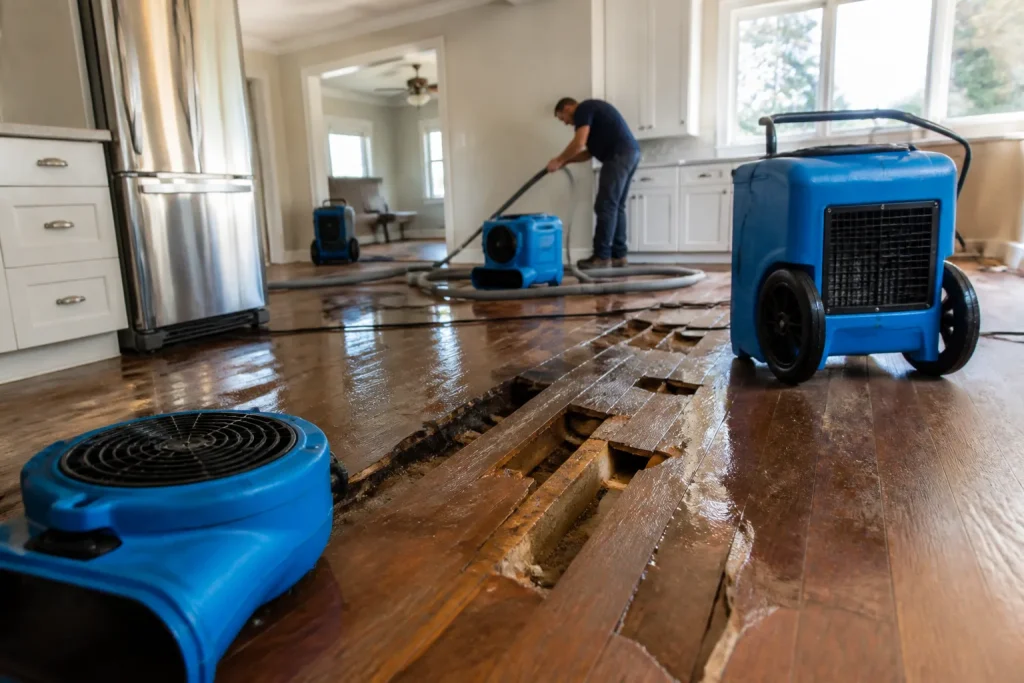
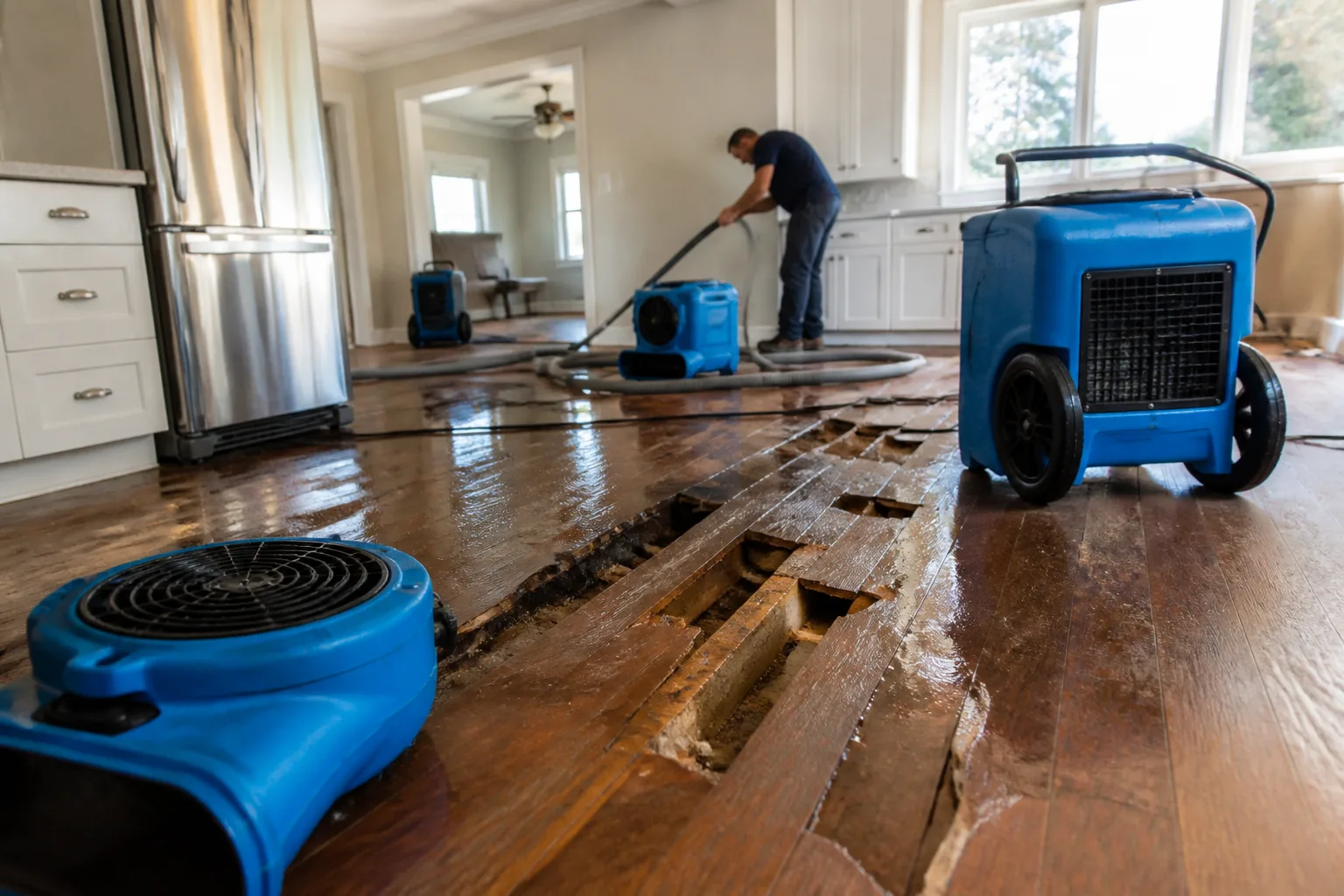
Phoenix Restoration Equipment, based in Wisconsin, has been manufacturing drying equipment for the restoration industry since 1994. They’re best known for desiccant dehumidifiers, which work differently from the refrigerant-based LGR (low grain refrigerant) dehumidifiers most restoration crews in Los Angeles run by default.
We should explain the difference in plain English, because it actually matters for your specific situation:
- Refrigerant dehumidifiers (LGR) pull moisture out of the air by cooling it below the dew point, like a window AC unit. They work great in warm, humid conditions and are the standard choice for most Los Angeles water damage jobs.
- Desiccant dehumidifiers (Phoenix’s specialty) use a rotating wheel of silica gel to physically absorb water vapor. They can dry air far below what refrigerant machines can achieve, and they work well in cooler environments where refrigerant units lose efficiency.
In Los Angeles, where our ambient humidity typically sits between 40% and 65%, LGR machines handle 90% of residential water damage perfectly well. Desiccant equipment becomes the right call when you need extremely low humidity, when the structure has been saturated for weeks, or when you’re drying a large commercial space. If a contractor is specifying Phoenix desiccant equipment for a small kitchen overflow, that’s not impressive, it’s overkill, and you’ll likely pay for that overkill in the estimate.
What Phoenix Equipment Actually Does (And When It Excels in LA)
Let us walk you through the scenario where desiccant drying genuinely outperforms refrigerant-based LGR systems in Los Angeles. Say a water heater on the second floor of a Spanish-style home in Los Feliz failed while the owners were away for three weeks. Water ran through the subfloor, down the wall cavities, and saturated the plaster and framing below. By the time anyone noticed, the moisture had been sitting long enough that the structure itself was holding gallons of water.
In that situation, an LGR dehumidifier alone would take weeks to pull the moisture out, because it struggles to get the air below about 40 grains per pound (a measurement of absolute humidity). A desiccant unit from Phoenix can push the air down to 10 grains or lower, which creates a massive vapor pressure differential and pulls water out of the wood far faster.
At Marsh, we’ve run Phoenix desiccant units on exactly that kind of long-saturation loss. Tobias Reyner, who leads our team, has seen the difference in cycle time: the desiccant setup might cut a month-long dry down to two weeks. That speed matters, because it reduces the window for secondary damage and gets your family back into the house sooner.
But here’s the point we want Los Angeles homeowners to understand: the equipment is only as good as the drying plan behind it. A desiccant unit running in a space that hasn’t been properly contained will just pull moisture from the ambient air outside the affected area. The technician who sets the drying chamber, calculates the cubic footage, places the air movers correctly, and takes daily psychrometric readings (measuring the moisture in the air and materials) is the one determining whether the job dries in seven days or seven weeks.
How to Ask a Contractor to Justify Their Equipment Selection
This is where you, the homeowner, can protect yourself from a sales pitch dressed up as technical expertise. When a restoration company in Los Angeles tells you they’re going to use Phoenix desiccant equipment, or any specific brand, ask these questions:
- “What’s my current ambient humidity reading, and what’s your drying goal?” If they can’t give you a number that they measured on site, that’s a red flag. The correct answer involves a moisture meter reading from your affected materials and a target humidity for the drying chamber.
- “Why is desiccant the right call for my job rather than LGR?” The honest answer might be that your specific situation warrants it: long saturation time, a very large affected area, a need for extremely low humidity. If the answer is just “we like Phoenix equipment,” that’s a brand preference, not a drying plan.
- “What documentation will I receive daily?” Every drying job should generate a daily log: humidity readings, moisture content readings from the affected materials, and the number and type of equipment in place. Phoenix machines, like the equipment from Dri-Eaz, B-Air, and XPOWER, have data ports and onboard sensors that capture this information. If a contractor won’t commit to providing daily written documentation, walk away.
We recommend you ask these questions before signing anything. A reputable restoration company in Los Angeles will answer them without hesitation. A company that gets defensive or vague is telling you something about how they operate.
The Documentation Your Drying Job Should Generate (Regardless of Brand)
We mentioned daily drying logs above, and we want to spend a moment explaining why they matter. When a structure is dried out and the restoration company packs up and leaves, the only thing protecting you from a future mold problem is the documentation that the drying actually reached the target. Too many Los Angeles homeowners have been told “it’s dry” when it wasn’t, and six months later they’re dealing with Mold Remediation in Los Angeles problems that could have been prevented.
A proper drying log should show:
- Initial moisture readings from the affected materials (wood, drywall, concrete), taken with a penetrating moisture meter
- Daily humidity readings from the drying chamber, including ambient temperature and relative humidity
- Daily moisture content readings from the same materials, showing the downward trend
- Equipment changes: when air movers were added, removed, or repositioned, and why
- The final “dry standard”: the target moisture content for each material type, signed off by the lead technician
Phoenix desiccant units produce excellent data, and any technician credentialed through the IICRC (Institute of Inspection, Cleaning and Restoration Certification) knows how to collect and interpret it. But the brand of machine doesn’t matter if the readings aren’t taken and written down. At Marsh, every drying job includes a daily log provided to the homeowner, and the final dry standard is documented in writing before we pack up the equipment.
Marsh’s Position: Equipment Brand Is a Detail, Not a Selling Point
We want to be direct with you about where Marsh Water Damage Restoration stands on this topic. We run professional-grade drying equipment in Los Angeles, and yes, that includes Phoenix desiccant units when the job warrants it, along with gear from Dri-Eaz, B-Air, and Injectidry for specific applications like hardwood floor drying. Our technicians hold credentials from the IICRC, RIA (Restoration Industry Association), and IFA (Inspection Firm Association).
But none of that is the reason you should choose us. Equipment is a tool, not a promise. The promise is this: a written price before any work begins, a written guarantee on every repair, and a 365-Day Done Right Promise that says if the repair isn’t right within a full year, we come back and make it right, free. That’s printed on every work order. The equipment choice is the technician’s job. The price certainty, the name-and-photo verification of the person knocking on your door, and the guarantee in writing are your protections.
We also want to be clear about the Threshold Verified standard, because it addresses the second fear every Los Angeles homeowner has when water damage happens: the discomfort of opening your door to a crew you’ve never met. Every technician is background-checked, identity-verified, and sent to you by name and photo before the visit. When they arrive, they show a photo ID badge at the door, every time. You know exactly who is coming before the knock.
When to Call a Pro
Water damage restoration is not a project you should attempt to run yourself. We pulled equipment out of a garage in Sherman Oaks last month where a homeowner had rented three box fans and a consumer dehumidifier and let it run for four weeks. The surface drywall felt dry to the touch. The framing behind it was at 28% moisture content, which is a mold waiting to happen. By the time the homeowner called us, the studs needed antimicrobial treatment and two walls of drywall had to come out.
Call a professional if the water affected more than a single room, if the water sat for longer than 24 hours, if the water came from a contaminated source like a sewage backup or dishwasher overflow, or if you can see water staining on the baseboards or feel softness in the flooring. A professional in Los Angeles will have moisture meters that can read through materials, not just on the surface.
Related services in Los Angeles: Water Damage Restoration in Los Angeles and Storm Damage Restoration in Los Angeles.
The Bottom Line
The Phoenix name on a dehumidifier is not a reason to hire a contractor, and it’s not a reason to avoid one. Phoenix makes solid, commercial-grade desiccant drying equipment that has a legitimate place in Los Angeles restoration work, particularly on large or long-saturated losses. But the machine is only as effective as the technician who sets it up, the drying plan they follow, and the documentation they produce.
What actually protects you as a homeowner is the same set of things regardless of what brand of equipment shows up: a written price before work starts, daily drying logs you can review, a technician who is credentialed and identity-verified, and a guarantee in writing that covers the work for a full year. We built Marsh Water Damage Restoration around those protections in 2005, and they’re printed on every work order we write. If you’re in Los Angeles and dealing with water damage, call (910) 613-6568 for a free estimate. A live person answers, day or night.
Frequently Asked Questions
Phoenix Restoration Equipment manufactures commercial-grade drying equipment for the restoration industry, most notably desiccant dehumidifiers that use a rotating silica gel wheel to remove moisture from the air. These machines dry air to much lower humidity levels than standard refrigerant-based dehumidifiers, which makes them useful on large commercial losses and long-saturated residential structures. If you’re researching this because a contractor mentioned Phoenix equipment, call (910) 613-6568 and we’ll walk you through whether it’s actually the right call for your Los Angeles job.
It depends on the job. For most residential water damage in Los Angeles, where ambient humidity ranges from 40% to 65%, LGR refrigerant dehumidifiers work well and cost less to run. Desiccant drying is the better choice when the structure has been saturated for weeks, when you need humidity pushed below what LGR units can achieve, or when the affected area is very large. A qualified technician should be able to explain why they’re choosing one over the other for your specific structure, and that explanation should reference your materials and current moisture readings, not just brand preference. For an honest equipment assessment, call (910) 613-6568.
Ask for daily drying logs that include moisture content readings from the affected materials, ambient humidity readings, and a final documented dry standard signed by the lead technician. If a contractor won’t commit to providing daily written documentation, that’s a problem. The documentation should show a consistent downward trend in material moisture content until it reaches the target for each material type. At Marsh, every drying job includes daily logs provided to the homeowner, and we don’t pack up until the final dry standard is documented in writing.
Most residential water extractions in Los Angeles run between $800 and $2,500 before drying equipment is set, depending on the size of the affected area and the water source. Drying equipment typically adds $150 to $350 per day, and the drying phase runs three to seven days on average. Desiccant drying with Phoenix equipment costs more per day than LGR drying, which is one reason an honest contractor will only recommend it when the job actually calls for it. Get a written price before any work starts. Call (910) 613-6568 for a free estimate from Marsh Water Damage Restoration.
Written by Tobias Reyner, Owner at Marsh Water Damage Restoration, serving Los Angeles since 2005.
Need Damage Restoration Help?
Call Marsh Water Damage Restoration - licensed & insured, here with fast after-hours help in Los Angeles.
(910) 613-6568