
B-Air Water Damage Restoration in Los Angeles: A Homeowner’s Guide
B-Air water damage restoration in Los Angeles comes down to one specific advantage: low-profile air movers that fit where standard drying fans physically cannot. These units slide under hardwood floors, into wall cavities, and beneath raised foundations, which makes them the right call for many of LA’s older craftsman and mid-century homes. If a floor is already cupping and you’d rather not wait, call (910) 613-6568 and we’ll walk you through what you’re looking at.
The most expensive part of a hardwood floor water damage claim in Los Angeles isn’t the water itself; it’s the cupping that happens when the subfloor stays wet for 48 hours while the surface looks almost fine. B-Air’s low-profile units exist specifically for that gap. Most homeowners don’t know to ask for them, and that’s exactly why we’re writing this.
What B-Air Equipment Actually Does (And Why It’s Different)
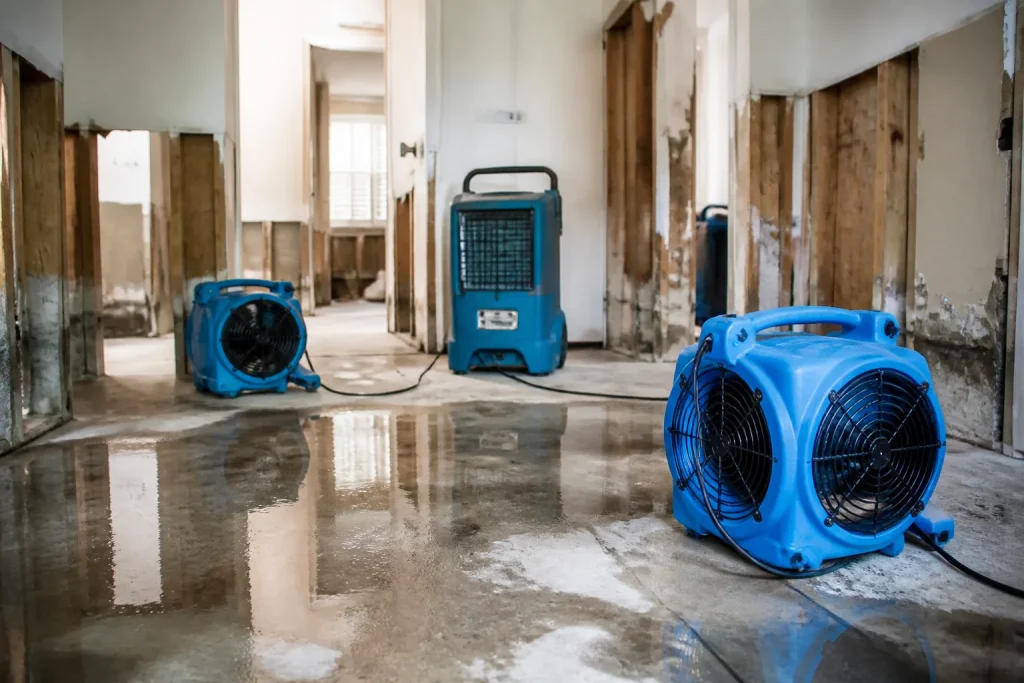
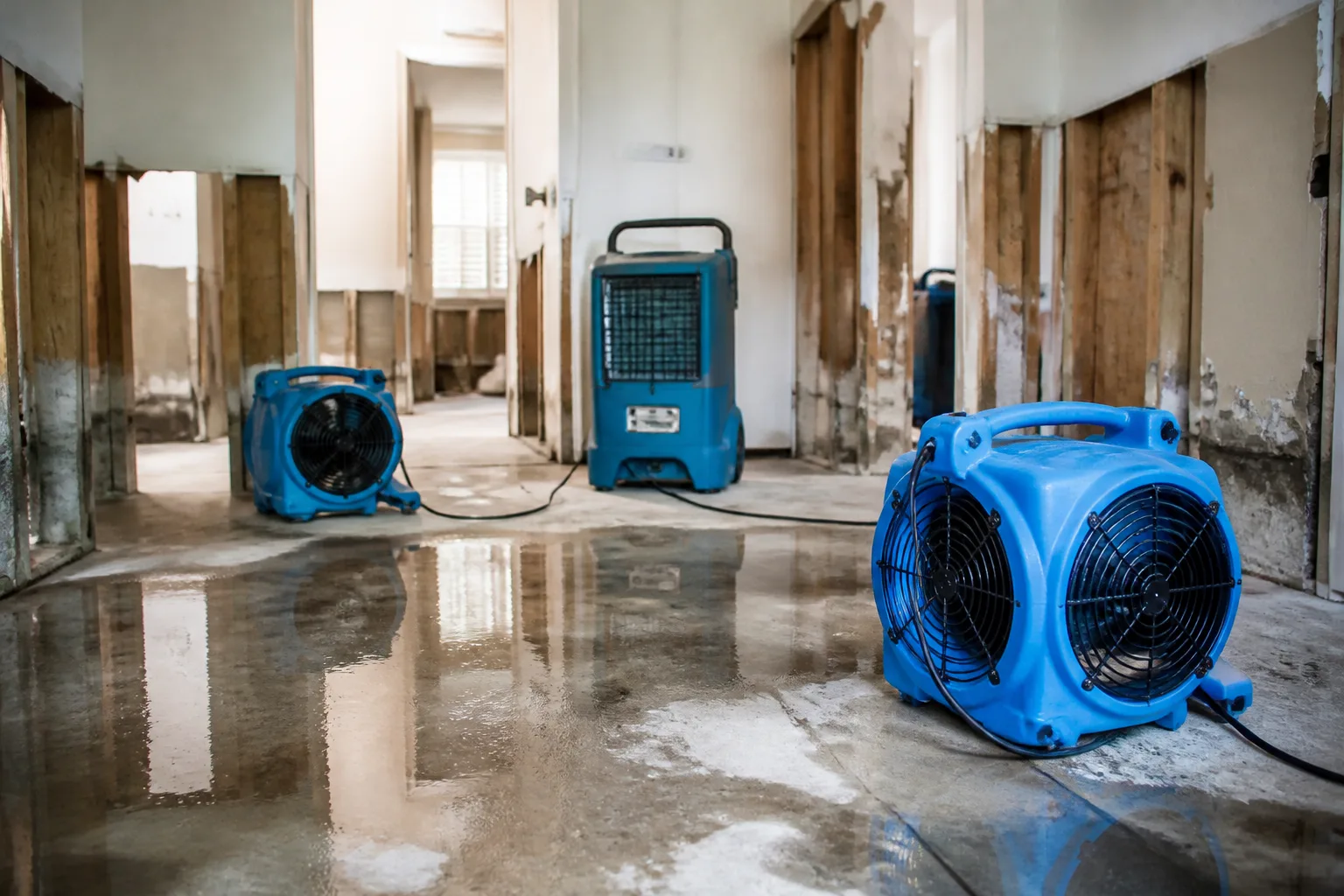
Most air movers used in water damage restoration are what the industry calls snail-shell fans: round, bulky, and built to push high volumes of air across open floor space. They’re effective for carpet and pad, but they can’t get under a door threshold that sits two inches off the slab. B-Air took a different approach entirely.
B-Air’s low-profile units are engineered with high static pressure in a flat, compact housing. In plain English: they force air through tight spaces instead of just across open rooms. A standard air mover might move 2,500 cubic feet per minute across a living room floor, but it does little for the cavity under a hardwood floor that’s nailed over a subfloor. B-Air panels, by contrast, channel that airflow directly into the space between the finished floor and the subfloor, where trapped moisture actually lives.
We’ve used these units in Highland Park craftsman bungalows where the original oak flooring sits directly over a vented crawlspace. The gap between the subfloor and the ground is often under 18 inches, and the space between floor joists is even tighter. A standard fan won’t fit. A B-Air low-profile unit will, and that’s the difference between drying the floor in place and pulling it up.
If you’re dealing with standing water right now, our water damage restoration in Los Angeles page explains what to do in the first hour, before equipment decisions even matter.
Why Los Angeles Housing Stock Makes B-Air The Right Tool
Los Angeles isn’t one housing market; it’s five or six, all with different flooring and foundation profiles. B-Air equipment isn’t needed for every water loss in the city, but for certain housing types, it’s the only realistic route to drying a floor without tearing it out.
Craftsman bungalows in Highland Park and Eagle Rock
These homes, most built between 1910 and 1930, typically have original hardwood floors over wood subfloors, with a vented crawlspace below. When a supply line bursts in a wall or a water heater lets go in the hall closet, water runs under the flooring and sits there. The crawlspace complicates things because moisture wicks upward from the ground even in dry weather. B-Air panels positioned in the crawlspace, blowing upward into the floor assembly, are often the only way to dry the floor from below without pulling up the finished surface.
Mid-century slab homes in Silver Lake and the Valley
Mid-century homes built on concrete slabs present a different problem. Hardwood or engineered flooring is often glued or nailed directly over the slab, sometimes with a thin plywood subfloor between. Water on the floor finds its way into the seams and gets trapped against the concrete, which holds moisture stubbornly. Low-profile B-Air units, placed directly against floor vents or at the edges of the affected area, can force air through the narrow channel between flooring and slab. It’s slow work, but it can save a floor that would otherwise need replacement.
Older Westside homes with raised foundations
Santa Monica, Mar Vista, and West LA have thousands of pre-war homes with raised foundations and original flooring. We’ve seen 1930s homes where the subfloor is 1×6 Douglas fir laid diagonally, with oak flooring on top. When a toilet supply line fails on the second floor, water travels down inside the wall and pools under the first-floor hardwood. Getting a standard fan into that space means cutting holes in the ceiling below, which no homeowner wants. A B-Air panel can often do the job from a single access point.
We pulled one of these units out of a garage over in Eagle Rock last month where the homeowner’s water heater had been leaking slowly for days. Surface looked fine, but the moisture meter showed 28% moisture content in the subfloor. Three days with a B-Air low-profile unit and two dehumidifiers, and the floor was saved. That’s the kind of outcome that makes the equipment choice matter. If you’re in a home like this and want to know whether your floor can be saved, call (910) 613-6568 and we’ll tell you straight.
What Subfloor Cupping Looks Like (And The 48-Hour Window)
Cupping is the first visible sign that a hardwood floor is in trouble. The edges of each board curl upward, creating a wavy surface that looks almost like a washboard. It happens because the bottom of the board absorbs moisture and swells while the top stays dry. That uneven swelling forces the board edges up.
Here’s what matters in Los Angeles: the first 48 hours decide whether cupping is reversible. If a technician can start pulling moisture from the subfloor within that window, the boards can often be dried flat and refinished if needed. If the subfloor stays wet beyond that, the wood fibers lose their cellular structure, and the floor will never lay flat again no matter how long it dries. At that point, replacement is the only option, and that’s a $15 to $25 per square foot conversation for hardwood in LA.
Professionals with the right equipment can buy time, but B-Air units are one of the few tools that actually get moisture out from underneath a floor where cupping starts. That’s not a sales pitch; it’s physics. Surface drying helps, but if the moisture under the board is still there, the cupping comes right back.
So the answer to “Can you save a cupped hardwood floor?” is: yes, if the subfloor gets dried within roughly 48 hours, and yes, B-Air low-profile units are exactly the tool that makes that possible in tight spaces.
How A Technician Decides Between B-Air Panels And Injectidry
This is a practical question, and the answer depends on moisture readings, not brand preference. A competent restoration technician in Los Angeles uses moisture meters at multiple depths before choosing equipment.
- Surface reading: The first reading is taken at the surface of the floor with a pinless meter. It tells us if the finished floor itself is wet, but it can’t distinguish between surface moisture and subfloor moisture.
- Subfloor reading: Pin probes inserted through the floor or in an inconspicuous spot measure moisture inside the wood itself. A reading above 16% in the subfloor means it needs targeted drying.
- Joist reading: If the water reached the joists, we take readings there too, because joists hold water long after the subfloor appears dry.
Here’s how the equipment decision goes, from what we see on our own jobs:
- B-Air low-profile air movers are the right call when the subfloor is moderately wet (16 – 22% moisture content) and there’s a physical gap the panel can blow into, like a crawlspace or an under-floor air channel. They’re low-amp, so running several panels on a single circuit is realistic for older LA homes with 100-amp panels.
- Injectidry is the right call when the moisture is trapped deeper and there’s no space for a panel. Injectidry uses panels with vacuum and pressure ports that pull air through the floor assembly from above. We use it under tile, under cabinetry, and inside wall cavities where a B-Air panel doesn’t make sense.
Neither is a universal solution, and a tech who reaches for the same fan on every job isn’t reading the moisture. Our team holds IICRC and RIA credentials, which means the moisture readings dictate the equipment, not the other way around.
If mold is a concern after a water event, see our mold remediation in Los Angeles page for how we handle it.
The Written Price Guarantee: No Upsell On Equipment
A fair question homeowners ask us is: “Are you going to show up with a B-Air panel and charge me a premium just because it sounds specialized?” The answer is no, and here’s why:
Every Marsh job gets a written price before any work starts. That price includes line-item detail for equipment. If we’re deploying B-Air low-profile units, the invoice will say exactly how many units, what they cost per day, and why they’re needed. That written explanation is part of the work order, not a verbal explanation you have to remember.
The same applies to everything else we run: dehumidifiers from Dri-Eaz or Phoenix, air scrubbers, and Injectidry panels when needed. You’ll see it all in writing before we plug anything in. If the job changes because the damage is worse than we thought, you get a revised written scope before any additional work starts. No after-the-fact surprises, no vague charges.
This matters in Los Angeles because homeowners have been burned before by companies that give a low verbal quote, start demo, and then “discover” the need for specialized drying at double the price. Marsh is built to be the opposite of that.
Every technician who arrives at your door is part of the Threshold Verified standard: background-checked, identity-verified, and sent to you by name and photo before the visit. They show a photo ID badge at the door, every single time. It’s the same reason we back every job with a Done Right Promise. If the repair is not right within a full year, we make it right, and a free second visit is included automatically. That’s printed on every work order.
Our Marsh Water Damage Restoration home page explains the full scope of what we do, including storm work.
The Bottom Line
B-Air water damage restoration in Los Angeles is not a gimmick. It’s a specific tool for a specific housing problem: older homes where water gets trapped under hardwood floors and standard fans can’t reach it. The 48-hour window for saving a cupped floor is real, and B-Air low-profile units are one of the few ways to actually hit that window in a craftsman bungalow or mid-century slab home.
Key takeaways:
- B-Air low-profile air movers are built to dry under floors and inside wall cavities where standard air movers can’t fit.
- LA housing stock – especially Highland Park, Eagle Rock, Silver Lake, and older Westside homes – is exactly the type of construction that benefits from this equipment.
- Cupped hardwood floors are reversible if the subfloor is dried within 48 hours; B-Air panels make that possible in tight spaces.
- Proper moisture readings at multiple depths determine whether B-Air panels or Injectidry injection drying is the right call.
- Marsh writes a line-item price for all equipment before any work starts, so there’s no surprise upcharge.
If you’re in Los Angeles and need help with water damage under a hardwood floor, Marsh Water Damage Restoration offers free estimates. Call (910) 613-6568 and we’ll tell you honestly whether your floor can be saved, and what it will cost in writing.
Frequently Asked Questions
Most residential water extractions run between $1,800 and $4,500 before drying equipment is factored in, depending on the affected square footage and the depth of the water. B-Air low-profile drying panels typically add $35 to $65 per unit per day, and a standard job uses two to four panels for three to five days. Your written estimate will break this all down before work starts. Call (910) 613-6568 for an exact quote.
Yes, in many cases it can, if the subfloor moisture is addressed within about 48 hours of the water event. Cupping happens when only the bottom of the board swells, and targeted low-profile drying pulls moisture out from underneath. If the floor has been wet for a week or more, the wood fibers may be permanently damaged and replacement is the realistic option.
Most subfloor drying jobs in Los Angeles take three to five days of continuous equipment run time, though homes with raised foundations in humid crawlspaces can take up to a week. Moisture meters at the subfloor and joist levels tell us when the structure is genuinely dry, not just dry on the surface. We don’t pull equipment until the numbers prove the floor is stable.
It’s not that B-Air is universally better; it’s that B-Air is specifically designed for confined spaces. Standard snail-shell air movers excel at drying open rooms and carpeted areas. B-Air low-profile units excel at moving air through floor cavities, under thresholds, and into crawlspaces. The right tool depends on the moisture readings and the construction of the home.
For storm-related water intrusion, our storm damage restoration in Los Angeles page covers roof leaks and wind-driven rain.
Written by the team at Marsh Water Damage Restoration.
Need Damage Restoration Help?
Call Marsh Water Damage Restoration - licensed & insured, here with fast after-hours help in Los Angeles.
(910) 613-6568