
Storm Damage Restoration: Repair or Replace? How Los Angeles Homeowners Decide
Most Los Angeles homeowners don’t actually need a repair-or-replace decision. They need a moisture-content test before anyone rebuilds anything. If you’re staring at a water-stained ceiling after an atmospheric river event, the answer isn’t found in how the damage looks. It’s found in a moisture meter reading behind the drywall, inside the insulation, and on the underside of the sheathing. If you’d rather not sort through this on your own, call (910) 613-6568 and we’ll walk you through it.
Here’s the uncomfortable truth we’ve learned: a roofer can replace every shingle on a Los Angeles house and leave wet insulation sitting in the attic. Within 60 days, mold starts growing on the underside of the new decking. The house looks repaired from the street. It isn’t. We’re seeing exactly this right now in homes that got cosmetic fixes after the 2023 and 2024 storm seasons, and those homeowners are paying twice. Once for the surface work. Once for the structural tear-out that should have happened first.
Cosmetic Restoration vs. Structural Restoration: The Distinction Most Bids Skip
The storm damage industry has a quiet problem. Too many contractors bid cosmetic restoration: patch the drywall, re-tile the roof, repaint the stucco. That work is visible, measurable, and easy to price. What gets skipped is structural restoration: testing the moisture content of sheathing, insulation, and framing before any surface material goes back on. Skipping that test is how a $4,000 “repair” becomes a $19,000 mold removal six months later.
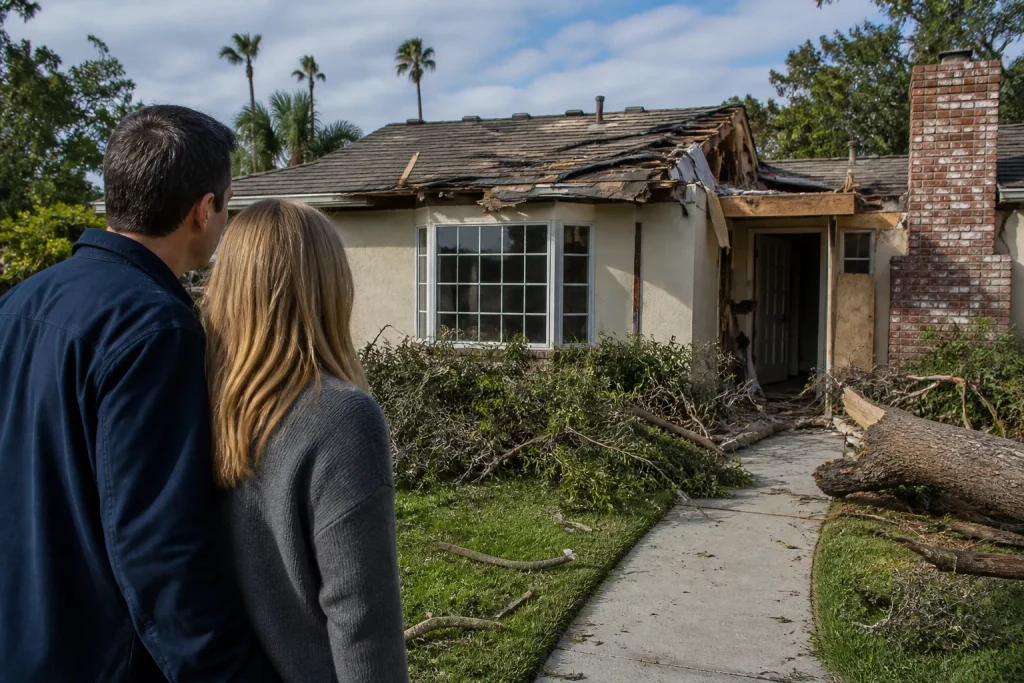
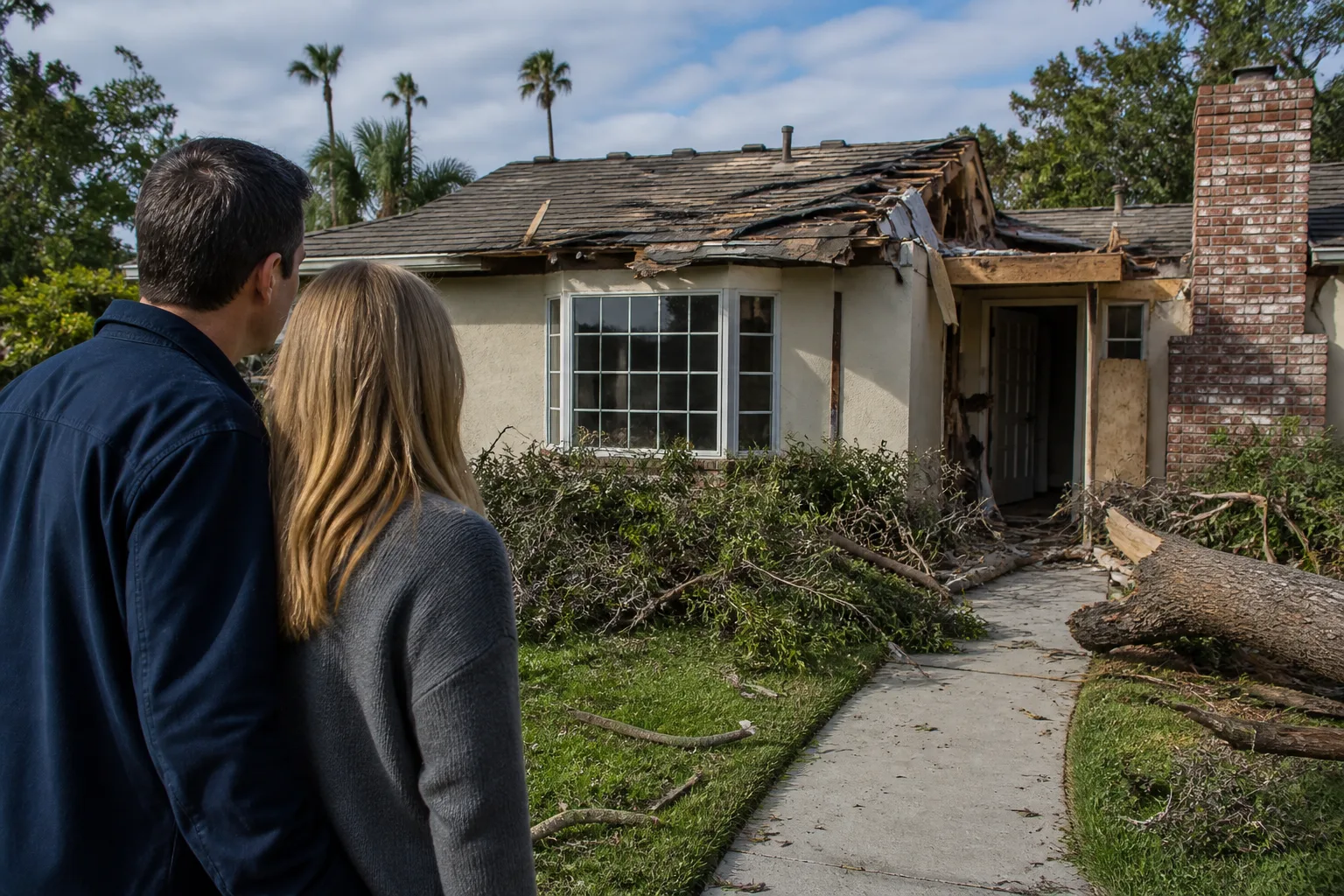
In Los Angeles, this matters more than in most markets. Our storm events are rare but violent. When an atmospheric river hits, older wood-frame homes in neighborhoods like Eagle Rock, Highland Park, and the Valley take on water in ways that don’t show up in photographs. The 2023 and 2024 events saturated structural lumber behind stucco and beneath roofing felt. The surface damage looked manageable. The hidden saturation was often severe. Many of those repairs are already failing because the diagnostic step never happened.
Before you sign any repair contract, ask one question: “Will you document moisture content before and after drying?” If the contractor hesitates, thank them and move on. A legitimate restoration company in Los Angeles uses moisture meters and psychrometric readings (measuring the moisture in the air, not just the surface of the material) to confirm the structure is genuinely dry before reconstruction begins. Companies that skip this step aren’t doing restoration. They’re doing decoration.
The Replacement Threshold: When “Dry Enough” Isn’t Actually Dry
Here’s a practical framework we use on every storm damage job in Los Angeles. It’s not secret knowledge. It’s the standard any IICRC-credentialed technician applies.
Drywall: Gypsum board can survive minor water exposure, but it has a hard limit. If moisture content reads above 1% after professional drying, the material has lost structural integrity. It will crumble, sag, and host mold. Replace it. This is not a judgment call. It’s a number on a meter.
Insulation: Fiberglass batts that have been soaked compress and clump. Once compressed, they stop insulating. Blown-in cellulose wicks water deep into the material, and it will not dry evenly. If the insulation has clumped, compacted, or shows any visible staining, it’s a replace item. Los Angeles attics already run hot. Wet, compressed insulation makes them hotter and spreads moisture against framing.
OSB Sheathing: Oriented strand board is common in LA roof decks, and it’s fragile once wet. If the edges have swollen, the layers have separated, or you can pick at it with a fingernail, it’s delaminated. That board will not hold fasteners and will not dry back to original strength. Replace it.
Framing lumber: Solid lumber is more forgiving. Dimensional lumber (2x4s, 2x6s) can usually be dried in place if the water exposure was brief and professional drying starts quickly. Using equipment from Marsh Water Damage Restoration home jobsites, including Dri-Eaz dehumidifiers and XPOWER air movers, we regularly salvage framing that looks terrible on day one. The key is getting air movement and dehumidification running within 48 hours. After that window, the odds of salvage drop fast.
How Your Insurance Adjuster Thinks (And How to Stay Ahead)
When a storm damages your Los Angeles home, your insurance company sends an adjuster to write a scope of loss report. That report determines what gets paid. The adjuster works for the carrier. Their training tells them to document visible damage, photograph it, and write a line-item estimate for repair.
Here’s what most homeowners don’t realize: the adjuster’s report is only as good as the information in front of them. If you get your own moisture mapping done before the adjuster arrives, with documented readings from inside wall cavities and attic spaces, you’ve changed the negotiation. You’re no longer asking the carrier to trust your word. You’re handing them measurements.
One of our Storm Damage Restoration in Los Angeles technicians can run a full moisture assessment and produce a report you can hand to your adjuster. When a scope of loss is built on measured data rather than visual impressions, the conversation shifts from “we think there might be hidden damage” to “the moisture meter says this framing is at 22% and here’s the photo of the reading.” That’s a very different meeting.
They argue with adjectives. Bring numbers.
When Repairing Makes Sense (And When It Doesn’t)
We’re not here to sell replacements. Repairing is often the right call, and we’ll tell you that on the phone before we ever step inside your house. Here’s the honest breakdown.
Repair is reasonable when:
- Moisture content in drywall reads below 1% after drying and the board is still firm
- Insulation is dry, fluffy, and uncompressed
- OSB sheathing shows no edge swelling or layer separation
- Framing moisture reads at or below 16% (the standard threshold for wood)
- Water exposure lasted less than 48 hours and drying started immediately
Replacement is mandatory when:
- Drywall has been saturated and reads above 1% after drying, or crumbles under light pressure
- Insulation is clumped, compressed, or shows staining
- OSB has delaminated, swollen at the edges, or no longer holds a fastener
- Framing has been wet for more than 72 hours and reads above 20%
- Visible mold is present on any porous material
If you’re not sure which list you’re on, that’s exactly when to call a pro. You don’t need a contractor who’ll guess. You need someone who’ll measure.
The Los Angeles-Specific Risk: Atmospheric Rivers and Old Wood
Los Angeles homes have a specific vulnerability that storm damage guides written for other markets miss. Our housing stock is old. Much of it was built before modern moisture barriers and vapor management were standard. When an atmospheric river drops three inches of rain in 24 hours, those older wood-frame structures absorb water through stucco cracks, around window flashing, and up through raised foundations.
The damage doesn’t announce itself. It sits in wall cavities and under floors, slowly raising the moisture content of everything it touches. In neighborhoods with hillside construction, like Mount Washington or the canyons, runoff goes where gravity sends it. We pulled one drying job out of a garage in Sherman Oaks after the 2024 storms where the homeowner thought a “small leak” had dampened one wall. The moisture meter told a different story: the entire bottom plate of the garage wall was at 24% moisture, the insulation behind the drywall was soaked, and the OSB sheathing had started to delaminate where it met the foundation. The visible damage was a two-foot water stain. The structural damage ran the full length of the wall.
That’s the pattern we see repeatedly in Los Angeles: surface clues that undersell the real problem. The repair-or-replace question can’t be answered by looking at the wall. It has to be answered by testing what’s behind it.
How to Demand the Right Diagnostic Before You Sign Anything
You have more power in this process than you might think. Most Los Angeles storm damage contractors want the job, and they’ll adjust their process if you make your expectations clear. Here’s the simple script.
- Ask for written moisture readings. Before any repair quote is final, request documented before-and-after moisture content for every affected area. If they can’t provide it, they’re not doing structural restoration.
- Ask what equipment they use. We run Dri-Eaz, Phoenix, XPOWER, B-Air, and Injectidry equipment on residential losses because it’s the same gear used on large commercial claims. A contractor who shows up with a box fan and a shop vac is not drying anything.
- Ask about their guarantee in writing. Our Water Damage Restoration in Los Angeles team puts the Done Right Promise on every work order: if a repaired item fails within a year because it should have been replaced, we come back and make it right at no cost. No argument, no claim denials, no “well, that’s technically a new issue.” If it should have been replaced and we repaired it, that’s on us.
- Ask who is showing up at your door. This matters more in Los Angeles than most places. You’re not just letting a company into your home; you’re letting a specific human into your home. Our Threshold Verified standard means every technician is background-checked, identity-verified, and sent to you by name and photo before the visit. When they arrive, they show a photo ID badge at the door. Every time. Not just on paper. Not just the first visit.
That last point gets overlooked in storm damage guides, but it’s the one our customers mention most. A water loss is already invasive. You shouldn’t have to wonder who’s in your house while you’re dealing with it. You should know their name before they ring the bell.
The Bottom Line
The repair-or-replace question in storm damage is not a cost question. It’s a moisture question. If the material reads wet, it gets replaced. If it reads dry and structurally sound, it gets repaired. The only way to know the difference is to test it, with real equipment, and to document the numbers before any work begins.
Los Angeles homeowners who insist on moisture mapping before signing a repair contract will save money, avoid mold in the attic, and keep their insurance adjuster honest. Those who skip the diagnostic step will likely pay twice. We’ve been doing this, and the pattern doesn’t change.
If you’re in Los Angeles and dealing with storm damage, or if you’re not sure whether the damage you’re looking at is cosmetic or structural, call us at (910) 613-6568 for a free estimate. A live person answers, 24 hours a day, including holidays. We’ll tell you what we think over the phone before we ever schedule a visit. Related services: Mold Remediation in Los Angeles and Storm Damage Restoration in Los Angeles.
Frequently Asked Questions
You don’t, until the moisture content is measured. Drywall above 1% moisture after drying needs replacement. Insulation that’s clumped or compressed needs replacement. OSB that has delaminated needs replacement. Everything else can usually be repaired. The test takes minutes and tells you exactly which list you’re on.
Most homeowners policies cover storm damage, but the scope of coverage depends on the cause and your policy terms. What helps is having your own moisture documentation before the adjuster visits. A measured report with photos of moisture readings gives you leverage that visual estimates can’t match. Call (910) 613-6568 and we can walk you through what to prepare.
A live person answers our phone 24/7, and in most Los Angeles neighborhoods we can have a technician on site the same day you call. Speed matters because framing lumber that’s been wet for more than 48 hours starts losing salvageability. The faster drying starts, the less likely you’ll need replacement.
Threshold Verified is our safety protocol: every technician is background-checked, identity-verified, and sent to you by name and photo before the visit. They show a photo ID badge at the door. It’s our answer to the discomfort of letting strangers into your home during an already stressful event. You’ll know who’s coming before they knock.
Written by the team at Marsh Water Damage Restoration.
Need Damage Restoration Help?
Call Marsh Water Damage Restoration - licensed & insured, here with fast after-hours help in Los Angeles.
(910) 613-6568