
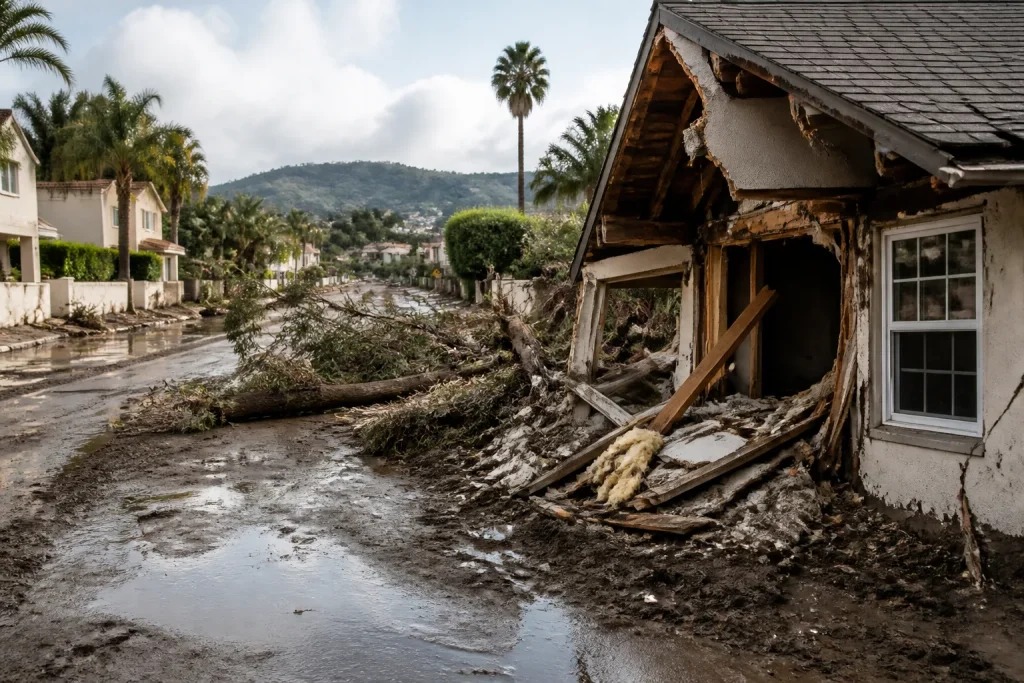
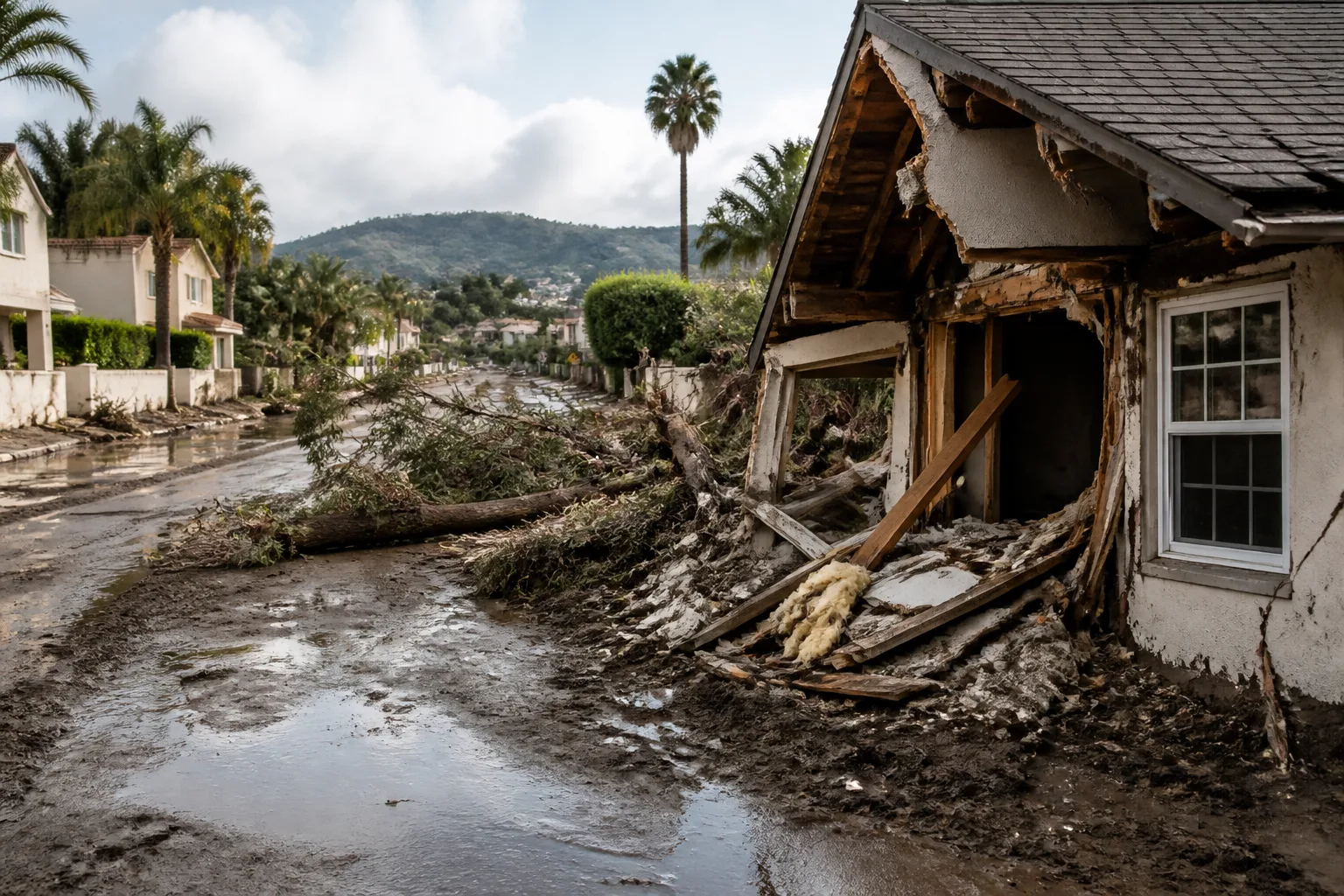
5 Mistakes to Avoid With Storm Damage Restoration
Storm damage restoration mistakes in Los Angeles are almost never about the technical work of pulling out water. They’re about paperwork, timing, and who you let through the front door. The most expensive mistake we see, year after year, is waiting more than 72 hours to file a claim, because many policies carry a “prompt reporting” clause that adjusters use to reduce payouts on damage they can no longer independently date. If you’d rather not sort through this alone, call (910) 613-6568 and a live person will walk you through the first 15 minutes.
We’ve run storm restoration crews across Los Angeles, from the hillside streets of Mount Washington to the flat, aging foundations of Van Nuys. The damage patterns change by neighborhood. The mistakes homeowners make don’t. Here are the five that cost people the most money, in the order they typically happen.
Mistake 1: Waiting to Document the Damage
Every storm damage claim in Los Angeles stands or falls on what you can prove. Not what happened. What you can prove happened. Adjusters are not being unreasonable when they ask for evidence; they’re doing the same job everyone does when writing a five-figure check. The problem is that water moves fast. Gray water stains dry into faint rings. Warped baseboards get photographed next week and look like they’ve always been that way.
Here’s a 15-minute documentation routine that protects your claim before you make a single call. First, shoot a continuous video walkthrough of every affected room, narrating what you see and what the weather was doing at the time. Second, take date-stamped photos of standing water, water lines on walls, and any ceiling staining, with a coin or dollar bill in frame for scale. Third, screenshot the weather report from that day, including the storm’s name or the National Weather Service advisory. Do this before you move anything. Your insurance company will not be able to reconstruct what the room looked like that night, but the adjuster will absolutely use the absence of photos to argue the damage predated the storm. We’ve had claims denied and then reversed because a homeowner had exactly seven photos and a weather screenshot.
If you’re reading this after the storm has already moved through, document what remains anyway. Water stains do not lie. A water damage restoration in Los Angeles crew can help identify hidden moisture behind drywall that even the insurance adjuster will miss without the right equipment.
Mistake 2: Signing an Assignment of Benefits With the First Contractor Who Knocks
Within hours of a major Los Angeles storm, canvassers appear in the hardest-hit neighborhoods, often the same day. They carry clipboards and a lot of urgency. Some are legitimate. Some are not. The piece of paper they push across the picnic table is often an Assignment of Benefits, called an AOB in the industry.
Here’s what an AOB actually does, in plain English: you’re signing over your insurance rights to the contractor. The contractor then bills your insurance company directly, at their own rates, and you lose your ability to negotiate, dispute the bill, or even speak to the adjuster about the scope. If the contractor inflates the invoice and the insurer refuses to pay the full amount, the contractor can come after you for the difference. In the worst cases we’ve seen, the AOB gives the contractor standing to place a lien on the property. You do not have to sign one to get legitimate storm restoration. Marsh never requires an AOB, and we’ll tell you that in writing if you ask. If a contractor pressures you to sign anything at the door before you’ve had time to verify who they are, that’s your cue to slow down.
What should you sign instead? A written scope of work with a fixed or clearly itemized price, which we’ll cover below. If you need storm damage help without the pressure, our Los Angeles storm damage restoration team will put the full scope in writing before anything is touched.
Mistake 3: Treating Tarping and Board-Up as the Full Repair
Emergency mitigation stops the loss from growing. It does not fix anything. This distinction sounds obvious until you’re standing in a living room with a tarp over a hole in the roof and a crew telling you it’s drying out fine. Weeks later the smell arrives. Months later the mold blooms behind the drywall.
In Los Angeles, our wet season is short but intense. A January atmospheric river can dump more rain in three days than the rest of the year combined. Water that enters through the roof doesn’t just sit on the floor; it travels down wall cavities, settles in insulation, and soaks into subflooring. A tarp stops new water from entering. It doesn’t remove the water already inside. That requires extraction, air movement, dehumidification, and moisture readings, which the industry calls psychrometric readings, meaning we measure the moisture in the air and in the material to confirm the structure is genuinely dry, not just dry on the surface. The equipment matters too. We run XPOWER air movers and B-Air dehumidifiers on Los Angeles storm jobs because they move enough air to actually change the environment inside the wall cavity, and we monitor until the numbers say done.
The tell that a homeowner is about to sign off on mitigation-as-repair: they ask for a single “dry out” quote and never see a drying log, moisture map, or completion criteria. If your contractor cannot show you day-by-day moisture readings, the job is not complete. If the tarp is still up six weeks after the storm and no one has opened the wall, that’s not slowing down. That’s stopping. Full restoration means repairing what water touched, not just stopping what water is still falling.
Mistake 4: Accepting a Verbal Estimate
After a major storm event in Los Angeles, contractor demand spikes overnight. Reputable crews are booked within hours. The ones who are still calling you back days later are often not the ones you want in your house. In that environment, verbal estimates become a common way to lock in a job. “It’ll be around six thousand.” Then demo starts. Then the invoice says nine. Then you’re told the original number never included cleanup, or permits, or disposal, or the second-story access that anyone with a ladder could have seen on day one.
We’ve pulled one out of a garage over in North Hollywood where the homeowner had a verbal quote, a handshake, and no paper. When the bill came in 40% over the original number, the contractor wasn’t answering. The homeowner had no scope, no price commitment, and no recourse. That’s a hard place to be, and it’s entirely avoidable.
A legitimate written scope of work includes six things at minimum: the complete list of repairs, the materials and their grades, the equipment and the number of days it runs, the start and completion dates, the total price broken into line items, and the payment schedule tied to milestones. If any of those six are missing, it’s a conversation, not a contract. Every Marsh work order is printed with the full scope and the full price before any work starts. We don’t start demo on a handshake. You shouldn’t let anyone else either. If you’re dealing with mold concerns after a Los Angeles storm, a mold remediation in Los Angeles assessment should be part of the written scope, not a surprise add-on later.
Mistake 5: Skipping Contractor Verification
After big storms, unlicensed operators pour into Los Angeles from out of state. Some are well-meaning and under-equipped. Some are running short cons. All of them are betting you won’t check. Checking takes about two minutes, and it’s the highest-return two minutes in the entire restoration process.
Here’s the two-minute verification: go to the Contractors State License Board website, search by the license number printed on the contractor’s business card or truck, and confirm two things. The license is active, and the name on the license matches the person or company you’re dealing with. That’s it. If there’s no number, no match, or the license shows a different trade classification than the work you need, you’re done. Don’t let them in for an estimate. Don’t let them tarp the roof.
License verification tells you the state has checked the basics. It does not tell you who is showing up at 8 a.m. Tuesday. That’s the part most checklists skip, and it’s the part that matters most to a homeowner deciding whether to open the door. Marsh operates under the Threshold Verified standard, which means every technician is background-checked, identity-verified, and sent to you by name and photo before the visit. When the knock comes, the person on the other side matches the person in the photo, and they show a photo ID badge at the door. Every time. No subcontractor surprises, no “he’s new, I know him.” The person who shows up is the person you were told to expect. If your contractor cannot tell you who is coming before they arrive, that’s not a scheduling issue. That’s a verification gap.
When to Call a Pro
If the storm put water into wall cavities, ceilings, or any enclosed space, you need professional drying equipment and daytime monitoring, not a fan from the garage. If the water sat for more than 48 hours, assume mold is present or forming and get an assessment before you spend money on cosmetic repairs. If your insurance adjuster is dragging or you’ve received a denial you think is wrong, a restoration company familiar with Los Angeles storm claims can help you document and re-present the evidence. We’re serving Los Angeles and have been handling these files. We’ve seen the same five mistakes cost good, careful homeowners tens of thousands of dollars, and all five are preventable if you move in the right order: document, verify, get it in writing, and don’t mistake the tarp for the fix.
Related services in Los Angeles: Marsh Water Damage Restoration home
The Bottom Line
Storm damage restoration mistakes are almost always administrative, not technical. Document everything in the first 15 minutes. Never sign an Assignment of Benefits you haven’t had time to read and understand. Don’t mistake emergency mitigation for actual restoration. Get the scope and price in writing before anyone opens a wall. And verify the license and the actual human being who will show up. Those five habits protect your insurance claim and your home. If you’re in Los Angeles and need help, Marsh Water Damage Restoration offers free estimates with a written scope before work starts. Call (910) 613-6568 and a live person will answer, day or night.
Frequently Asked Questions
Most policies require “prompt reporting,” which adjusters commonly interpret as within 72 hours of the storm event. California law gives you up to one year to file for most homeowners claims, but the longer you wait, the harder it becomes to prove storm damage versus pre-existing conditions. Document with photos and a weather report screenshot immediately, even if you’re not ready to file.
An Assignment of Benefits, or AOB, transfers your insurance claim rights to the contractor, who then bills your insurer directly and controls the negotiation. You lose the ability to dispute scope or cost, and if the insurer refuses to pay the contractor’s bill, you can be held responsible for the difference. You never have to sign an AOB to get legitimate storm restoration work. Marsh does not require one.
If water entered wall cavities, insulation, ceilings, or subflooring, tarping and board-up are only the first step. Hidden moisture leads to mold and structural weakening within weeks. A professional crew uses moisture meters and psychrometric readings to confirm the structure is truly dry, not just dry on the surface. Get that in writing before anyone calls the job done.
A live person answers our phones 24/7, including holidays. Our storm damage crews in Los Angeles can typically assess the property and begin emergency mitigation quickly, with a written scope and price in your hands before any work begins. Call (910) 613-6568 to get an exact timeline for your situation, at no cost.
Written by the team at Marsh Water Damage Restoration.
Need Damage Restoration Help?
Call Marsh Water Damage Restoration - licensed & insured, here with fast after-hours help in Los Angeles.
(910) 613-6568