
Injectidry Water Damage Restoration in Los Angeles: A Homeowner’s Guide
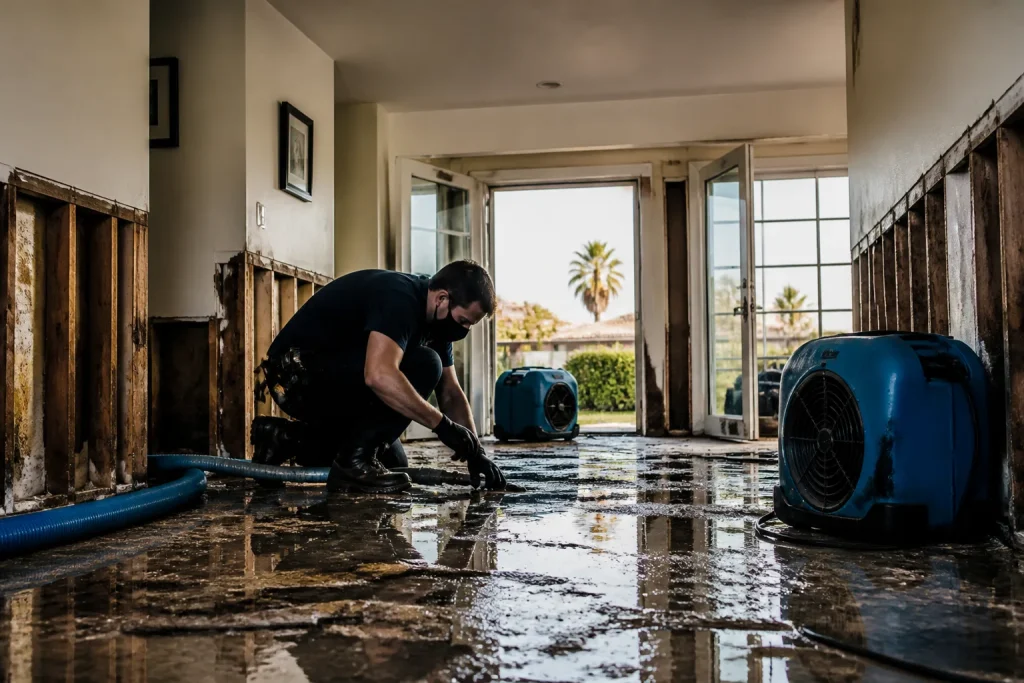
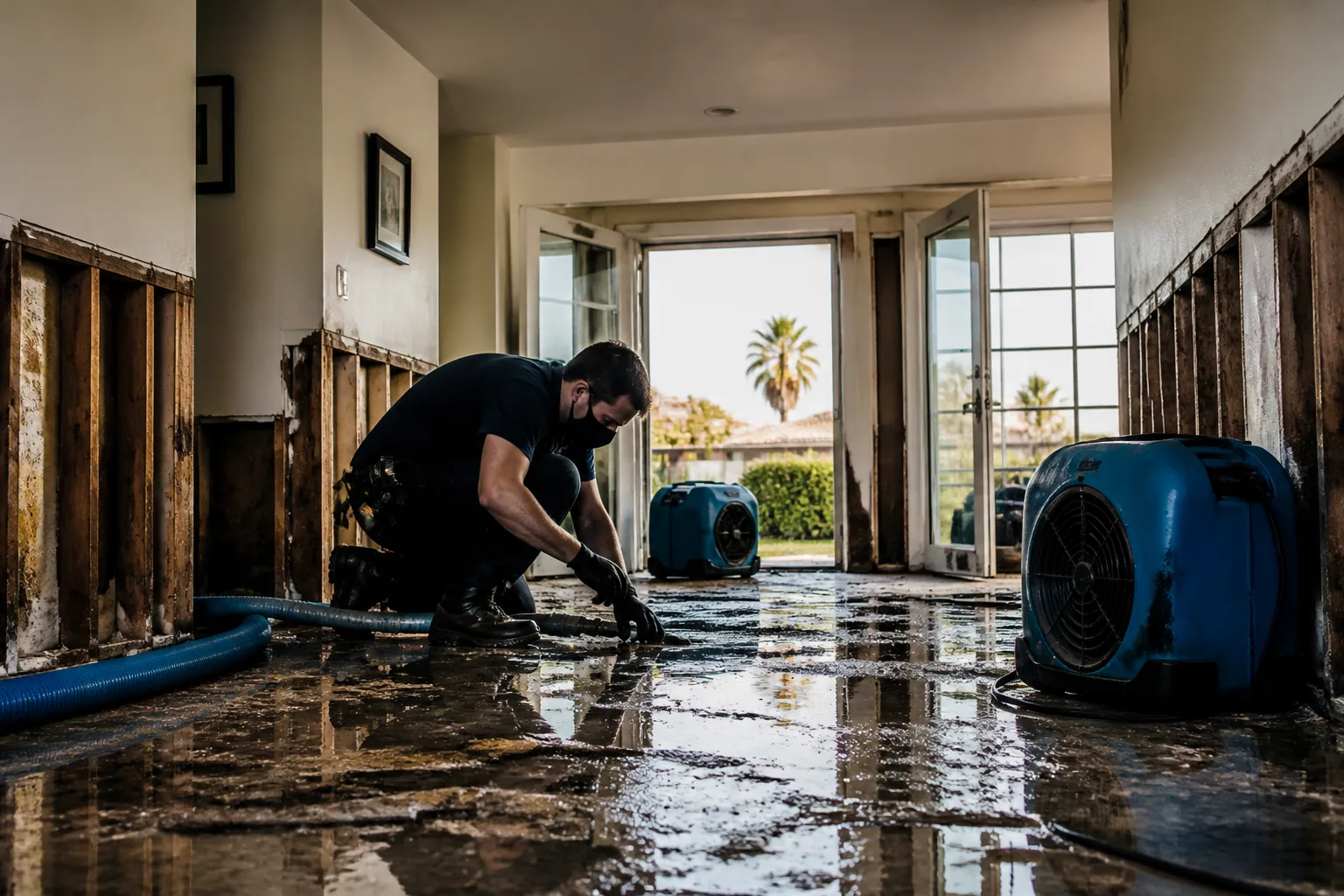
Injectidry water damage restoration in Los Angeles is a drying method that uses hoses, floor mats, and wall panels to force warm, dry air into hidden cavities, so your walls and floors dry without being torn out. Most homeowners have never heard of it until a contractor tells them their drywall has to go. That conversation usually ends with a bigger check than the job actually required.
If you’d rather not manage a drying process yourself, call Marsh Water Damage Restoration at (910) 613-6568. We’ll tell you exactly what we’d do and what it costs before anything starts.
What Injectidry Actually Does (And Why It Beats Demolition)
The idea behind Injectidry is straightforward. Small-diameter hoses connect to a primary drying unit and push warm, filtered air into wall cavities through small holes drilled into the drywall. For floors, the system uses vinyl floor mats with air channels that sit directly on top of hardwood, tile, or vinyl. The mats create a low-pressure zone that pulls moisture up and out from underneath the flooring. The air loop is closed, meaning the moisture-laden air gets captured and processed, not blown around your living room.
In Los Angeles, where many homes built before 1980 have hardwood over plywood subfloors, this matters. Tearing out a hardwood floor because the laminate underneath got wet from a pinhole leak used to be the default. Injectidry panels and mats dry the subfloor in place, and the wood usually recovers without sanding or replacement.
The catch: none of this works if the technician hasn’t found every wet pocket first. Injectidry is not a “set it and forget it” tool. Air only dries what it touches, and touch requires knowing where the moisture is hiding. A thermal camera and a moisture meter do that job. Skip the mapping, and you’re paying for dry air blowing through already-dry cavities while a soggy section of wall festers behind the bathroom vanity.
What a Proper Injectidry Setup Looks Like in a Los Angeles Home
Here is what homeowners should watch for when a crew shows up with Injectidry equipment:
- Moisture mapping first. Before any hole is drilled or mat is laid, the technician should walk the affected area with a moisture meter and a thermal imaging camera. They should mark readings on a diagram or floor plan, and they should be able to show you where each injection point will go and why. If they start drilling ports without mapping first, that’s a red flag. Injection points placed by guesswork waste time and leave moisture behind.
- Port holes spaced correctly. For wall cavities in stud-bay construction (the norm in most Los Angeles single-family homes), ports are typically drilled every 16 to 24 inches along the affected wall section. The holes are small, usually under a half-inch, and they’re placed between studs, not into them. A technician who knows the framing layout can tell you where each stud sits before drilling.
- Floor mats sealed with adhesive or edge tape. Injectidry floor mats work because they form a seal against the floor surface. If the mat is just sitting there with gaps at the edges, the vacuum effect diminishes. Technicians should press the mat down and confirm the seal before walking away.
- Daily readings, documented. A proper Injectidry drying log shows moisture content readings at each injection point on day one, day two, and every day after until the wood or drywall reaches a target moisture content. For wood in Los Angeles’s climate, that target is usually around 8 to 12 percent, depending on the material and the building’s baseline. The log should be signed, dated, and included in your job file. We include this with every Marsh Water Damage Restoration job, not as a favor but as part of the work order.
One more thing specific to Los Angeles: stucco. Many homes in West Adams, Leimert Park, and the Fairfax district have stucco exteriors. Injectidry panels can still work on those walls, but the port-drilling approach differs from standard interior drywall. The technician has to drill through the stucco carefully, and the panel placement needs to account for the exterior moisture barrier. We’ve seen crews drill ports straight through stucco without sealing the exterior side afterward, which creates a new entry point for rain later. If you have a stucco home, ask the crew how they handle exterior sealing before they start.
How Much Does Injectidry Drying Cost in Los Angeles?
Here is a straight answer, because most restoration companies won’t give you one until they’ve already been inside your house. In the Los Angeles market, Injectidry drying for a typical single-room water loss runs between $1,200 and $2,800 for a three to five day drying period. That includes the equipment setup, daily monitoring, moisture readings, and equipment breakdown. More complex jobs, like a whole-floor dry-out involving multiple rooms and floor mat coverage, typically land between $3,000 and $6,500.
Compare that to demolition. Tearing out and replacing drywall in a single wall section can cost $800 to $1,800 in labor and materials. Add in painting and texture matching, and your total demolition bill often exceeds the cost of the drying equipment rental. For a 1,400-square-foot Los Angeles home, avoiding drywall demolition across a flood-damaged room typically saves $3,000 to $6,000 in labor and material costs. You also avoid living with plastic sheeting, dust, and a construction crew for another three weeks while the replacement drywall gets installed, taped, textured, and painted.
Flooring is where the savings get bigger. Hardwood floor replacement in Los Angeles runs $12 to $25 per square foot for materials and installation. Injectidry floor mats can often save that entire expense if the water sat for less than 72 hours and the wood hasn’t cupped severely. The drying won’t reverse cupping that has already occurred, but it prevents the subfloor from rotting and the boards from warping further.
Here is a cost line item table for clarity:
| Service | Typical Los Angeles Cost Range |
|---|---|
| Injectidry drying, single room (3-5 days) | $1,200 – $2,800 |
| Injectidry drying, multiple rooms / floor mats | $3,000 – $6,500 |
| Drywall demolition and replacement (per affected wall) | $800 – $1,800 |
| Hardwood floor replacement (per square foot) | $12 – $25 |
| Typical total savings when demolition is avoided | $3,000 – $6,000+ |
These figures are ranges from jobs we’ve priced and completed in Los Angeles. Your final number depends on the size of the affected area, how long the water sat, and whether dry rot or mold is already present. What should not vary is whether you see a written price before work starts. If a company won’t put the number in writing, find someone who will.
Injectidry vs. Traditional Fans and Dehumidifiers: What’s the Difference?
Construction fans and dehumidifiers dry the air and the exposed surfaces. They do good work on what they can reach. What they can’t reach is the inside of a wall cavity or the space between a hardwood floor and its subfloor.
Injectidry is designed for exactly those hidden spaces. It pushes dry air into cavities and under floors, which is where water hides after it runs down a wall or seeps through the floor covering. In our experience with Los Angeles homes, the most persistent moisture problems after a water loss are hidden: behind baseboards, inside wall voids where a supply line burst, under tile that sits on a mud bed with no drainage plane. Fans don’t help any of those situations. Injectidry does, if it’s set up correctly.
The two approaches also work well together. A standard setup for a bathroom overflow in a Los Angeles condo might include one Injectidry wall panel for the shared wall, a floor mat over the wet laminate area, and a Dri-Eaz dehumidifier in the room to handle ambient moisture. The key is that the technician understands psychrometric readings, which measure the amount of moisture in the air, so they know when the structure is genuinely dry rather than just dry on the surface. We’ve seen jobs where a crew pulls equipment three days early because the drywall feels dry to the touch, but the cavity behind it is still at 30 percent moisture content. That’s how you get mold six months later.
When Injectidry Isn’t the Right Answer
Injectidry has limits, and an honest restoration company will tell you when it’s not the right tool. Here are the situations where demolition really is necessary:
- Water sat for more than 72 hours. By that point, drywall and particle board subflooring are often too saturated to dry structurally. Mold can already be forming. The material’s integrity is compromised even if it dries out.
- Blackwater contamination. Sewage backups and toilet overflows with waste mean the affected materials are contaminated, no matter how well they dry. Drywall and carpet that absorbed sewage water need to be removed and disposed of, not dried in place. Drying contaminated material doesn’t make it safe.
- Visible mold growth inside the wall cavity. If a moisture meter reading confirms elevated moisture and there is visible mold on the drywall surface, sealing the mold inside the wall and drying around it is not a fix. The mold needs remediation, which may mean removing the affected drywall section. Our Mold Remediation in Los Angeles service handles that scenario with proper containment and air scrubbing.
- Structural wood that has begun to rot. Dry rot is a fungal condition, not just a moisture problem. Once wood fibers have been consumed by rot, drying stops the progression but doesn’t restore the wood’s strength. Rotted framing needs to be replaced.
Injectidry is a drying tool, not a mold removal tool. If mold is already present, the right move is mold remediation first, then drying. The equipment we use for that work comes from Dri-Eaz, Phoenix, XPOWER, B-Air, and Injectidry, and the technicians running it hold credentials through IICRC, RIA, and IFA, the industry’s recognized training bodies. Those credentials mean the person on site has passed exams on drying science and remediation standards, not just watched a training video.
How to Choose a Restoration Company That Actually Knows Injectidry
Owning Injectidry panels and using them correctly are two different things. Plenty of restoration companies in Los Angeles list “Injectidry drying” on their website without ever having run a complete drying job. Here’s what separates the trained crews from the equipment renters:
They map before they drill. Ask the technician to show you their moisture map. If they can’t produce one, they haven’t done one. Injectidry without moisture mapping is like a surgeon operating without an X-ray.
They explain the drying log. A proper drying log tracks moisture content at each injection point, every day, until the material reaches an acceptable equilibrium moisture content. Ask how often they’ll send you updated readings. If the answer is “we’ll let you know when it’s dry,” that’s not a documented process. That’s a guess.
They’re transparent about personnel. This is where we have a strong opinion. You’re letting strangers into your home, often when you’re alone or with young children. Every Marsh Water Damage Restoration technician is background-checked, identity-verified, uniformed, and photo-badged. Before we show up, you get the tech’s name and photo. At the door, they show a photo ID badge. It’s a five-step process we call the Threshold Verified standard, and it applies to every visit, not just the first one. Tobias Reyner, who leads our team, set that standard because a restoration company should remove uncertainty from your home, not add to it.
They put the price in writing before work starts. A written price is the only price we give. Not an estimate that “might adjust after we open the wall.” Not a range that expands after demolition begins. The scope, the equipment, the number of drying days, the total, in writing, before anything starts. The same goes for our Water Damage Restoration in Los Angeles service. If a repair doesn’t hold up within a full year, we come back and make it right. That’s the 365-Day Done Right Promise, and it’s printed on every work order, not buried in fine print.
Related service in Los Angeles: if your water damage came from a storm event, our Storm Damage Restoration in Los Angeles team handles roof leaks, window intrusion, and drainage failures with the same Injectidry drying approach where applicable.
We pulled a drying job in Silver Lake last month, two-story stucco house, supply line to the upstairs bathroom sink failed while the owner was at work. Water ran through the first-floor ceiling cavity and into the kitchen below. The homeowner’s first call was to a handyman who quoted $11,000 for drywall replacement across three rooms. The homeowner called us for a second opinion. We mapped the moisture, drilled ports in the ceiling and one interior wall, and ran Injectidry panels for four days. Final price: $2,300. The drywall stayed. The owner went on vacation with the money they didn’t spend on demolition.
If you’re in Los Angeles and water damage has you considering drywall demo, call (910) 613-6568 before you sign anything. We’ll tell you if Injectidry drying can save you from the demo, and we’ll tell you straight if it can’t. Free estimates, written pricing, and a live person answers the phone even at 3 a.m.
The Bottom Line
Injectidry water damage restoration in Los Angeles is the reason a homeowner can dry a flooded wall or floor without tearing it out. But the technology is only as good as the technician reading the moisture maps and placing the injection points correctly. Demand to see the moisture map, the port spacing plan, and the daily drying log. If the crew can’t produce all three, they don’t have a process; they have some hoses and a good story.
For Los Angeles homeowners, the math is simple: drying in place costs less than demolition, takes days instead of weeks, and lets you keep your original floors and walls. If you’re not sure whether your water damage is a candidate for Injectidry, Marsh Water Damage Restoration offers free estimates and straight answers. Call (910) 613-6568. We’ve been doing this in Los Angeles since 2005, and our company name Marsh Water Damage Restoration home says it plainly: water where it shouldn’t be is what we deal with every day.
Frequently Asked Questions
Most residential Injectidry drying jobs in Los Angeles take three to five days. The timeline depends on how long the water sat, the materials involved, and the ambient humidity. Wood and drywall in coastal neighborhoods like Venice or Playa del Rey can take longer because the outdoor air is more humid. Your technician should provide daily moisture readings so you can see the numbers dropping toward the target range.
Yes, most homeowner insurance policies cover Injectidry drying because it’s the less expensive option. Insurance companies prefer drying over demolition whenever possible because it reduces the claim cost. We provide photo documentation and daily drying logs directly to your adjuster, and we walk you through what your policy covers. If you have questions about your specific plan, call (910) 613-6568 and we’ll help you understand your coverage before you commit to anything.
In many cases, yes, if the drying starts within 72 hours of the water event and the wood hasn’t cupped severely. Injectidry floor mats pull moisture from the subfloor through the wood, which allows the wood to dry from both sides. Once cupping has occurred, drying won’t reverse it, but it will prevent further warping and rot. The sooner the mats go down, the better the odds of saving the floor.
Yes, but the technique differs. Stucco walls require careful port drilling and exterior sealing to prevent new moisture intrusion. Not every restoration company in Los Angeles has done this correctly. If you have a stucco home, ask the technician specifically how they handle exterior port sealing before they drill. If they can’t answer clearly, find a company that can.
Written by Tobias Reyner, Owner at Marsh Water Damage Restoration, serving Los Angeles since 2005.
Need Damage Restoration Help?
Call Marsh Water Damage Restoration - licensed & insured, here with fast after-hours help in Los Angeles.
(910) 613-6568