
Preparing Your Home’s Damage Restoration for Winter in Los Angeles
Preparing your Los Angeles home for winter water damage means doing three things before the first big storm: clearing and testing your drainage paths, inspecting the roof and flashing, and documenting a pre-loss moisture baseline in your attic, walls, and subfloor. Most LA winter damage calls we take trace back to one of those three systems letting go. If you’d rather not spend a Saturday on a ladder, call us at (910) 613-6568 and we’ll walk the property with a thermal camera and a moisture meter, then hand you a written list of what needs attention now and what can wait.
Key Takeaways
- Los Angeles gets roughly 60% of its annual rainfall between December and February, concentrated into a handful of intense storms.
- Flat and low-slope roofs, gutter downspouts, and original window caulking are the three highest-failure points in LA housing stock.
- A pre-winter moisture baseline inspection strengthens any future insurance claim because it documents that your home was dry before the storm.
- Hillside homes in the Hollywood Hills, Silverlake, and Malibu need a waterproof membrane and retaining wall check that flat-lot homes don’t.
- Homes in low-lying parts of the San Fernando Valley or near the LA River channel should have a sump pump tested before November.
Why Winter Water Damage in Los Angeles Catches Homeowners Off Guard
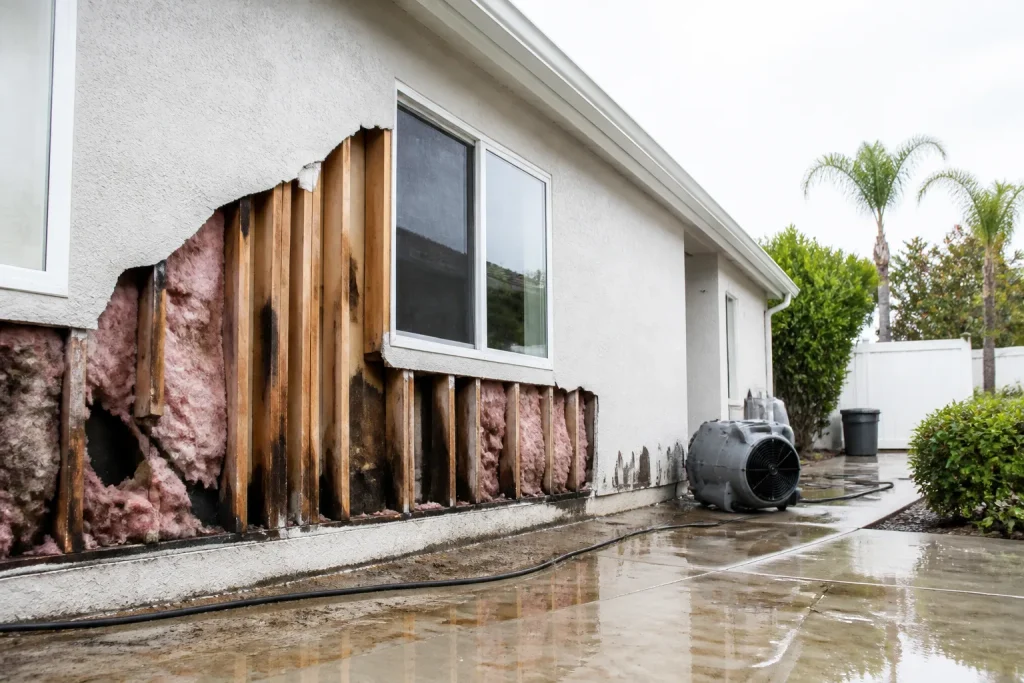
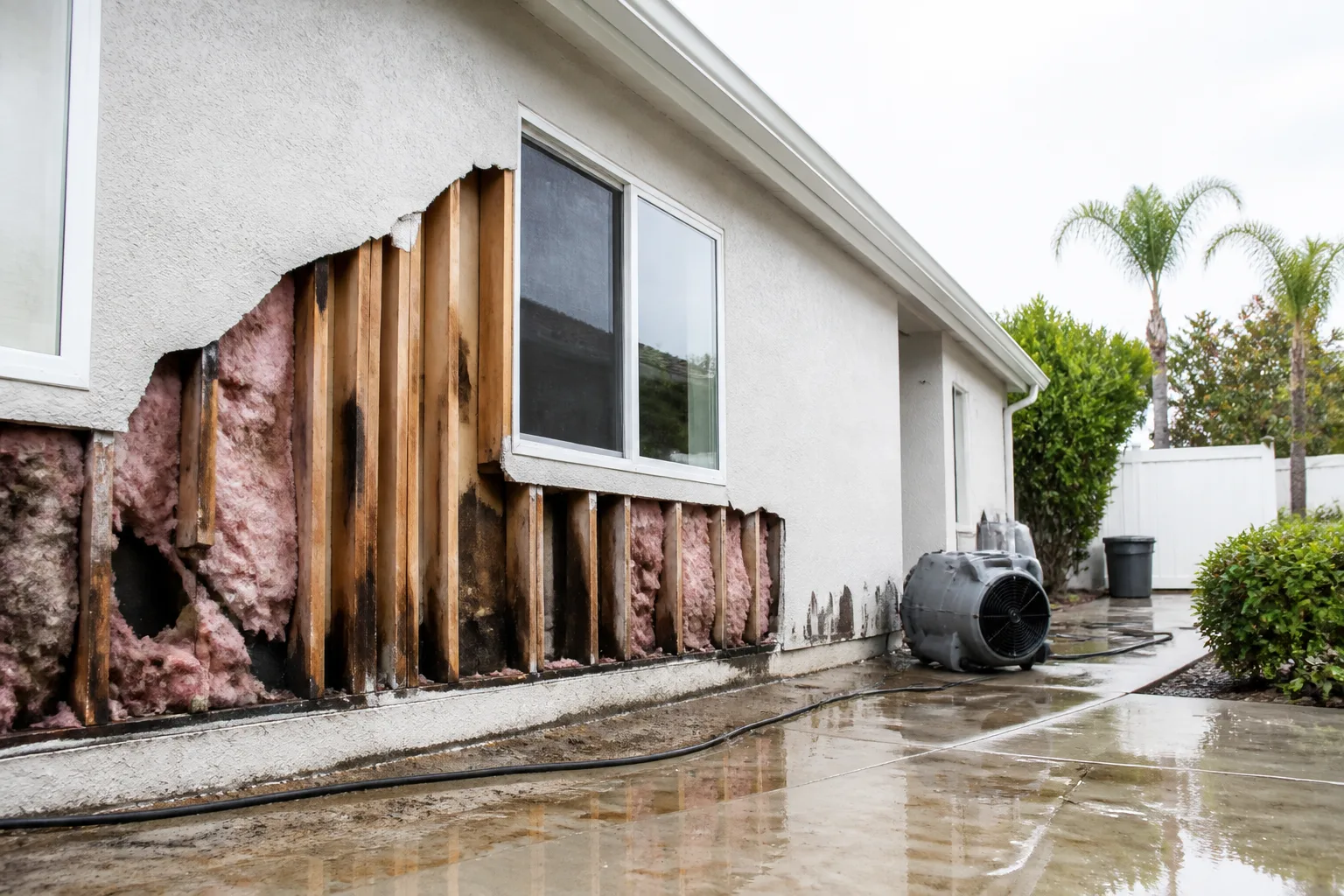
Los Angeles averages about 15 inches of rain a year, and most of it lands in a 90-day window. Your roof, gutters, and window flashing spend nine months dry and untested, then take most of a year’s rainfall in three months. That’s not a gradual wear pattern. It’s a stress test, and the components that were quietly failing all summer don’t reveal themselves until water is already inside the wall cavity. We’ve pulled soggy insulation out of attics in Silverlake in January where the leak had been slowly working since the previous March. The homeowner had no idea because it never rained hard enough to push water past the failed flashing until a December downpour did it in one night.
This is the specific vulnerability that makes pre-season inspection higher-ROI in Los Angeles than almost anywhere else. In Seattle or Portland, a small roof leak shows itself quickly because it rains every week. In LA, the same leak hides for months, growing mold in the dark, and announces itself as a ceiling stain and a musty smell the same week your holiday guests arrive. The Marsh Water Damage Restoration home approach starts with accepting that Los Angeles has a unique failure pattern, and the most cost-effective response is to inspect before the rain, not after the damage.
The Three Structural Failure Points That Generate the Most Restoration Calls in LA
We’ve been answering the phone through Los Angeles winters, and the same three problems produce the bulk of our December through February emergency calls. Knowing what they are and checking them now is the cheapest insurance you’ll buy this year.
1. Flat and Low-Slope Roofs on Mid-Century Homes
Los Angeles has a huge inventory of mid-century homes with flat or nearly flat roofs, the architectural style that defined the city’s post-war expansion. A flat roof relies entirely on its membrane and seam sealing to keep water out. There’s no slope to shed water quickly, so after a heavy storm, water pools in low spots and sits there for hours or days. Every pinhole, every dried-out seam, every cracked patch becomes an entry point. Our Storm Damage Restoration in Los Angeles work during winter months is dominated by these roofs failing at the seams, not by dramatic structural collapses. One homeowner in Rancho Park told us last winter that his roof had been “fine for years” right up until an atmospheric river parked over the city for three days. His roof had been slowly failing for years. The rain was just the first event heavy enough to prove it.
What to check: visible cracks in the roof coating, standing water that doesn’t drain within 48 hours, and any bubbling or lifting of the membrane. If you see any of these, a roofer or restoration company can document them before they become leaks. The fix now is a patch. The fix after a storm is extraction, drying, and often mold remediation.
2. Corroded or Disconnected Gutter Downspouts
Gutters in Los Angeles don’t have an easy life. They bake in the sun for most of the year, collect a season of dust and jacaranda debris, and then get asked to channel thousands of gallons in a single storm. The most common failure we see isn’t a clogged gutter. It’s a downspout that has corroded at the connection point or pulled away from the house entirely, sending roof water straight down the foundation wall instead of away from it. We’ve walked up to homes in Studio City where the downspout is dangling six inches from the soil line, and the homeowner has walked past it for months without noticing. Water pooling at the base of a foundation in Los Angeles is a slow-grinding problem: slab foundations and pier-and-beam foundations both absorb that moisture, and over a wet winter it finds the path of least resistance inside.
What to check: walk the perimeter during the next rain, not after it. Look for water pouring off any spot where a downspout should be. Check for rust at the elbow joints. Make sure the bottom of every downspout extends at least three feet from the foundation, and that the splash block or extension pipe is actually directing water downhill, not toward the house.
3. Failed Caulking Around Original Single-Pane Windows in Craftsman and Spanish-Revival Homes
Los Angeles has an astonishing inventory of original Craftsman bungalows and Spanish-revival homes with single-pane wood-framed windows that have been in place since the 1920s and 1930s. The glass is fine. The caulking around the frame is not. Caulk dries out, cracks, and separates from the frame after decades of LA sun. When a winter storm drives rain against the side of the house, water seeps through those gaps, runs down inside the wall, and collects at the sill plate. We’ve opened walls in Pasadena and Highland Park where the exterior caulk looked intact from the street, but a moisture meter showed the sill plate was saturated. The homeowner’s first sign was peeling paint and a window that suddenly wouldn’t open easily in January.
What to check: run a butter knife gently along the caulk bead around every exterior window. If it crumbles or pulls away, it needs replacement. The job is a tube of exterior-grade caulk and an hour of work per window. The alternative, after a hard rain, is cutting out wet drywall, drying the cavity with commercial-grade air movers, and treating the framing for mold. That’s a very different invoice.
What a Pre-Winter Moisture Baseline Inspection Is (and Why It Strengthens Your Insurance Claim)
A moisture baseline inspection is exactly what it sounds like: before the rainy season, a professional walks your home with a thermal camera and a moisture meter and documents the current dry condition of your attic, your walls, and your subfloor. Thermal cameras show temperature differences that indicate hidden moisture. A moisture meter gives us exact readings in the wood and drywall. The result is a dated record that says, “on October 10th, this wall assembly measured 8% moisture content, which is normal and dry.”
Here’s why that matters in Los Angeles. If a January storm soaks a wall and you file an insurance claim, the adjuster’s first question is often whether the damage pre-existed the storm. If you have a baseline document showing the wall was dry in October, that question gets answered with a piece of paper instead of an argument. We recommend this inspection to every Los Angeles homeowner at the end of summer, and especially to anyone who had prior water damage. It takes less than an hour and costs far less than a denied claim. Our technicians use the same Phoenix and Dri-Eaz thermal and moisture equipment on baseline inspections that we use on commercial losses, so the documentation is consistent and thorough.
The LA Hillside Variable: Why Slope Homes Need a Different Checklist
Los Angeles isn’t one climate. The difference between a flat lot in Culver City and a hillside lot in the Hollywood Hills is the difference between rainwater that drains away from your house and rainwater that drains toward it. Homes built on slopes face lateral water intrusion through retaining walls and foundations, the pressure of saturated soil pushing against a below-grade wall, and runoff from properties uphill of you that you don’t control. Flat-lot homeowners don’t deal with any of this.
If your home is on a slope in Silverlake, Malibu, or the Hollywood Hills, your pre-winter checklist has one extra line item: a waterproof membrane inspection. The membrane is the barrier on the outside of your below-grade walls and retaining walls that keeps saturated soil from forcing water through the concrete. These membranes degrade over time, and they’re not visible once backfilled. What you can check: cracks in retaining walls, soil erosion near the foundation, and any signs that water has been running toward the house instead of around it during past storms. If you see staining on the inside of a below-grade wall, that’s a sign the membrane has already been compromised. That’s a call to a restoration professional before the next storm, not after.
Our Water Damage Restoration in Los Angeles service includes slope-specific assessments for hillside properties, because the failure mode is genuinely different than on flat ground. The fix is different too. A flat-lot home with water in the crawlspace needs extraction and drying. A hillside home with water coming through a retaining wall often needs excavation, membrane repair, or drainage redirection on top of the drying work.
Sump Pumps in the San Fernando Valley and Near the LA River: What They Are and Why You Should Test One Now
A sump pump is a small electric pump that sits in a pit at the lowest point of your home’s foundation or crawlspace. Its entire job is to pump groundwater out and away from the house before it rises enough to saturate your subfloor or infiltrate your foundation. If you live in a low-lying part of the San Fernando Valley or near the LA River channel, your water table can rise significantly during a heavy storm. Saturated soil pushes water toward any below-grade space, and without a working sump pump, that water has nowhere to go but in.
Testing a sump pump is straightforward: pour a five-gallon bucket of water into the pit and confirm the pump kicks on, moves the water out, and shuts off properly. Then check the discharge line to make sure it’s carrying water away from the foundation, not back toward it. We recommend doing this before November, because the moment you discover the pump has failed should not be at 2 AM during an atmospheric river. Homes near the LA River channel in neighborhoods like Studio City and Sherman Oaks historically see groundwater intrusion during sustained heavy rain, and a working sump pump is the difference between a little water in the crawlspace and a full Mold Remediation in Los Angeles project by spring.
If you don’t have a sump pump and you’re in a low-lying area, it’s worth asking a restoration professional to check your crawlspace moisture levels during the dry season. A damp crawlspace all winter is a mold factory by March, and the fix gets more expensive the longer it waits.
When to Call a Pro
You can check gutters, caulking, and downspouts on your own. But there are times when calling a professional before the season is the smarter play. If you own a flat-roof mid-century home and can’t safely access the roof to inspect seams, call someone who can. If you’re on a hillside and can’t see your retaining walls or foundation membrane, that’s a professional inspection. If you had water damage in the past and want a documented baseline before this winter’s storms, that’s a standard service, not an emergency call. And if you’re not comfortable on a ladder, don’t be a hero. We answer every call with a live person at (910) 613-6568, 24 hours a day.
Related services in Los Angeles: if you need winter-specific remediation work, start with our Storm Damage Restoration in Los Angeles page. For homes with existing moisture issues, our Water Damage Restoration in Los Angeles team handles extraction and drying. And if moisture has already become a mold problem, our Mold Remediation in Los Angeles service documents the extent and treats it properly.
The Bottom Line
Winter in Los Angeles is short, intense, and entirely predictable in the damage it causes. Flat roofs fail at the seams. Downspouts disconnect and send water toward foundations. Old caulking lets water into walls. The homeowners who get through winter without a restoration bill are the ones who spent a few hours in October checking these three things, and who documented their dry baseline before the first storm. If you had prior Marsh restoration work done within the last year, that baseline documentation may already exist. Our Done Right Promise means that if any area we previously restored shows renewed moisture within a full year, we address it at no charge. That’s not a promotional phrase. It’s printed on every work order we issue.
If you’re in Los Angeles and want a professional pre-winter inspection, or you’ve already got water coming in, call (910) 613-6568. A live person answers. You’ll get a written price before any work starts, and you’ll know exactly who’s coming to your door before they knock.
Frequently Asked Questions
October is the best month in Los Angeles. The first significant storm usually arrives in November or December, and October gives you enough time to schedule inspections, repair caulking, clear gutters, and document a moisture baseline before the rain actually hits. March through September is when the damage is quietly accumulating; October is when you catch it before it becomes an emergency.
Most standard homeowners policies cover sudden and accidental water damage from storms, including roof leaks and wind-driven rain, but they typically exclude damage from long-term neglect or gradual wear. That’s why a pre-winter moisture baseline inspection matters. It shows the damage was not pre-existing. We coordinate directly with adjusters and provide photo documentation and moisture readings from Dri-Eaz and Phoenix equipment, which are recognized standards in the restoration industry. Call (910) 613-6568 if you need help navigating a winter-related claim.
We answer every call with a live person, 24/7, including holidays, and we dispatch emergency response teams across Los Angeles during storm events. A technician arrives ready to extract standing water, set drying equipment, and tarp any exterior breaches to stop further damage. The goal is to stop the water before it spreads into wall cavities and subflooring. Call (910) 613-6568 and you’ll speak to a person, not a voicemail.
If you live in a low-lying part of the San Fernando Valley or within a few blocks of the LA River channel, a sump pump is strongly recommended even though Los Angeles is dry most of the year. When heavy rain saturates the soil, groundwater can rise into crawlspaces and foundations. A sump pump moves that water out before it damages your home. If you have one, test it before November. If you don’t and you’re in a low-lying area, ask a restoration professional to assess your crawlspace moisture risk before the winter rains arrive.
Written by the team at Marsh Water Damage Restoration.
Need Damage Restoration Help?
Call Marsh Water Damage Restoration - licensed & insured, here with fast after-hours help in Los Angeles.
(910) 613-6568