
XPOWER Water Damage Restoration in Los Angeles: A Homeowner’s Guide
XPOWER air movers and dehumidifiers are rental-counter staples that any contractor can wheel into your living room for about $40 a day. What separates a real drying job from a fan pointed at wet drywall is the moisture data behind it. Here’s the number that tells the difference: grains per pound (GPR), and we’ll show you exactly what a healthy drying curve looks like on Day 1, Day 3, and Day 5 in Los Angeles.
If you’re staring at wet floors right now and want someone who reads those numbers before the machines ever turn on, call Marsh Water Damage Restoration at (910) 613-6568. Free estimates, live answer, no obligation.
What XPOWER Equipment Actually Does (and What It Doesn’t)
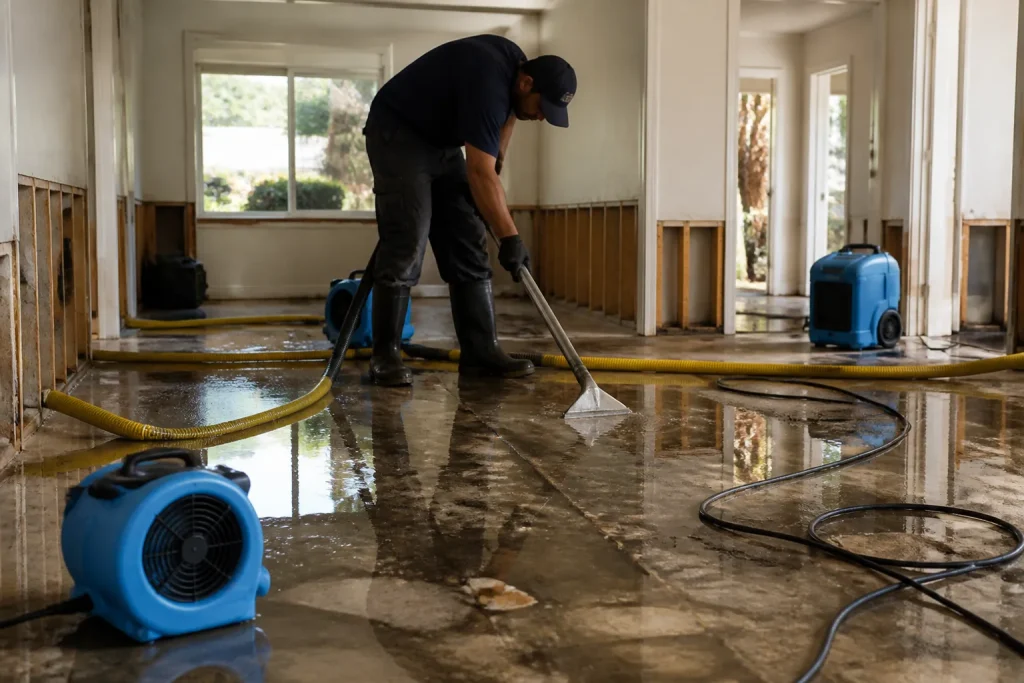
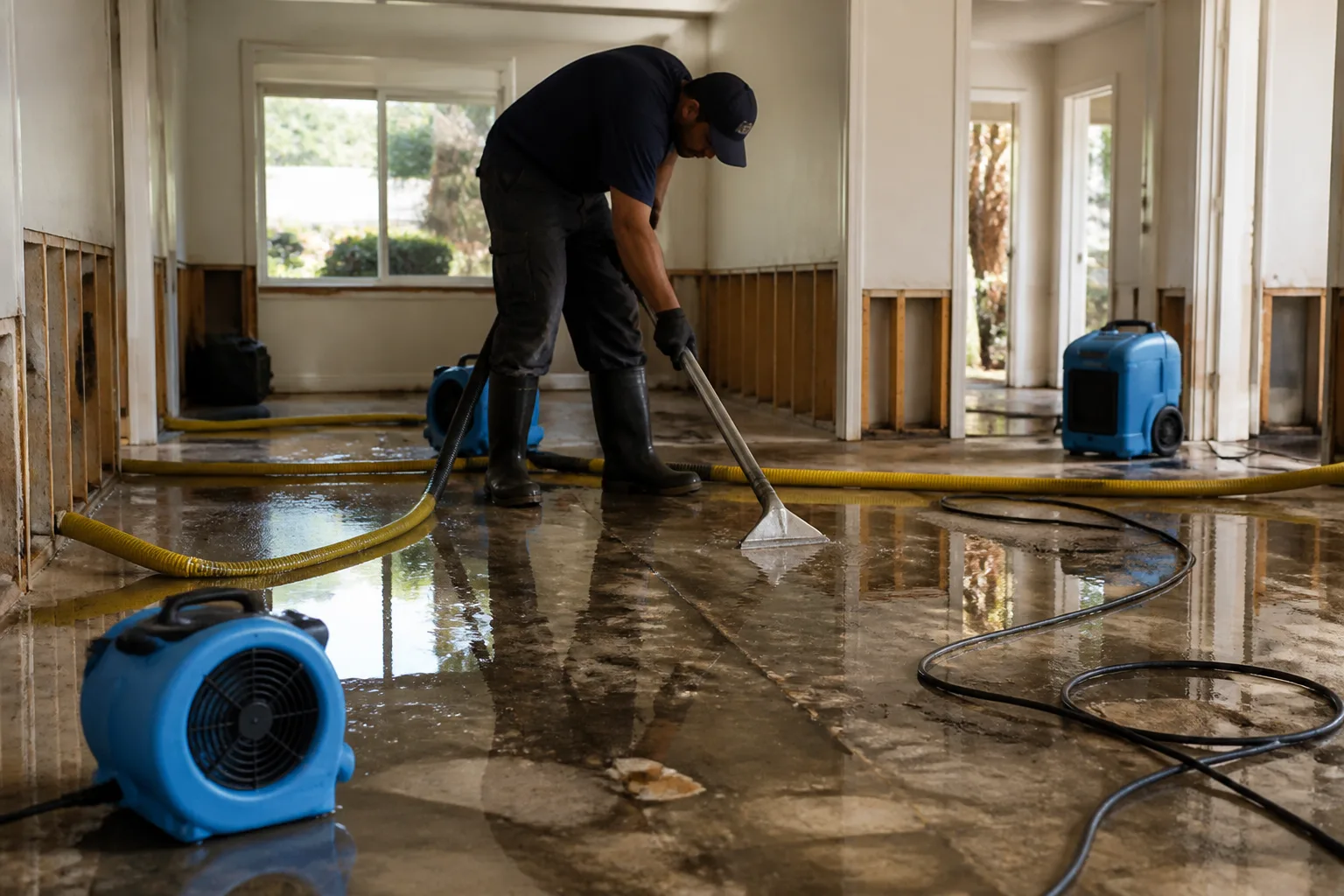
XPOWER makes professional-grade air movers, dehumidifiers, and air scrubbers. The brand is common on restoration trucks from coast to coast, and for good reason: the machines are durable, move serious air, and pull genuine moisture when sized correctly.
Here’s the plain-English version of what each piece does:
- Air movers blow high-velocity air across wet surfaces. That airflow accelerates evaporation, pushing water from your drywall, subfloor, or carpet pad into the air. Think of it like wind drying a towel on a clothesline faster than a still, humid bathroom.
- Dehumidifiers pull that now-moist air in, strip the water out, and exhaust dry air back into the room. Without this step, you’re just circulating humidity in circles. The air mover puts water in the air, and the dehumidifier takes it back out. Both are required, and the ratio matters.
The ratio part is where Los Angeles jobs go sideways. A dehumidifier rated for 40 pints per day cannot keep up with three air movers running in a 500-square-foot living room, especially in a coastal neighborhood like Venice or Playa del Rey where the outside air already carries marine-layer moisture. You need the machine’s capacity matched to the cubic footage of the affected space, not a guess at the rental counter.
We run XPOWER alongside Dri-Eaz and Phoenix equipment, which matters less than the fact that our technicians calculate the load before plugging anything in. The brand is not the fix. The math is.
The One Number That Exposes Fake Drying: Grains Per Pound
Everyone asks about moisture meters and pin readings in the drywall. Those matter. But the number on your drying log that tells you whether the XPOWER machines are actually working is grains per pound (GPR), also called humidity ratio. It measures the actual amount of water vapor suspended in the air, expressed in grains of moisture per pound of dry air. One pound of air holds 7,000 grains when fully saturated, but your target is nowhere near that.
Here’s what a legitimate drying curve looks like in a typical Los Angeles home:
- Day 1: 70 – 90 GPR. The affected room’s air is carrying heavy moisture from the saturated materials. Anything over 100 GPR means you’ve got a lot of standing water still evaporating, and the dehumidifier is already behind.
- Day 3: 50 – 65 GPR. The equipment should be winning. If the GPR has barely moved in three days, the dehumidifier is undersized for the space, the air movers are pointed at the wrong surfaces, or someone never set up proper containment.
- Day 5: 40 – 55 GPR, depending on your microclimate. The goal is typically to reach equilibrium with the unaffected areas of your home, not some arbitrary “dry” number. A good tech compares the affected room’s GPR to a control reading from a room that never got wet.
Los Angeles climate makes this trickier than it sounds. Inland neighborhoods like Sherman Oaks or Woodland Hills run dry during Santa Ana stretches, so ambient GPR might sit around 40. But in Santa Monica or the Marina, marine-layer humidity can keep the ambient baseline at 60+ GPR even on a sunny day. Drying to a target of 40 in a coastal home with a baseline of 62 is unnecessary and will just prolong the job and your equipment rental. The right target depends on where in Los Angeles you live.
If your contractor cannot show you a daily log with GPR numbers, they are not monitoring anything. They are renting machines and hoping.
Why the Rental-Equipment Loophole Is a Real Problem in LA
Here’s something most homeowners don’t realize: XPOWER, Dri-Eaz, Phoenix, and B-Air all sell or rent equipment to anyone with a contractor’s license, and sometimes to anyone with a credit card. That means a handyman, an unlicensed “water guy” off Craigslist, or a general contractor with no restoration training can show up at your Los Angeles home with professional-branded machines and no idea how to use them.
What they typically skip:
- Moisture mapping: using thermal imaging and penetrating meters to find the full footprint of the water before equipment is placed. If the tech doesn’t map first, they’re guessing which walls and floors are wet.
- Psychrometric readings: the GPR, temperature, and relative humidity data we covered above. Without this, there is no way to know if the drying is progressing.
- Containment and air scrubbers: on any job involving contaminated water or potential mold, the affected area should be sealed off with plastic sheeting and negative air pressure so moisture and spores don’t float into the rest of your home.
- A written drying plan: a document showing the expected duration, number of air movers and dehumidifiers, placement locations, and daily reading targets. Most rentals skip this entirely.
We pulled a drying job in a Mid-City bungalow two years back where the previous crew ran three XPOWER air movers for eleven days and never once took a humidity reading. The baseboards felt dry, so they picked up the machines and left. Six weeks later, mold bloomed behind the kitchen cabinets because the wall cavity was still at 95% relative humidity. The equipment was fine. The monitoring was nonexistent.
At Marsh Water Damage Restoration, every drying job starts with moisture mapping and ends with a written drying completion report. No exceptions. That report is not optional paperwork; it’s the only proof that the water is actually gone.
What a Written Drying Completion Report Should Contain
When your drying job wraps, you should get a document that shows the work was finished, not just the invoice. In Los Angeles, where older home framing is common and hidden water loves lath-and-plaster walls, this report is your insurance policy against the six-week mold surprise.
A legitimate drying completion report includes:
- Initial moisture readings: wall cavities, subfloor, baseboards, and ceiling areas, taken with penetrating and non-penetrating meters at the start of the job.
- Daily psychrometric log: GPR, temperature, and relative humidity readings from the affected space and at least one unaffected control room, recorded every day the equipment ran.
- Equipment list and placement map: how many XPOWER air movers and dehumidifiers were used, where they were placed, and when they were moved or adjusted.
- Final moisture content readings: wood and drywall moisture levels that match or fall within the normal range for the unaffected areas of your home.
- Drying goal confirmation: a written statement that the structure has reached the target moisture content and that the equipment can be removed.
We provide this report on every job before any equipment leaves the property, and we walk you through it room by room if you want. You should never have to ask for it, and you should never be told it’s an internal document. It’s your home, your walls, and your proof.
For more on how we approach full-scope water mitigation, see our Water Damage Restoration in Los Angeles service page.
Los Angeles Humidity: Why One Drying Plan Does Not Fit Every Home
The city of Los Angeles spans something like 500 square miles and at least three distinct moisture zones. A drying plan that works in Granada Hills will not work in San Pedro, and anyone who treats the whole city as one climate is already making mistakes.
- Valley areas (Encino, Van Nuys, Reseda, Northridge): hot, low-humidity conditions for much of the year, especially during summer and fall. Evaporation happens fast, which is helpful, but the dryness can fool you into thinking materials are dry when moisture is still locked deeper in the wall cavity. Dehumidifier capacity is still essential in enclosed spaces with low airflow.
- Coastal areas (Santa Monica, Pacific Palisades, Marina del Rey, Long Beach): marine-layer humidity keeps ambient GPR elevated, which slows drying and means you need more dehumidifier capacity per air mover. Ventilation also matters less here, since the outside air is nearly as damp as the inside air.
- Central Los Angeles and Mid-City (Koreatown, West Adams, Silver Lake): a mix of both, with older housing stock that often has minimal insulation and surprising airflow patterns. These homes dry unevenly, and you’ll see hot spots in ceilings and around chimneys that require repositioning equipment mid-job.
We’ve dried homes in Venice where the ambient humidity made a 3-day dry take 6 days, and homes in Tarzana where the same amount of water was gone in 48 hours. The equipment brand did not change; the dehumidifier sizing and the daily adjustments did. That’s the skill part.
If you’re dealing with a broader water event that included flooding from a burst pipe, heavy storm runoff, or an HVAC failure, our Storm Damage Restoration in Los Angeles page covers how we handle the scope, from extraction to drying and rebuild.
When to Call a Pro (and When a Fan Is Enough)
We are not going to tell you that every water event needs a restoration crew, because that’s not true. A small puddle from a knocked-over glass or a pet water bowl does not require XPOWER equipment or a psychrometric log. You wipe it up, you air it out, you move on.
Here’s when the math changes:
- Water that soaked into drywall, baseboards, or flooring, not just sitting on top.
- Any water that came from a toilet, washing machine overflow, sink backup, or exterior flooding. These carry bacteria and require sanitation, not just drying.
- Water that sat for more than 24 hours. Mold spores need moisture and time, and the clock is running.
- Any event affecting a wall cavity, subfloor, or area behind cabinets. These spaces hold moisture with almost no airflow, and you cannot dry them with a fan in the doorway.
If any of these apply, call us at (910) 613-6568. We’ll send a technician with a name, a photo, and a badge, because we still believe you should know who’s walking through your door. That’s the Marsh Water Damage Restoration home
If the damage also involved mold growth or you suspect mold because the water sat, our Mold Remediation in Los Angeles page explains the process and the testing we use to confirm the problem is gone, not just covered up.
The Bottom Line
XPOWER equipment is professional-grade, and a properly sized and monitored drying setup with XPOWER air movers and dehumidifiers can pull thousands of gallons of water out of a Los Angeles home in under a week. The machines are not the variable. The person reading the numbers is.
If you’re in Los Angeles and need water damage help, Marsh Water Damage Restoration offers free estimates and a live person on the phone 24/7. Call (910) 613-6568 and we’ll tell you exactly what your drying plan should look like, in writing, before any work starts.
Frequently Asked Questions
Most residential water extractions in Los Angeles run between $1,500 and $4,000 before drying equipment is set, depending on the affected square footage, whether walls or flooring are involved, and how long the water has been sitting. Category 3 water (sewage or exterior flooding) adds sanitization costs and typically pushes the total higher. Call (910) 613-6568 for an exact quote, and we’ll put it in writing before any work begins.
You can rent XPOWER air movers and dehumidifiers from equipment rental counters in Los Angeles, but without moisture mapping and daily psychrometric readings, you won’t know where to point the machines or when the drying is complete. Wall cavities and subfloors can stay wet behind dry surfaces, which leads to mold weeks later. That’s why we recommend a credentialed team for any water event involving structural materials.
Most residential drying jobs in Los Angeles take 3 to 5 days, with coastal homes near the marine layer taking longer than Valley homes thanks to higher ambient humidity. A properly documented drying log will show GPR dropping daily. If you’re on Day 6 and the numbers haven’t moved, the equipment is sized wrong or placed wrong.
Most homeowner policies in Los Angeles cover sudden and accidental water damage, like a burst pipe or a failed water heater. Coverage depends on the source, the age of the damage, and your policy’s specific exclusions. We document every job with photos and drying logs, and we can work directly with your adjuster. Call (910) 613-6568 and we’ll walk you through what to ask your insurance company first.
Written by the team at Marsh Water Damage Restoration.
Need Damage Restoration Help?
Call Marsh Water Damage Restoration - licensed & insured, here with fast after-hours help in Los Angeles.
(910) 613-6568