

Free visual inspection and a written scope of work before any mitigation begins - photos, moisture readings, and drying logs go in your claim file
The scope we write is the scope we bill. Anything new gets shown to you, in writing, before we touch it.






 Before
 After
After Before
 After
After Before
 After
AfterRestoration Company in Fort Lee, NJ
Fort Lee is unlike almost any other town in Bergen County. Nearly 80 percent of its housing stock consists of concrete high-rise towers built between the 1960s and 1980s, which means restoration work here routinely involves coordination with co-op boards, building management, shared plumbing chases, and insurance policies spread across multiple units. One burst riser can flood 10 to 30 stacked apartments before the main shutoff is reached. We’ve handled those jobs, and we’ve handled them enough times to know exactly what Fort Lee buildings throw at you. Call (910) 613-6568 and someone will pick up.
Why Fort Lee Homes Are Different
The towers along the Palisades escarpment carry water damage in ways a single-family house never does. Fort Lee’s condominium and co-op buildings were built with cast-iron and galvanized plumbing risers running through shared chases. Those original risers are still in service in many buildings because replacing them means opening finished walls in occupied units floor by floor. When one corrodes through, water travels down the stack until someone reaches the main shutoff, and by then several units are involved.
The terrain adds its own pressure. Fort Lee’s position atop the Palisades exposes older towers to channeled wind off the Hudson River. Nor’easters drive rain into parapet walls and rooftop mechanical rooms, and the river-valley humidity accelerates freeze-thaw cycles on flat and low-slope roofs from the tower era. The practical result for homeowners: a roof leak on the 20th floor rarely stays on the 20th floor.
Access is the other thing outsiders don’t anticipate. Restoration work in high-rises means booking service elevators, staging equipment through loading docks or parking garages, and working on building schedules. A water extraction that takes three hours in a Leonia ranch might take a full day in a Fort Lee tower before you factor in board approvals and after-hours access rules.
Our Main Fort Lee Services
Most Fort Lee calls we answer fall into one of three categories, and each one pulls in the tower realities described above. Here’s what the work actually involves here.
Water Damage Restoration in Fort Lee
Water damage in a Fort Lee high-rise almost always traces back to common systems rather than anything inside one unit. A riser crack, a fire-suppression discharge, a failed water heater in a mechanical room, a neighbor’s overflowing tub. We extract the standing water, set commercial drying equipment, and take psychrometric readings (measuring the moisture in the air and building materials) until the structure is genuinely dry, not just dry on the surface. In buildings with original 1960s plumbing, we’re regularly coordinating with building management to locate the shutoff before we even unload equipment. Full details are on our Water Damage Restoration in Fort Lee page.
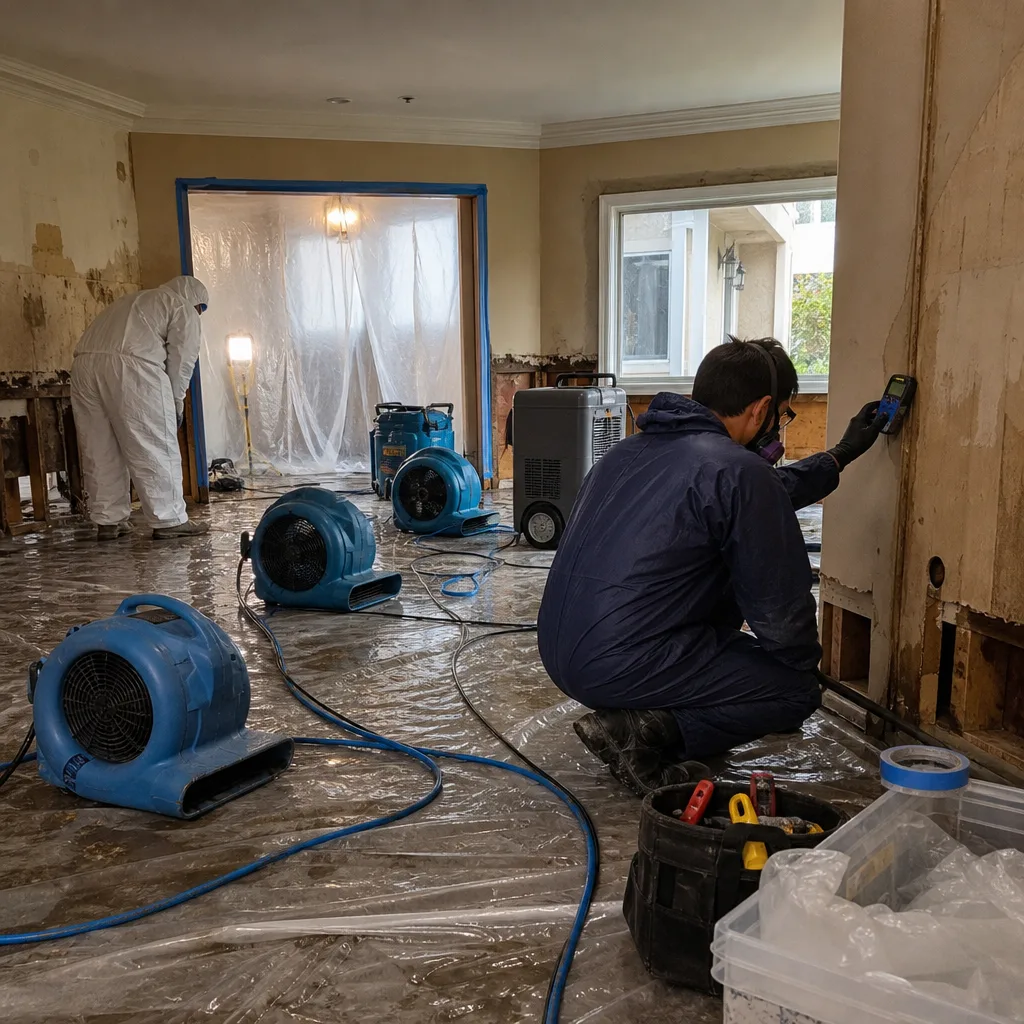
Mold Remediation in Fort Lee
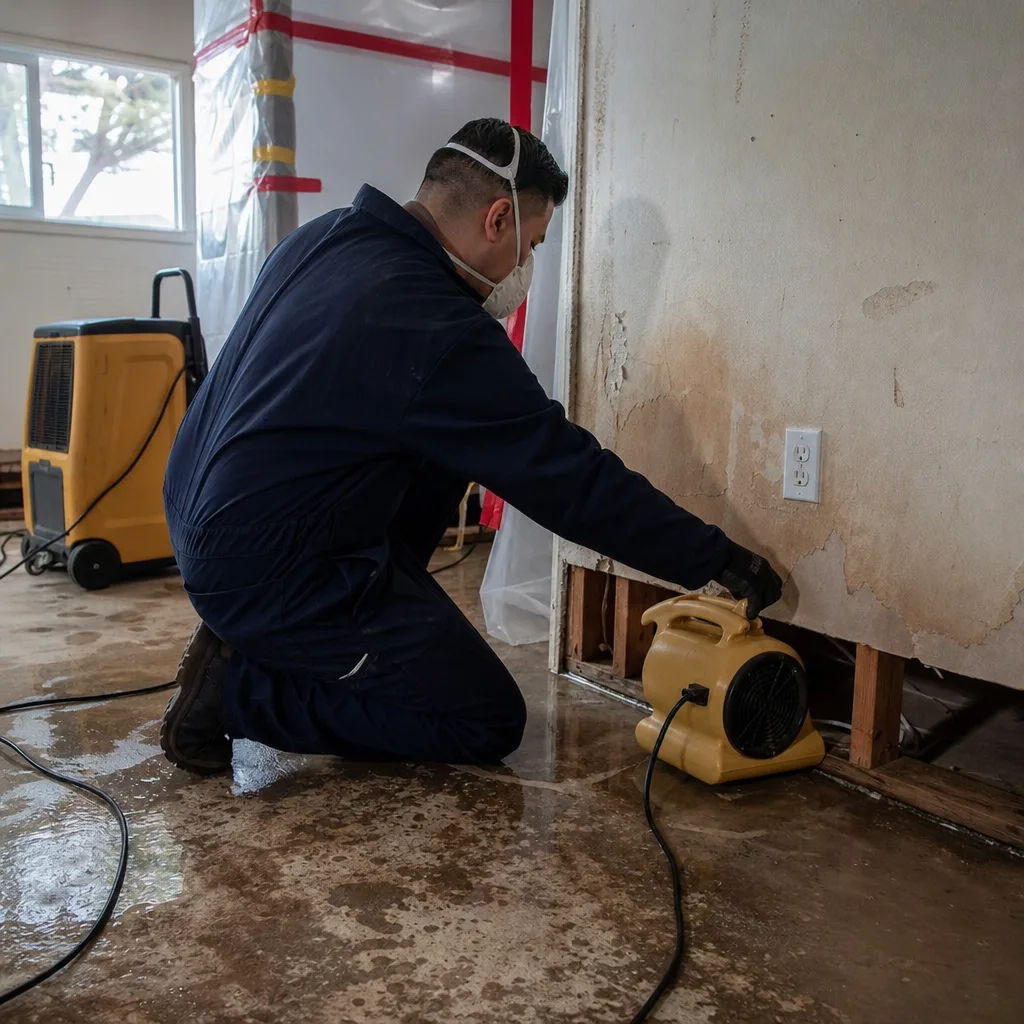
Mold in Fort Lee’s towers feeds on the same conditions that cause water damage, multiplied by shared wall cavities and limited ventilation in older units. A slow leak inside a bathroom chase can go unnoticed for months while mold spreads behind finishes across multiple rooms, and sometimes into adjacent apartments. We contain the affected area, remove contaminated materials, treat what remains, and document moisture levels so the problem doesn’t return through the same hidden path. Co-op buildings often require specific containment protocols, and we’re used to working under board-level scrutiny. See Mold Remediation in Fort Lee for how we manage multi-unit mold jobs.
Storm Damage Restoration in Fort Lee
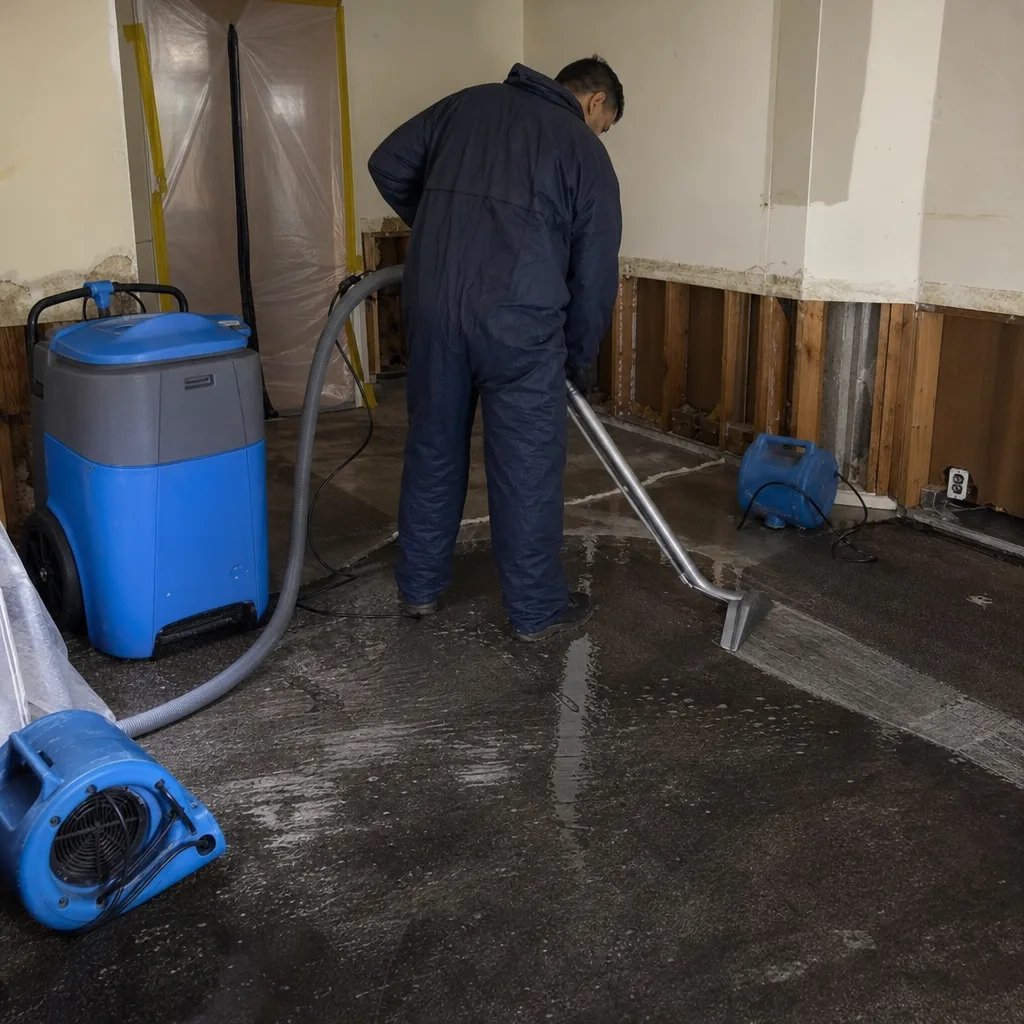
Storm work in Fort Lee centers on the building envelope. Wind-driven rain penetrates aging parapet walls, flat roofs from the 1970s and 1980s, and rooftop mechanical rooms. Water then travels down interior walls and ceilings, sometimes three or four floors below the actual breach, which confuses everyone until we trace the path. We handle tarping, water extraction, structural drying, and the rebuild work that follows, all while coordinating with building management on exterior access. Our Storm Damage Restoration in Fort Lee page covers the full storm sequence from first tarp to final coat of paint.
What happens when you call
- 1
A real person answersNo phone trees - you reach a local pro.
- 2
You get an upfront price rangeHonest numbers before anyone is dispatched.
- 3
A background-checked tech heads outLicensed & insured, dispatched right away.
- 4
You approve before work beginsNothing starts until you say go.
Brands We Service in Fort Lee
Our restoration equipment runs on industry-standard gear from Dri-Eaz, Phoenix, and XPOWER, the same commercial brands deployed on large commercial losses. Parts and consumables are stocked and ready locally, and the equipment arrives with the technician, not two days later. See our brands for the full list.
Pricing for Restoration Company in Fort Lee, NJ
| Service | Typical range in Fort Lee |
|---|---|
| Water extraction (single room) | $450 – $850 |
| Water extraction (multiple rooms) | $900 – $1,800 |
| Structural drying (per affected room) | $600 – $1,400 |
| Commercial drying equipment setup | $350 – $800 per day |
| Mold assessment and visual inspection | $150 – $400 |
| Mold containment and air filtration setup | $500 – $1,200 |
| Mold remediation (single room) | $800 – $2,500 |
| Mold remediation (full unit, multi-room) | $2,500 – $8,000 |
| Storm water extraction | $800 – $2,000 |
| Roof tarping and emergency board-up | $400 – $1,200 |
| Exterior envelope repair (per opening) | $600 – $2,400 |
| Full interior rebuild after storm damage | $4,000 – $25,000+ |
Fort Lee pricing runs higher than surrounding Bergen County towns for one structural reason: logistics. Service elevators, loading dock time, and building access coordination add hours to every job, and hours are what drive restoration cost. No matter the final number, you receive a written price before any work starts, so nothing changes once demolition begins.
Neighborhoods We Serve in Fort Lee
We work throughout Fort Lee, from the towers along Palisade Avenue and Center Avenue to the co-ops near the George Washington Bridge and the mid-rises around Main Street. Our crew familiarity with each building’s layout and access points is part of why we move faster here than someone driving in blind.
- The high-rise corridor along Palisade Avenue
- Main Street and the central retail district
- The Bridge Plaza neighborhood near the George Washington Bridge
- The co-op clusters south of Linwood Park
- The mid-rise buildings along Anderson Avenue
Response time across Fort Lee is driven by our dispatch model: a live person answers every call, and we schedule crews directly rather than routing through voicemail or a call center queue. In a town where a burst riser can flood below-floor units within minutes, that directness matters.
Service Area – Cities Near Fort Lee
While this page is focused on Fort Lee, our crews regularly respond in the surrounding Bergen County communities. We serve Leonia, NJ to the west, Palisades Park, NJ to the southwest, Edgewater, NJ down along the Hudson, and Ridgefield, NJ just beyond the Turnpike.
Serving Fort Lee, NJ - Our Local Coverage Area
We’re based in the Fort Lee area and know this community well. Use the map below to see our service coverage - if you’re nearby, we can almost certainly help.
FAQs About Restoration Company in Fort Lee
We dispatch crews to Fort Lee on the same day for most emergency calls, and depending on the time and building access schedule, often within one to three hours of your call. High-rise buildings with strict service elevator windows can add a delay, so we coordinate with building management immediately. Call (910) 613-6568 and a live person gives you a clear arrival window.
Most Fort Lee co-op and condominium boards require written documentation and scope of work before our crew enters common areas or begins demolition inside a unit. Mold containment and water extraction equipment may also be subject to building logistics approval. We handle the board paperwork and documentation as part of the job, not as a separate service you have to chase.
Most Fort Lee homeowner policies cover sudden water damage and storm intrusion, but high-rise claims often involve multiple policies when shared plumbing is at fault. That means your policy, your neighbor’s policy, and the building’s master policy can all be involved in one job. We photograph and document everything for direct adjuster submission, and we’ll coordinate with your adjuster directly.
What happens when you call
- 1A real person answersNo phone trees - talk to a local damage restoration pro.
- 2You get an upfront price rangeHonest numbers before anyone is dispatched. No surprises.
- 3We come out and measureLicensed & insured, at a time that suits you - the visit and the quote are both free.
- 4You get the price in writingLine-itemed, yours to keep, and nothing starts until you say go.
What Fort Lee Customers Say
"Knowing the techs were background checked was a big deal with them working in our home for days. Respectful and careful with our belongings."
- Priya S."Washing machine hose burst while we were out. The crew arrived with badges, set up fans and dehumidifiers, and checked the wall cavities with a moisture meter. Floors were dry in four days."
- Colleen A."Clear communication about what insurance would cover and what wouldn't. Never felt pushed."
- Oscar P.