

Free visual inspection and a written scope of work before any mitigation begins - photos, moisture readings, and drying logs go in your claim file
The scope we write is the scope we bill. Anything new gets shown to you, in writing, before we touch it.






 Before
 After
After Before
 After
After Before
 After
AfterRestoration Company in Little Italy, NY
Marsh Water Damage Restoration handles water, mold, and storm damage in Little Italy’s pre-war brick tenements. The blocks along Mulberry, Mott, and Hester Streets were built between roughly 1880 and 1915, and their horsehair plaster, shared masonry walls, and original cast-iron plumbing change how restoration work gets done. We’re the crew that hand-trucks drying equipment up narrow tenement stairwells and knows what the Landmarks Preservation Commission will ask before demo starts. Call (910) 613-6568 and a live person answers, day or night.
Why Little Italy Homes Are Different
Little Italy’s building stock predates modern construction methods, and that fact drives every restoration decision. The five- and six-story brick tenements share masonry party walls, so water from one apartment’s burst supply line migrates sideways into the neighboring unit before anyone sees a stain. Horsehair-and-lime plaster absorbs moisture slowly and releases it even more slowly. A wall that feels dry on the surface can hold 20% moisture content two inches back, feeding hidden mold for weeks. Cast-iron and galvanized supply lines corrode from the inside, producing pinhole leaks that drip inside wall cavities silently.
The blocks nearest Canal Street sit atop historically filled-in ground where the shoreline used to be. During heavy summer cloudbursts, the combined sewer system backs up, and hydrostatic pressure pushes groundwater into basements and cellars. Ground-floor restaurants complicate matters further: grease traps and retrofit floor drains back up into adjacent residential cellars during those same storms. Restoration here routinely means coordinating with the Department of Buildings when structural elements need opening, and parts of the neighborhood fall under historic district review, which constrains what materials we can use to restore damaged plaster and finishes.
Our Main Little Italy Services
Most calls from Little Italy homeowners start with one of three emergencies: a supply line that failed inside a wall, a basement that flooded after a cloudburst, or mold discovered behind a kitchen cabinet. Each gets its own dedicated page because the work is different enough to deserve separate attention.
Water Damage Restoration in Little Italy
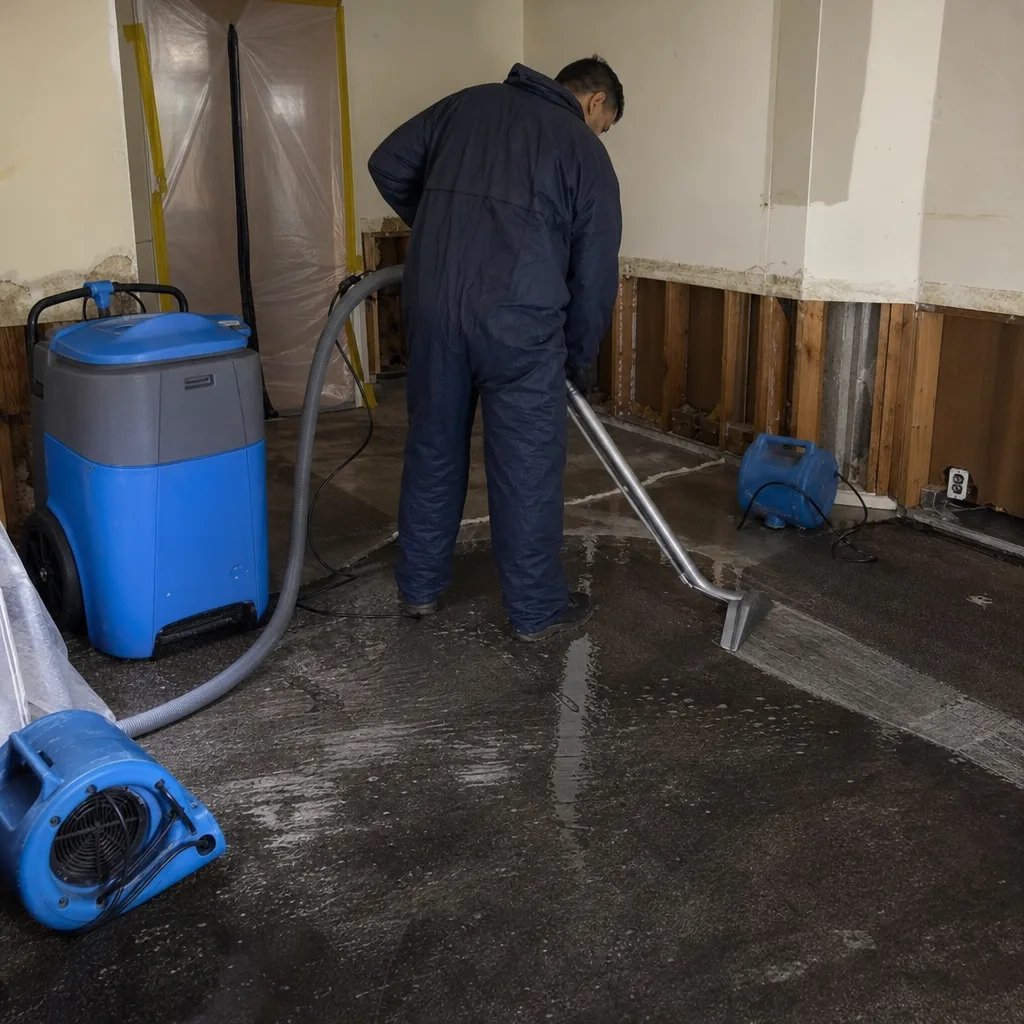
Water jobs here start with tracing the migration path through shared walls. A leak on the fourth floor of a Mott Street tenement shows up as ceiling staining on the third floor two apartments over, which means the restoration footprint is rarely confined to one unit. We map moisture with meters and thermal imaging before cutting anything open, then set commercial drying equipment from Phoenix and XPOWER. Hand-trucking air movers and dehumidifiers up five flights of narrow stairs is part of the job here, and it’s labor we account for in our written price upfront. Full details are on the Water Damage Restoration in Little Italy page.
Mold Remediation in Little Italy
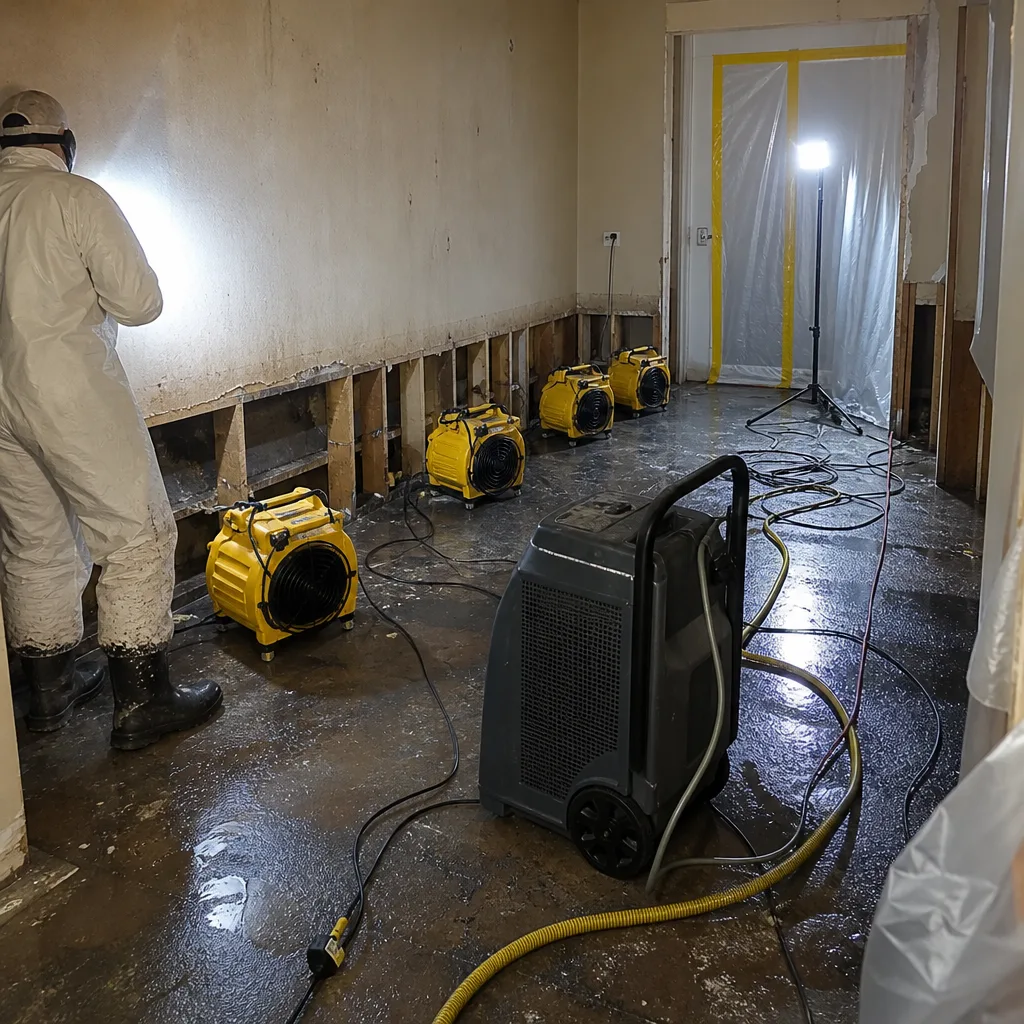
Mold behind horsehair plaster requires containment that ordinary drywall jobs don’t. We build negative-air chambers around affected rooms, run HEPA air scrubbers, and remove the plaster back to brick before treating the masonry itself. The dense construction on Mulberry and Mott means we often coordinate access with neighboring units, because mold spores travel through floor joist bays that run continuously across party walls. Every technician who enters your apartment is Threshold Verified: background-checked, identity-verified, and sent to you by name and photo before the knock. See Mold Remediation in Little Italy for the full scope of this work.
Storm Damage Restoration in Little Italy
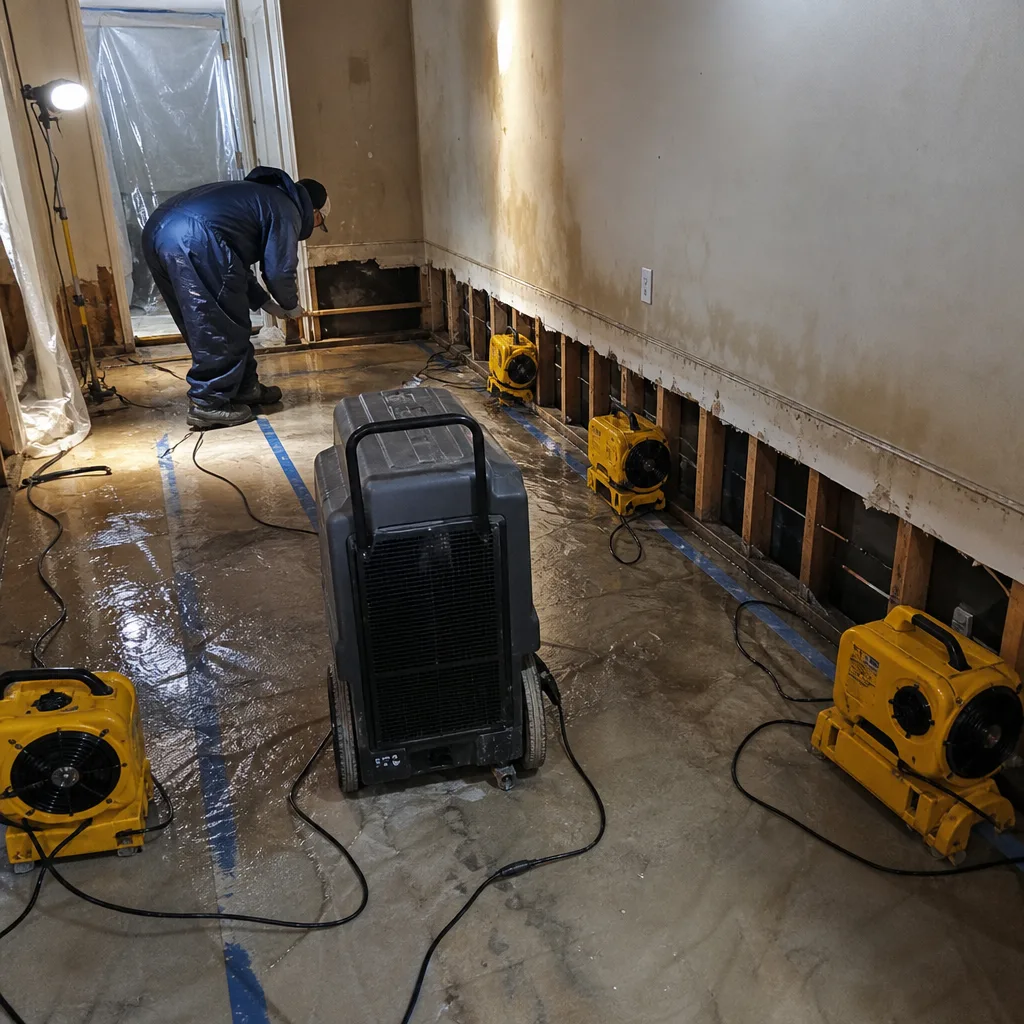
Storms here mean two things: street-level flooding from the combined sewer system near Canal Street, and wind-driven rain that finds every gap in century-old brick pointing. When basement water comes up through floor drains or foundation walls, we extract first, then run psychrometric readings (measuring the moisture in the air and building materials) to determine how long drying will actually take in this building stock. We also handle the second-order damage: soaked subflooring, saturated plaster, and the mold that follows if drying stalls. The Storm Damage Restoration in Little Italy page covers timelines and what insurance typically pays.
What happens when you call
- 1
A real person answersNo phone trees - you reach a local pro.
- 2
You get an upfront price rangeHonest numbers before anyone is dispatched.
- 3
A background-checked tech heads outLicensed & insured, dispatched right away.
- 4
You approve before work beginsNothing starts until you say go.
Brands We Service in Little Italy
We run equipment from the brands restoration professionals actually use: Phoenix, XPOWER, and B-Air for drying and air movement, with Injectidry systems for hard-to-reach cavities. Parts and replacement units are stocked in our New York City office, so we’re not waiting on a distributor when a dehumidifier fails mid-job. Browse the full list on our brands page.
Pricing for Restoration Company in Little Italy, NY
Little Italy pricing reflects the labor involved in working inside pre-war buildings with no freight elevators and tight stairwells. Here’s what homeowners typically see:
| Service | Typical range in Little Italy |
|---|---|
| Water extraction (single room) | $900 – $1,600 |
| Water extraction (multi-room, shared-wall spread) | $1,800 – $4,200 |
| Drying equipment setup (3 – 5 days rental) | $350 – $700 |
| Mold containment and air scrubbing | $1,500 – $3,000 |
| Mold remediation (single wall cavity) | $2,200 – $5,000 |
| Mold remediation (full room, plaster removal) | $5,500 – $12,000 |
| Storm water extraction (basement/cellar) | $1,200 – $2,800 |
| Sewer backflow cleanup | $2,500 – $6,500 |
| Plaster drying and restoration | $1,800 – $4,500 |
| Subfloor replacement (wood plank) | $900 – $2,200 per room |
| Emergency board-up or tarp (post-storm) | $400 – $900 |
| Whole-unit restoration after major event | $15,000 – $45,000+ |
What pushes a Little Italy job toward the top of these ranges is usually access: fourth-floor walk-ups without elevators, narrow staircases that require equipment disassembly, and Landmarks Preservation Commission review when exterior finishes are involved. Whatever the number, you get a written price before any work starts. Nobody opens a wall and discovers the price went up on the other side.
Neighborhoods We Serve in Little Italy
Our crews cover the full Little Italy footprint and the immediately surrounding blocks. Response time from our New York City office is typically under 90 minutes for water emergencies during normal hours, faster on nights and weekends when traffic is thin.
- Mulberry Street corridor
- Mott Street corridor
- Hester Street blocks
- Grand to Canal Street
- Broome Street border
Service Area – Cities Near Little Italy
Beyond Little Italy, our crews regularly respond across the boroughs. We serve Brooklyn, NY and Queens, NY for water and mold work in their own older housing stock, plus Manhattan, NY jobs from the Financial District up through The Bronx, NY. Dispatch and scheduling are coordinated from the brand’s New York City office, and crews serving Little Italy locally are dispatched from there.
Serving Little Italy, NY - Our Local Coverage Area
We’re based in the Little Italy area and know this community well. Use the map below to see our service coverage - if you’re nearby, we can almost certainly help.
FAQs About Restoration Company in Little Italy
Most water emergencies in Little Italy get a crew on site within 90 minutes, often faster outside rush hour. Mulberry and Mott Street parking is a real constraint, so our trucks stage on wider cross streets and we hand-carry equipment the last block. Call (910) 613-6568 and whoever answers will tell you the actual ETA, not a scripted promise.
For interior water extraction and drying, no. For anything that touches building exteriors, cornices, window lintels, or visible facade materials, yes, and that process can add days to a timeline. We handle the paperwork and coordinate with the LPC as part of the written scope, so you’re not left navigating historic-district review alone.
Most homeowner policies cover sudden water damage, including sewer backflow if you carry that rider. Mold coverage varies widely by carrier. Every Marsh job includes photo documentation from first arrival through final clearance, and our team talks directly with your adjuster so the claim file reflects what was actually found behind the plaster. Call (910) 613-6568 for a free estimate and we’ll walk through your specific policy language with you.
What happens when you call
- 1A real person answersNo phone trees - talk to a local damage restoration pro.
- 2You get an upfront price rangeHonest numbers before anyone is dispatched. No surprises.
- 3We come out and measureLicensed & insured, at a time that suits you - the visit and the quote are both free.
- 4You get the price in writingLine-itemed, yours to keep, and nothing starts until you say go.
What Little Italy Customers Say
"Knowing the techs were background checked was a big deal with them working in our home for days. Respectful and careful with our belongings."
- Priya S."Washing machine hose burst while we were out. The crew arrived with badges, set up fans and dehumidifiers, and checked the wall cavities with a moisture meter. Floors were dry in four days."
- Colleen A."Clear communication about what insurance would cover and what wouldn't. Never felt pushed."
- Oscar P.