

Free visual inspection and a written scope of work before any mitigation begins - photos, moisture readings, and drying logs go in your claim file
The scope we write is the scope we bill. Anything new gets shown to you, in writing, before we touch it.






 Before
 After
After Before
 After
After Before
 After
AfterFast, Reliable Mold Remediation Across Glen Oaks
Mold remediation in Glen Oaks usually costs between $1,800 and $6,500 depending on how far the mold has spread and whether it’s inside a Glen Oaks Village unit’s walls or confined to surfaces. Most jobs take two to five days once we get the co-op board’s written approval, which is the real wildcard in this neighborhood. We know the approval chain here because we work inside these buildings every month. If you can see mold or smell that damp, musty odor in your apartment, call (910) 613-6568 and a live person answers, day or night.
Why Marsh Water Damage Restoration Is Glen Oaks’s Preferred Mold Remediation Company
Glen Oaks is not like other Queens neighborhoods. The housing stock is dominated by Glen Oaks Village, roughly 3,000 garden apartment co-op units built between 1947 and 1950 from dense brick and plaster. That construction holds moisture longer than wood-frame homes, which means mold gets a longer head start. Our crews have worked inside enough of these buildings to know the difference between a failed cooperative riser pipe and an in-unit supply line, and that distinction determines who approves the job and who pays for it.
Tobias Reyner, who leads our technical team, holds IICRC, RIA, and IFA credentials, and he trains every technician on the specific drying profiles for postwar brick-and-plaster buildings like the ones that define Glen Oaks. We do not send out a crew that has to learn the building type on your dime. Before any technician arrives, you get their name and photo on your phone. At the door, they show a matching photo ID badge. That is the Threshold Standard, and it is on every job, no exceptions.
Response time to Glen Oaks is typically under 90 minutes for emergency calls. We stage equipment in the metro area so we are not driving across the county while mold keeps growing. Every job also gets a written price before any work starts, and a written guarantee printed on the work order. If something is not right within 365 days, we return and make it right, free.
Mold Removal Service in Glen Oaks
Mold Removal Service in Glen Oaks means physically removing visible mold from affected surfaces: drywall, plaster, baseboards, framing, and personal contents that can be cleaned or must be disposed of. In a Glen Oaks Village apartment, this almost always follows a water event, whether a burst pipe, a roof leak from a freeze-thaw cycle, or a slow drip inside a shared plumbing chase. A typical surface-level mold removal in a single room runs $1,800 to $3,200. If mold is behind walls or in cavities, figure $3,500 to $6,500. The co-op board’s approval for the scope is often the longest part of the job, and we handle that paperwork in writing before containment goes up.
Surface Mold and Contents Cleaning
When mold is limited to visible surfaces, we use HEPA vacuuming, wire brushing, and antimicrobial treatment, then dry the area completely before any paint or finish goes back on. Contents like books, clothing, and small furniture can often be cleaned off-site. We photograph everything for your insurance file before we touch it.
Containment and Material Removal
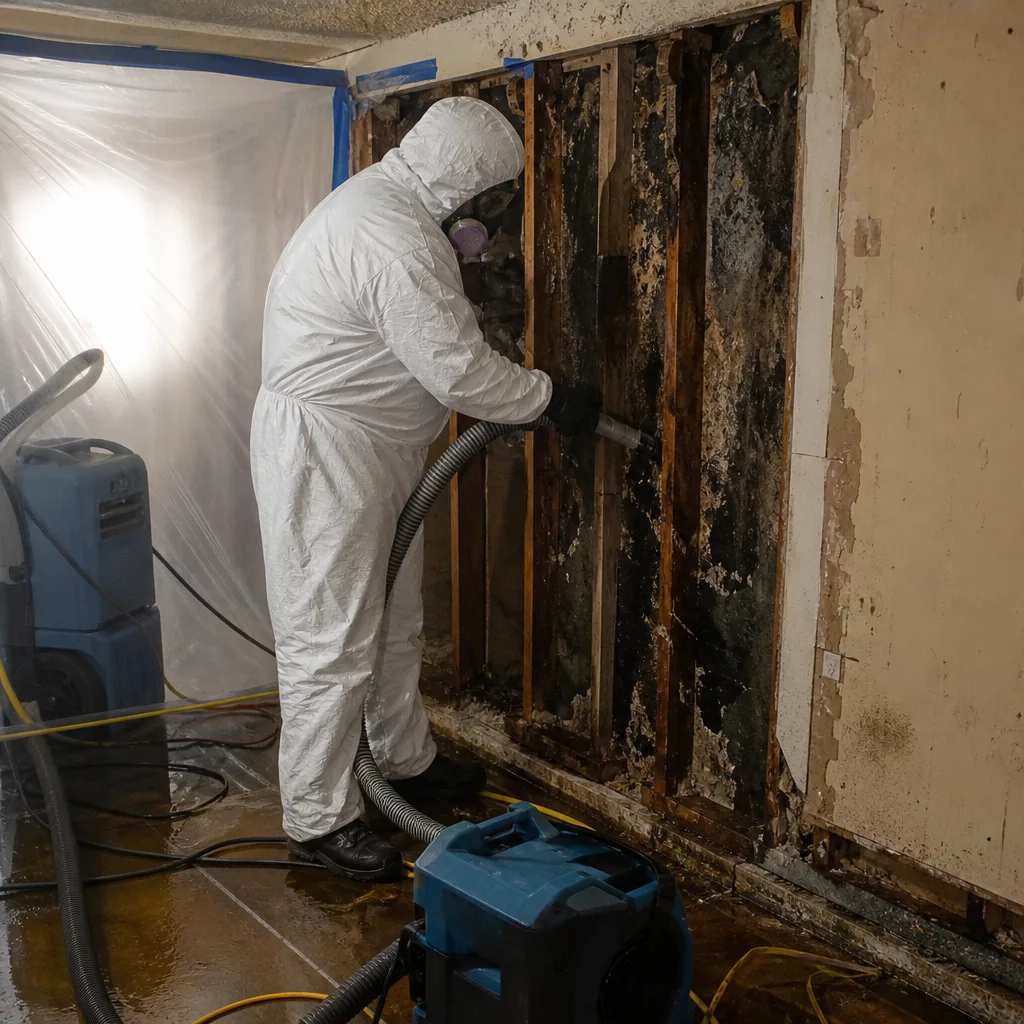
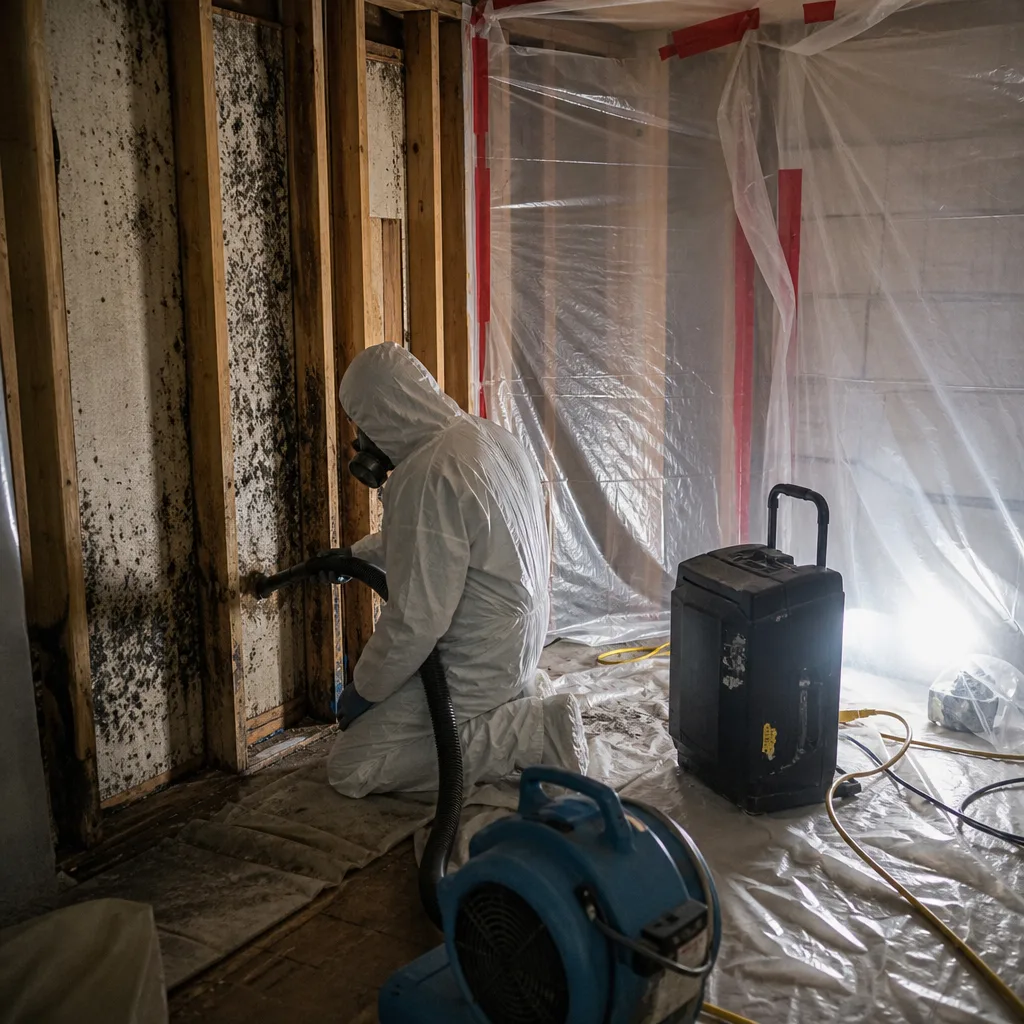
Once mold is inside wall cavities or under flooring, containment becomes non-negotiable. We seal off the affected room with negative air pressure so spores do not migrate into adjacent apartments through the building’s shared chases. Cut-out drywall and plaster are bagged and disposed of as regulated waste, and we document the moisture readings at every step.
Mold Remediation Services in Glen Oaks
Mold Remediation Services in Glen Oaks go beyond removal to address the moisture source, the airborne spore load, and the conditions that let mold return. That is the difference between wiping a patch of black mold and solving the problem. In Glen Oaks Village especially, remediation must account for the dense 1947 – 1950 brick-and-plaster construction that holds moisture for days after wood-frame walls would be dry. A full remediation in a two-bedroom Glen Oaks co-op typically runs $3,500 to $6,500 when wall cavities are involved, with smaller jobs around $2,000.
Moisture Mapping and Building System Checks
We start by finding every wet area, not just the one you can see. Using moisture meters and thermal imaging, we map the affected wall, floor, and ceiling cavities, including the shared plumbing chases that connect Glen Oaks Village units. If the source is a cooperative-owned riser or roof membrane, we document that in writing before we open a single wall. That documentation is what keeps the board’s approval moving instead of stalling.
Air Quality Restoration
After the mold is removed and cavities are treated, we run HEPA air scrubbers to pull airborne spores out of the living space. In brick-and-plaster buildings, we also monitor the relative humidity for several days, because the masonry itself releases moisture slowly. We do not clear a unit until the air and surfaces test clean and the structure is genuinely dry, not just dry-feeling.
We use Dri-Eaz and Phoenix dehumidifiers and air movers on these jobs, the same equipment used on large commercial losses. The tools matter because brick holds water differently than drywall, and standard wood-frame drying timelines will leave a Glen Oaks apartment damp behind the walls.
What happens when you call
- 1
A real person answersNo phone trees - you reach a local pro.
- 2
You get an upfront price rangeHonest numbers before anyone is dispatched.
- 3
A background-checked tech heads outLicensed & insured, dispatched right away.
- 4
You approve before work beginsNothing starts until you say go.
Trusted Brands We Service in Glen Oaks
Glen Oaks homeowners and boards do not get a say in what brands of building materials are already inside their walls, but they do get a say in the equipment used to fix the problem. Our technicians run Dri-Eaz and Phoenix drying systems, along with Injectidry injection drying for cavities, because these machines are built for dense masonry and plaster, not just drywall. XPOWER air movers move air through tight chases and closets common in garden apartment layouts. We stock the filters, hoses, and replacement parts for these units locally, so a failed dehumidifier does not stall your job. If a technician ever has to swap equipment mid-job, the replacement is already nearby.
Common Mold Remediation Problems We See in Glen Oaks Homes
- Approval delays stall the job after containment is up. In Glen Oaks Village, the co-op board, managing agent, and shareholder all have to sign off before remediation begins. If a crew opens walls before that approval exists, the job stops and the mold keeps growing. We get the building-system vs. in-unit determination in writing first.
- Treating mold without drying the shared plumbing chase. A failure in one unit’s riser pipe or a neighbor’s supply line can wet the wall cavity between apartments. If the mold is killed but the chase stays wet, moisture migrates laterally into the next co-op unit and creates a second claim for a different shareholder.
- Using a standard wood-frame drying plan on brick construction. Glen Oaks Village’s 1947 – 1950 brick and plaster absorbs and holds moisture far longer than drywall on wood studs. A crew that pulls dehumidifiers after three days because that is the norm for a frame house will leave the walls damp and invite mold back within months.
- Wait-and-see after a roof leak. Northeastern Queens endures hard freeze-thaw cycles every winter. Ice damming on the flat and low-pitch roofs common in Glen Oaks Village cracks membranes and lets water into top-floor units. By the time a stain appears on the ceiling, the cavity behind it may have been wet for weeks.
Pricing for Mold Remediation in Glen Oaks, NY
A small, contained mold removal in a Glen Oaks bathroom or closet runs $1,800 to $2,800. A single-room remediation with containment, wall cavity treatment, and air scrubbing runs $3,000 to $4,500. A full two-bedroom Glen Oaks Village apartment with mold in multiple walls or a shared chase runs $5,000 to $6,500, sometimes more if an entire wall system has to be rebuilt. What moves the number is not square footage alone. It is whether mold is on surfaces or inside cavities, whether the moisture source is still active, and whether contaminated drywall and plaster need to be removed and replaced. Every job gets a written price before anything starts, and nothing gets added on after demo begins. Call (910) 613-6568 and we will walk you through what your specific situation should cost.
We Also Serve Cities Near Glen Oaks
Beyond Glen Oaks, our crews regularly work in Bellerose, Little Neck, Floral Park, and Great Neck. The buildings change across the Nassau County line, but the standard does not. If you are in one of those neighborhoods and dealing with mold, the same written-price and Threshold Verified process applies. For more on how we handle jobs across the wider Queens and Nassau area, see our Mold Remediation service page or our Mold Remediation in Glen Oaks local page.
Serving Glen Oaks, NY - Our Local Coverage Area
We’re based in the Glen Oaks area and know this community well. Use the map below to see our service coverage - if you’re nearby, we can almost certainly help.
FAQs About Mold Remediation in Glen Oaks
Yes, and it is the single biggest difference between Glen Oaks and neighboring towns. Before remediation can start, the co-op board, managing agent, and individual shareholder must agree in writing whether the moisture source is a cooperative building system or an in-unit element. That three-party approval does not exist in owner-occupied Floral Park or New Hyde Park. We prepare the building-system documentation as part of the initial assessment so the board can approve the scope without weeks of back-and-forth. Call (910) 613-6568 to start that paperwork.
The brick-and-plaster construction from 1947 – 1950 holds moisture far longer than wood-frame walls. Once water enters a wall cavity or shared plumbing chase, the dense masonry stays wet for days even after the leak stops. That extended damp period is exactly what mold needs to go from spores to visible growth. Without extended dehumidification and moisture mapping, the mold returns.
A Category 2 or 3 event means the water is contaminated, often from a sewage backup or a slow leak that has been sitting. In a Glen Oaks Village unit, that requires containment, extraction, removal of saturated drywall and insulation, then injection drying into the brick and plaster cavities with machines like Injectidry and Phoenix dehumidifiers. The shared chase has to be dried, not just the visible room. We monitor the relative humidity in the masonry until it is genuinely low, not just dry on the surface.
Yes. The shared plumbing chases and brick cavities between units mean that air and moisture move laterally. If one unit has active mold and the adjacent cavity is not dried or treated, spores can migrate. That is why containment with negative air pressure is standard on any Glen Oaks Village remediation, even when the visible mold is small. We treat the wall cavity as part of the job, not an afterthought.
Our standard emergency response to Glen Oaks is under 90 minutes. A live person answers the phone 24/7, not a voicemail or a callback queue. For a non-emergency mold assessment, we typically schedule within 24 to 48 hours. If you are watching a stain spread or you smell mold in a unit with children or older residents, call (910) 613-6568 and we will tell you exactly when a technician with a name and a photo will be at your door.
Written by Tobias Reyner, Owner at Marsh Water Damage Restoration, serving Glen Oaks since 2005.