

Free visual inspection and a written scope of work before any mitigation begins - photos, moisture readings, and drying logs go in your claim file
The scope we write is the scope we bill. Anything new gets shown to you, in writing, before we touch it.






 Before
 After
After Before
 After
After Before
 After
AfterFast, Reliable Mold Remediation Across Jackson Heights
Mold remediation in Jackson Heights typically costs between $1,800 and $6,500 depending on the spread, and the board approval process in your co-op often dictates how fast we can start. We know that’s not what you want to hear when you’ve spotted black patches creeping across a ceiling. The written price comes before any work begins, and a live person answers at (910) 613-6568 around the clock so you won’t sit through a voicemail while the bloom spreads. Our crews know the Historic District buildings off 34th Avenue, 82nd Street, and Roosevelt Avenue because we work inside them every week.
Why Marsh Water Damage Restoration Is Jackson Heights’s Preferred Mold Remediation Company
Most Jackson Heights homeowners first hear about us from a neighbor in their building, because mold in these pre-war co-ops rarely stays in one unit. One broken steam riser in a 1928 six-story walk-up on 35th Avenue sends water through four stacked apartments before anyone notices. That’s the call we take. Tobias Reyner, who leads our team, built our Jackson Heights process around that co-op board reality, meaning we handle the shareholder authorization, the board approval, and the asbestos testing hold as one timeline instead of three separate surprises.
Every technician who shows up at your door in Jackson Heights is background-checked and identity-verified under the Threshold Verified standard. You get the tech’s name and photo before the visit, and they show a photo ID badge at the door, every time. No mystery crew. That standard matters in a neighborhood where many residents are home alone during the day or have young kids in the apartment. You know who is coming before the knock.
We’ve been part of the Threshold Group family of restoration companies since 2005, and our crews carry IICRC, RIA, and IFA credentials. The equipment is Dri-Eaz, Phoenix, XPOWER, and B-Air, the same commercial drying gear used on large losses. But in Jackson Heights, the real credential is knowing which co-op boards require a board resolution before a single sheet of drywall gets removed, and building that into your schedule.
Mold Remediation Services in Jackson Heights
Mold Remediation Services in Jackson Heights start with moisture mapping across every affected unit in the stack, then containment, air scrubbing, and removal of the contaminated materials. In these co-ops, full remediation of a single unit with visible mold on one wall and ceiling generally runs $1,800 to $4,200. When mold has spread into the shared riser chases or through original plaster, expect $4,500 to $6,500 because structural drying and pack-out must happen across multiple units. Every price is on paper before demo starts.
Mold Inspection & Testing
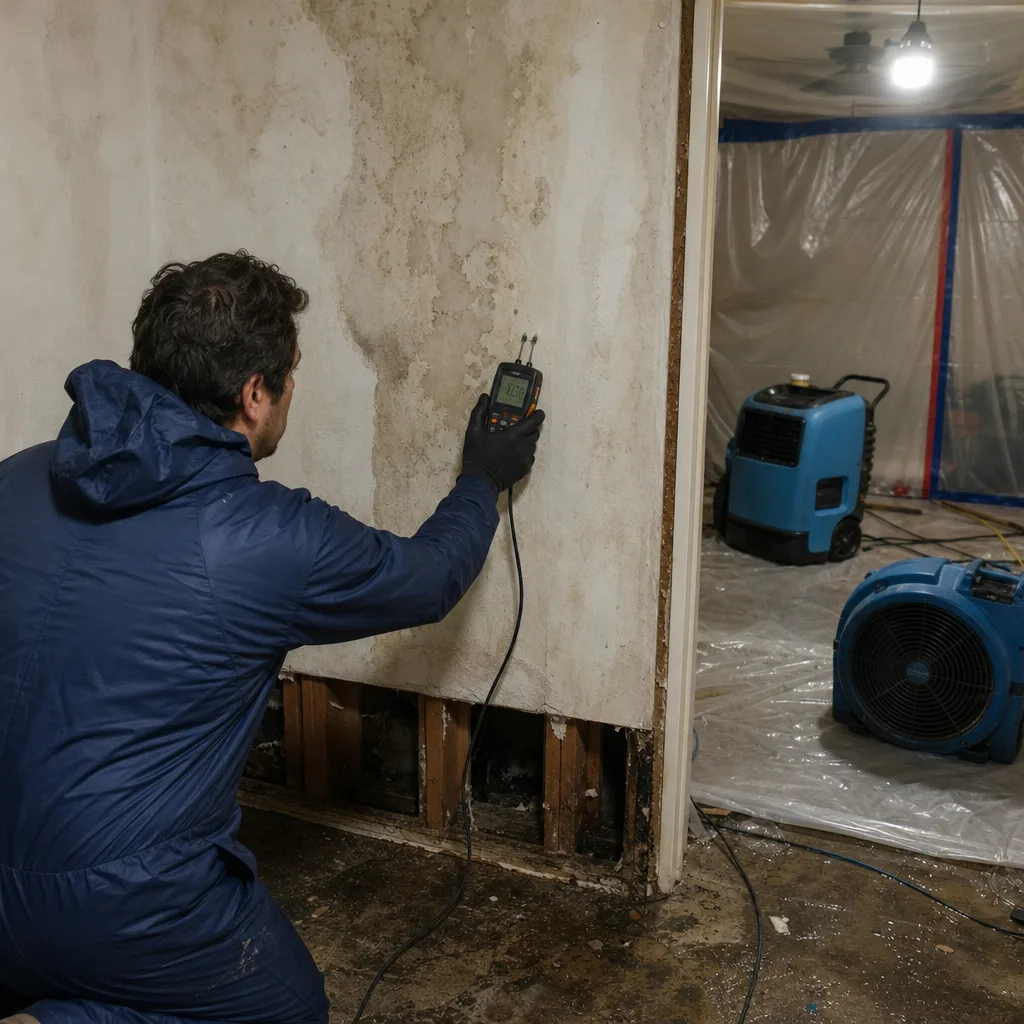
Before we remove anything, we document the moisture source and test surfaces. In a pre-war Jackson Heights co-op, that test often gets held up waiting on the board’s approval to disturb original materials. We handle that paperwork with the board and the shareholder together.
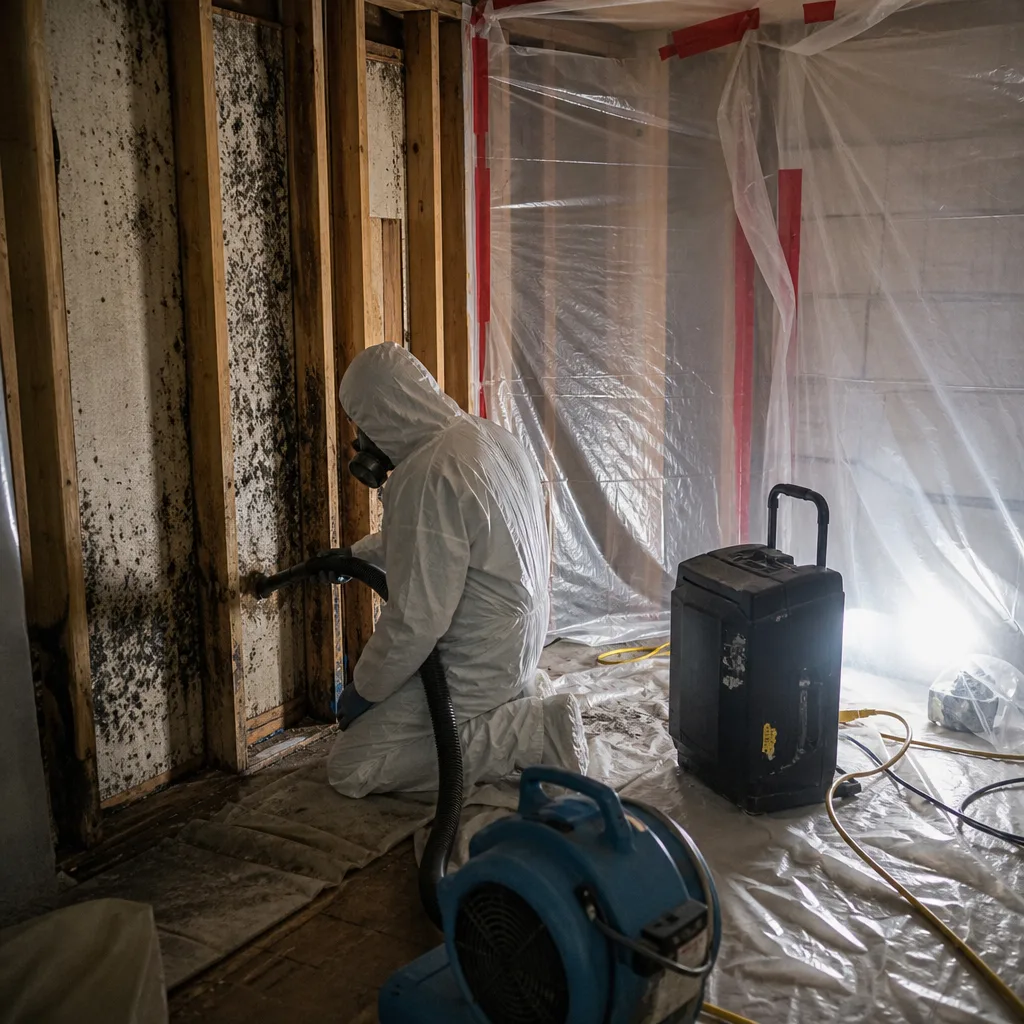
Crawl Space Treatment
Some Jackson Heights garden apartment buildings have shallow crawl spaces under the ground-floor units that go fully unchecked after a roof drain backup. We treat the source, remove the mold, and set a drying plan that prevents the same bloom from returning the next heavy rain.
What happens when you call
- 1
A real person answersNo phone trees - you reach a local pro.
- 2
You get an upfront price rangeHonest numbers before anyone is dispatched.
- 3
A background-checked tech heads outLicensed & insured, dispatched right away.
- 4
You approve before work beginsNothing starts until you say go.
Professional Mold Removal in Jackson Heights
Professional Mold Removal in Jackson Heights means cutting out the affected plaster or drywall, bagging it under containment, and treating the framing and surrounding surfaces. Most single-unit jobs with moderate growth run $3,000 to $5,000. When we find mold behind original hard-coat plaster in a historic co-op, the removal cost climbs because the material is thicker and the asbestos hold can add days to the schedule before demolition starts.
Black Mold Remediation
Stachybotrys, what people call black mold, grows where water sat for days, often behind walls in Jackson Heights steam-heat buildings. We contain the area under negative air pressure before removal so spores don’t move into the neighbor’s apartment through the same chase.
Air Quality Restoration
After removal, we run HEPA air scrubbers and take psychrometric readings, measuring moisture in the air and materials, until the unit is genuinely dry, not just dry on the surface. That step matters in tightly built pre-war apartments where damp air hangs around for weeks.
Trusted Brands We Service in Jackson Heights
Our Jackson Heights crews run equipment from Dri-Eaz, XPOWER, and B-Air, the same brands commercial restoration firms deploy on high-rise losses. We keep replacement filters and drying accessories stocked for fast turnaround in the neighborhood, so you’re not waiting a week for a part while mold keeps blooming. These are the machines that actually pull moisture out of century-old plaster and brick, and they hold up on the tight schedules co-op boards impose once they approve the work.
Common Mold Remediation Problems We See in Jackson Heights Homes
- Steam riser failures in 1920s bathroom chases. The riser cracks behind the wall, Category 2 water travels down the stack, and mold shows up on a ceiling two floors below before anyone sees the leak.
- Flat roof drains freezing over during NYC winters. Ponding water saturates top-floor ceilings and runs down through utility chases, spreading mold inside multiple units before the first stain appears.
- Cast-iron drain stacks separating at century-old joints. Shower and sink waste leaks slowly into wall cavities, giving mold exactly the wet, dark space it needs behind original tile and plaster.
- Board approval delays pushing a Category 2 loss into Category 3. By the time the shareholder and co-op board agree on authorization, water has sat past the 24 – 48 hour window, and what could have been surface treatment becomes full plaster gut with mold remediation.
Pricing for Mold Remediation in Jackson Heights, NY
A mold inspection with testing in Jackson Heights runs $350 to $700. Single-unit mold removal with containment and treatment typically lands between $1,800 and $4,200. Multi-unit stack work above a burst riser or roof drain backup runs $4,500 to $6,500 because every affected unit needs mapping, drying, and treatment. If asbestos testing triggers abatement, that cost is separate and billed by the licensed abatement contractor, not rolled into our number. The biggest factor in Jackson Heights is not the mold itself, it’s how quickly the co-op board authorizes demo. A five-day delay often doubles the price because contamination spreads from one room to three. Call (910) 613-6568 for a free estimate and we’ll give you the number in writing before any work starts.
We Also Serve Cities Near Jackson Heights
We handle mold remediation across the neighborhoods around Jackson Heights in Queens. You’ll find our crews in Jackson Heights, East Elmhurst, Elmhurst, Corona, and Woodside, often on the same day for emergency response. No matter which block you’re on, the Mold Remediation team arrives with the same written-price guarantee and Threshold Verified technicians.
Serving Jackson Heights, NY - Our Local Coverage Area
We’re based in the Jackson Heights area and know this community well. Use the map below to see our service coverage - if you’re nearby, we can almost certainly help.
FAQs About Mold Remediation in Jackson Heights
Yes. In Jackson Heights’s co-op buildings, the board must authorize any work that touches original building materials, so remediation can’t begin until both you as shareholder and the board sign off. We prepare the scope in board-friendly language and submit it through the managing agent to speed that up. Call (910) 613-6568 and we’ll walk you through the exact approval steps for your building.
Because these 1917 – 1940 buildings use steam heat with aging risers and original cast-iron stacks, water often leaks inside wall cavities for days before surfacing, and by the time you see mold, it’s had a 24 – 48 hour head start. Once the leak starts, the thick plaster and brick hold moisture, giving mold exactly the warm, dark space it needs. We map moisture across the whole stack, not just your ceiling, to catch the source.
NYC DEP rules require asbestos testing before disturbing original floor tiles, pipe insulation, or hard-coat plaster in Jackson Heights pre-war buildings, and those tests routinely come back positive. If that happens, we stop structural demolition and a licensed abatement contractor clears the material before our drying and mold removal resumes. We fold that realistic pause into your schedule from day one, so the delay doesn’t blindside you.
Sometimes, but if the moisture source traces to shared risers or a roof drain, drying only your apartment means the water keeps moving back into the same wall. The board has to authorize investigation of the shared infrastructure. We document everything with moisture readings and photos so the board has what it needs to approve the full fix instead of just a patch.
We set containment in every affected unit, run air scrubbers, and map moisture floor by floor up and down the stack, then sequence drying and removal so the building isn’t left open while one board member reads the proposal. A Category 3 loss, where sewage or long-sitting water touched the porous materials, means removing all affected plaster and insulation, not just treating surfaces. Call (910) 613-6568 for a free estimate on multi-unit stack work; we’ll send a written scope your board can act on immediately.
Written by Tobias Reyner, Owner at Marsh Water Damage Restoration, serving Jackson Heights since 2005.