

Free visual inspection and a written scope of work before any mitigation begins - photos, moisture readings, and drying logs go in your claim file
The scope we write is the scope we bill. Anything new gets shown to you, in writing, before we touch it.






 Before
 After
After Before
 After
After Before
 After
AfterFast, Reliable Mold Remediation Across Short Hills
Mold remediation in Short Hills typically runs $2,800 – $6,500 for a contained basement or first-floor job, depending on the size of the affected area and whether historic plaster, custom millwork, or imported stone needs in-kind restoration rather than demolition. That’s the range we print on our work orders before a single air mover gets plugged in. We know the homes here: pre-war Tudors off Old Short Hills Road, mid-century Colonials near the Wyoming Avenue corridor, sprawling estates backing up to the Rahway floodplain. They were built with materials that demand a slower, more careful hand than standard drying protocols allow. When you call (910) 613-6568, you get a live person who knows which questions to ask about your home before we even set foot in Millburn Township.
Why Marsh Water Damage Restoration Is Short Hills’s Preferred Mold Remediation Company
Short Hills homeowners call us because we treat their houses like the irreplaceable assets they are, not like drywall-and-paint jobs from a generic restoration playbook. Our Mold Remediation crews have worked through enough nor’easters and slow-receding river water here to know that a $3M Tudor Revival can’t be dried like a 1990s colonial in a flat suburb. The plaster keys will release. The oak floors will cup and buckle if you force the process. We slow it down, document everything, and match what was there before.
Every technician who arrives at your door in Short Hills is Threshold Verified: background-checked, identity-verified, uniformed, and photo-badged. You get the tech’s name and photo before the visit. At the door, they show a photo ID badge. Every time. Tobias Reyner, who leads our restoration team, built this standard around one question: who is actually walking into your house at 2 a.m. with a dehumidifier? We answer that question before the knock.
Marsh has been restoring homes since 2005 as part of the Threshold Group family. Our technicians hold IICRC, RIA, and IFA credentials. The gear we run in Short Hills basements includes Dri-Eaz and Phoenix drying systems, the same equipment used on large commercial losses. And every job carries the 365-Day Done Right Promise: if the repair isn’t right within a full year, we make it right. That includes a free second visit. It’s printed on the work order before you sign anything.
Mold Remediation Services in Short Hills
Mold Remediation Services in Short Hills usually start with a containment setup and a written scope of work, not with demolition. We find mold the way it actually appears in this town: behind plaster walls beside a failing exterior door, under old-growth oak flooring near a slowly leaking threshold, inside crawl spaces that took on Rahway River groundwater and never fully dried. A standard Short Hills remediation runs $2,800 – $6,500. A small, contained crawl space treatment might land near $1,900. A full basement with horsehair plaster walls and custom millwork can push past $8,000 when you factor in artisan restoration.
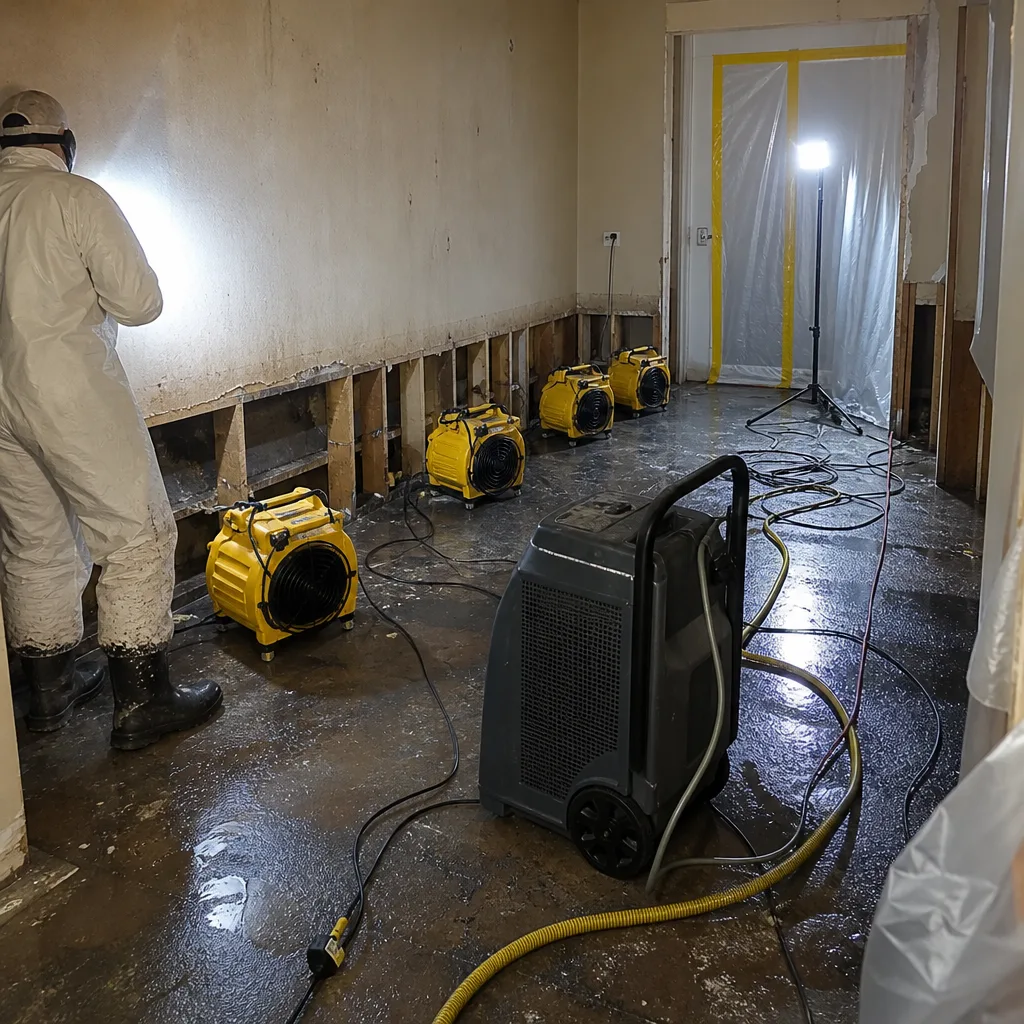
Containment and Air Quality
We set up negative-air containment before disturbing any colonized material. That keeps spores from migrating into your living spaces and HVAC system during demo and treatment. Air scrubbers run for the duration, and we take clearance readings at the end. You get those numbers in writing.
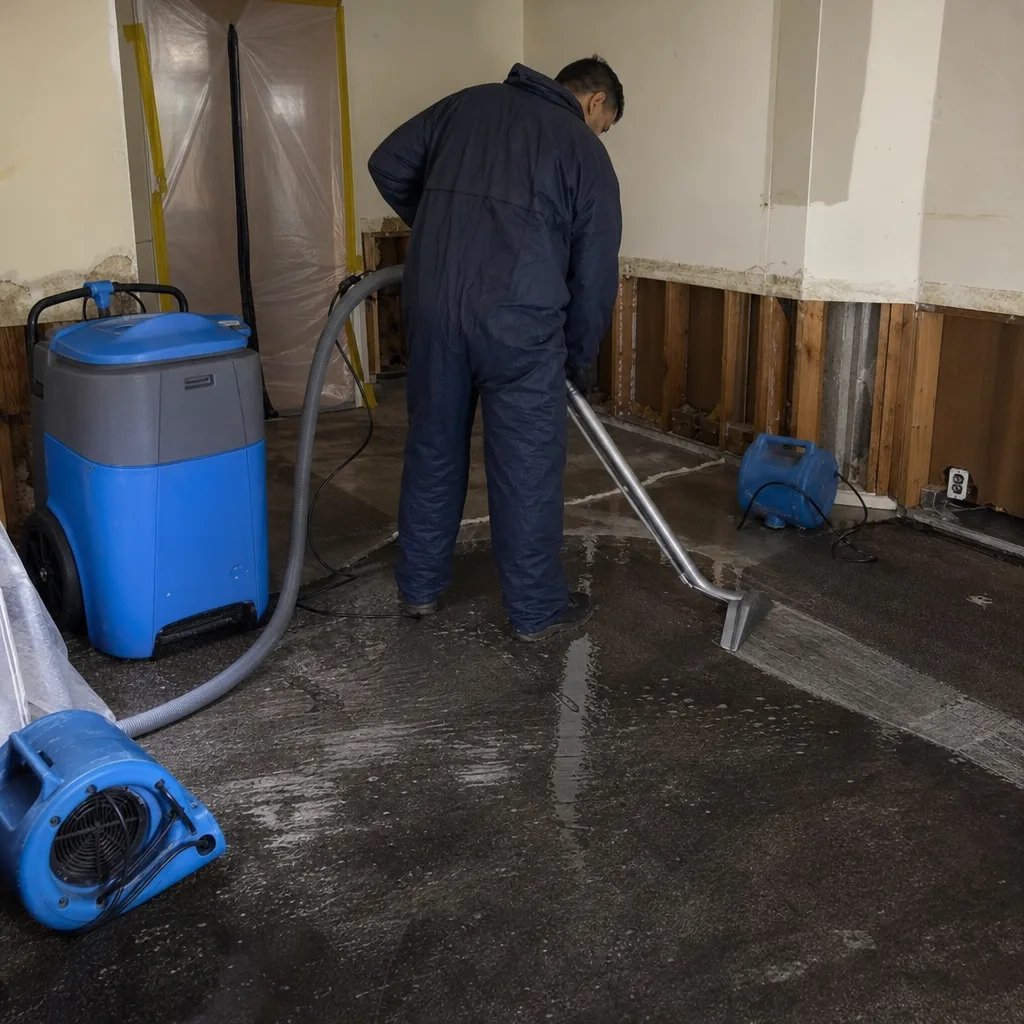
Source Removal, Not Cover-Up
Mold that grows behind plaster-over-lath can’t be bleached or painted away. We open the wall face carefully, remove colonized material, treat the framing, and document the condition of the original plaster keys before re-drying. On Short Hills estates where original wall surfaces are part of the home’s value, that documentation matters to your adjuster.
What happens when you call
- 1
A real person answersNo phone trees - you reach a local pro.
- 2
You get an upfront price rangeHonest numbers before anyone is dispatched.
- 3
A background-checked tech heads outLicensed & insured, dispatched right away.
- 4
You approve before work beginsNothing starts until you say go.
Professional Mold Removal in Short Hills
Professional Mold Removal in Short Hills isn’t a spray-and-wipe job. On pre-war homes near the Rahway floodplain, we’re often removing mold that colonized behind horsehair plaster after wind-driven rain breached an aging door threshold. The visible staining is usually the smallest part of the problem. Hidden saturation behind lath feeds fungal growth for weeks before a homeowner notices. Our removal protocol includes controlled demolition where necessary, HEPA vacuuming of all exposed surfaces, antimicrobial treatment, and slow low-temperature drying to protect original materials. A typical room-level removal with plaster restoration runs $3,200 – $5,800 in Short Hills.
Historic Plaster and Millwork Protection
Aggressive forced-air drying will delaminate original 1920s horsehair plaster faster than the mold will. We use low-temperature dehumidification and monitor MC readings daily. The goal is dry, not fast. Original millwork gets cleaned in place or removed, numbered, and restored rather than discarded.
Post-Remediation Verification
After treatment, we run a final inspection with moisture meters calibrated for plaster substrates. You get a written summary of what was removed, what was treated, and what was restored. No mystery work orders. No adjuster surprises.
Trusted Brands We Service in Short Hills
Our Short Hills crews work with the restoration equipment homeowners and adjusters actually recognize. Dri-Eaz dehumidifiers and air movers for structural drying. Phoenix restoration systems for low-temperature applications on historic finishes. B-Air air scrubbers for containment on mid-sized residential jobs. We stock filters, hoses, and replacement parts locally so a Short Hills call doesn’t wait on a warehouse shipment from out of state. When a nor’easter hits and every basement in Millburn Township is wet, having functioning equipment today matters more than having the newest model in a catalog.
Common Mold Remediation Problems We See in Short Hills Homes
- Wind-driven rain at aging door systems. On pre-war Tudor and Colonial estates, the first sign of mold is often a soft spot in the plaster beside an exterior French door, not a visible leak. The door’s threshold failed years ago. Water has been entering the wall cavity during every storm since.
- Horsehair plaster that fools standard moisture meters. Original 1920s – 1940s plaster over wood lath reads differently on capacitance meters than drywall does. A contractor who doesn’t know Short Hills construction will misread the numbers and either over-dry (delaminating the keys) or under-dry (leaving mold alive behind the wall).
- Rahway River black water in finished basements. Slow-receding river overflow isn’t clean groundwater. It’s category 3 water, contaminated with sewage and organics. Finished basements with imported stone and custom millwork need removal and in-kind restoration, not just drying. Standard cat-1 dry-down protocols will leave contamination behind.
- Closet and crawl space mold hidden behind custom built-ins. Short Hills homes have a lot of original millwork, built-in cabinetry, and paneled walls. Mold grows behind them quietly. By the time you see staining on the face of a cabinet, the back panel is likely colonized. We remove, treat, and restore those pieces rather than telling you to replace them with box-store cabinets.
Pricing for Mold Remediation in Short Hills, NJ
A contained mold remediation in a Short Hills basement with modern drywall typically runs $2,800 – $4,500. Add horsehair plaster restoration and you’re at $3,500 – $6,500. A full crawl space treatment with encapsulation work lands between $2,200 – $4,800 depending on square footage and access. Large multi-room remediations in finished basements with custom millwork can reach $8,000 – $12,000 when in-kind material sourcing is required. What moves the number: whether original plaster keys are intact, whether a category 3 Rahway flood is involved, and whether your adjuster requires documentation for like-kind restoration. Our estimate is free, written, and specific to your house. Call (910) 613-6568.
We Also Serve Cities Near Short Hills
Marsh regularly handles mold remediation in Mold Remediation in Short Hills and the surrounding Essex and Union County communities, including Springfield, Summit, Maplewood, and Livingston. Same Threshold Verified standard, same written pricing, same 365-Day Done Right Promise. Call (910) 613-6568 and a live person will route you to the crew nearest your address.
Serving Short Hills, NJ - Our Local Coverage Area
We’re based in the Short Hills area and know this community well. Use the map below to see our service coverage - if you’re nearby, we can almost certainly help.
FAQs About Mold Remediation in Short Hills
Horsehair plaster over wood lath fails differently than drywall when wet, and it requires slower drying to avoid delamination. Standard capacitance moisture meters under-read the actual moisture content of lath and the plaster keys behind it. We use low-temperature Phoenix dehumidification and document plaster condition before placing equipment, because a forced-air dry-down on a 1920s wall can cause the keys to release and the entire face to pull away. If you have original plaster in a Millburn Township estate and suspect mold, call (910) 613-6568 before anyone starts cutting.
Mold colonization can begin within 48 to 72 hours in a wall cavity that stays wet, especially behind horsehair plaster where there’s little airflow. Wind-driven rain at a failed door threshold saturates the wall from the inside out, and because Short Hills homes are built so tight with custom millwork and solid doors, moisture doesn’t dissipate on its own. If you notice soft plaster, musty odor, or staining near an exterior door after a storm, call us that day. Early containment is far cheaper than full wall restoration.
Rahway River overflow is category 3 black water, not clean storm water. It carries sewage, soil organics, and contamination into finished basements with imported stone, custom millwork, and original plaster. Standard drying won’t remove category 3 contamination from porous materials like old-growth white oak flooring or lath. Those materials either get properly removed and replaced with in-kind sourcing, or they get professionally remediated with HEPA processes and verified clearance. It’s slower work, and it’s why a Short Hills river job costs more than a drywall basement in Summit.
We run Dri-Eaz dehumidifiers and air movers for structural drying, Phoenix restoration systems for low-temperature drying on plaster and historic finishes, and B-Air scrubbers for containment. The equipment matters less than the protocol: slow drying, daily moisture readings, and no forced hot air on original plaster keys. Our Short Hills crews are trained specifically on pre-war construction and know when to pull back on airflow to protect a wall face.
Yes. A door with a worn threshold or failed jamb seal lets wind-driven rain into the wall cavity slowly, over months and years. By the time mold appears on the plaster beside the door, the saturation behind it is often widespread. The restoration scope expands from a small patch to full wall cavity treatment, sometimes including floor repair where water traveled down into the subfloor. A $400 threshold repair can prevent a $6,000 mold remediation. If your door is original to a 1930s or 1950s Short Hills home, have it inspected before hurricane season.
Need an exact quote? Call Marsh Water Damage Restoration at (910) 613-6568. We answer live, 24/7, and we’ll send a Threshold Verified technician to your Short Hills home with a written scope and price before any work starts.
Written by Tobias Reyner, Owner at Marsh Water Damage Restoration, serving Short Hills since 2005.