
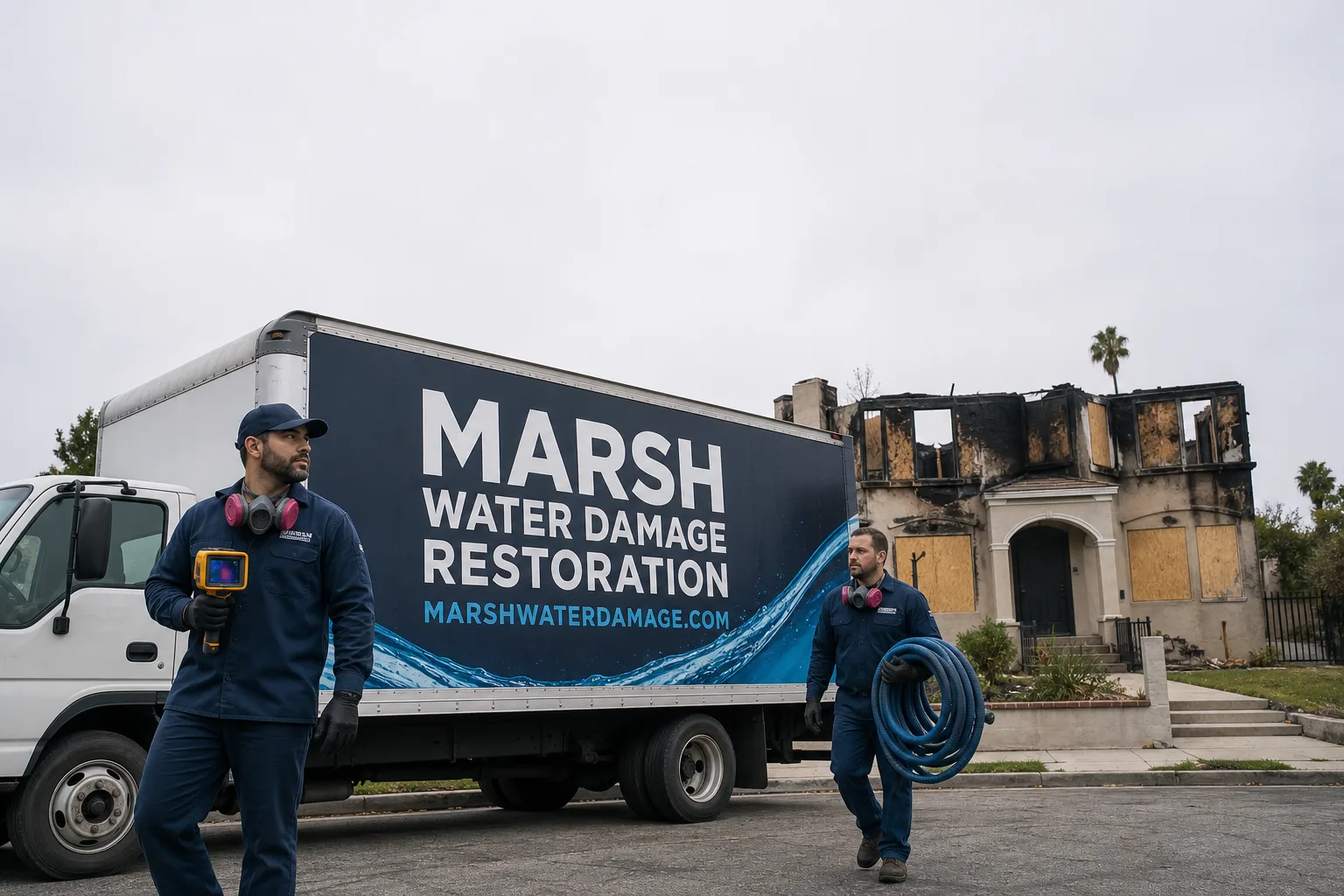
Free visual inspection and a written scope of work before any mitigation begins - photos, moisture readings, and drying logs go in your claim file
The scope we write is the scope we bill. Anything new gets shown to you, in writing, before we touch it.






 Before
 After
After Before
 After
After Before
 After
AfterFast, Reliable Storm Damage Restoration Across East New York
If storm water just pushed into your East New York basement, you need two things fast: the water out and a straight answer on what it’ll cost. Most storm-related water extractions in East New York run $1,800 to $4,200 before drying equipment is set, and full flood restoration with structural drying typically lands between $3,500 and $9,000 depending on how far the water traveled and what got soaked. Our crews know the rowhouses here, the tight basement stairways, the shared party walls, and the way Linden Boulevard floods when the sewers back up. Call (910) 613-6568 now. A live person answers, 24/7.
Why Marsh Water Damage Restoration Is East New York’s Preferred Storm Damage Restoration Company
East New York homes are mostly attached brick rowhouses and two-families built between the 1920s and 1940s. That means storm water doesn’t just pool on a floor; it moves through shared walls, wicks up old mortar, and hides behind plaster over brick. We’ve worked enough basements off Pitkin Avenue, New Lots Avenue, and around the Pink Houses to know exactly where water goes in these buildings and where mold will show up three weeks later.
Every technician who shows up at your door is background-checked, identity-verified, and sent to you by name and photo before the visit. That’s the Threshold Verified standard, and it applies to every single job we run in East New York. You’ll know who’s coming before the knock, and they’ll show a photo ID badge at the door, every time.
We don’t hand you a vague estimate and start swinging hammers. You get a written price before any work begins, a written guarantee on every repair, and a 365-Day Done Right Promise printed on the work order. If something isn’t right within a year, we come back and make it right. Free second visit, automatically.
Flooded House in East New York
A flooded house in East New York usually means water came up through the floor drain or in through the foundation after a nor’easter or heavy rain. You need extraction first, then classification, then drying. Standing water that came from a sewer backup or storm surge has to be treated as category 3, which means contaminated, and that changes everything about the scope.
The Extraction and Classification Step
We pull water out with truck-mounted and portable extraction units, then take readings to classify the water. Clean water from a broken supply line gets extracted and dried in place. Sewer backup water means removing wet drywall, carpet pad, and any porous material that absorbed it. In an East New York rowhouse with an unfinished basement, this often means cutting out lower drywall sections and treating the exposed brick.
Drying with Commercial Equipment
Our crews set up Dri-Eaz air movers, Phoenix dehumidifiers, and XPOWER blowers in the exact configuration the space needs. We run psychrometric readings, which means measuring the moisture in the air and materials, not just what’s damp on the surface. East New York basements with low ceilings and no windows dry slower than open spaces, so equipment staging matters more here than in the suburbs.
Flood Restoration in East New York
Flood restoration in East New York goes beyond water extraction. Once the standing water is out and the scope is written, the real work is structural drying, mold prevention, and rebuilding what got torn out. In the pre-war brick rowhouses around Spring Creek and the Belt Parkway corridor, that often means opening walls, checking mortar joints, and testing cast-iron plumbing stacks that sat underwater.
Hidden Mold Behind Brick and Mortar
Water wicks into old mortar and lime plaster, and it can sit there for weeks before anyone notices. By the time you see staining, mold has usually been active for a while. We check wall cavities, take moisture readings at multiple depths, and treat what we find before closing anything up.
Combined Sewer Backups Change the Scope
A lot of East New York flood restoration work is not about the storm at all. It’s the city’s combined sewer system backing up into basements along Linden Boulevard, Pitkin Avenue, and nearby corridors during heavy rain. When that’s the source, the restoration plan has to include backflow prevention or the same basement re-floods on the next heavy rain. We flag this in the written scope, every time.
Trusted Brands We Service in East New York
We run restoration equipment from Dri-Eaz, Phoenix, and XPOWER on our East New York jobs because they’re the same commercial-grade machines used in large commercial losses, applied to your rowhouse basement. We stock common replacement parts, hoses, and filters locally so we’re not waiting on a distributor when a machine fails mid-job. For attached two-families with tight stairways, we use low-profile air movers and compact dehumidifiers that fit where bigger units can’t.
Common Storm Damage Restoration Problems We See in East New York Homes
- Category 3 water treated like clean water. Storm surge and sewer backup carry bacteria, and a basement flooded from those sources can’t just be dried in place. We classify water before any drying plan is written.
- Mortar joints failing after the first storm. In the 1920s and 1930s brick rowhouses, repeated freeze-thaw cycles break down mortar. Water finds its way in well before a named storm arrives, and that means recurring basement leaks.
- Shared party walls spreading damage. Water moves through the shared wall between attached two-families. If we don’t check the neighboring unit’s side, mold and odor travel back after the job closes.
- Sewer backups undoing finished mitigation. Along Linden Boulevard and Pitkin Avenue, the storm and the sewer often flood together. Without a backflow valve, every heavy rain undoes the restoration.
Pricing for Storm Damage Restoration in East New York, NY
Water extraction alone in East New York runs $1,800 to $4,200 for most residential jobs. Full flood restoration with structural drying, mold treatment, and basic rebuild work ranges $3,500 to $9,000. Sewer backup jobs skew higher because category 3 water means more tear-out and disposal costs. Attached two-families can cost more than detached homes because containment and shared-wall checks add hours. You get a written price before any work starts, so nothing moves without your signature. Call (910) 613-6568 for a free estimate and a scope you can read line by line.
We Also Serve Cities Near East New York
If you’re just outside East New York, in Brooklyn, Queens, Manhattan, or The Bronx, we send the same Threshold Verified crews and equipment. Our Storm Damage Restoration team covers the full five-borough footprint, but this page is built specifically for the housing stock and flood patterns we see in East New York. Call (910) 613-6568 and we’ll confirm dispatch to your block.
Serving East New York, NY - Our Local Coverage Area
We’re based in the East New York area and know this community well. Use the map below to see our service coverage - if you’re nearby, we can almost certainly help.
FAQs About Storm Damage Restoration in East New York
Call us first, then shut off power to the basement if the panel is safely accessible, and do not walk through standing water that came from a storm or sewer backup because it’s likely contaminated. We answer 24/7 at (910) 613-6568, and a crew can usually reach most East New York blocks within hours. The first step on our end is extraction and water classification, because storm water and sewer water require different treatment.
In this neighborhood, the combined sewer system backs up into basements during heavy rain, especially along Linden Boulevard and Pitkin Avenue, and that water comes up through floor drains even when Jamaica Bay surge never reaches your block. We see this recurring pattern in the pre-war rowhouses here more than in neighboring Brooklyn neighborhoods. The fix is a flood restoration scope that includes backflow prevention, not just water extraction.
Mold can begin colonizing on wet drywall and wood within 48 to 72 hours, and in an unfinished rowhouse basement with old mortar joints, hidden cavities stay damp much longer than the visible surfaces. In East New York’s humid summers, that window shrinks even further. We run antimicrobial treatment and moisture mapping during every storm restoration job because waiting until you see mold means a much bigger tear-out.
Only materials that absorbed category 3 water plus any drywall or insulation that can’t be dried to standard. Clean-water intrusion from a cracked foundation or leaking supply line usually means dry in place, while sewer backup or storm surge means removing saturated porous materials. In attached two-families, we also check the shared party wall so the neighboring unit doesn’t keep feeding moisture back into your side.
Yes. We stage equipment in the street with proper cones and permits where needed, and our crews are used to carrying Dri-Eaz air movers and Phoenix dehumidifiers down narrow rowhouse stairways and through alley entrances. We won’t block your neighbors’ driveways, and we’ll coordinate any sidewalk or street staging with you before the crew arrives. You’ll know exactly what to expect when we show up.
Call Marsh Water Damage Restoration in East New York
Storm water in your basement is not a wait-and-see situation, especially in an attached brick rowhouse where water and mold move through shared walls. Call (910) 613-6568 and a live person answers, day or night. We’ll send a Threshold Verified technician you already know by name and photo, with a written price before any work starts and a 365-Day Done Right Promise on every repair. When the water rises in East New York, call before the next rain takes it deeper.
Written by Tobias Reyner, Owner at Marsh Water Damage Restoration, serving East New York since 2005.