
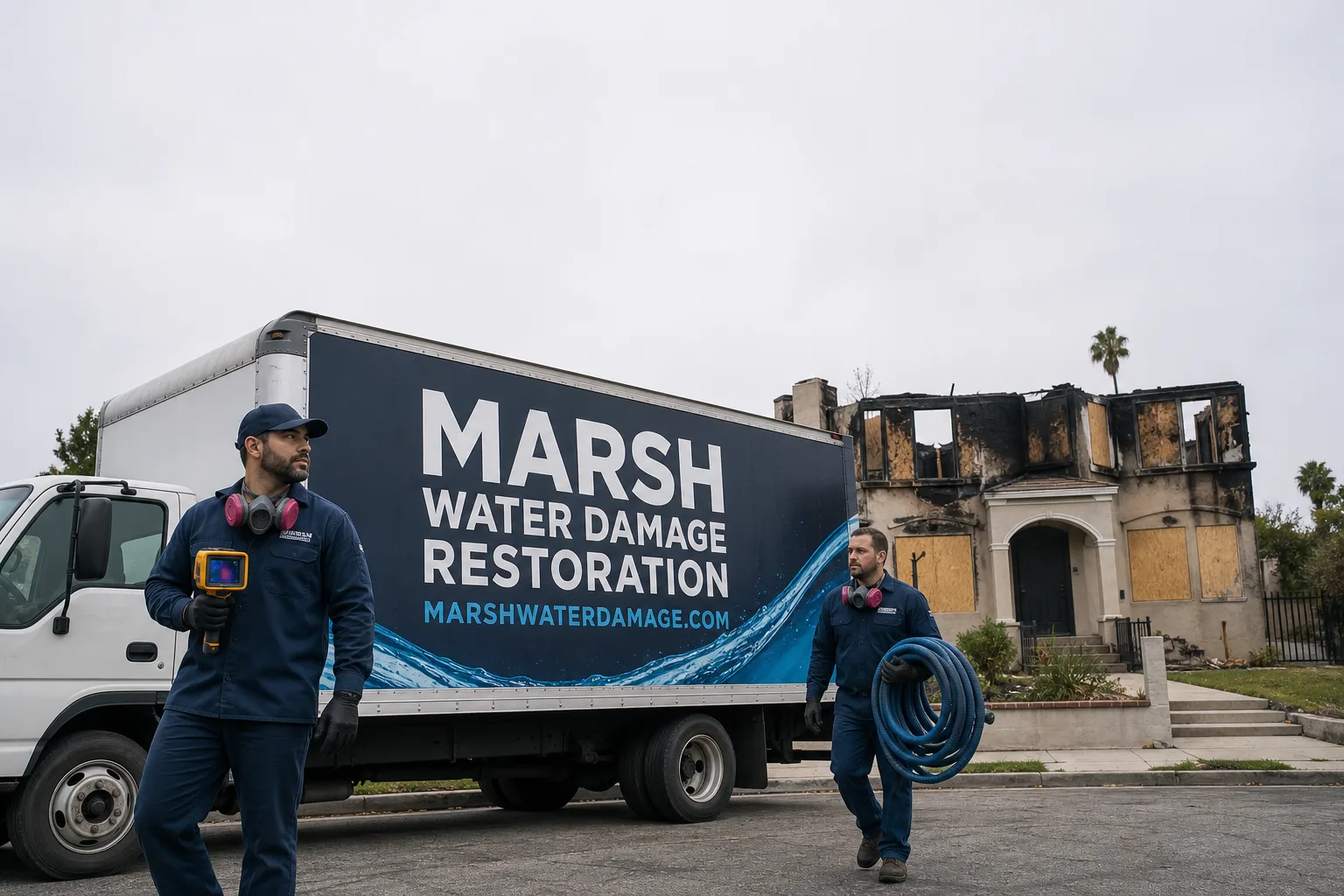
Free visual inspection and a written scope of work before any mitigation begins - photos, moisture readings, and drying logs go in your claim file
The scope we write is the scope we bill. Anything new gets shown to you, in writing, before we touch it.
 Before
 After
After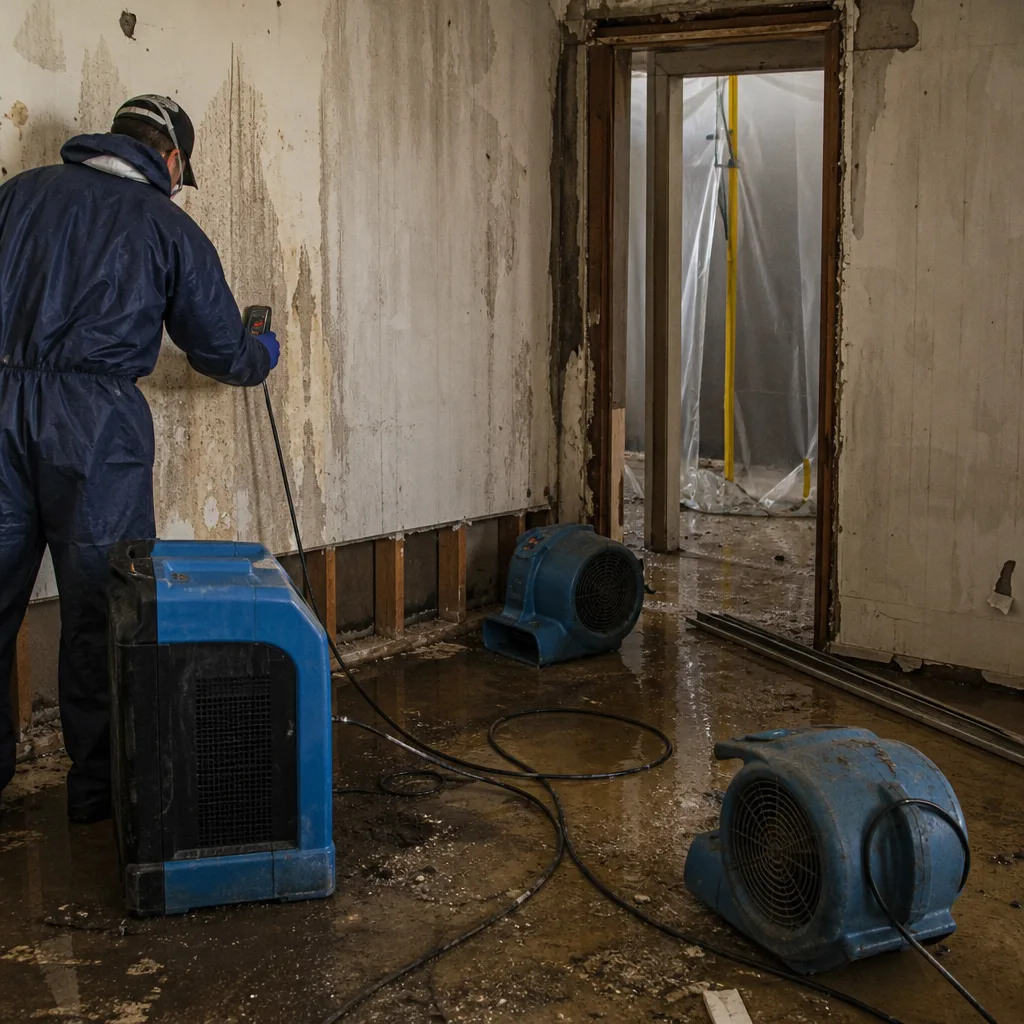 Before
 After
After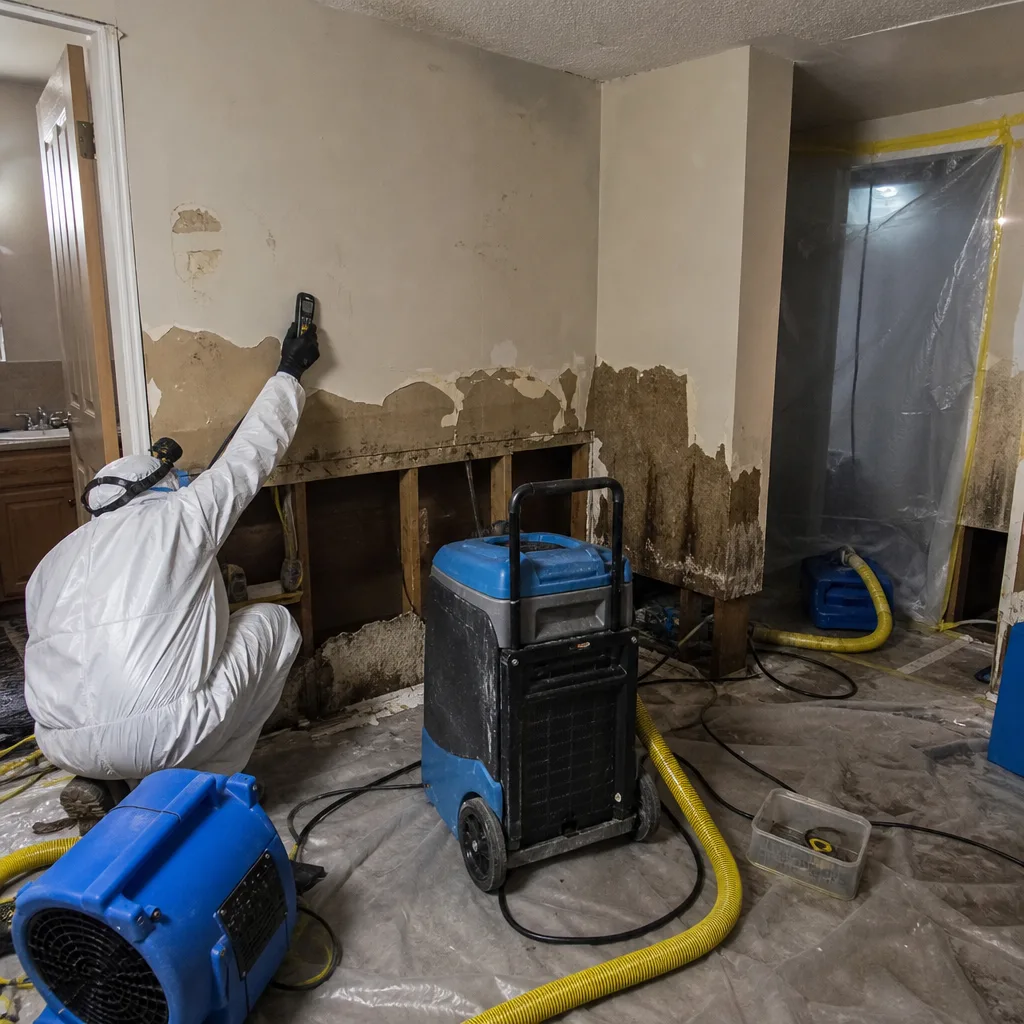 Before
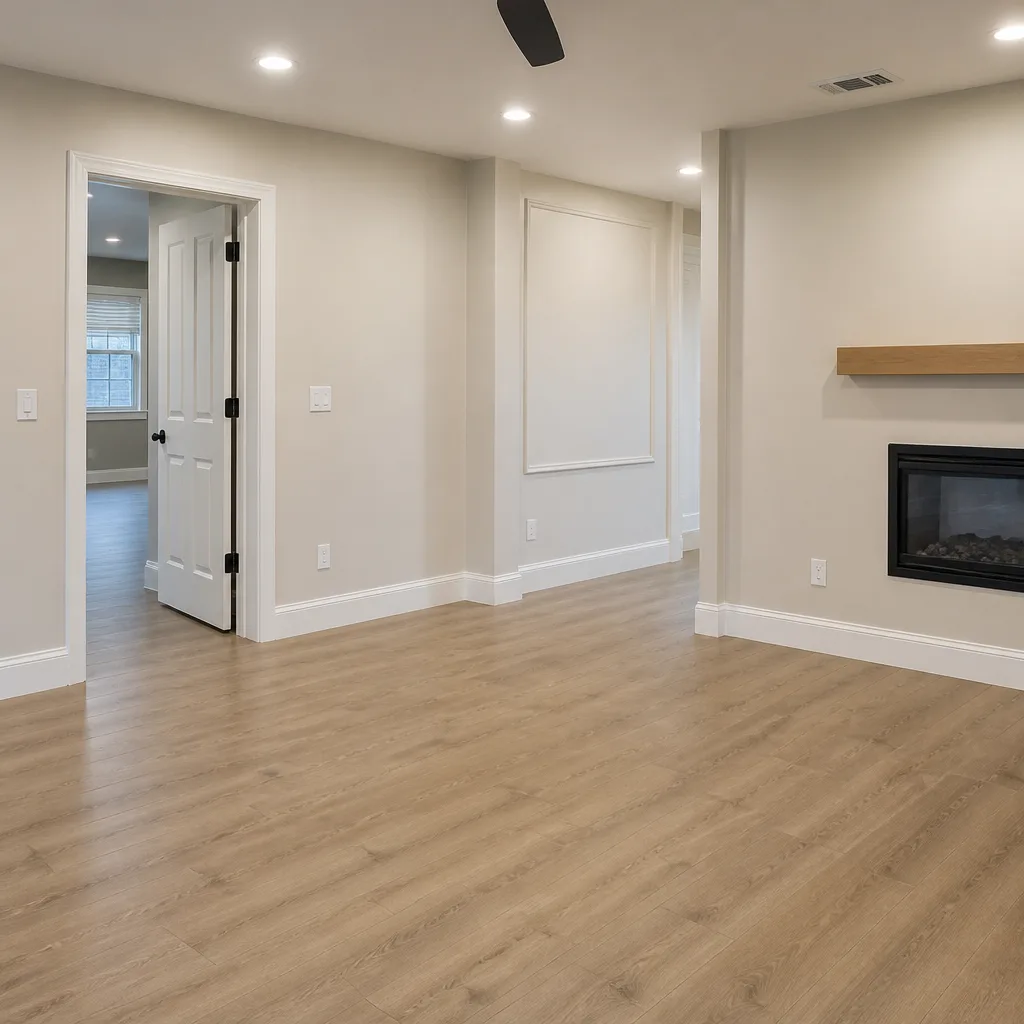 After
AfterFast, Reliable Storm Damage Restoration Across New Hyde Park
Storm damage in New Hyde Park rarely stays where it lands. Wind-driven rain gets forced through damaged door sweeps, lifted flashing, and broken thresholds, then travels down into the half-level wall cavities that define so many of the 1945 through 1965 split-levels and raised ranches here. By the time you see water in the basement, it has usually passed through two or three floors of framing. Our Storm Damage Restoration team knows exactly how water moves through New Hyde Park’s vintage housing stock, because we have mapped it in dozens of homes from the LIRR station corridor to the Herricks and Denton Avenue neighborhoods. If water is inside your home right now, call (910) 613-6568. A live person answers, and we’ll have a plan before you hang up.
Why Marsh Water Damage Restoration Is New Hyde Park’s Preferred Storm Damage Restoration Company
Most storm damage restoration companies in Nassau County treat a flooded New Hyde Park basement as a single-room water loss. We know better. The split-levels and raised ranches that dominate this town were built fast, between 1945 and 1965, with half-level wall cavities that act as hidden channels for wind-driven rain. Water enters at the roof or the door, then pools inside wall bays one or two floors below where the damage is visible. That is the job. Finding the water is half the work, and it is where our thermal imaging and moisture mapping make the difference.
Every technician who arrives at a New Hyde Park home is Threshold Verified: background-checked, identity-verified, and sent to you by name and photo before we knock. At the door, they show a photo ID badge. No exceptions. You know exactly who is walking into your house, which matters when you are already stressed and the damage is spreading. Our techs hold IICRC, RIA, and IFA credentials and run Dri-Eaz, Phoenix, and XPOWER equipment, the same drying systems used on large commercial losses. We answer the phone live, 24 hours a day. And before any work starts, you get a written price. Not an estimate that balloons after demo begins.
The 365-Day Done Right Promise is printed on every work order. If the repair is not right within a full year, we make it right. A free second visit is included automatically, never something you have to ask for or negotiate. Tobias Reyner leads our technical team, and he holds every job to that standard. That is the only way we work in New Hyde Park.
Flooded House in New Hyde Park
A flooded house in New Hyde Park is rarely a simple extraction job. The first call usually comes from a homeowner standing in a finished basement with water seeping up through the slab or pouring in through a failed door threshold. What we find on arrival, over and over in this town, is that storm-driven rain entered at the roof line or the door and then traveled down through the half-level wall cavities before ever reaching the basement. You are not looking at one wet room. You are looking at a moisture path that runs through two or three floors of your home.
Multi-Level Moisture Mapping Before Anything Else
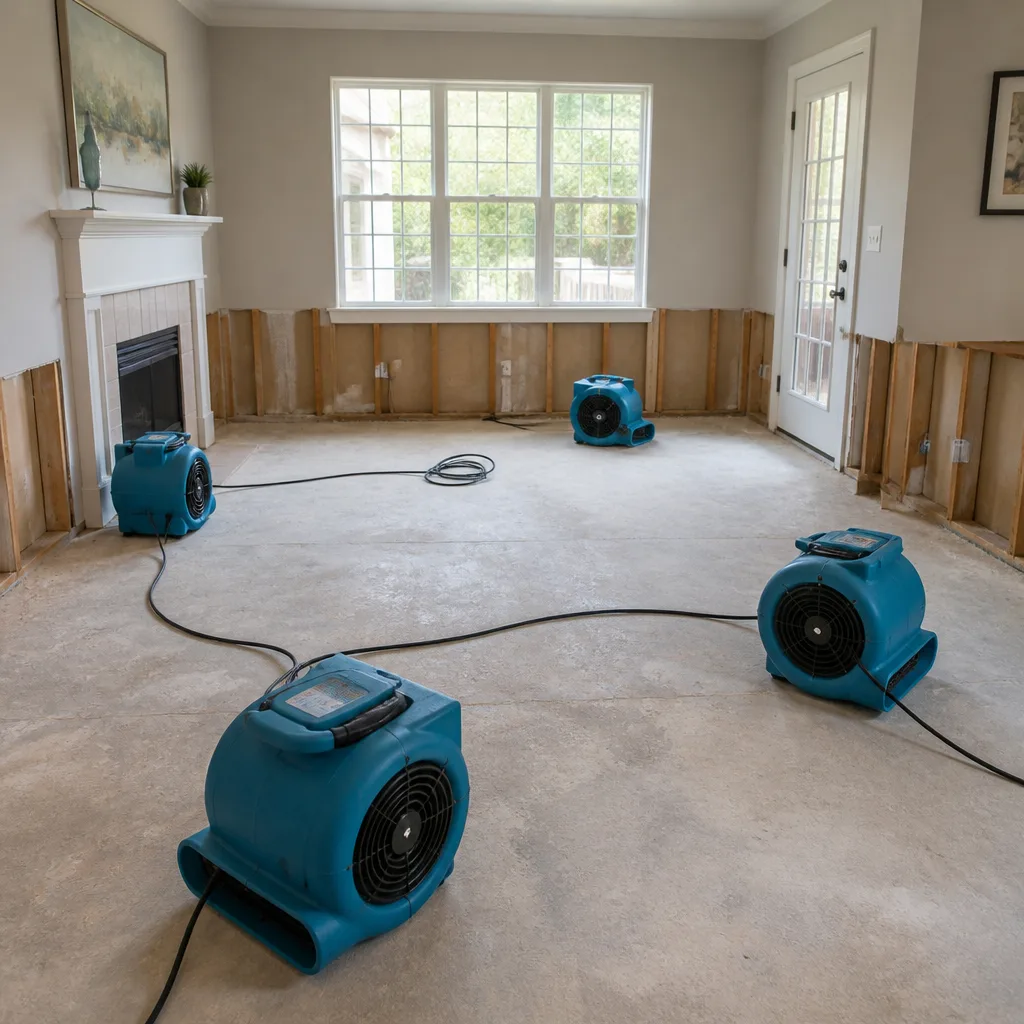
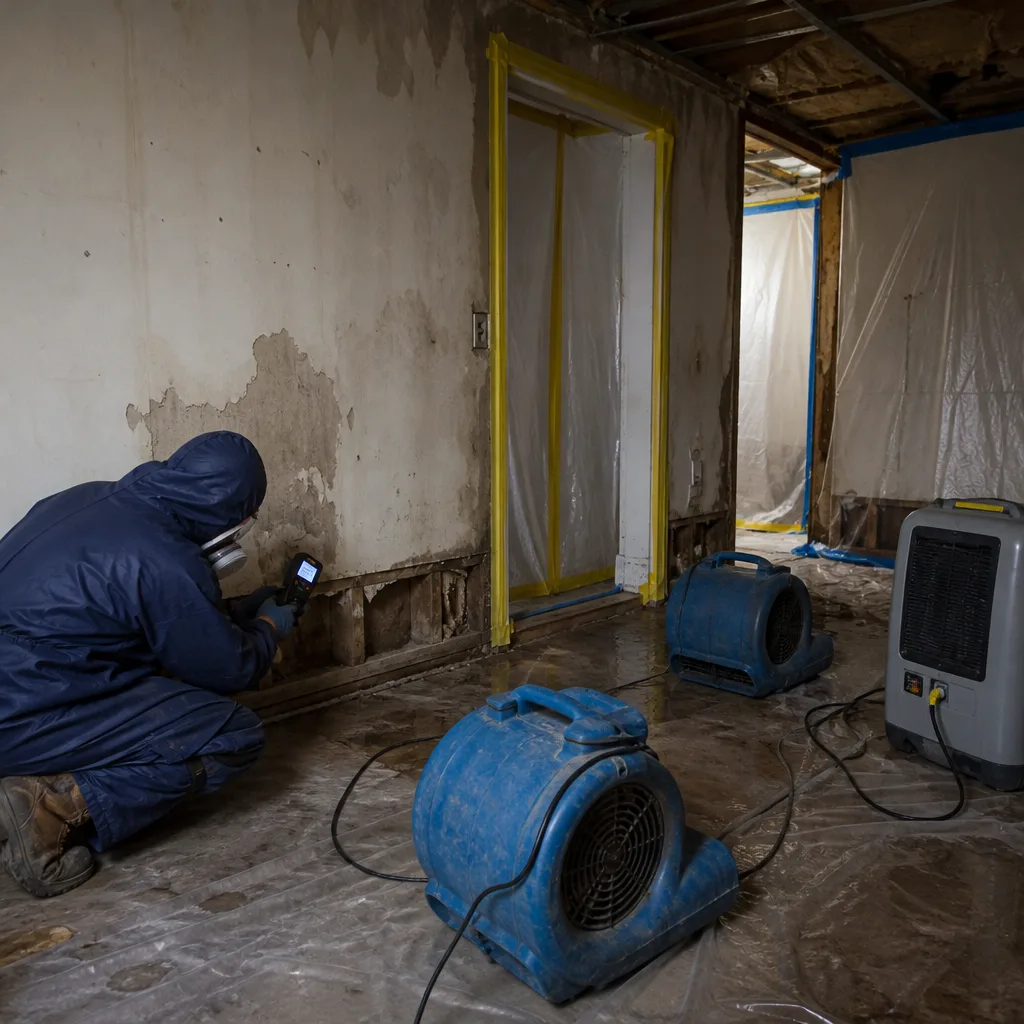
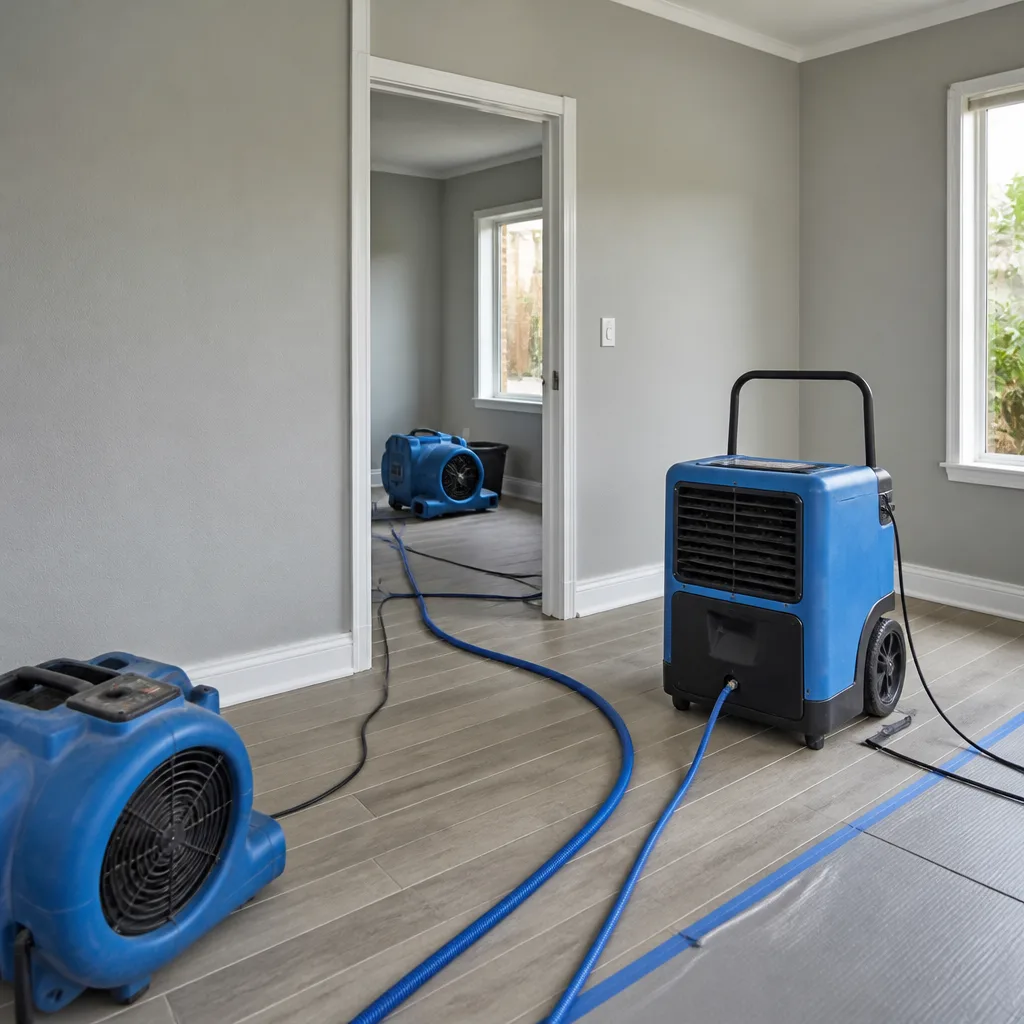
We do not place a single dehumidifier until we have traced exactly where the water went. In New Hyde Park’s split-levels, that means moisture mapping and thermal imaging across the upper half-level, the main floor, and the basement. Air movers and Injectidry panels often get staged on three separate floors before structural drying can begin. Skip that step and you leave wet framing inside wall cavities, which turns into mold long after the visible water is gone.
Asbestos Protocol on Basement Floors
Here is a New Hyde Park reality that surprises most homeowners. When storm water forces us to pull up basement flooring in a 1950s or early 1960s home, we almost always hit 9″x9″ vinyl asbestos tile underneath. That turns a standard water extraction into a regulated asbestos abatement job before drying equipment can be placed. We pre-stage abatement supplies on nearly every residential basement call in this area, because the pattern is that consistent. A Category 1 water loss becomes a regulated job, and we handle both sides of it without you having to coordinate two separate contractors.
Flood Restoration in New Hyde Park
Flood restoration in New Hyde Park means more than pumping water out and running fans. It means figuring out whether the water in your basement is Category 1, 2, or 3, and then restoring the structure the right way: extraction, containment where required, antimicrobial treatment when contamination is present, structural drying, and a written scope of repair. The mistake we see most often is a restoration crew treating a post-storm loss as clean water when it is actually Category 2 or 3. That happens when storm water picks up soil, roof debris, and groundwater before it reaches your basement.
Why Category Matters in New Hyde Park
Wind-driven rain that passes over a damaged roof or a filthy threshold picks up contaminants. By the time it reaches a New Hyde Park basement, it is usually Category 2 at minimum, sometimes Category 3. The category determines whether we need full containment, antimicrobial treatment, and disposal of porous materials. Getting this wrong is not a paperwork issue. It is a health issue, and it is the difference between a restoration that holds up and one that leaves contamination sealed inside your walls.
The Written Scope Before Work Begins
Before any equipment gets placed, you receive a written scope of work and a written price. That scope tells you exactly what we found, what category the water is, what we will do, and what it will cost. If your insurance company is involved, we photograph everything and provide direct adjuster documentation. You will never be oversold after demo begins, because the price is already on paper.
Common Storm Damage Restoration Problems We See in New Hyde Park Homes
- Wind-driven rain trapped in half-level wall cavities. Split-levels and raised ranches have wall bays that connect the upper half-level to the lower floors. Storm water enters at the roof or door, runs inside those cavities, and you never see it until the basement is wet. We stage drying equipment on multiple floors to catch what other crews miss.
- 9″x9″ vinyl asbestos tile beneath storm water. The standard basement floor finish of the 1945 to 1965 building boom now triggers mandatory asbestos abatement whenever flooring gets pulled. We pre-stage abatement supplies on almost every New Hyde Park basement call and carry the proper containment and clearance protocols.
- Failed door sweeps and thresholds after high wind. A storm-damaged door may look fine from the outside, but a broken sweep or a bent threshold lets wind-driven rain pour directly into the house. We replace sweeps, thresholds, and weatherstripping as part of storm damage restoration, not as an add-on.
- Insurance scopes that miss the wind path. Adjusters often write a post-storm loss as a single-floor Category 1 water claim. Our documentation shows the full moisture path, the true category, and the required abatement work, which keeps your claim accurate and your repair complete.
Pricing for Storm Damage Restoration in New Hyde Park, NY
Storm damage restoration in New Hyde Park typically starts around $3,500 to $6,000 for a single-floor water extraction and structural drying when no asbestos abatement is needed. When the job involves pulling up 9″x9″ VAT flooring and running containment with abatement clearance, the total usually lands between $7,000 and $12,000. Multi-level drying across split-level wall cavities adds $2,000 to $4,000 because air movers, Injectidry panels, and dehumidifiers are staged on two or three floors. Door and threshold replacement after wind damage runs $400 to $1,800 depending on the door type and whether the frame is compromised. Every job receives a written price before work begins, and that price does not change after demo starts. Call (910) 613-6568 for a free estimate. You will speak to a live person, and we can often have a technician to your New Hyde Park home the same day.
Trusted Brands We Service in New Hyde Park
We run Dri-Eaz dehumidifiers, Phoenix air movers, and XPOWER extraction units on New Hyde Park storm damage jobs, and our trucks carry spare parts for these systems, which means fewer delays when a fan motor fails or a dehumidifier needs a new sensor mid-job. We stock replacement door sweeps, thresholds, and weatherstripping for the common door sizes found in 1950s and 1960s construction in this area, so a wind-damaged entry can often be sealed the same day, not ordered and waited on. Fast turnaround matters when the next storm rolls through and your house is still open to the weather.
We Also Serve Cities Near New Hyde Park
Our Storm Damage Restoration crews work throughout the North Hempstead Town and western Nassau County area. That includes Floral Park, Garden City, Glen Oaks, and Franklin Square, plus the neighborhoods directly around the New Hyde Park LIRR station. If you are anywhere in or near New Hyde Park, call (910) 613-6568 and we will tell you exactly when a technician can arrive.
Serving New Hyde Park, NY - Our Local Coverage Area
We’re based in the New Hyde Park area and know this community well. Use the map below to see our service coverage - if you’re nearby, we can almost certainly help.
FAQs About Storm Damage Restoration in New Hyde Park
A storm-damaged door in New Hyde Park often leads to a full basement drying job because wind-driven rain enters through the broken sweep or threshold, then travels down through the half-level wall cavities common in the town’s 1945 to 1965 split-levels and raised ranches. The water follows the framing until it pools in the basement, soaking multiple floors along the way. We trace that full path before drying begins. Call (910) 613-6568 if you suspect water has moved beyond the entry point.
Storm damage restoration in a 1945 to 1965 New Hyde Park home is different because the half-level wall cavities create hidden water paths between floors, and the original basement floors are often 9″x9″ vinyl asbestos tile. That combination means a single storm event frequently becomes a multi-level drying job with mandatory asbestos abatement before dehumidifiers can be placed. We pre-stage for both conditions on nearly every residential call in this area.
We determine the category by testing the water and tracing its entry path. Storm water that ran over a damaged roof, through a dirty threshold, or across soil is Category 2 or 3 because it carries contaminants. Category 1 is clean water from a supply line, which is almost never the case after a nor’easter. Getting the category right determines whether containment and antimicrobial treatment are required. Call (910) 613-6568 and a technician will test and document the actual category before any work starts.
New Hyde Park requires that wind-rated door and impact-rated opening replacements be installed with the proper local permit and product approval documentation. A door upgrade installed without that paperwork can stall an insurance claim and fail final inspection. We handle the documentation as part of the restoration scope, so the repair is both storm-resistant and code-compliant. Call (910) 613-6568 to find out what your specific door replacement will require.
Mold becomes a concern within 48 to 72 hours after storm water enters a New Hyde Park home, especially inside the enclosed wall cavities of split-levels and raised ranches where moisture is trapped and invisible. That is why we get drying equipment running quickly and why we map the full moisture path, not just the visible water. If water has been inside for more than two days, call (910) 613-6568 immediately. The sooner we start, the less damage spreads.
Written by Tobias Reyner, Owner at Marsh Water Damage Restoration, serving New Hyde Park since 2005.