
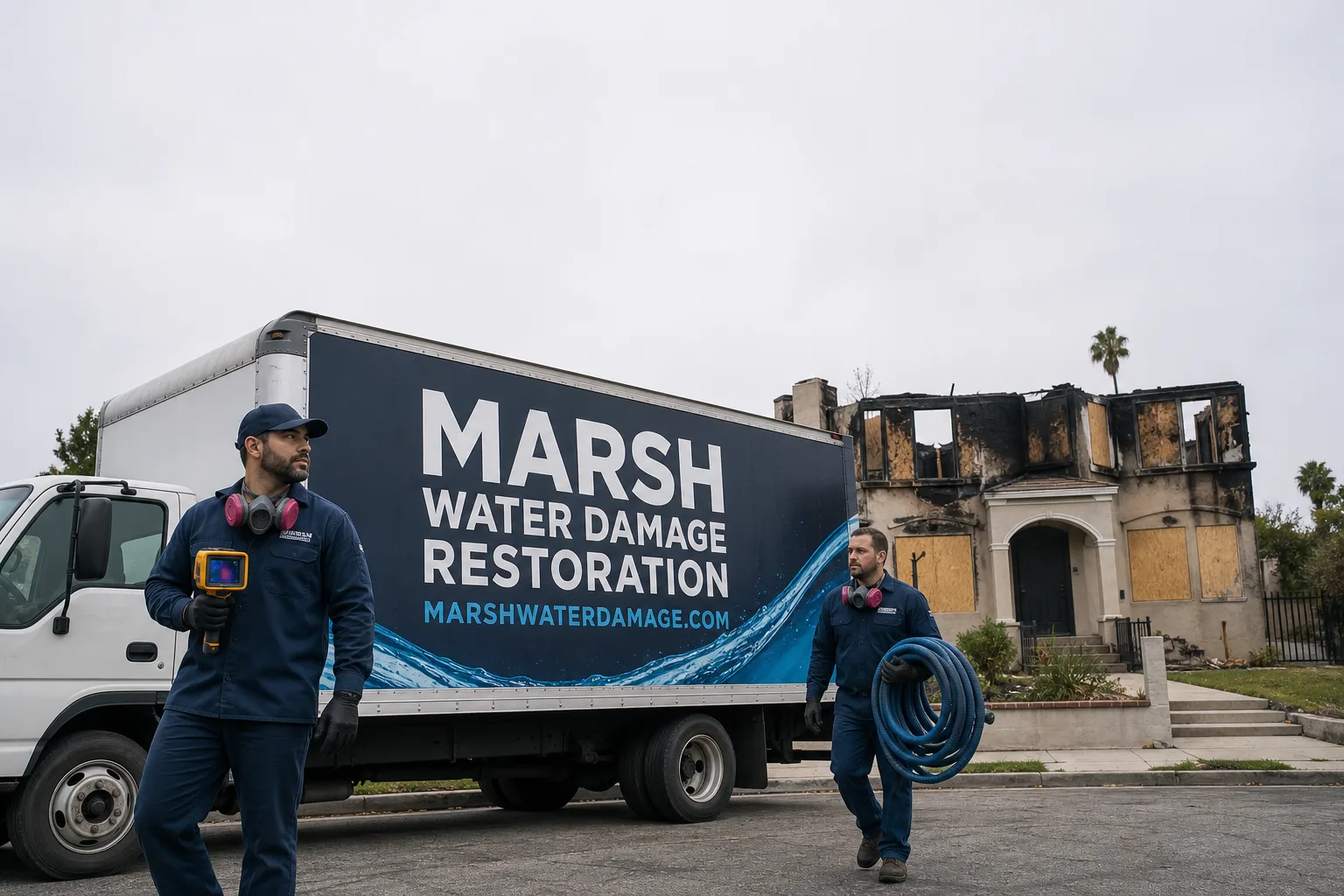
Free visual inspection and a written scope of work before any mitigation begins - photos, moisture readings, and drying logs go in your claim file
The scope we write is the scope we bill. Anything new gets shown to you, in writing, before we touch it.






 Before
 After
After Before
 After
After Before
 After
AfterStorm Damage Restoration in Ridgefield Park: Tidal Surge, Not Rainfall, Is Usually the Culprit
Most storm damage in Ridgefield Park doesn’t start with a leaky roof or a burst pipe. It starts when the Hackensack River, tidal through this stretch of Bergen County, pushes saltwater-influenced surge into basements on days when it barely rained at all. That’s the pattern we’ve seen on Industrial Avenue, Hobart Street, and the low blocks near the river for years. If water is in your basement right now, call (910) 613-6568 and a live person answers, any hour, any day.
A typical storm-related basement extraction in Ridgefield Park runs $1,800 to $3,400 before drying equipment and any structural tear-out. Salt-influenced surge water from the Hackensack tends to push that toward the higher end because it complicates drying and usually requires antimicrobial treatment. Our Storm Damage Restoration team treats most tidal intrusions as Category 2 or 3 water, not the clean Category 1 a lot of crews assume. That distinction matters more here than almost anywhere else in Bergen County.
Key Takeaways for Ridgefield Park Homeowners
- Storm surge from the tidal Hackensack River floods basements here even without heavy local rain.
- Salt-influenced floodwater requires different drying and antimicrobial protocols than rainwater.
- Most homes in the village are pre-1950 construction with basements at or near river grade.
- Extraction and initial mitigation typically costs $1,800 to $3,400, with drying equipment billed separately.
- Marsh responds to Ridgefield Park with background-checked, photo-badged technicians, every time.
Why Marsh Water Damage Restoration Is Ridgefield Park’s Preferred Storm Damage Restoration Company
Ridgefield Park is a tight, walkable village. Neighbors talk. When a crew shows up on Elm Avenue or Teaneck Road, word travels fast if they don’t know what they’re doing. We’ve built our reputation here on the jobs where the river won: two-family homes on streets like Preston and Overpeck where surge backed into full basements, where homeowners thought a wet floor was the whole story, and where previous remediation attempts had failed quietly behind original plaster.
Every technician we send to Ridgefield Park is background-checked, identity-verified, and sent to you by name and photo before the visit. That’s the Threshold Verified standard, and it isn’t optional. When the doorbell rings, the person standing there matches the photo you already received, holding a photo ID badge. Tobias Reyner, who leads our technical team, insists on it for every single job, no exceptions. A live person answers our phones 24/7, which matters when the river rises at 2 a.m. and you’re standing in water.
We answer calls from Ridgefield Park within minutes, and our crews typically arrive within 60 to 90 minutes for emergency mitigation. For a village of roughly 13,000 people squeezed between the Hackensack and the Meadowlands, that response window matters because water doesn’t wait for a callback queue.
Storm Damage Cleanup in Ridgefield Park
Storm Damage Cleanup in Ridgefield Park usually means removing what the Hackensack River left behind: saturated rugs, buckled hardwood, wet drywall, and a film of salt residue on every surface. We handle the extraction first, then containment, then a written scope for what gets torn out and what gets dried. The cleanup phase, before drying equipment is set, typically runs $1,400 to $2,800 depending on square footage and how much of the basement was affected. After a nor’easter or tropical remnant, the water is rarely clean, so antimicrobial treatment is standard on nearly every tidal job we do in the village.
Salt Residue and Surface Contamination
Hackensack surge water leaves behind chloride residue that plain water extraction misses. If that film isn’t addressed, it keeps pulling moisture from the air and slows the entire drying process. We map moisture first, then treat surfaces before drying equipment ever gets powered on.
Contents and Debris Removal
Basements in Ridgefield Park’s pre-war homes are often storage spaces for decades of belongings. After surge intrusion, we move salvageable items out, document everything with photos for your claim, and remove the unsalvageable material. Photo documentation is part of every job, which makes dealing with flood insurance adjusters significantly less painful.
Flood Cleanup in Ridgefield Park
Flood Cleanup in Ridgefield Park isn’t a single task. It’s extraction, antimicrobial treatment, drying, and then a decision about what gets rebuilt and what gets replaced. Because large portions of the village sit inside FEMA-designated AE flood zones, many homeowners here carry flood insurance through the NFIP, and every job we do comes with the paperwork adjusters expect: moisture logs, drying records, photos, and a written scope. Flood cleanup before structural repairs typically runs $2,200 to $4,500 in Ridgefield Park, with the higher end for basements where salt-influenced Category 3 water requires more aggressive antimicrobial work and longer drying times.
FEMA Flood Claim Documentation
If you’ve had a previous flood loss at the property, your claim is different than a first-time loss. Repetitive-loss designations in Ridgefield Park mean adjusters want more documentation, and elevation certificates matter. We handle the moisture mapping, drying logs, and photo evidence so your claim doesn’t stall because of missing paperwork.
Repetitive-Loss and Pre-Existing Damage
Homes closest to the river have often flooded before. That means old damage sits alongside new damage, and an honest scope has to distinguish between the two. We document pre-existing conditions in writing before work starts, so there’s no dispute later about what the storm did and what was already there.
Trusted Brands We Service in Ridgefield Park
Ridgefield Park homeowners run a lot of the same equipment we do: XPOWER air movers in damp basements, B-Air dryers after a small leak, Injectidry systems for hardwood that got wet. When those units fail mid-job or never quite got the basement dry, we service them and get replacement parts fast from our local supply network. Our drying fleet includes Phoenix and Dri-Eaz units running alongside Injectidry mats on hardwood floors, because the housing stock here, original oak over framing that’s been wet before, responds better when you combine air movement with targeted wood drying. If your own equipment isn’t cutting it after a storm, we’ll bring in ours while yours gets repaired.
Common Storm Damage Restoration Problems We See in Ridgefield Park Homes
- Tidal surge mistaken for clean rainwater. Crews treat Hackensack surge as Category 1, skip antimicrobial treatment, and homeowners get mold weeks later. Salt-influenced water from a tidal river is almost never clean, and we treat it accordingly.
- Chronic humidity in river-grade basements. On the lowest blocks near the Hackensack, relative humidity stays above 70% even between named storms. That means partial mold remediation from a previous flood looks fine on the surface but keeps growing behind original plaster.
- Drying signed off too early. Salt residue skews moisture meter readings and slows evaporation. A contractor unfamiliar with tidal floodwater might call the basement dry days before it actually is. We’ve seen the callbacks from this exact mistake.
- Pre-1950 construction without flood-resistant materials. Original hardwood, plaster walls, and old framing absorb saltwater differently than modern materials. Drying schedules run longer here, and tear-out replacement decisions have to account for what’s historically original versus what’s already been replaced.
Pricing for Storm Damage Restoration in Ridgefield Park, NJ
Here’s what you’re walking into, in plain dollar terms. Extraction and initial cleanup: $1,400 to $2,800. Antimicrobial treatment and containment: $400 to $900 depending on square footage. Drying equipment, including Dri-Eaz and Phoenix dehumidifiers and XPOWER air movers, runs $60 to $120 per day per unit, and most Ridgefield Park tidal surges need four to seven days of drying. Structural tear-out and disposal adds $1,000 to $3,000 on average for a typical two-family basement. The salt factor is real: if surge water sat for more than a few hours, expect the higher end of every range. We give you a written price before any work starts, and the 365-Day Done Right Promise is printed on the work order. Call (910) 613-6568 for a free estimate.
A Ridgefield Park Basement on Industrial Avenue: What Tidal Surge Actually Does
We were called to a two-family on Industrial Avenue after a fall nor’easter pushed tidal surge into a full basement that sits at river grade. The homeowner had no local rainfall to warn them. The streets were dry. The basement wasn’t. Moisture mapping showed saturated original plaster and hardwood throughout, and the surge water tested as salt-influenced Category 3, not clean rain. We pulled the affected flooring, ran containment with antimicrobial treatment, and set Dri-Eaz and Phoenix dehumidifiers with air movers against the open framing. Drying logs ran several extra days because the salt residue held moisture in the wood. We also flagged the home’s repetitive-loss history for the FEMA flood claim paperwork, because that changes what the policy covers and what the adjuster expects to see. That’s the Ridgefield Park pattern we know well: dry streets outside, saltwater inside, and a claims process that needs more documentation than a standard water loss.
Because the Hackensack Is Tidal, Ridgefield Park Storm Damage Doesn’t Follow the Rain
Ridgefield Park sits directly on the tidal Hackensack River, with large portions of the village inside FEMA-designated AE flood zones. That geography drives nearly every storm damage call we get here. When a coastal nor’easter or hurricane remnant pushes water up the river, the surge backs into basements and crawl spaces along the lowest blocks, even if the village got an inch of rain. The water is brackish and salt-influenced, which corrodes metal hardware, wicks into original plaster, and complicates structural drying in ways an inland Bergen County crew rarely sees. On the lowest-lying streets near the river, crawl spaces and basement mechanicals often show active mold colonization year-round because chronic tidal intrusion keeps relative humidity above 70% between named storms. Repairing storm damage here isn’t just extracting water. It’s understanding a hydrology that doesn’t behave like anywhere else in the county.
What the Tidal Surge Pattern Means for Drying and Mold Handling
Because Ridgefield Park storm flooding is river-driven rather than rain-driven, the restoration playbook changes. First, we test the water. If it’s Category 2 or 3, we treat it with antimicrobials before drying starts, not after. Second, we don’t trust surface readings on moisture meters. Salt-laden residue skews readings and slows evaporation, so our drying logs run longer and we check framing with penetrating meters before we sign off. Third, we look for what previous crews missed. In pre-1950 homes with original plaster, mold from an earlier flood often colonizes behind walls for years before anyone sees it. If we’re called after a new surge, we inspect those hidden cavities before we close anything up. The 365-Day Done Right Promise backs all of it: if the repair isn’t right within a year, we come back and make it right, with a free second visit included automatically.
We Also Serve Cities Near Ridgefield Park
Our crews work throughout this corner of Bergen County, including Ridgefield Park, Little Ferry, South Hackensack, Bogota, and Palisades Park. If you’re on the border or right across the river, the same tidal surge patterns and the same restoration standards apply. Call and ask for our team.
Serving Ridgefield Park, NJ - Our Local Coverage Area
We’re based in the Ridgefield Park area and know this community well. Use the map below to see our service coverage - if you’re nearby, we can almost certainly help.
FAQs About Storm Damage Restoration in Ridgefield Park
The Hackensack River is tidal through Ridgefield Park, so a coastal nor’easter or hurricane remnant can push surge water upstream into the village’s lowest blocks with almost no local rainfall. Your basement flooded because the river rose, not because rain fell. That’s why storm damage in Ridgefield Park doesn’t correlate with the rainfall totals on your phone. Call (910) 613-6568 and we’ll confirm the water source and start extraction today.
Yes, significantly. Salt residue slows evaporation, skews moisture meter readings, and holds water in wood and plaster longer than clean rainwater would. We test the water, apply antimicrobial treatment when it’s Category 2 or 3, and run drying logs for several extra days before signing off. If you’d like a specific drying plan for your home, call (910) 613-6568 for a free assessment.
Because chronic tidal intrusion keeps relative humidity above 70% in homes near the river, so mold that wasn’t fully remediated in a previous flood keeps growing behind plaster and under floors. Surface checks miss it. We inspect wall cavities and floor framing before closing anything up. To schedule an inspection, call (910) 613-6568.
Yes. Repetitive-loss properties in Ridgefield Park’s FEMA AE zones require more documentation, and elevation certificates often come into play. We separate new damage from pre-existing conditions in writing before work starts, and we provide the moisture logs, photos, and drying records your adjuster will expect. Call (910) 613-6568 and we’ll walk you through what your claim needs.
Within hours, not days. Saltwater-influenced surge starts wicking into plaster, hardwood, and framing immediately, and mold colonization begins within 24 to 48 hours. Our crews typically arrive in Ridgefield Park within 60 to 90 minutes of your call. If water is in your basement right now, call (910) 613-6568.
Call Marsh Water Damage Restoration for Storm Damage in Ridgefield Park
If the Hackensack backed into your basement, or a nor’easter just pushed water through your crawl space, don’t wait for the salt residue to do more damage. Call (910) 613-6568 any hour, any day. A live person answers. We’ll send a background-checked, photo-badged technician to your Ridgefield Park home, give you a written price before anything starts, and back the work with the 365-Day Done Right Promise. That’s how we’ve worked since 2005, and that’s what every Ridgefield Park homeowner gets, every single time.
Written by Tobias Reyner, Owner at Marsh Water Damage Restoration, serving Ridgefield Park since 2005.