
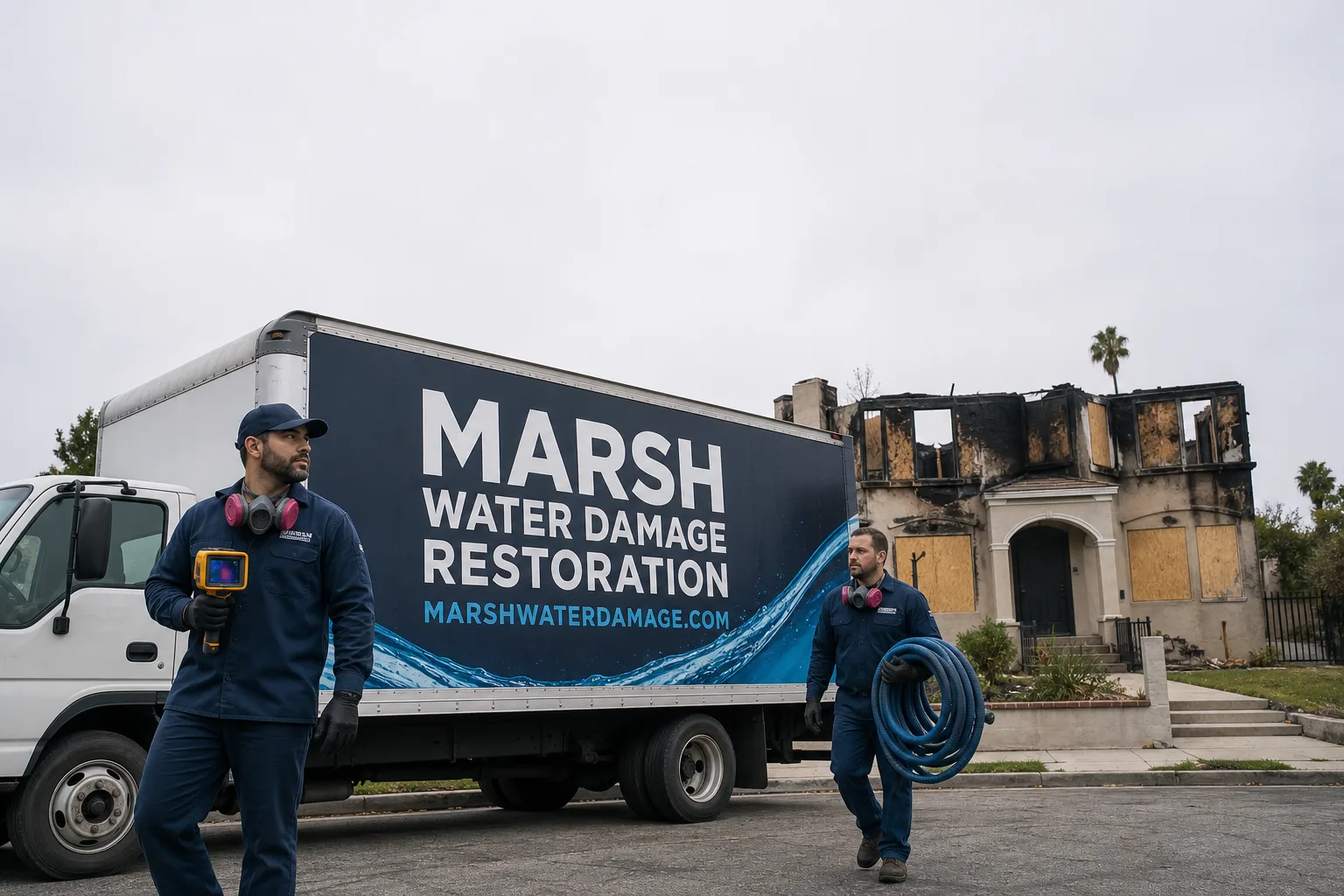
Free visual inspection and a written scope of work before any mitigation begins - photos, moisture readings, and drying logs go in your claim file
The scope we write is the scope we bill. Anything new gets shown to you, in writing, before we touch it.






 Before
 After
After Before
 After
After Before
 After
AfterFast, Reliable Storm Damage Restoration Across South Richmond Hill
Storm damage in South Richmond Hill rarely looks like it does on the news. It’s not a collapsed roof or a tree through a window. It’s two inches of backed-up sewage in a finished basement apartment off 123rd Street. It’s water pushing up through a floor drain on Atlantic Avenue after twenty minutes of hard rain. Marsh Water Damage Restoration has answered storm calls across South Richmond Hill since 2005, and we know what these homes need because we’ve seen what these storms do. Call (910) 613-6568 any hour, and a live person answers. Not a recording. Not a callback. A person who can dispatch a crew to your block.
Why Marsh Water Damage Restoration Is South Richmond Hill’s Preferred Storm Damage Restoration Company
South Richmond Hill’s housing stock is specific. Semi-detached and attached two-family brick homes built between the 1920s and 1950s, many with converted basement units that hold a tenant’s entire life. When storm water hits, the damage is rarely contained to one room. Plaster walls wick moisture upward. Old galvanized drain lines corrode and trap water. The job requires more than extraction, and homeowners here know it. That’s why they call us first.
Our Storm Damage Restoration team includes technicians credentialed through IICRC, RIA, and IFA, and every one of them arrives under our Threshold Verified protocol. Before the truck pulls up, you get the technician’s name and photo on your phone. At the door, they show a photo ID badge. Every time. For neighbors who are home alone, or parents with small children, or older homeowners who have had bad experiences with contractors, that matters more than any equipment list.
Response time to South Richmond Hill is measured in minutes when weather is active. We stage crews at the metro office in Queens during storm warnings, and dispatch directly to the Liberty Avenue corridor, the blocks around Phil “Scooter” Rizzuto Park, and the residential streets running north toward Atlantic. When the combined sewer surcharges, the first hour determines whether you’re dealing with wet carpet or a full biohazard remediation. We answer live, we move fast, and we bring the right gear the first time.
Storm Damage Cleanup in South Richmond Hill
Storm Damage Cleanup in South Richmond Hill usually means one thing: the combined sewer backed up and the basement took the hit. That water isn’t rainwater by the time it reaches your floor. It’s Category 3 black water, carrying raw sewage and whatever else the system was holding. If you’re standing in it, stop. This is a biohazard situation, and the cleanup has to be treated as one from the first minute.
Our crews start with water extraction and antimicrobial treatment before anything else. We don’t treat storm basement water like a clean-water pipe break, because it isn’t. Then we moisture-map the plaster walls to find how far the water traveled inside the cavities. South Richmond Hill’s original plaster construction is beautiful, but it holds water in ways modern drywall simply doesn’t. A job here typically costs more than the same square footage in new construction because the drying is slower and the demolition scope is often larger once hidden moisture is found.
Plaster Cavity Drying and Mold Prevention
Once the standing water is gone, the real work starts. Plaster walls in these 1920s-era homes absorb water at the base and pull it upward through capillary action, sometimes six feet or more inside the wall cavity. We use psychrometric readings (measuring the moisture in the air and materials) to track the drying front and confirm when the structure is genuinely dry, not just dry on the surface.
The equipment we run on these jobs is built for commercial losses: Dri-Eaz and Phoenix dehumidifiers matched with XPOWER air movers to create drying chambers that actually move air through wall cavities. We set containment, document everything for your insurance file, and adjust the drying plan daily based on readings. That’s the difference between a basement that stays dry and one that smells like mildew in six weeks.
Post-Storm Debris and Content Handling
South Richmond Hill basements often hold more than the average home. A tenant’s furniture, clothing, electronics, personal papers. When a sewer backup floods a converted basement apartment, we inventory and photograph everything before we move it. The contents are often contaminated, but the documentation is what protects the claim. We coordinate directly with insurance adjusters and NYC HPD when the unit is occupied, and we don’t begin structural demolition until the scope is signed off. That keeps the claim clean and keeps you from being held liable for work the adjuster never approved.
Flood Cleanup in South Richmond Hill
Flood Cleanup in South Richmond Hill follows a pattern we know well. The flat, low-lying terrain just north of Jamaica Bay gives stormwater almost no natural grade to escape. Streets pond. Catch basins overwhelmed. Then the combined sewer system, already burdened, pushes the whole mess back up through floor drains and toilets into the lowest point of the house. That’s why flood cleanup here is a biohazard job first and a wet-vac job second.
Cost for a typical South Richmond Hill flood cleanup ranges from $2,800 to $6,500 for a single-family basement under 800 square feet, with Category 3 contamination included. That covers extraction, antimicrobial application, containment, and the first 72 hours of drying equipment. When the basement is a converted rental unit with unpermitted partition walls, the range climbs toward $7,000 to $12,000 because the demolition and rebuild scope grows once HPD and the adjuster weigh in. A simple Category 1 clean-water event, like a sump pump failure during a heavy rain, can run $1,200 to $2,400 for baseline extraction and drying.
Sewer Surcharge Backup and Category 3 Protocols
When someone says their basement flooded during a storm in South Richmond Hill, our first assumption is sewer surcharge. The combined sewer system serving this neighborhood is old. It’s overtaxed. And every moderate nor’easter or summer convective storm tests it in real time. The water that backs up is Category 3 black water, and it carries pathogens that require full biohazard protocols: full PPE, antimicrobial fogging, and waste disposal under regulated handling.
We write this reality into the scope of work before we start. That’s the Threshold promise. Written price, written guarantee, no estimate that balloons after demo begins. You know what the job costs and exactly what we’re doing about the contamination before a single piece of baseboard comes off.
Two-Family Home Coordination with HPD and Adjusters
South Richmond Hill’s dense blocks of two-family homes mean almost every flood event involves a tenant. That changes the job. Demolition can’t begin until NYC HPD and the insurance adjuster sign off on the scope, especially when the basement unit was informally converted. We handle that coordination directly. We document the pre-loss condition, photograph the unpermitted partition walls and non-code electrical drops, and produce the moisture mapping the adjuster needs to approve the claim. The timeline stretches, but doing it right protects both the owner and the tenant.
Trusted Brands We Service in South Richmond Hill
South Richmond Hill homeowners run their dehumidifiers and pumps hard, and these machines fail at the worst possible time. When a Phoenix or XPOWER unit gives out during a storm, we’re already in the neighborhood with replacements on the truck. We stock common parts and spare equipment locally so a failed dehumidifier doesn’t extend your drying timeline by three days. Dri-Eaz and B-Air gear runs on our trucks, and our techs service the same brands they install. If your ejector pump or sump pump failed in the storm, tell us when you call. The crew will bring a replacement instead of just documenting the failure.
Common Storm Damage Restoration Problems We See in South Richmond Hill Homes
- Sewer surcharge into finished basement apartments: The combined sewer system here backs up through floor drains and toilets, filling converted basement units with Category 3 black water that contaminates everything it touches.
- Hidden moisture in original plaster walls: The 1920s-1950s brick homes in South Richmond Hill have plaster walls that wick water upward inside the cavity. Surface drying is deceptive. Mold grows where you can’t see it.
- Demolition delays from unpermitted conversions: Restoration crews here repeatedly find unpermitted partition walls and non-code electrical drops in flooded basements. Work can’t start until HPD and the adjuster sign off, adding days to the job.
- Undersized drying equipment in tight access homes: Semi-detached blocks with alley-load access make equipment staging hard. Crews that bring residential-grade fans to these jobs get slow drying and skewed moisture readings. We size for the structure, not the square footage.
Pricing for Storm Damage Restoration in South Richmond Hill, NY
Storm restoration pricing in South Richmond Hill depends on contamination level, square footage, and whether the basement is a converted rental unit. A baseline clean-water extraction and drying for a 600- to 800-square-foot basement runs $1,800 to $3,200. Category 3 sewer backup in the same space runs $2,800 to $6,500 when containment, antimicrobial treatment, and full drying are included. Converted basement apartments with tenant contents and HPD involvement typically land between $7,000 and $12,000. Every job gets a written price before work starts, with a written guarantee on the repair. Call (910) 613-6568 for a free estimate, and we’ll walk the scope with you before you commit to anything.
We Also Serve Cities Near South Richmond Hill
Our crews cover South Richmond Hill and the neighborhoods around it every day. If you’re in South Ozone Park, Richmond Hill, Kew Gardens, or Ozone Park, you’re inside our regular service area and we can usually be on your block within the hour when weather is active. The same written price, the same Threshold Verified standard, the same live answer when you call.
Serving South Richmond Hill, NY - Our Local Coverage Area
We’re based in the South Richmond Hill area and know this community well. Use the map below to see our service coverage - if you’re nearby, we can almost certainly help.
FAQs About Storm Damage Restoration in South Richmond Hill
Because the neighborhood sits on flat terrain inside the Jamaica Bay watershed with a combined sewer system that overflows during even moderate storms. The water backing up into your basement is not clean rainwater. It’s mixed with raw sewage from the same pipes that carry toilet waste. That’s Category 3 black water by definition, and it requires full biohazard protocols, antimicrobial treatment, and regulated disposal. If a contractor treats it as Category 1 or 2 and skips the antimicrobial step, they’re leaving pathogens and future mold in your plaster walls. Call (910) 613-6568 and we’ll scope it correctly from the start.
Yes, but not all of it. We start water extraction, antimicrobial treatment, and drying setup immediately. Those steps don’t require HPD or adjuster approval, and delaying them makes the damage worse. What waits is demolition. If the basement unit has unpermitted partition walls or non-code electrical work, NYC HPD and your insurance adjuster must sign off before we tear anything out. We handle that coordination, document the pre-loss condition, and keep the mitigation moving in the meantime. That’s how we protect your claim and your tenants.
Mold can establish in plaster cavities within 48 to 72 hours of water intrusion, and South Richmond Hill’s original plaster and lath construction gives it a perfect hidden environment. The plaster wicks water upward from the base, the wood lath holds moisture, and the wall cavity stays damp long after the surface feels dry. If drying equipment isn’t sized and placed correctly, you’ll smell the mold before you see it. We use psychrometric readings to confirm the structure is genuinely dry before we tear down containment.
It can. Post-Sandy FEMA remapping reclassified portions of streets near Jamaica Bay into higher-risk AE and X flood zones, and that changes how adjusters scope claims and what rebuild standards your restoration contractor must meet. If your home now sits in a higher zone, the adjuster may require different materials, elevation documentation, or additional moisture mapping before approving the full scope. We work directly with your adjuster and produce the documentation they need, so the claim doesn’t stall over missing paperwork. Call (910) 613-6568 and we’ll walk it with you.
We run Dri-Eaz and Phoenix dehumidifiers, XPOWER air movers, and B-Air equipment on storm jobs across South Richmond Hill. These are commercial-grade machines, the same ones used on large commercial losses, not residential units you can buy at a hardware store. The reason it matters here specifically is the tight access on semi-detached blocks with alley-load entries. Undersized equipment loaded into these homes slows drying and skews moisture readings. We size the equipment to the structure, not the square footage, and we adjust placement daily based on actual readings.
If you’re dealing with storm water in your basement right now, don’t guess. The longer it sits, the more it spreads. Call (910) 613-6568. A live person answers. We’ll send a Threshold Verified technician whose name and photo you’ll have before the truck arrives, and you’ll get a written price before any work begins. That’s the way it should work, and that’s the way we do it.
Written by Tobias Reyner, Owner at Marsh Water Damage Restoration, part of the Threshold Group family serving South Richmond Hill since 2005.