
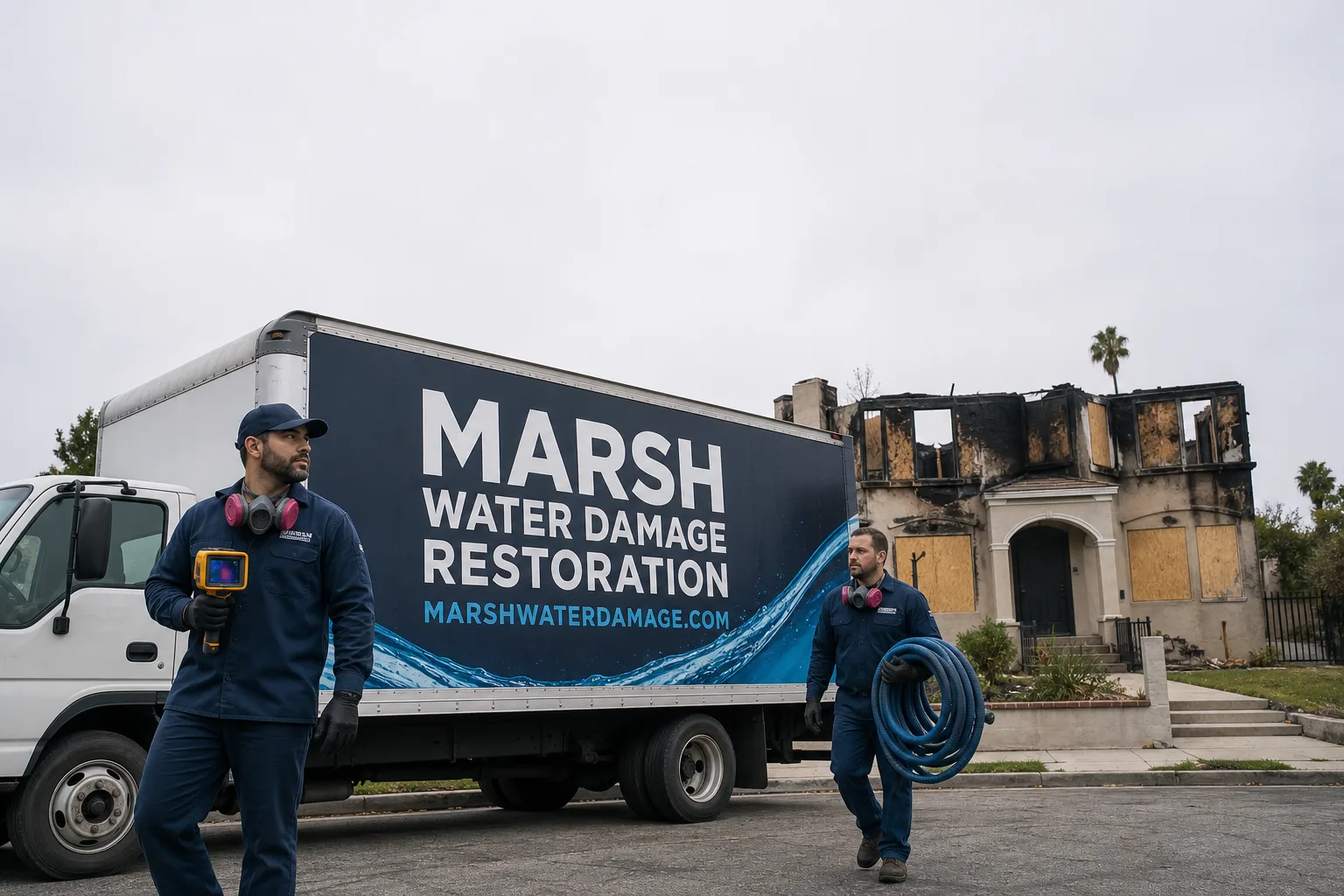
Free visual inspection and a written scope of work before any mitigation begins - photos, moisture readings, and drying logs go in your claim file
The scope we write is the scope we bill. Anything new gets shown to you, in writing, before we touch it.
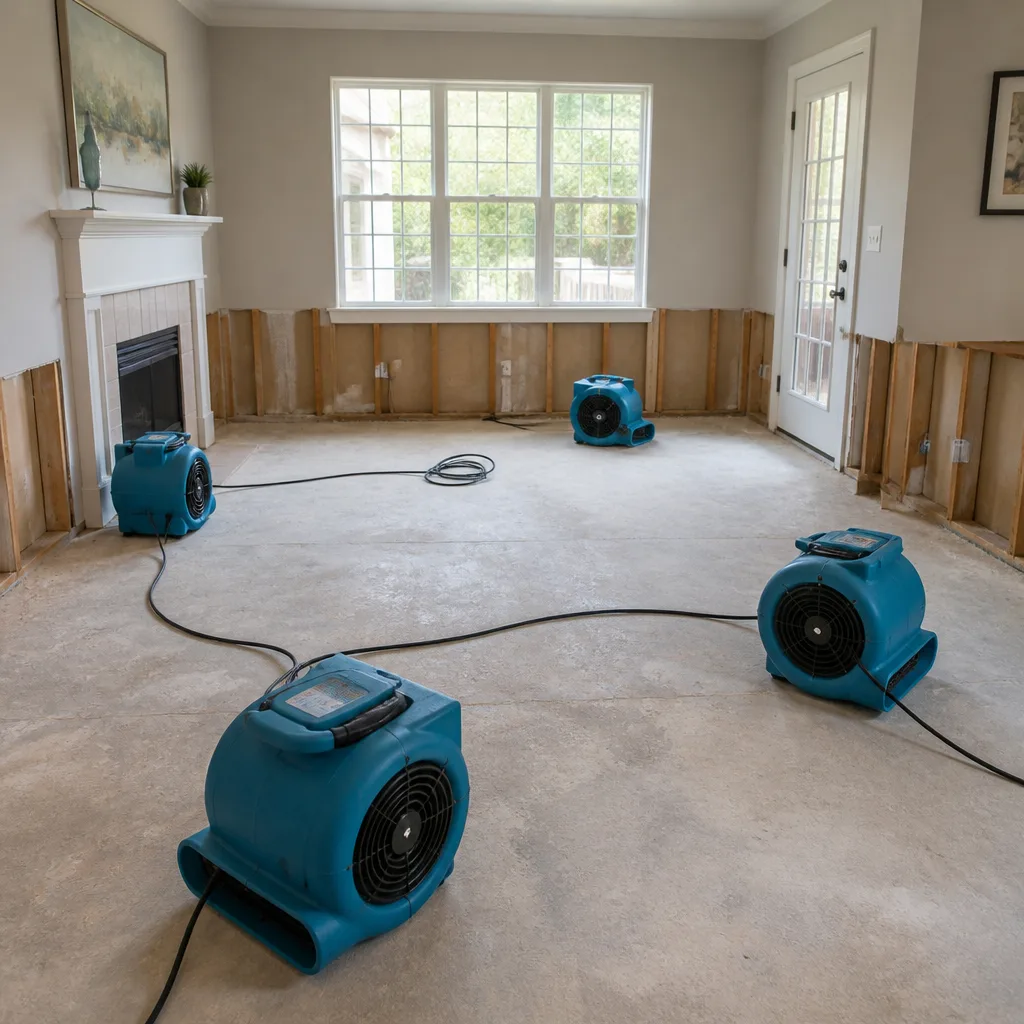
 Before
 After
After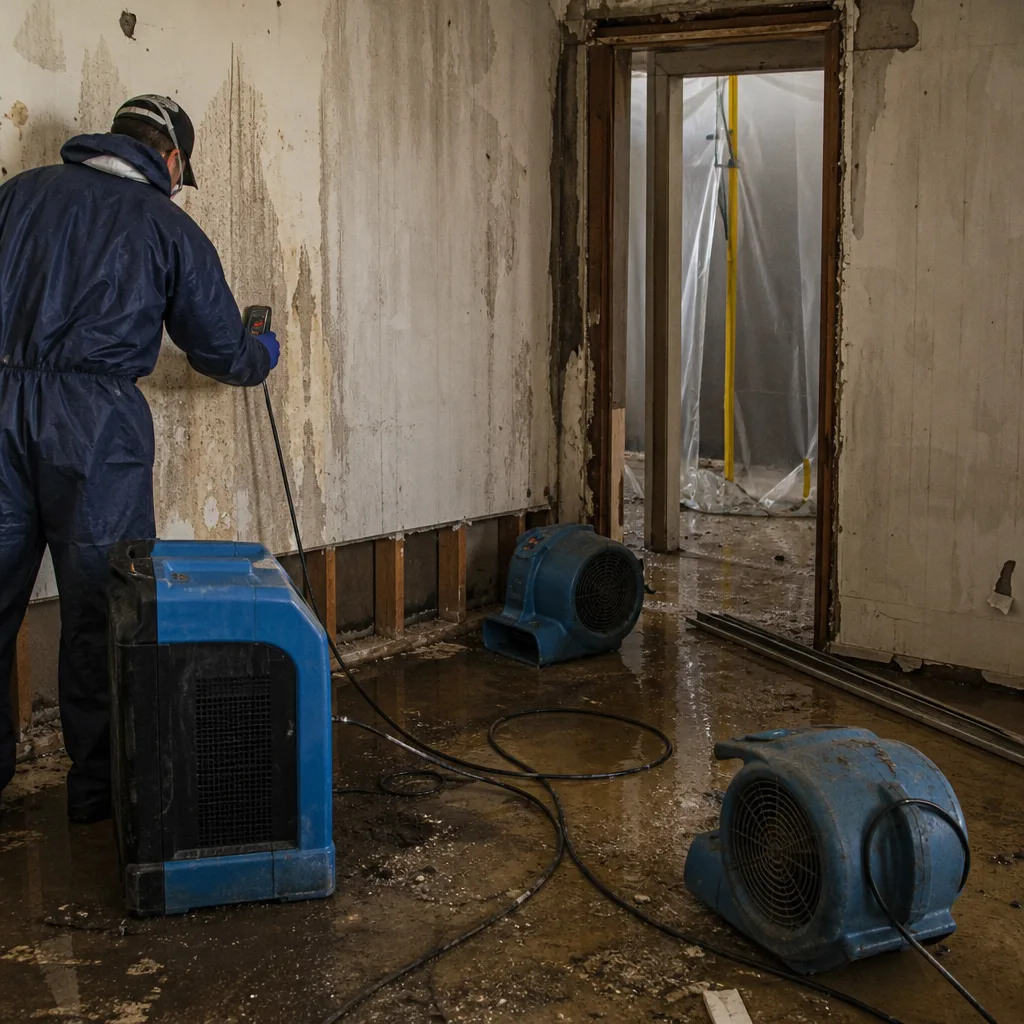 Before
 After
After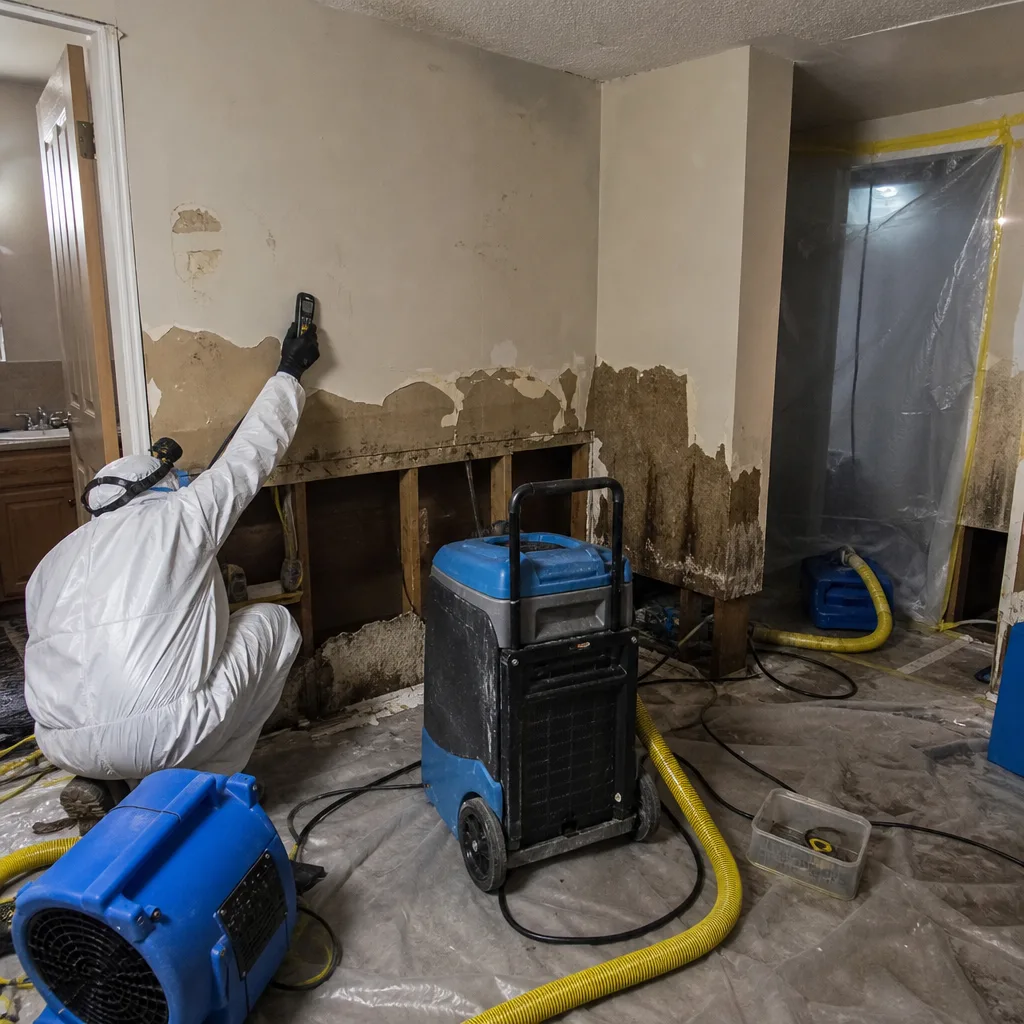 Before
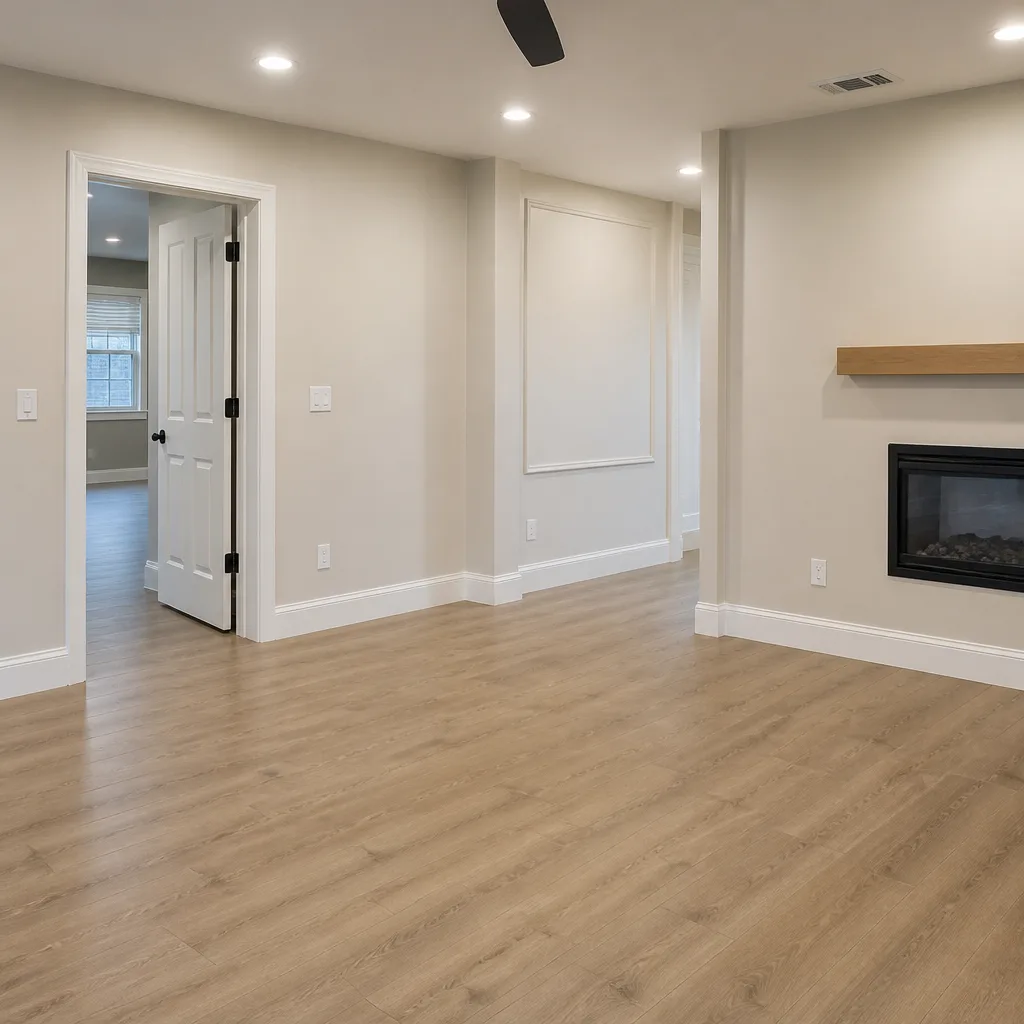 After
AfterFast, Reliable Storm Damage Restoration Across Washingtonville
Storm damage in Washingtonville rarely ends when the rain stops. Homes here sit in the Moodna Creek watershed, and block-foundation basements on sloped lots pull groundwater in through walls that were never waterproofed to post-Irene standards. That means what looks like a wet carpet is often the first sign of a longer moisture problem. We respond to Washingtonville fast, with a live person answering 24/7, and every tech shows up background-checked, photo-badged, and by name. Call (910) 613-6568 and you’ll get a written price before any work starts.
Why Marsh Water Damage Restoration Is Washingtonville’s Preferred Storm Damage Restoration Company
Most Washingtonville storm calls we take are not first-time floods. They’re follow-ups. A nor’easter blows through, the basement looks dry, and six months later there’s mold behind the drywall and a musty smell that won’t leave. We know this pattern because we’ve traced it through hundreds of Orange County basements, from the older plaster-and-lath homes in the village core to the 1970s and 80s colonials off Route 208. Our Storm Damage Restoration team reads moisture the way a mechanic reads an engine: moisture meters, thermal imaging, and psychrometric readings (measuring the moisture in the air) to find what’s hidden.
Since 2005, as part of the Threshold Group family, we’ve built our Washingtonville reputation on showing up prepared and telling you the truth. That starts before the knock: we text you the tech’s name and photo, then they show a photo ID badge at the door. Every time. Not just the first visit. Tobias Reyner leads the crew, and the standard he set is simple: written price, written guarantee, and a 365-Day Done Right Promise printed on every work order. If the repair isn’t right within a year, we come back and make it right. Free.
Storm Damage Cleanup in Washingtonville
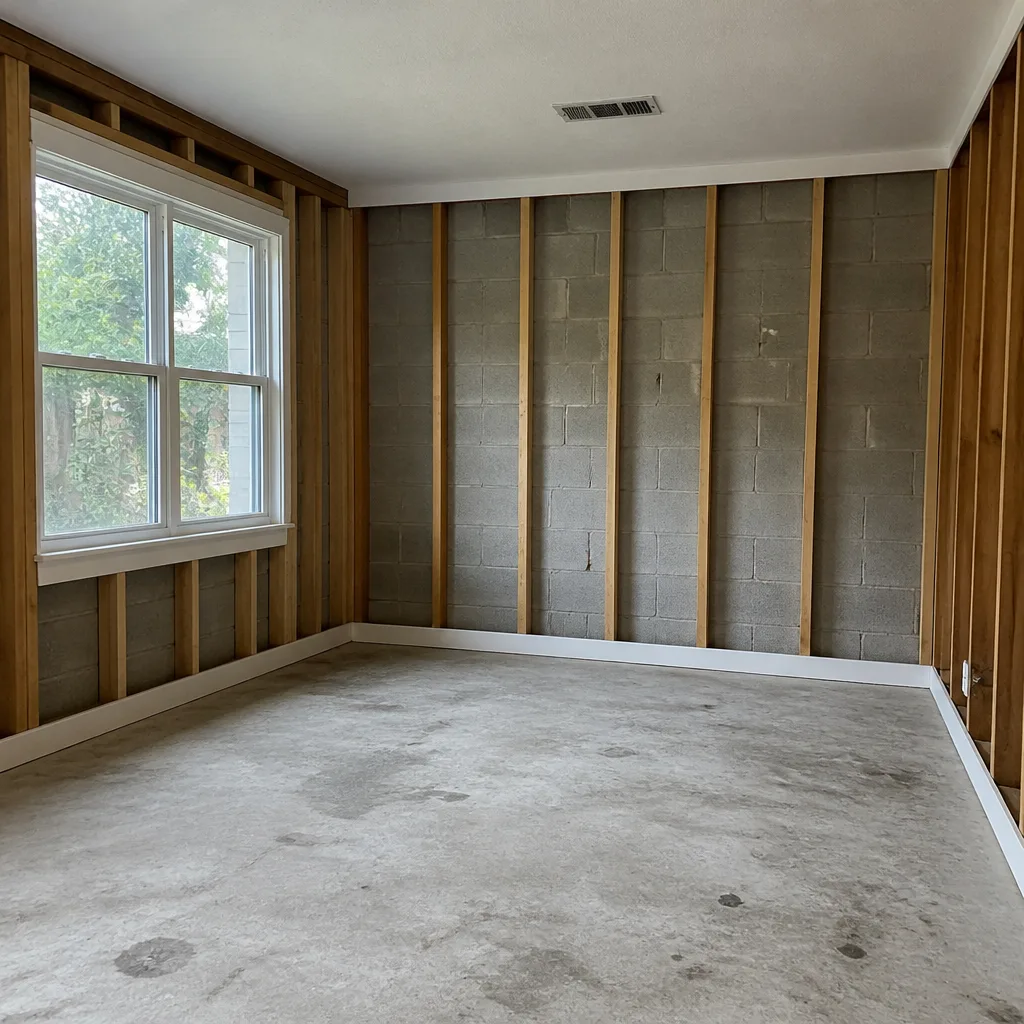
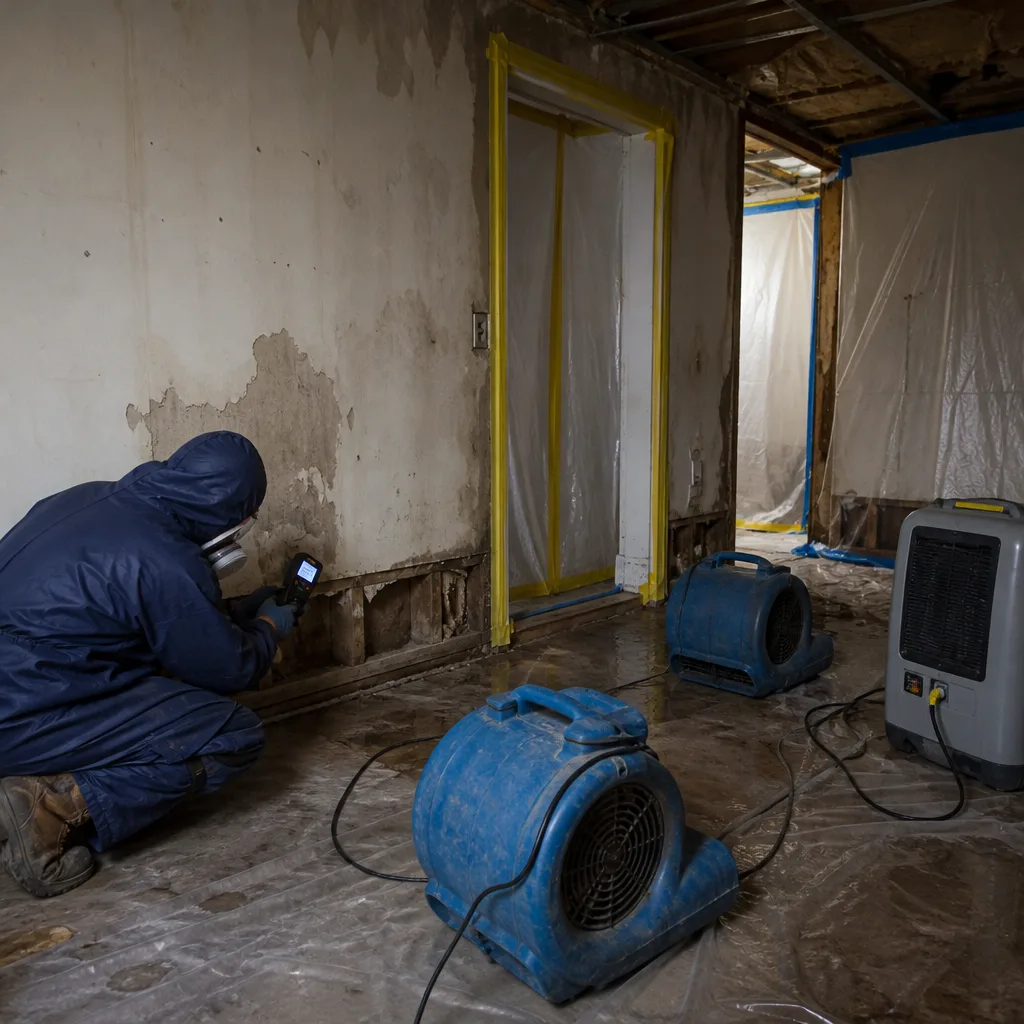
Storm damage cleanup in Washingtonville usually means pulling water out of a basement that sits against a slope, then finding the water you didn’t see. The first hour sets the tone for the whole job. We extract standing water with truck-mounted and portable units from Dri-Eaz and XPOWER, cut flood cuts where drywall has wicked moisture, and map the affected area with moisture meters before any drying equipment goes in.
Extraction and Initial Assessment
A typical storm damage cleanup in Washingtonville starts with extraction, then immediate documentation. We photograph everything for your insurance file and coordinate directly with adjusters. Photo documentation matters more than homeowners expect, especially when floodwater category questions come up later.
Antimicrobial Treatment and Drying Setup
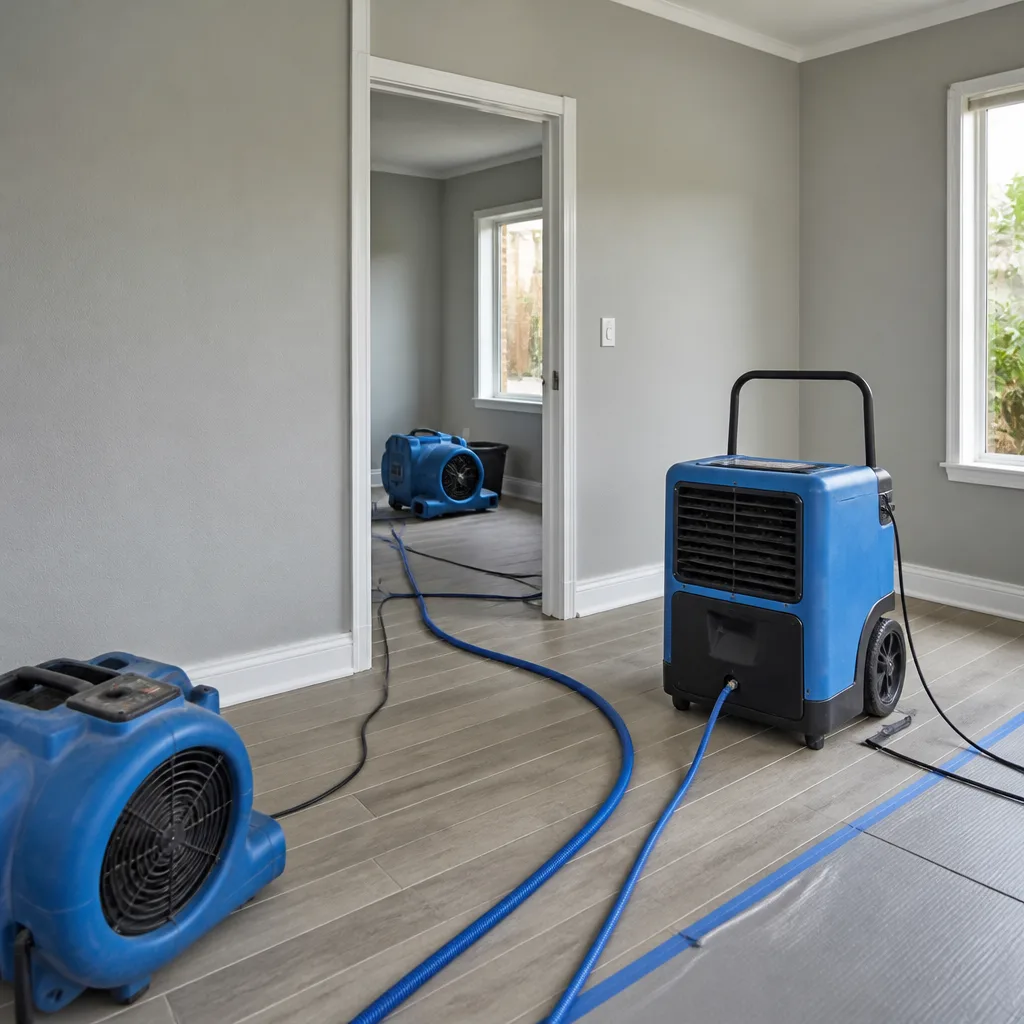
After extraction and flood cuts, we apply antimicrobial treatment to affected framing and set air movers and dehumidifiers. In Washingtonville’s humid Hudson Valley summers, drying takes longer than the equipment specs suggest. We log readings daily until the cavity hits dry standard, not just dry to the touch. Most residential storm cleanups here run $2,800 to $5,600 depending on square footage and how far moisture has traveled.
Flood Cleanup in Washingtonville
Flood cleanup in Washingtonville is different from storm cleanup. Storm water is often Category 1. Floodwater from Moodna Creek overflow or groundwater pushing through block foundations is frequently Category 2, sometimes Category 3, and that distinction determines what gets dried and what gets removed. We classify the water before we decide what happens to your drywall, insulation, and framing.
Category Classification and Material Removal
When groundwater backs up through unwaterproofed block walls, it carries silt, organics, and whatever is in the soil. That water goes behind finished walls and lingers. In Washingtonville’s older village-core homes with plaster and lath, floodwater wicks upward fast because plaster acts like a sponge. We remove material that should be removed, not dry it and hope. Typical flood cleanup here runs $3,400 to $7,200 depending on water category and affected square footage, before drying equipment is set.
Drying and Moisture Verification
We don’t pull equipment until moisture readings confirm the structure is dry throughout the affected area. That means probing bottom plates, checking sill plates, and verifying the wall cavity, not just the floor. In Washingtonville’s freeze-thaw winters, even a small amount of trapped moisture becomes a bigger problem when ice expands against foundation walls.
Trusted Brands We Service in Washingtonville
We run Dri-Eaz, XPOWER, and Phoenix drying and extraction equipment on Washingtonville jobs because that’s what commercial restoration demands. The same goes for Injectidry systems when we need to dry wall cavities without tearing out finished surfaces. We keep replacement parts stocked for these machines locally, so a failed dehumidifier doesn’t add three days to your drying schedule. When you call us about a flooded basement off Route 208 or a storm-damaged split-level near Goshen Road, the gear we bring matches what you’d see on a major commercial loss.
Common Storm Damage Restoration Problems We See in Washingtonville Homes
- Hidden efflorescence behind finished drywall. Homes on sloped lots along Moodna Creek tributaries often have block foundations that were never waterproofed. Water wicks through, evaporates, and leaves white mineral deposits that signal active moisture movement, even when the wall looks dry.
- Corroded garage-door springs and hinges misdiagnosed as storm damage. Washingtonville’s humidity and freeze-thaw cycles eat garage-door hardware. Homeowners think a snapped spring means storm damage when it’s actually corrosion fatigue, and they skip the corrosion inspection that would have caught it earlier.
- Category misclassification on Irene-era flood calls. Standing groundwater in Moodna Creek tributary basements is often Category 2 or 3, not Category 1. Material that should have been removed gets dried instead, and mold returns within weeks.
- Pipe bursts in older village-core homes. Original supply lines and minimal insulation in exterior walls mean freeze-thaw cycles from November through March routinely cause pipe bursts in the older plaster-and-lath homes around the village center.
Pricing for Storm Damage Restoration in Washingtonville, NY
Storm damage cleanup in Washingtonville typically runs $2,800 to $5,600 for a standard basement extraction, flood cuts, antimicrobial treatment, and drying equipment setup. Flood cleanup with Category 2 or 3 water runs $3,400 to $7,200 before drying equipment, depending on affected square footage and how much material must be removed. Drying equipment rental adds $45 to $85 per day per room while equipment is on site. Every job gets a written price before work starts. That number doesn’t change after demo begins. Call (910) 613-6568 for a free estimate.
We Also Serve Cities Near Washingtonville
Our crews also respond to storm and flood calls in Washingtonville and the surrounding Orange County communities: New Windsor, Monroe, Goshen, and Walden. Same written-price standard, same Threshold Verified techs, same 365-Day Done Right Promise.
Serving Washingtonville, NY - Our Local Coverage Area
We’re based in the Washingtonville area and know this community well. Use the map below to see our service coverage - if you’re nearby, we can almost certainly help.
FAQs About Storm Damage Restoration in Washingtonville
The short answer: water travels through block foundations long after the surface looks dry. Washingtonville homes on sloped lots along Moodna Creek tributaries often have unwaterproofed block foundations that wick groundwater continuously after storms. Moisture sits behind finished drywall, invisible until mold grows and you smell it. That’s why we probe beyond the visible wet area and verify drying with moisture meters, not a hand on the wall. Call (910) 613-6568 if you suspect hidden moisture from a past storm.
Category 1 is clean water, like a burst supply pipe. Category 2 carries contaminants, like groundwater that pushed through soil. Category 3 is grossly contaminated, which includes Moodna Creek overflow and sewage. We classify water by source and condition at the start of every job, because the category determines whether material gets dried or removed. Misclassified water is why mold comes back weeks after some “cleanups.” We’ll tell you what you’re dealing with before we touch anything.
Yes, in two ways. Freeze-thaw cycles from November through March cause pipe bursts in older homes with minimal insulation and original supply lines. And trapped moisture left from a fall storm expands when it freezes, stressing foundation walls and framing. That’s why we verify drying beyond the visible wet area, especially before winter sets in. If you had a storm earlier in the year and suspect moisture, call (910) 613-6568 and we’ll check it before the first hard freeze.
Extraction, flood cuts, moisture mapping, antimicrobial treatment, equipment setup, and daily drying logs. We cut drywall where moisture has wicked, not just where it’s visibly wet. We treat framing to prevent mold. We set air movers and dehumidifiers sized to the affected square footage, and we document readings until the structure hits dry standard. The wet carpet is step one, not the whole job.
In Washingtonville’s Hudson Valley humidity, structural drying typically takes three to five days for a standard basement job, sometimes longer in summer or when water got behind finished walls. We don’t pull equipment on a schedule. We pull it when moisture readings confirm the structure is dry. We’ll tell you the expected timeline after we map the moisture, and we update you as readings come down. Free estimates are a call away at (910) 613-6568.
Written by Tobias Reyner, Owner at Marsh Water Damage Restoration, serving Washingtonville and Orange County since 2005.