
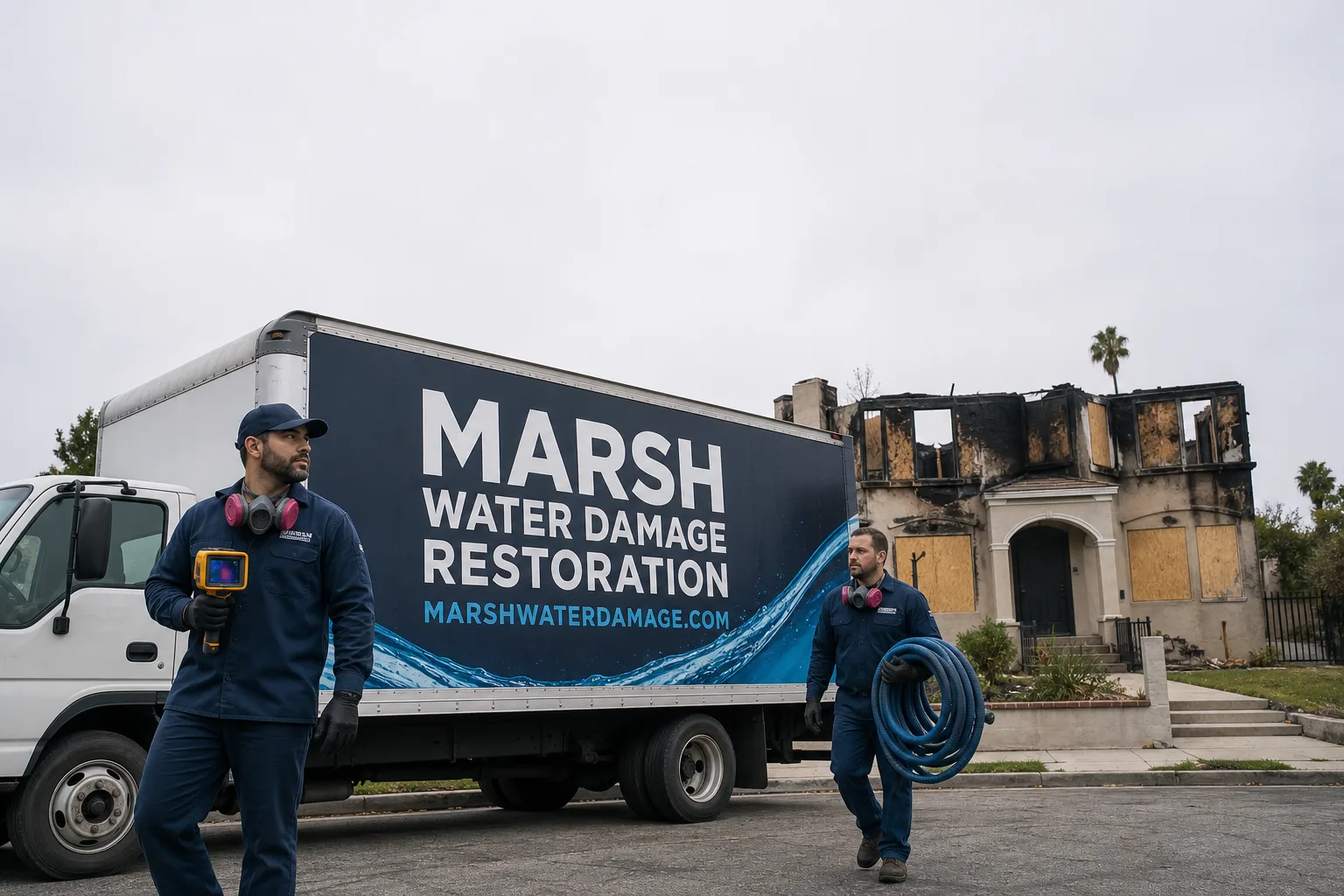
Free visual inspection and a written scope of work before any mitigation begins - photos, moisture readings, and drying logs go in your claim file
The scope we write is the scope we bill. Anything new gets shown to you, in writing, before we touch it.
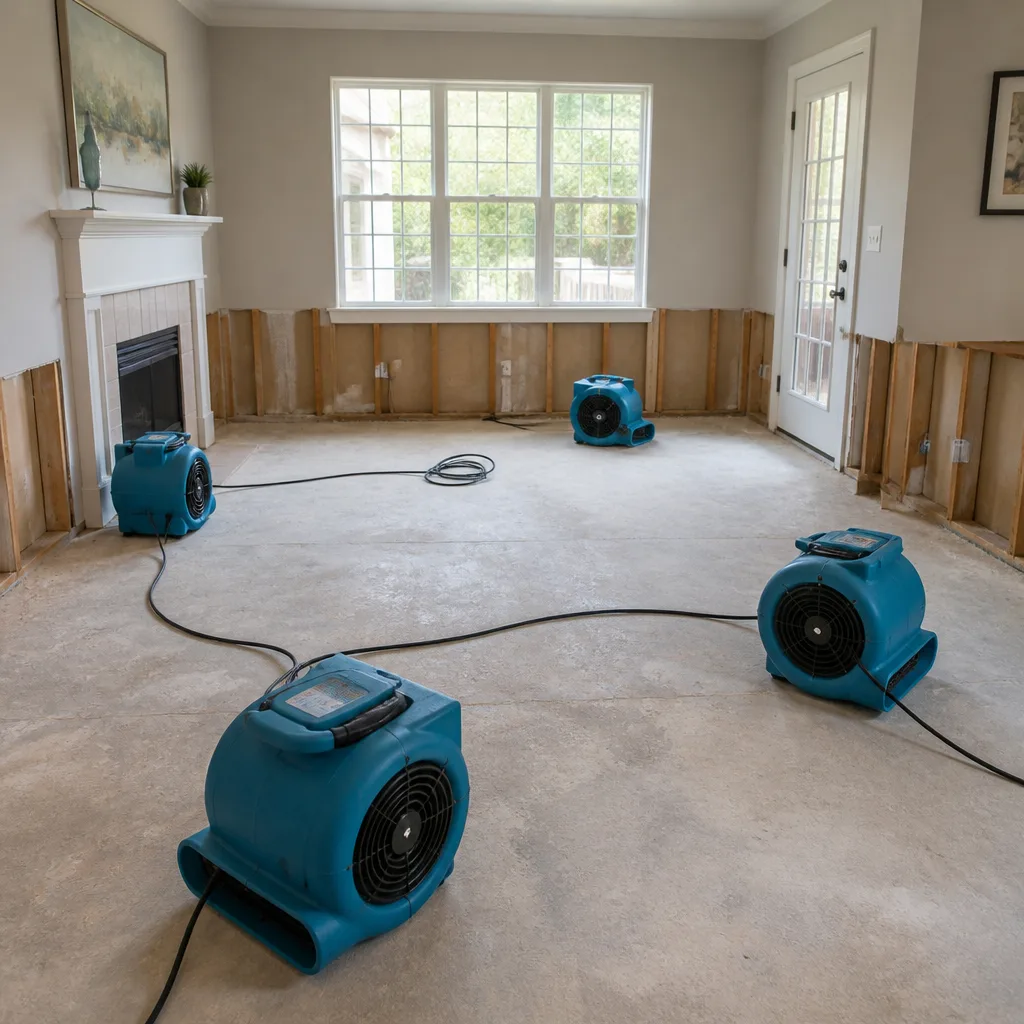
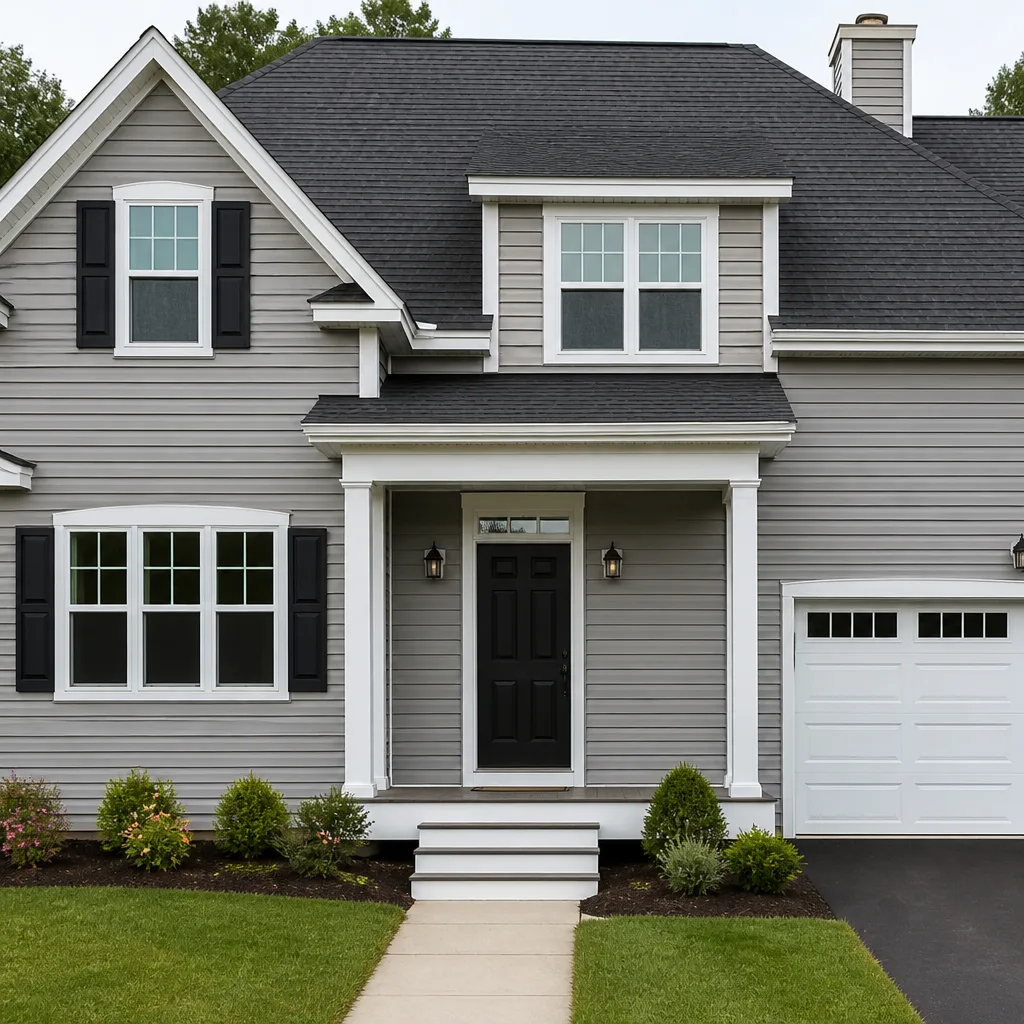
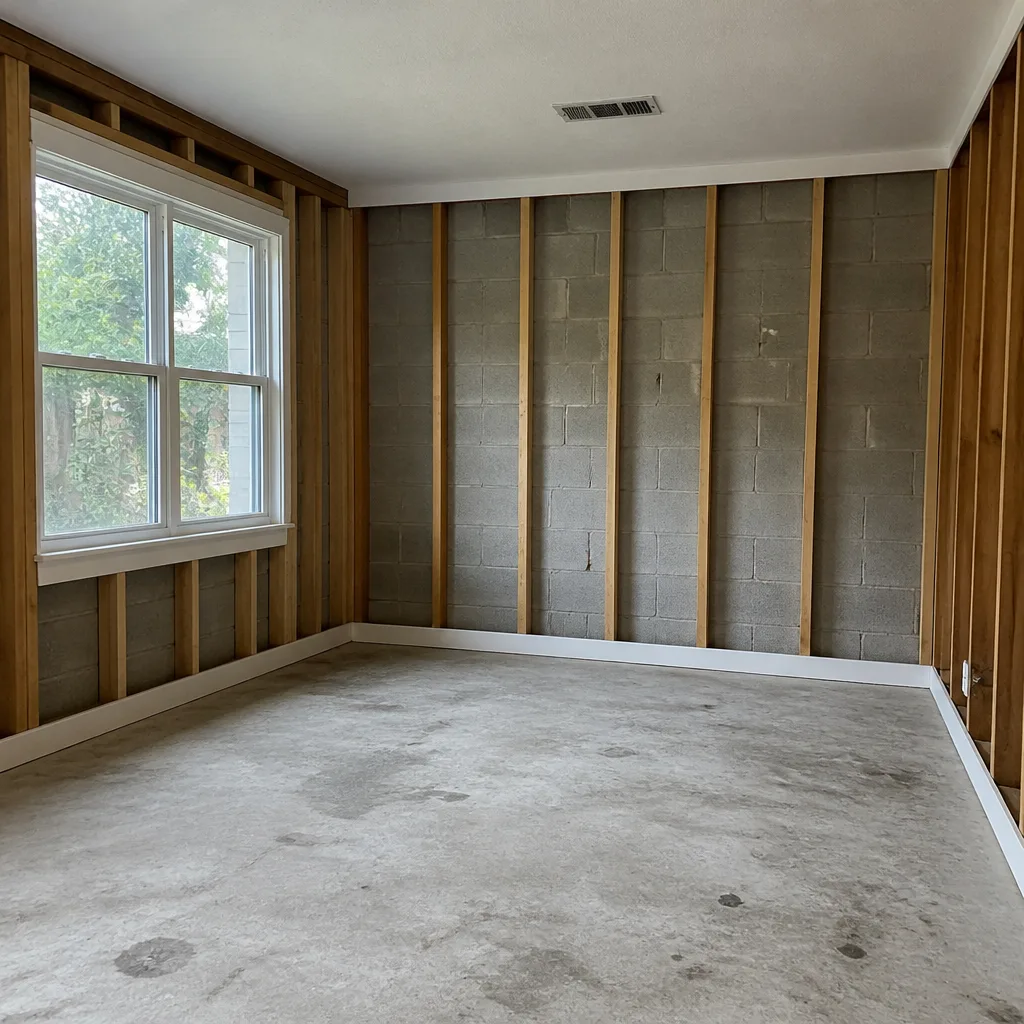
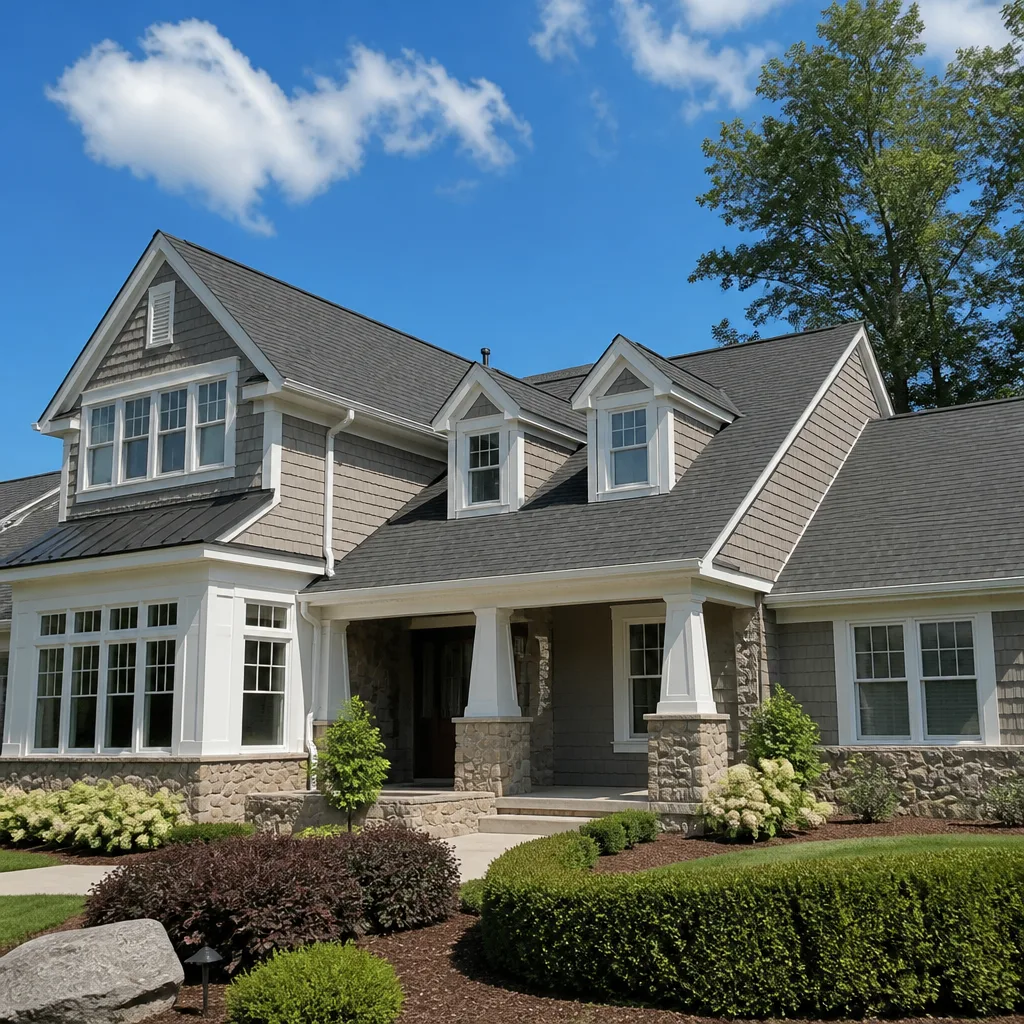
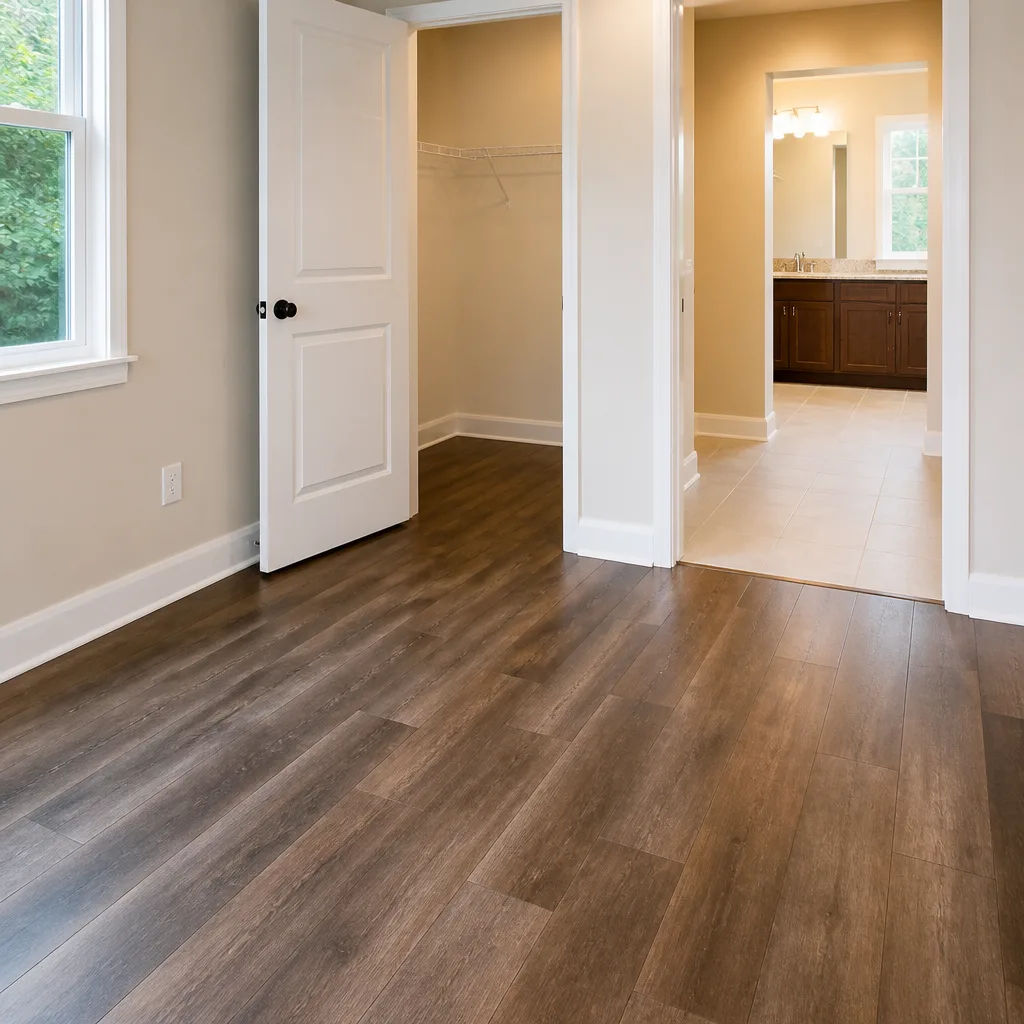
 Before
 After
After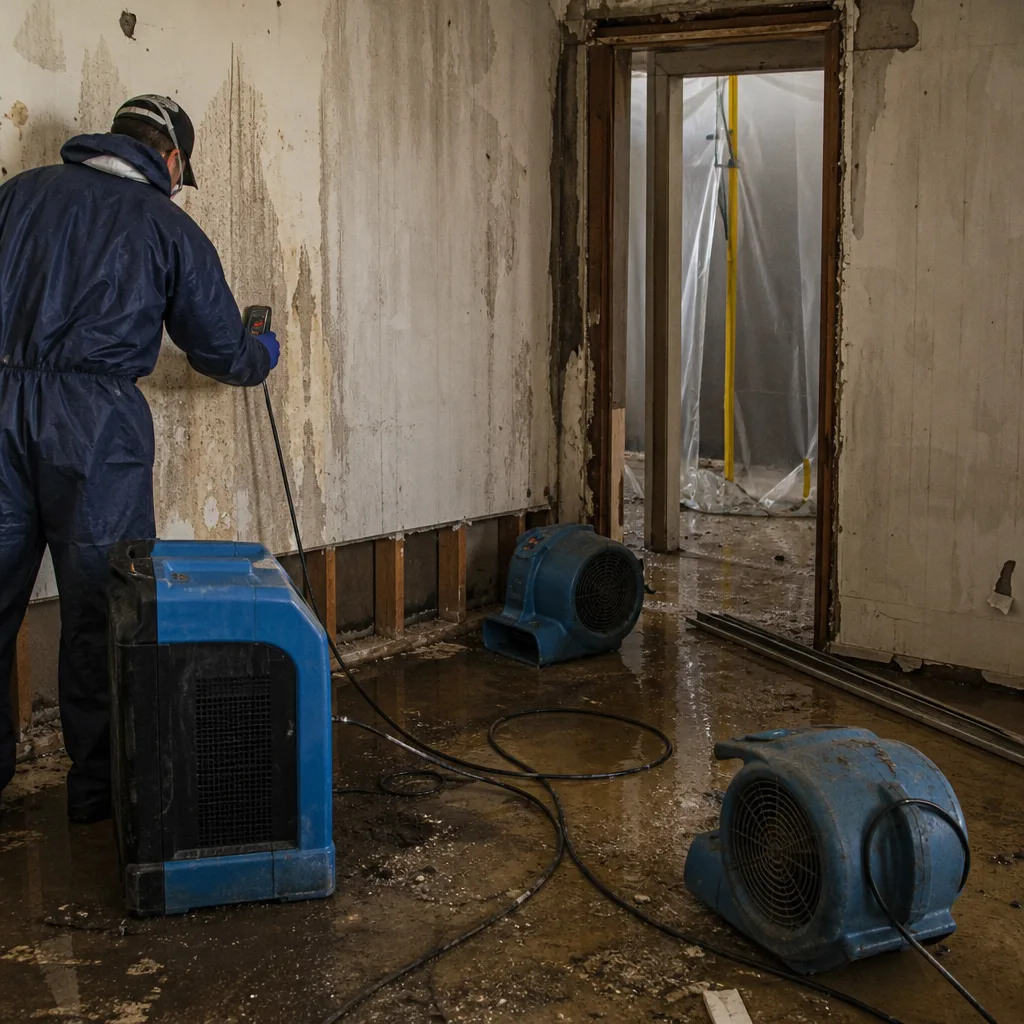 Before
 After
After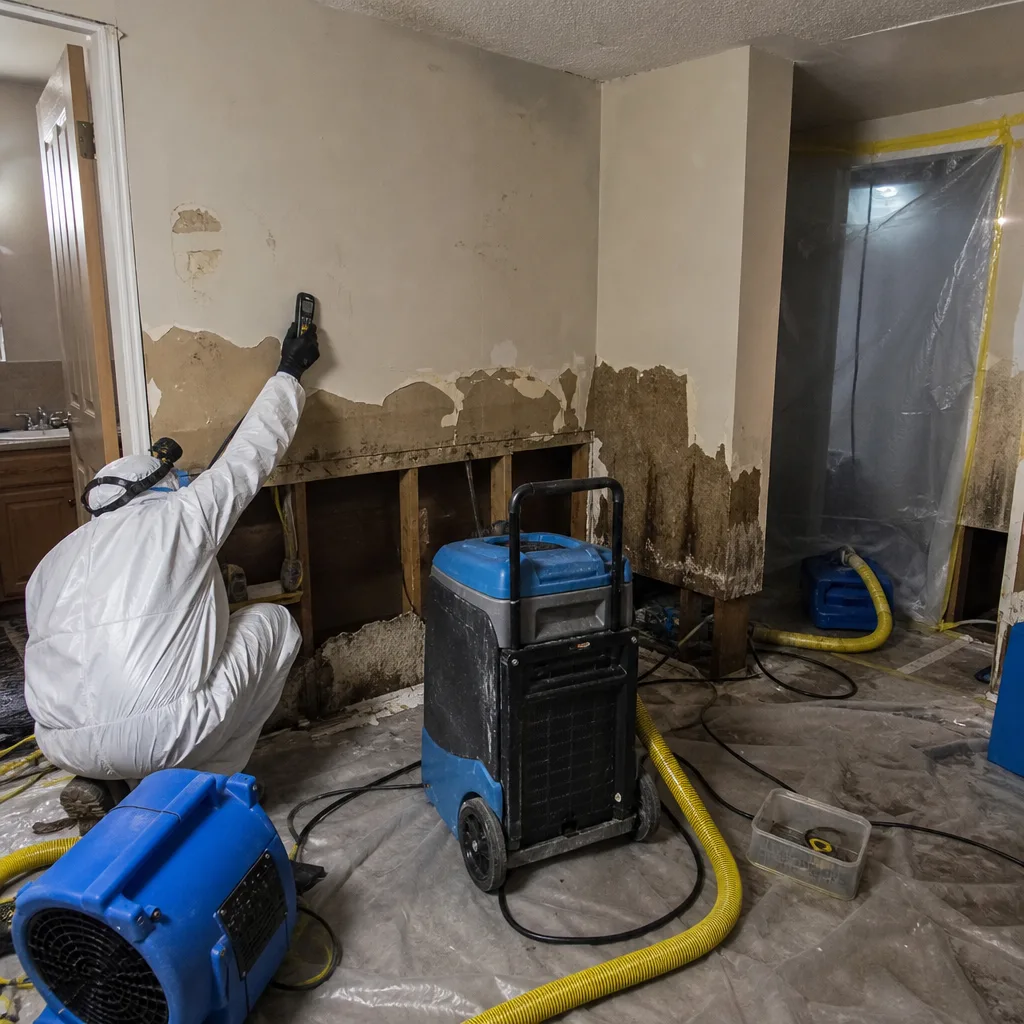 Before
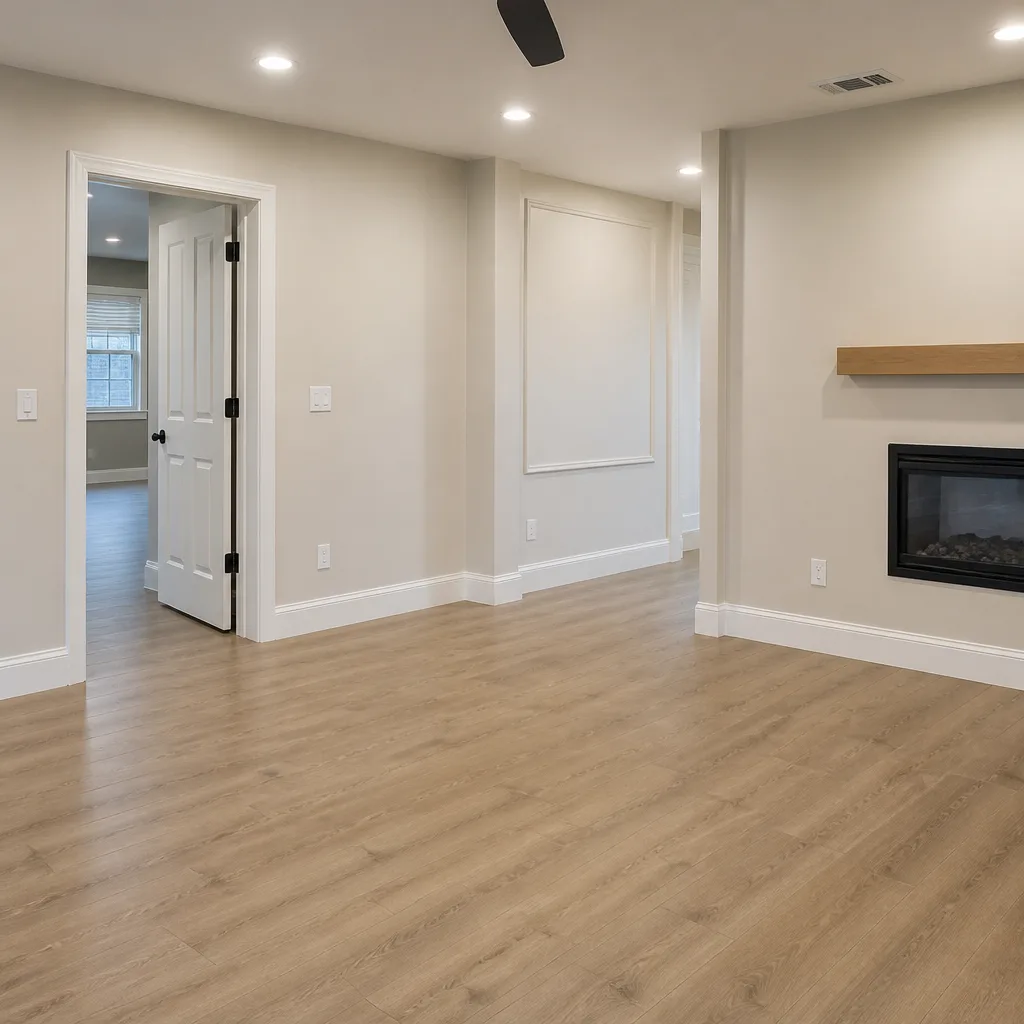 After
AfterFast, Reliable Water Damage Restoration Across Hilton
Water damage in Hilton rarely announces itself politely. A heavy lake-effect band drops two feet overnight, an ice dam forms along a low-pitch roof, and by morning water is running down an interior wall or pooling across a basement floor. Most Hilton water extractions run between $1,200 and $3,800 depending on how far the water traveled and what it soaked into. The sooner extraction starts, the more of your home can be dried rather than torn out. That’s why our Water Damage Restoration crews stage equipment in the Monroe County corridor during lake-effect season, so we can be at a Hilton address within 60 to 90 minutes of your call. If you’re standing in water right now, call (910) 613-6568. A live person answers, day or night.
Why Marsh Water Damage Restoration Is Hilton’s Preferred Water Damage Restoration Company
Since 2005, Marsh Water Damage Restoration has worked the shoreline communities of Monroe County, and Hilton homeowners call us for a reason that has little to do with equipment and everything to do with who shows up. Every technician dispatched to a Hilton home is Threshold Verified: background-checked, identity-verified, and sent to you by name and photo before the visit. When the tech knocks, they hold up a photo ID badge. No mysteries, no unmarked van pulling up at 2 a.m.
We know the difference between a 1940s colonial near Lake Avenue with original plaster walls and a 1990s Parma subdivision home built on a slab. That matters when you’re deciding whether baseboards can be saved or drywall needs cutting. Hilton customers regularly mention two things after a job: the tech explained every step in plain words, and the price on the written scope matched the final invoice. That’s not luck. It’s how we work.
Our response time to the village core and Parma shoreline is typically 60 to 90 minutes during active storm events, and we coordinate overflow jobs through our New York City dispatch office so no Hilton call waits for a callback. Tobias Reyner, who leads our technical team, reviews every Hilton water loss that involves structural drying. You don’t get a call center handoff. You get a restoration company that treats your house like a water problem we’ve seen before, because around here, we have.
Water Mitigation in Hilton
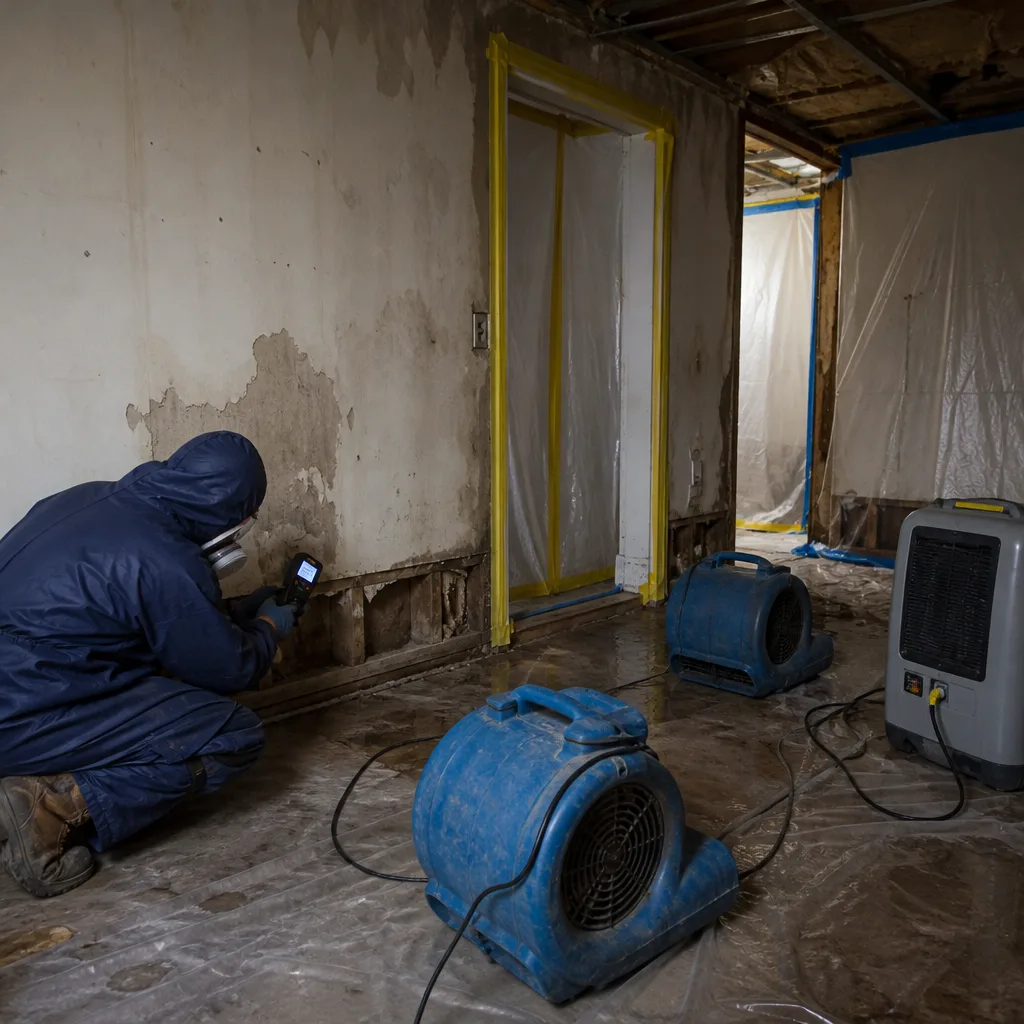
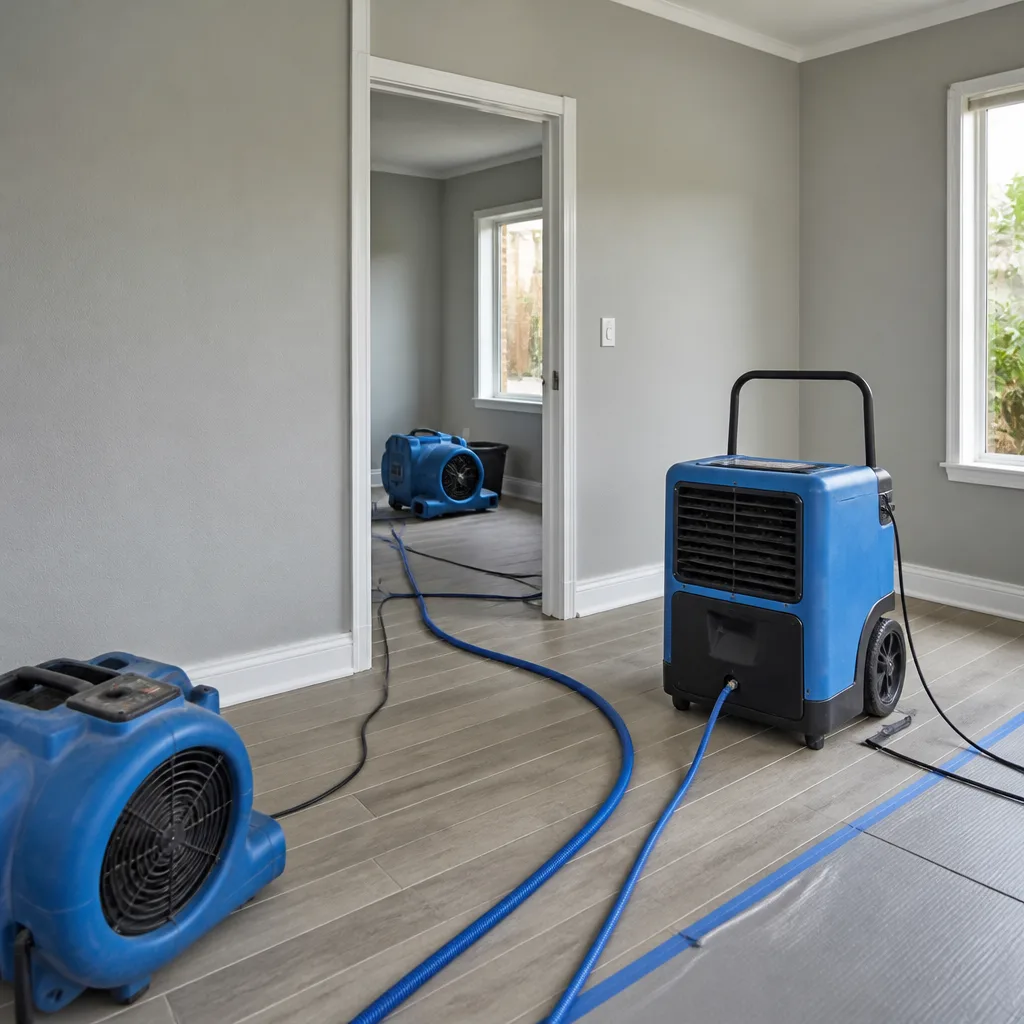
Water Mitigation in Hilton is the process of stopping active water damage and beginning controlled drying before mold or structural rot takes hold. When a supply line bursts in a Bath Road kitchen or an ice dam lets water into a finished attic, mitigation starts with extraction, then moves to moisture mapping, containment, air movement, and dehumidification. In Hilton’s older housing stock, mitigation often means working around plaster and lath, not just cutting and tossing modern drywall. A standard Hilton mitigation job runs $1,800 to $4,600, with the final number driven by how many rooms are wet and whether category 2 or 3 water is involved.
Injection Drying for Hardwood and Tile
When water gets under a hardwood floor in a Hilton home, replacing the floor is sometimes the right call. But often it’s not, and that’s where Injectidry drying mats come in. These mats pull moisture out through the wood surface using controlled suction, letting us dry oak or maple flooring that would otherwise buckle and need full removal. On Hilton jobs with wet hardwood, this approach saves homeowners thousands in replacement flooring costs.
Written Scopes and Drying Logs
Before we cut anything or set equipment, you get a written scope with a line-item price. Daily moisture readings, called psychrometric readings, measure the moisture in the air and in materials so we know when the structure is genuinely dry, not just dry on the surface. That documentation goes to your insurance adjuster if a claim is open, and we coordinate with adjusters directly. No homeowner in Hilton should be left guessing what something costs or when it’s finished.
Flooded Basement in Hilton
Flooded Basement situations in Hilton follow a pattern we can almost set a watch to. When the snowpack from a multi-foot lake-effect event melts quickly in late March or early April, foundation drainage in the village’s older neighborhoods gets overwhelmed. Groundwater pushes in through cove joints and floor cracks, and by the time it’s visible, it’s already soaked the bottom six inches of drywall and any flooring on the slab. A Hilton basement flood extraction typically runs $1,400 to $3,600, with structural drying and sanitization adding $1,000 to $2,000 depending on square footage and how fast we get in.
Groundwater vs. Clean Water Losses
Not all basement floods are the same. Water from a burst supply pipe is category 1, clean water that can usually be extracted and dried with less tear-out. Groundwater entering from outside is category 2 or 3, meaning it carries soil, bacteria, or sewage and requires removal of saturated porous materials. In Hilton’s older basements with fieldstone or block foundations, spring groundwater floods almost always fall into the latter category, which changes the scope and cost. We identify the category before we quote a dollar figure.
Same-Day Extraction During Melt Events
When the melt hits, we run simultaneous extraction and drying crews across Hilton on the same day the ground thaws. That’s unusual for restoration companies that wait for the phone to ring before they schedule a crew. For Hilton homeowners, it means the difference between drying out a basement in four days or tearing out drywall and flooring two weeks later because the water sat too long.
Trusted Brands We Service in Hilton
We work on all major residential equipment brands, and for Hilton’s mix of older village homes and converted Parma shoreline cottages, that includes a lot of legacy hardware: original sump pumps, early-generation dehumidifiers, and plumbing runs that predate modern PEX by decades. Our trucks carry common replacement components for Dri-Eaz extractors, Phoenix dehumidifiers, and XPOWER air movers so Hilton jobs don’t stall waiting on parts from a warehouse. When a part isn’t on the truck, our New York City dispatch coordinates overnight delivery to the Hilton area so drying continues without a gap. The equipment we run, Dri-Eaz, Phoenix, XPOWER, B-Air, and Injectidry, is the same commercial-grade gear used on large losses, sized down for residential work. That matters when a Hilton basement needs 180 gallons pulled in an afternoon.
Common Water Damage Restoration Problems We See in Hilton Homes
- Ice dams on low-pitch roofs. The 1920s through 1950s homes in Hilton’s village core often have minimal attic insulation and no air-sealing, so heavy lake-effect snow melts at the roof deck, refreezes at the eaves, and forces water back under shingles. Homeowners see ceiling stains or wet insulation weeks before any visible leak, and by then the roof deck is already saturated.
- Frozen and burst pipes in converted cottages. The Parma township shoreline still has dozens of originally seasonal cottages that now serve as year-round homes without adequate thermal upgrades. When a January cold snap hits, copper supply lines in uninsulated knee walls freeze and split. The water doesn’t stay contained, and because these cottages often sit empty during weekdays, mold can colonize wet drywall within 24 to 48 hours before anyone notices.
- Spring snowmelt overwhelming foundation drainage. After a four-foot pack melts over a week, the ground around Hilton’s older foundations saturates faster than perimeter drains can move water away. Basements take on category 2 or 3 groundwater through cove joints, and the longer it sits, the more drywall and flooring go from salvageable to tear-out.
- Attic condensation from inadequate venting. In Hilton homes where ridge and soffit vents are undersized for the snow load, warm air from the living space condenses on the underside of the roof sheathing. That trapped moisture quietly feeds mold growth and rots roof decking, and it’s often discovered only when a restoration crew starts opening walls for a different problem entirely.
Pricing for Water Damage Restoration in Hilton, NY
Here’s what Hilton homeowners can expect to pay, based on jobs we’ve completed across the village, Parma shoreline, and surrounding town roads. Emergency water extraction alone typically runs $800 to $1,800, including equipment setup and initial moisture mapping. Full structural drying with dehumidification and air movement adds $1,200 to $3,000 depending on affected square footage and drying time, which in Hilton’s older plaster homes can run three to five days. Flooded basement cleanup with category 2 or 3 water runs $1,400 to $3,600. A burst pipe restoration that includes drywall removal, drying, and basic rebuild starts around $2,500 and can reach $7,000 when hardwood flooring or cabinetry are involved. Ceiling and roof leak water damage from ice dams typically lands between $1,600 and $4,200 once the affected area is opened and dried. Every Hilton job gets a written price before any work starts, and that price is what you pay. Call (910) 613-6568 for a free estimate, and we’ll give you a range over the phone before we even schedule the visit.
We Also Serve Cities Near Hilton
Our Hilton crews extend service to Water Damage Restoration in Hilton and the surrounding Monroe County communities, including Rochester, Brockport, Webster, and East Rochester. If your home is in one of those areas and you’re dealing with water damage or a frozen pipe emergency, the same Threshold Verified technicians who respond to Hilton calls are available for dispatch. Call (910) 613-6568 and we’ll route the nearest available crew to your address.
Serving Hilton, NY - Our Local Coverage Area
We’re based in the Hilton area and know this community well. Use the map below to see our service coverage - if you’re nearby, we can almost certainly help.
FAQs About Water Damage Restoration in Hilton
The snowpack around Hilton doesn’t melt all at once. It releases water slowly as temperatures rise, and by the time the visible snow is gone, the ground is saturated. That water seeks the path of least resistance, which in older village basements means cove joints, floor cracks, and fieldstone walls. Flooding shows up weeks after the storm because the soil around the foundation has been holding that moisture the entire time. If your basement is wet now and the snow’s been gone for a while, call (910) 613-6568 so we can assess whether it’s groundwater or a plumbing leak, because the fix is different.
Mold can colonize wet drywall in 24 to 48 hours when indoor temperatures are above 60 degrees and humidity is elevated. Converted Parma shoreline cottages are especially vulnerable because they often sit empty during the workday, which means a burst pipe can run for hours before anyone finds it. By the time a homeowner opens the door, mold is often already established behind baseboards and inside wall cavities. That’s why we treat every Hilton pipe burst as a mitigation emergency, not a cleanup job, and that’s why our response time to the shoreline is 60 to 90 minutes during active events.
No, not always. Sometimes an ice dam forms and the water refreezes before it penetrates the roof deck. But on Hilton homes built between the 1920s and 1950s with minimal attic insulation, an ice dam often does force water under the shingles and into the sheathing. You may see nothing inside for weeks or months, then a ceiling stain appears once the attic warms and releases its moisture. If you have an ice dam and see any interior staining, call (910) 613-6568 before the damage spreads; the water has likely already moved further than the stain suggests.
After a freeze event in a Hilton lakefront cottage, restoration starts with finding every break. Frozen pipes often split in multiple places, so we pressure-test the system after thawing to locate all of them. Then we extract standing water, remove wet drywall and insulation that cannot be dried, and set injection-drying mats and dehumidifiers where the structure is salvageable. Finally, we document pre-loss condition for your insurance adjuster and provide a written scope for any rebuild work. Most Hilton cottage freeze jobs run $2,200 to $5,800 depending on how many rooms flooded and whether mold remediation is required. Call (910) 613-6568 and we’ll walk you through what your specific cottage needs.
Lake Ontario never fully freezes, so the lake-effect snow machine runs from November through March, and Hilton catches the heaviest bands before they weaken inland. Homes 10 to 15 miles south of Hilton may get six inches from the same storm that drops two feet on the village core. More snow means more ice dams, more roof load stress, and more spring melt water pushing into basements. It’s a geographic reality, not a construction-quality issue, and it’s why Hilton restoration crews have to be staffed for simultaneous jobs on the same day a band clears while inland competitors are still waiting for their first call.
If you’re dealing with water damage in Hilton, don’t wait for the problem to dry on its own; it won’t, but mold will gladly take over the wet areas. Call (910) 613-6568 now. A live person answers 24/7, the estimate is free, and you’ll get a written price before any work begins. Water where it shouldn’t be is what we deal with every day. Let us get yours out.
Written by Tobias Reyner, Owner at Marsh Water Damage Restoration, serving Hilton, NY since 2005.