
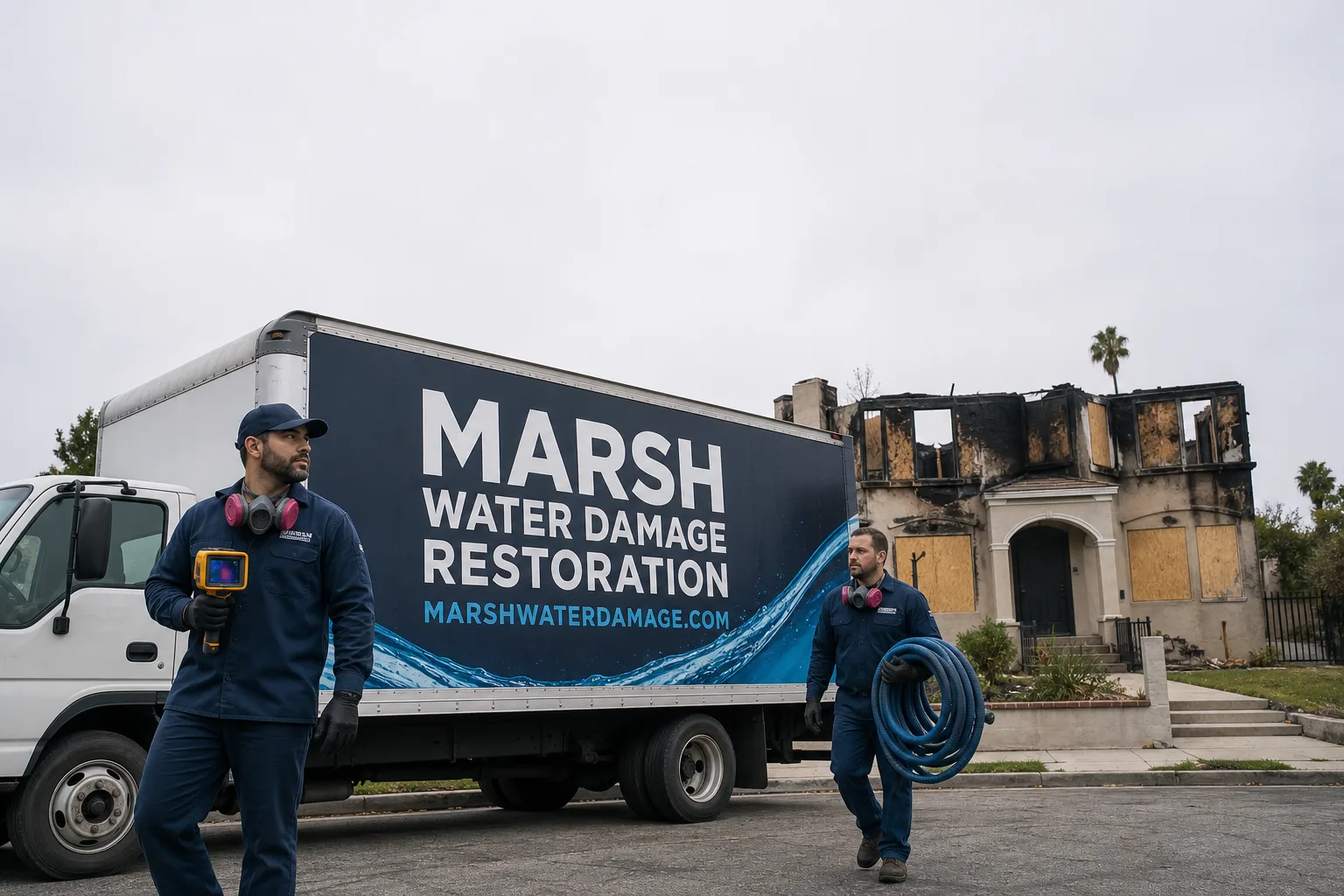
Free visual inspection and a written scope of work before any mitigation begins - photos, moisture readings, and drying logs go in your claim file
The scope we write is the scope we bill. Anything new gets shown to you, in writing, before we touch it.






 Before
 After
After Before
 After
After Before
 After
AfterFast, Reliable Water Damage Restoration Across Patchogue
Water damage restoration in Patchogue is not a generic service call. The village sits on Great South Bay with the Patchogue River cutting through its core, which means water events here carry salt, storm surge, and a timeline that inland Suffolk towns never face. When a nor’easter pushes bay water up onto South Ocean Avenue or a burst pipe floods a basement on Rider Avenue, you need a crew that knows the difference between freshwater cleanup and Category 3 saltwater removal. Marsh Water Damage Restoration has been doing this work since 2005, with a live person answering every call at (910) 613-6568. We know Patchogue’s flood zones, its aging wood-frame housing stock, and its lingering Sandy-era damage. We’ll tell you what you’re facing, what it costs, and exactly who is walking through your door.
Why Marsh Water Damage Restoration Is Patchogue’s Preferred Water Damage Restoration Company
Patchogue homeowners call us because we don’t send a mystery crew. Every technician under the Threshold Verified standard is background-checked, identity-verified, and sent to you by name and photo before the visit. When the knock comes, you already know the face. Our techs hold IICRC, RIA, and IFA credentials and carry the same Dri-Eaz and Phoenix equipment that commercial restoration firms run on large losses. We apply it to a 1920s colonial on Lakewood Street the same way we would a retail building on Main Street.
The threshold standard means something specific: written price before any work starts, written guarantee on every repair, and a 365-Day Done Right Promise printed on the work order. If the repair is not right within a full year, we come back and make it right. No argument, no negotiation. For Patchogue homeowners who have watched a previous contractor cut corners and disappear, that matters.
Our familiarity with the FEMA flood maps, the village’s elevation certificate requirements, and the salt-crystal damage patterns in old framing near the Patchogue River means we’re not learning your neighborhood on your dime. We arrive ready.
Water Extraction in Patchogue
Water extraction in Patchogue is the first physical step after a water event, and it’s where a lot of restoration jobs succeed or fail before the fans ever turn on. When we extract water from a flooded basement off Medford Avenue or a storm-surge-soaked floor near Shorefront Park, we’re not just pumping visible water. We’re pulling saturated water from carpet, padding, subfloor, and wall cavities before the structure locks moisture in. Get this step wrong and you’ll have hidden mold behind baseboards six weeks later.
Standing Water and Structural Fabric
Patchogue’s older homes have plaster walls, dimensional lumber framing, and full basements that hold water differently than newer drywall construction on concrete slabs. Plaster wicks moisture vertically. Old joists soak it in. Extraction has to account for that, not just chase the puddle on the floor.
Saltwater Extraction Is Different
When Great South Bay surge enters a home, extraction alone doesn’t solve the problem. Salt stays behind in fibers and wood cells even after water is removed. That salt keeps pulling moisture from humid air, and it corrodes fasteners, wiring anchors, and plumbing straps. A standard freshwater extraction followed by fans will fail. Saltwater jobs need extraction, then controlled drying, then antimicrobial treatment, and often full removal of saturated drywall and insulation.
Emergency Water Removal in Patchogue
Emergency water removal in Patchogue is the call you make at 2 a.m. when the Patchogue River backs up into your basement or a supply line bursts in a second-floor bathroom and rains through the kitchen ceiling. We answer live, not with a voicemail, and we dispatch a crew with extraction pumps, moisture meters, and containment materials. On a surge event, the first hours matter because saltwater contamination has no grace period. Every hour of standing water is an hour of wicking into framing and an hour of microbial growth.
Priority Response for Coastal Flooding
The blocks south of Main Street and along the river are the most exposed ground in Patchogue. We prioritize those addresses during storm events. Our techs arrive with the understanding that bay water is Category 3, not because we assume the worst, but because salt and street runoff from an urban shoreline make it true. That classification changes what gets torn out and what gets dried in place.
Apartment and Sub-Crawl Access
Some Patchogue homes have low crawlspaces rather than full basements, and water in those spaces is harder to see and slower to dry. We use Injectidry floor drying systems when needed to get air into closed cavities without ripping up finished floors. That matters when you’re trying to save an original oak floor in an older home.
Trusted Brands We Service in Patchogue
Patchogue’s homes run the spectrum from original pier-and-beam Victorians to 1960s capes on slab. We service water damage across all of them, and we stock parts and equipment compatible with the systems already installed in local homes. We run Phoenix and XPOWER air movers, Dri-Eaz dehumidifiers, and Injectidry floor drying mats. For homeowners off Blue Point Avenue or near the Patchogue-Medford border, that means we arrive with what the job needs, not with a parts order list.
Common Water Damage Restoration Problems We See in Patchogue Homes
- Storm-surge backflow through floor drains and basement stairs. When the bay or river rises, water doesn’t always come through a broken window. It comes up through the lowest openings in the house, carrying silt, salt, and municipal contaminants.
- Salt-crystal damage to old framing and fasteners. Homes built before 1930 used hand-driven nails and iron straps. Salt from surge water accelerates corrosion and can weaken structural connections that look fine on the surface.
- Hidden mold behind ‘Sandy patches.’ Cosmetic repairs after Hurricane Sandy sealed moisture behind drywall in dozens of homes south of Main Street. Those walls look dry. They are not.
- Groundwater intrusion through stone and brick foundations. Patchogue’s older basements were never waterproofed against sustained high water tables, and after a storm the ground around the village stays wet for weeks.
Pricing for Water Damage Restoration in Patchogue, NY
Most residential water extractions in Patchogue run between $1,200 and $3,800, depending on the size of the affected area and how long water has been standing. Structural drying with professional dehumidification equipment typically adds $80 to $140 per day in equipment and monitoring costs. Saltwater intrusion jobs run higher because they require contaminated material removal and antimicrobial treatment, not just drying. A full basement surge cleanup with Category 3 protocols often lands between $5,000 and $12,000. We price everything in writing before work begins. Call (910) 613-6568 and we’ll give you a straight number based on what we see, not a range that balloons later.
We Also Serve Cities Near Patchogue
Our Water Damage Restoration in Patchogue coverage area extends through Bayport, Medford, Holtsville, and Holbrook. If you’re on the edge of the village or just over the town line, the same crew, the same equipment, and the same written-price commitment apply. We coordinate dispatch from the brand’s New York City office so a Patchogue call always goes to a technician already covering the South Shore.
Serving Patchogue, NY - Our Local Coverage Area
We’re based in the Patchogue area and know this community well. Use the map below to see our service coverage - if you’re nearby, we can almost certainly help.
FAQs About Water Damage Restoration in Patchogue
Bay surge water is always treated as Category 3 black water because it carries salt, street runoff, and biological contaminants. Fresh water from a burst supply line is Category 1 or 2 and can often be dried in place. Saltwater requires full removal of affected porous materials, antimicrobial treatment, and a longer drying timeline because salt residue keeps drawing moisture from humid air even after the surface feels dry.
‘Sandy patches’ are walls and ceilings that got quick cosmetic repairs after Hurricane Sandy without proper moisture remediation behind them. In Patchogue homes south of Main Street and along the river, those patches still hold moisture and active mold. If you see fresh staining or peeling paint in a home that was repaired around 2012 or 2013, that’s likely an old Sandy patch finally failing. The original water event never got resolved. Call us for a moisture assessment at (910) 613-6568.
In Patchogue’s coastal humidity, mold can begin within 24 to 48 hours on wet drywall, insulation, and wood. The salt air and high relative humidity near Great South Bay mean the clock starts fast and never really pauses. If water has been standing for even one night, assume microbial growth is possible and get a professional extraction and drying plan started before you have a full remediation on your hands.
Many Patchogue homes now require elevation certificates and flood-zone documentation before major restoration work can be approved. After Sandy redrew FEMA maps, compliance paperwork became a gate in front of nearly every significant water damage project in flood-prone parts of the village. We handle that documentation as part of the scope of work, not as a surprise add-on after demolition begins.
We use Dri-Eaz dehumidifiers, Phoenix air movers, and XPOWER axial fans for structural drying, and Injectidry floor drying systems when water is trapped under finished floors. For saltwater contamination, we also run controlled containment with negative air when needed and use moisture mapping to track drying progress in wall cavities. In older wood-frame homes with plaster walls, that cavity monitoring matters because surface readings alone will lie to you.
Get a straight answer from a real person. Call (910) 613-6568 for a free estimate on Water Damage Restoration anywhere in Patchogue. We’ll tell you what you’re facing and what it costs, in writing, before any work starts.
Written by Tobias Reyner, Owner at Marsh Water Damage Restoration, serving Patchogue since 2005.