

Free visual inspection and a written scope of work before any mitigation begins - photos, moisture readings, and drying logs go in your claim file
The scope we write is the scope we bill. Anything new gets shown to you, in writing, before we touch it.






 Before
 After
After Before
 After
After Before
 After
AfterFast, Reliable Mold Remediation Across Cypress Hills
Mold remediation in Cypress Hills typically runs $1,800 – $4,200 for a contained bedroom or basement wall, and $4,500 – $11,000 when a sewage backup has wicked through a shared party wall into two attached rowhouses. We get crews to Cypress Hills within 90 minutes for emergency containment, because every hour of delay lets spores colonize the next cavity. Call (910) 613-6568 and a live person answers, day or night.
We know this neighborhood’s houses. The 1910s – 1940s attached brick rowhouses between Fulton Street and Highland Boulevard don’t dry like suburban homes with siding and open air gaps. They hold moisture in plaster-on-lath, share joist pockets with the neighbor, and hide decades of failed flat-roof patches above every ceiling. That’s why a local crew matters more here than almost anywhere else in Brooklyn.
Why Marsh Water Damage Restoration Is Cypress Hills’s Preferred Mold Remediation Company
Since 2005, our Mold Remediation team has worked inside Cypress Hills rowhouses where the real problem is rarely the room you can see. It’s the wall cavity behind it. The neighbor’s side of the party wall. The rotted joist bay above the plaster that looked fine from below. We send crews who grew up working this housing stock, so they know what a 1920s brick rowhouse off Fulton Street does when it’s wet, and they plan for it before the first wall is opened.
Every technician who arrives at your door in Cypress Hills is background-checked, identity-verified, and sent to you by name and photo before the visit, then shows a photo ID badge at the door. Tobias Reyner leads our technical team and holds the line on that standard. We don’t ask you to open your door to a stranger. We show you who’s coming, with a written price in hand before any containment goes up.
Mold Remediation Services in Cypress Hills
Mold Remediation Services in Cypress Hills start with containment, then moisture mapping, then removal of colonized material, and end with drying logs and post-remediation verification. When a homeowner here calls us, it’s usually because they smell something musty behind a wall off a shared stairwell, or their basement flooded during a nor’easter and the plaster never dried right. Most residential jobs in Cypress Hills fall between $2,500 and $6,500 depending on how many rooms and whether the party wall is involved.
Containment and HEPA Air Scrubbing
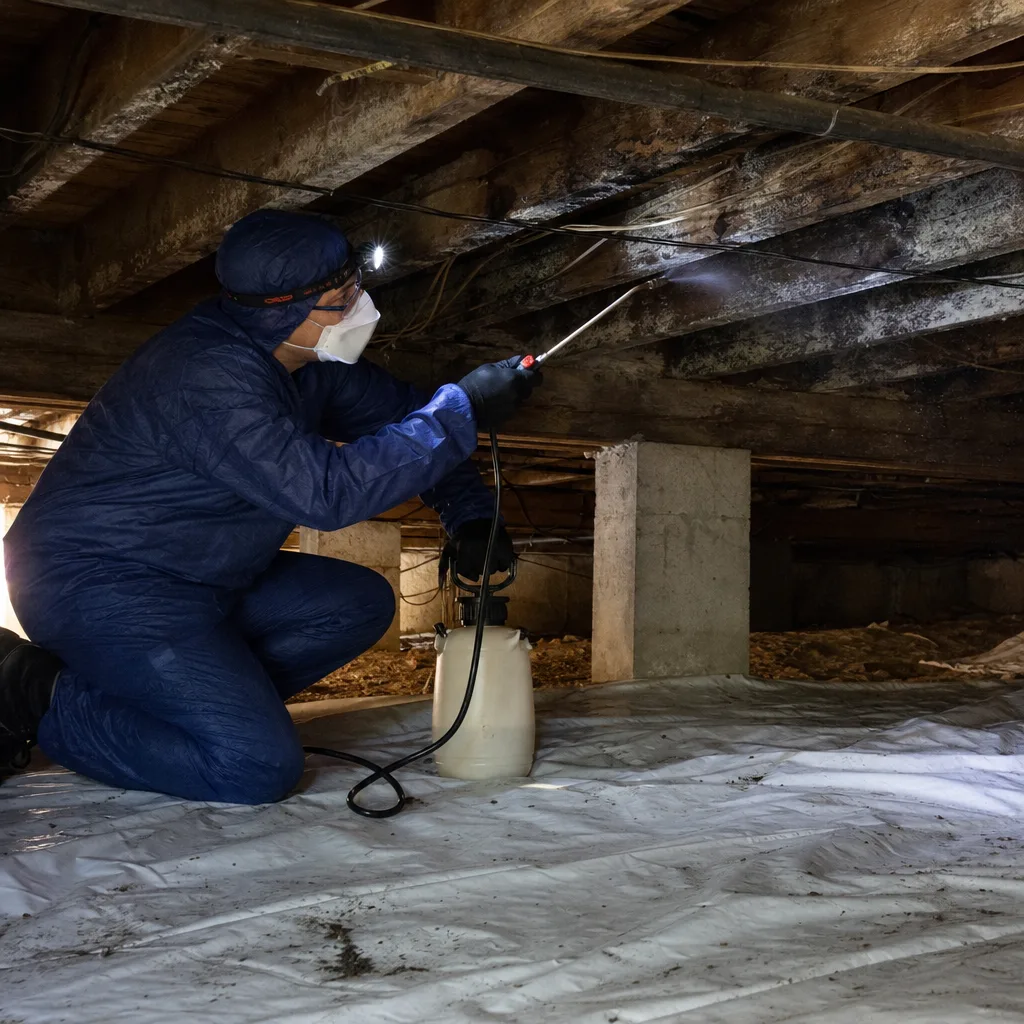
We build containment with negative air pressure before we disturb any colonized plaster or lath. In a Cypress Hills rowhouse, that means sealing doorways, floor registers, and any shared chase that runs up to the neighbor’s unit. HEPA air scrubbers run from setup through final clearance.
Plaster Cavity Treatment
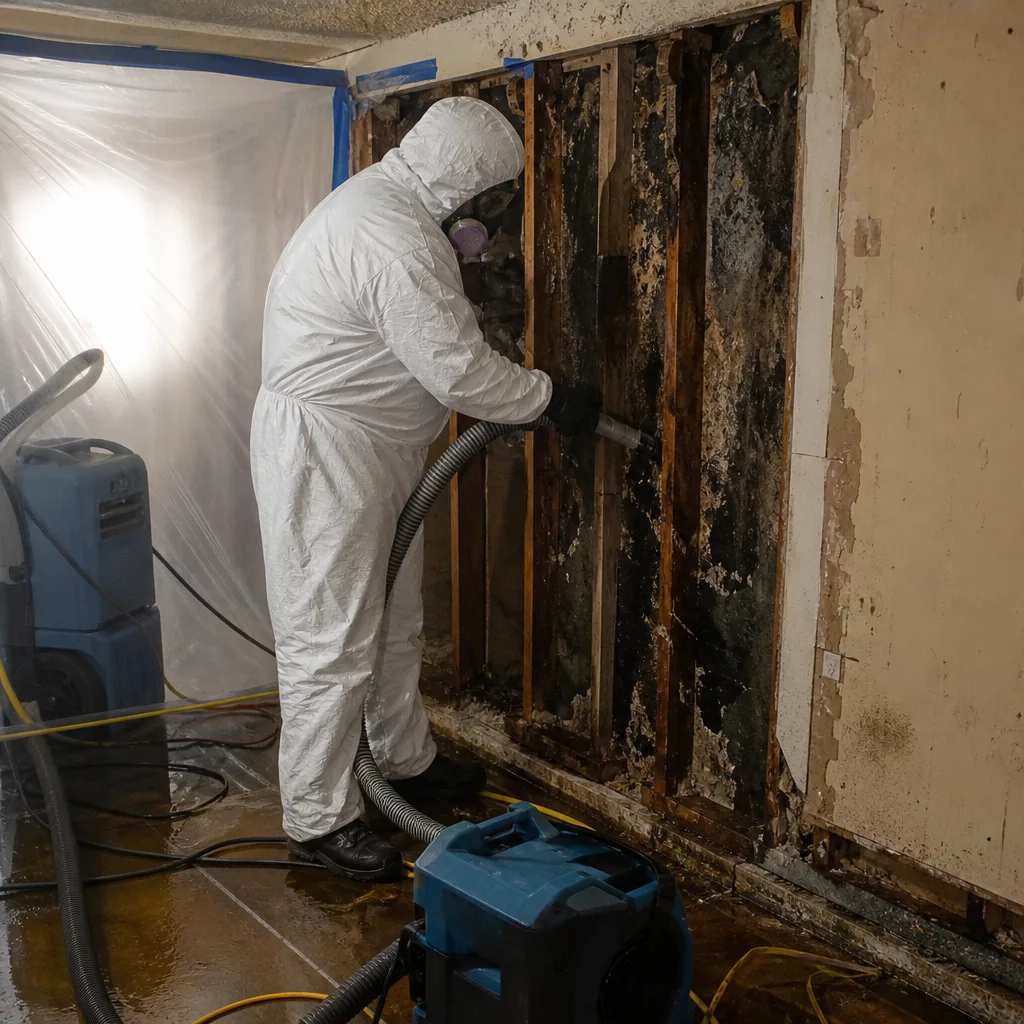
Mold behind original plaster-on-lath doesn’t come out with a spray and wipe. We open only what’s colonized, treat the lath and framing, and rebuild the wall. You get a written scope and a fixed price before the first cut, so there’s no ballooning estimate after demo starts.
What happens when you call
- 1
A real person answersNo phone trees - you reach a local pro.
- 2
You get an upfront price rangeHonest numbers before anyone is dispatched.
- 3
A background-checked tech heads outLicensed & insured, dispatched right away.
- 4
You approve before work beginsNothing starts until you say go.
Professional Mold Removal in Cypress Hills
Professional Mold Removal in Cypress Hills is not the same as cleaning bathroom grout with bleach. It’s surgical removal of colonized drywall, plaster, insulation, and sometimes rotted subfloor, using HEPA-filtered tools and full respiratory protection. When a flat-roof leak off a minimally-pitched brick rowhouse has been dripping for years, we often find the mold has spread far beyond the stain on the ceiling. Removal costs for a single contained room in Cypress Hills start around $1,800 and rise with the square footage of colonized framing.
Black Water and Sewage-Colonized Materials
Category 3 water from a sewer backup carries pathogens. In Cypress Hills, these backups happen often enough that we treat every flooded basement south of Jamaica Avenue with full biohazard protocol. That means removing porous materials rather than attempting to dry them in place.
Post-Removal Air Quality Restoration
After removal, we run air scrubbers and take air samples to confirm spore counts have dropped to normal background levels for Cypress Hills. You get the lab report. Not just a handshake and an invoice.
Trusted Brands We Service in Cypress Hills
Our crews run equipment from Dri-Eaz, Phoenix, and XPOWER on Cypress Hills jobs, from HEPA-filtered air scrubbers to panel drying systems like Injectidry that get into plaster walls without gutting them. We stock common filters, antimicrobial treatments, and containment supplies locally, which means we’re not waiting on a supply house in another borough when your basement is open. If you’ve had a Dri-Eaz system running and the moisture won’t come down behind a party wall, that’s exactly the kind of call we take every week here.
Common Mold Remediation Problems We See in Cypress Hills Homes
- Party-wall mold migration: Water and spores don’t respect property lines. We regularly find mold in a neighbor’s plaster cavity that started from a Category 3 backup in the adjacent rowhouse, which means two owners and two carriers coordinate on one containment. Moisture readings must be taken on both sides of the wall.
- Concealed roof-leak rot: Cypress Hills flat rowhouse roofs hold standing water, and decades of tar patches hide multiple failed membrane layers. By the time a crew opens the ceiling, years of slow intrusion have rotted joist ends and colonized the plaster keys.
- Original plaster-on-lath complications: Mold grows in the lath and the plaster keys, not just the surface. Drying only the face of the wall misses the cavity behind it. In these houses, that’s where the job lives.
- Cast-iron and galvanized supply line failures: When old supply lines let go in a Cypress Hills basement, the water doesn’t just flood the floor. It follows the joist pockets into the next house, and the mold problem becomes a shared structural one. We coordinate across property lines regularly.
Pricing for Mold Remediation in Cypress Hills, NY
Here are real numbers for Cypress Hills, not vague ranges from a national chart. A single-wall mold removal in a contained bedroom or stairwell: $1,800 – $3,400. A full basement sewage backup with containment, removal, antimicrobial treatment, and drying: $4,500 – $11,000. Crawl space treatment under a rowhouse floor system: $2,200 – $5,000. Post-remediation air quality restoration and testing: $400 – $900. Party-wall coordination on a two-owner job adds cost because we run separate containment, separate drying logs, and separate scopes for each carrier. Every estimate is written, fixed, and signed before work starts. Call (910) 613-6568 for a free walkthrough and an exact price.
We Also Serve Cities Near Cypress Hills
We work across Cypress Hills and the surrounding boroughs, including Brooklyn, Queens, Manhattan, and The Bronx. If you’re in one of those areas or on the border between two, call us and we’ll tell you straight whether we can get there and what it’ll cost.
Serving Cypress Hills, NY - Our Local Coverage Area
We’re based in the Cypress Hills area and know this community well. Use the map below to see our service coverage - if you’re nearby, we can almost certainly help.
FAQs About Mold Remediation in Cypress Hills
It’s both. In an attached brick rowhouse, water that enters one basement through a sewer backup or pipe failure wicks through the party-wall masonry into the neighbor’s plaster cavities. In Cypress Hills, we handle this constantly: we set containment on both sides, write separate scopes of work, run separate drying logs, and coordinate with both insurance carriers so each unit gets its own documented remediation. Call (910) 613-6568 and we’ll walk both owners through the process.
Yes, completely. Sewage is Category 3 water, which carries pathogens and requires full biohazard protocol. Porous materials like plaster, lath, carpet, and drywall get removed, not dried. In Cypress Hills, where combined sewer backups during nor’easters and summer storms are routine, we treat every flooded basement with the same containment and disposal standard, even if it looks like just water. The alternative is mold blooming behind your plaster in two weeks.
Within 24 to 72 hours, given moisture and warmth, mold spores can begin colonizing the paper face of plaster, the lath behind it, and any old wallpaper buried under paint. In Cypress Hills rowhouses, the cavity between plaster and brick stays humid longer than a modern stud wall, so the window to dry it properly is short. We answer the phone 24/7 at (910) 613-6568 because response time changes the scope of the job.
Sometimes, yes. If the mold is on the surface and hasn’t eaten the lath or the plaster keys, we can clean, treat, and rebuild the finish. If the keys are rotted or the mold has colonized the lath, the plaster has to come out. We won’t know for certain until we open a small section and look, but our crews preserve original plaster whenever the structure lets us, because it’s part of what these old Cypress Hills houses are.
Almost always more than the stain on the ceiling. Cypress Hills flat rowhouse roofs hold water and get patched over and over. When we open a ceiling after a leak, we regularly find multiple layers of failed tar and felt, rotted joist ends, and mold that has been growing unseen for years. That’s the job. We document it with photos, give you a written scope for the full repair, and coordinate with your adjuster so the concealed rot isn’t argued after the fact. Call (910) 613-6568 for a free inspection.
Written by Tobias Reyner, Owner at Marsh Water Damage Restoration, serving Cypress Hills since 2005.