
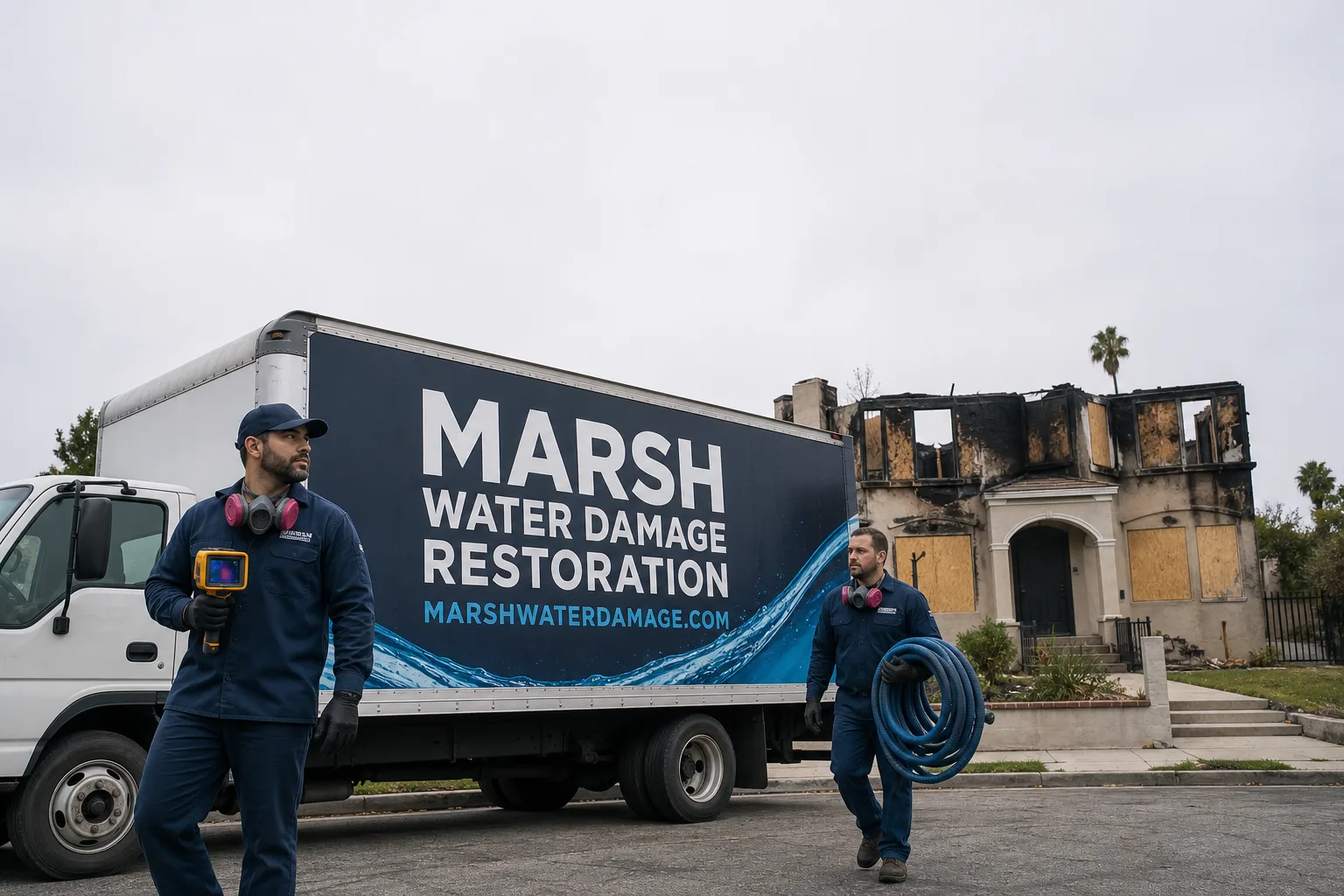
Free visual inspection and a written scope of work before any mitigation begins - photos, moisture readings, and drying logs go in your claim file
The scope we write is the scope we bill. Anything new gets shown to you, in writing, before we touch it.






 Before
 After
After Before
 After
After Before
 After
AfterFast, Reliable Mold Remediation Across Parkchester
Mold remediation in Parkchester typically costs between $1,800 and $6,500 depending on how far spores have traveled behind those original 1940s plaster walls, and most jobs start with a same-week inspection. If you’ve spotted black staining creeping up a closet wall or you’ve been smelling something musty near a bathroom vent, don’t wait for it to reach the next unit. Parkchester’s 171 connected mid-rise buildings mean your problem doesn’t always stay your problem for long. Call (910) 613-6568 and a live person answers, any hour, any day, including the middle of a nor’easter.
We know Parkchester. We know the pipe chases behind Metropolitan Oval. We know the original steam-heat radiator piping. And we know who has to sign off before anyone opens a common-area wall: the condo board, not just the unit owner. That coordination layer is real, it’s specific to this complex, and we handle it on every job so you don’t have to chase signatures while mold keeps growing.
Why Marsh Water Damage Restoration Is Parkchester’s Preferred Mold Remediation Company
We’ve been doing restoration work since 2005 as part of the Threshold Group family, and our Mold Remediation team has spent enough time inside Parkchester’s pre-war brick mid-rises to know exactly what we’re walking into before we open a single wall cavity. Parkchester homeowners call us because we tell them who’s coming before the knock. Every technician is background-checked, identity-verified, and sent to you by name and photo before the visit. Then they show a photo ID badge at the door. Every time. Tobias Reyner, who leads our technical team, insists on that standard for every single dispatch, not just the first one.
Our response time to Parkchester is typically same-day for assessment and next-day for setup when you call before noon. We coordinate directly with the Parkchester Condominium association’s management office when a job touches shared pipe chases, common corridors, or a neighbor’s wall cavity, because in this complex, that conversation is not optional. It’s structural. And we document everything in a format the association accepts, so you’re not left fighting a disputed claim after the drying is done.
Every job gets a written price before any work begins. Not an estimate that balloons after demo starts. A printed number. And behind that number stands the 365-Day Done Right Promise: if the repair isn’t right within a full year, we make it right, and a free second visit is included automatically. It’s printed on every work order. It’s not a promotional offer. It’s how we’ve always worked.
Mold Removal Service in Parkchester
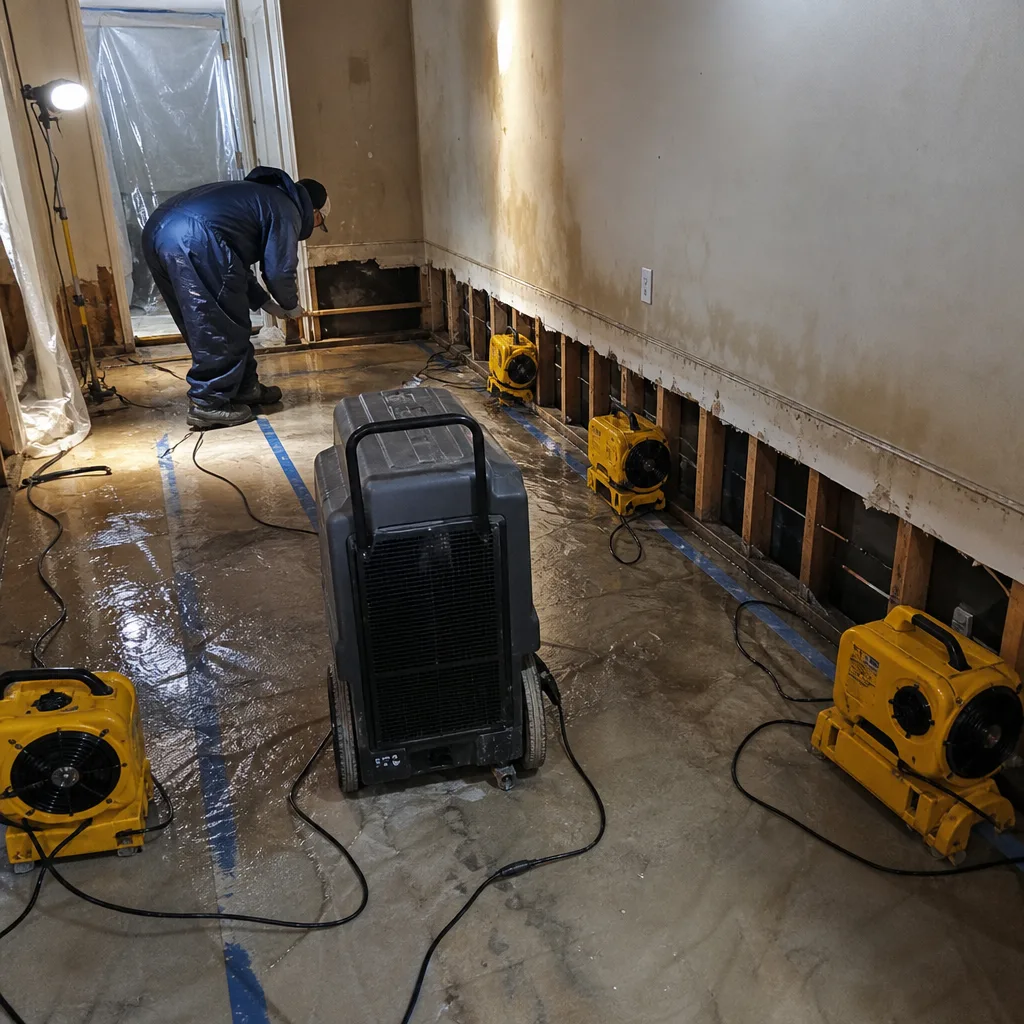
Mold Removal Service is for Parkchester homeowners who can see the problem: black or green staining on drywall, baseboards, window frames, or the plaster ceilings found throughout this complex’s 1938 to 1942 construction. When visible mold is present, removal means more than wiping surfaces. It means containing the affected area, removing contaminated drywall and plaster down to the framing, treating the remaining structure with antimicrobial solution, and then running professional drying equipment until moisture readings confirm the cavity is genuinely dry, not just dry on the surface.
A typical mold removal job in Parkchester runs $1,800 to $4,200 for a single-room containment and removal. When hidden migration behind original plaster pushes the job into two or three rooms, expect $4,500 to $6,500. Those are honest ranges for this market, not bait pricing.
Containment and Source Removal
We set up negative air pressure and physical containment so spores disturbed during demolition don’t drift into your living space or the hallway outside your unit. In Parkchester’s mid-rise buildings, hallway containment matters, because hallway air is shared air. We also identify and stop the moisture source, because removing mold without stopping the water is a guarantee the job fails within a year.
Antimicrobial Treatment and Drying Verification
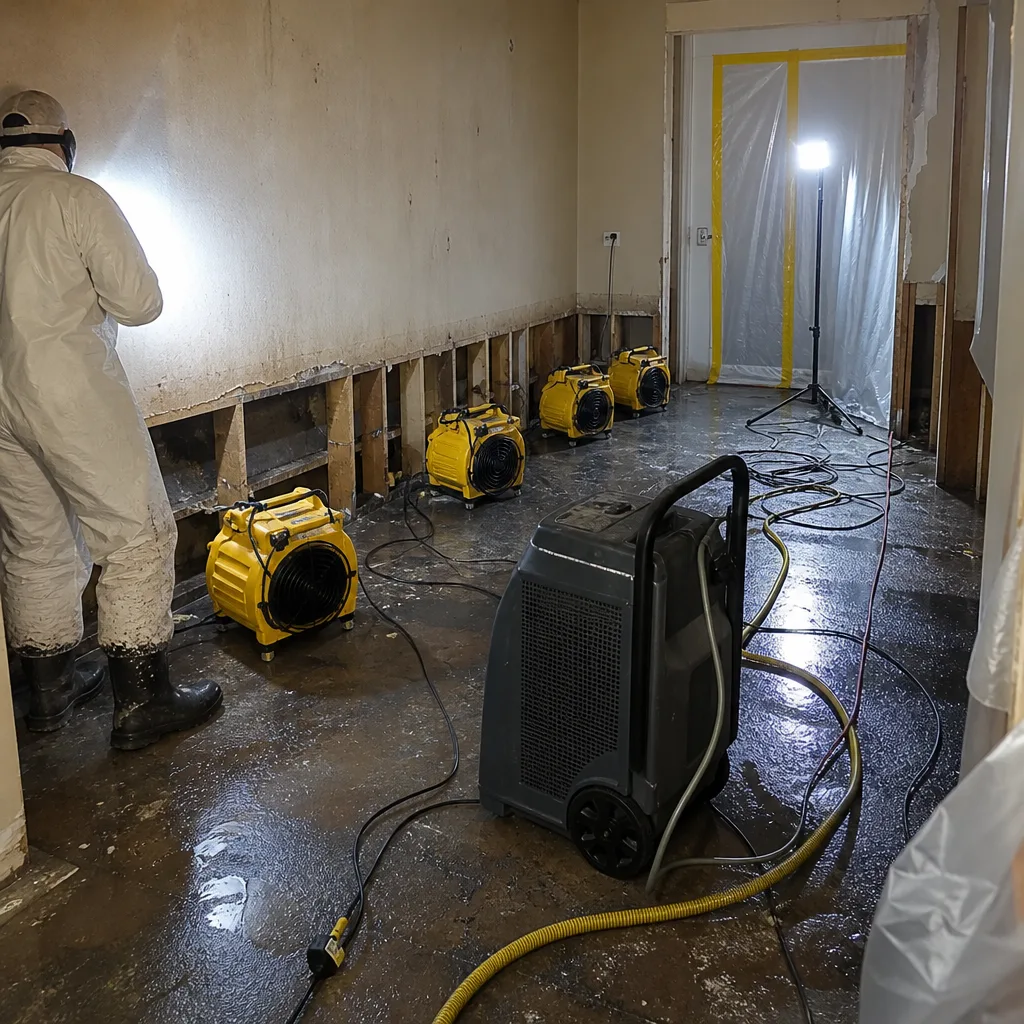
After contaminated material is removed, we treat the remaining framing and cavity surfaces. We use equipment from Phoenix and XPOWER to dry the structure, then take psychrometric readings (measuring the moisture in the air and materials) to confirm the cavity is dry before any rebuild begins. Those readings go into your drying log, which the condo association can review if needed.
Mold Remediation Services in Parkchester
Mold Remediation Services go beyond visible removal. In Parkchester, remediation is the full process of investigation, containment, source correction, removal, cleaning, drying, and verification, and it’s what this complex’s older buildings most often need. Because the original 1940s plaster walls are thick and porous, mold regularly travels behind the surface into cavities no one has opened since MetLife built the place. What looks like a 2-foot patch in a bedroom closet can be a 30-foot migration through a shared pipe chase running down three floors.
Full remediation in Parkchester typically runs $3,200 to $6,500 when it involves a single unit with contained spread. Jobs that require multi-floor coordination, condo-board authorization for common-area access, and expanded containment run higher, and we’ll tell you that in writing before we start.
Moisture Mapping and Hidden Migration Detection
We bring more moisture mapping documentation to a Parkchester inspection than we would to a single-family home, because the condo association’s management office, not you, controls access to most pipe chases and common corridors. Elevated readings behind a closet wall in a 7th-floor unit on Purdy Street or along Metropolitan Avenue often mean water has been moving behind plaster for days. Mapping tells us how far before we cut anything open.
IICRC-Scoped Remediation and Documentation
Our technicians hold IICRC, RIA, and IFA credentials, and every remediation follows an IICRC scope of work. In Parkchester, that documentation matters twice: once for your insurance claim and once for the condo association’s records. We write the scope, we document every moisture reading, and we hand you a drying log that stands up to review by an adjuster or a board.
What happens when you call
- 1
A real person answersNo phone trees - you reach a local pro.
- 2
You get an upfront price rangeHonest numbers before anyone is dispatched.
- 3
A background-checked tech heads outLicensed & insured, dispatched right away.
- 4
You approve before work beginsNothing starts until you say go.
Trusted Brands We Service in Parkchester
We run Phoenix dehumidifiers, XPOWER air movers, and Injectidry injection drying systems on Parkchester jobs because this housing stock demands commercial-grade drying, not a box fan from a rental counter. These are the same machines used on large commercial losses, applied here to residential units where 80-year-old plaster holds moisture like a sponge. We keep these units stocked for fast deployment to Parkchester, so we’re not waiting on a warehouse in another borough when your closet walls are reading wet on a moisture meter. The gear matters because the building materials are unforgiving.
Common Mold Remediation Problems We See in Parkchester Homes
- Shared pipe chases spreading mold across units. The 1938 to 1942 construction runs original vertical plumbing stacks behind 1940s plaster, which means a slow Category 2 or Category 3 leak in the unit above can seed mold behind your walls before you ever smell it. A one-unit call often becomes a multi-unit investigation once moisture mapping begins.
- Condo board authorization delays. Opening a common-area wall or a shared pipe chase without the Parkchester Condominium association’s written sign-off stalls the job mid-containment. While paperwork gets sorted out, spores keep moving. We handle that authorization step up front, because we know it’s required here.
- Pre-war materials requiring abatement coordination. Original floor tiles, pipe insulation, and lead paint appear routinely once walls are opened in Parkchester, and those materials carry formal abatement protocols. Any remediation plan here has to account for them before demo starts, not after the crew is already inside your unit.
- Visible mold that understates the real problem. A 2-foot patch of staining on a bedroom wall in one of these brick mid-rises often means a 30-foot migration behind thick plaster and through the chase. Assuming small visible mold means small job is how homeowners end up with a recurrence six months later, and how claims get disputed.
Pricing for Mold Remediation in Parkchester, NY
Here’s what you’re walking into, in real numbers. A single-room mold removal with containment in Parkchester runs $1,800 to $4,200. Full remediation of a unit with hidden migration behind plaster and treatment of shared chase framing typically lands between $3,200 and $6,500. A job that expands into multi-floor coordination, common-area access, and abatement of pre-war materials goes higher, and we’ll put that number in writing before we start. What moves the price: square footage of affected material, whether the condo board needs to approve common-area access, and whether Category 2 or Category 3 water is involved. Estimates are free. Call (910) 613-6568 and we’ll give you a written scope and a printed number, not a range that drifts.
We Also Serve Cities Near Parkchester
Our Mold Remediation in Parkchester service extends to the surrounding boroughs. We regularly handle jobs in Brooklyn, Queens, Manhattan, and The Bronx, and the same Threshold Verified dispatch standard applies everywhere we go: name and photo before the visit, photo ID badge at the door, written price before work begins.
Serving Parkchester, NY - Our Local Coverage Area
We’re based in the Parkchester area and know this community well. Use the map below to see our service coverage - if you’re nearby, we can almost certainly help.
FAQs About Mold Remediation in Parkchester
Yes, if the job touches a shared pipe chase, common corridor, or any wall cavity that borders another unit or common space, written authorization from both the unit owner and the Parkchester Condominium association’s management office is required before containment or demolition can begin. We handle that coordination for you before we open anything, because starting without it stalls the job mid-containment and risks re-contamination while paperwork is sorted out. Call (910) 613-6568 and we’ll tell you at inspection whether your job triggers board approval.
Mold can begin growing within 24 to 48 hours of water contact, and behind original 1940s plaster where air movement is almost zero, it often spreads undetected for days before any tenant reports a musty smell. By the time staining shows through in a Parkchester unit, the hidden migration behind the wall is usually weeks along. That’s why we moisture-map before we demo, never the other way around.
Plumbing stack leaks that have been seeping behind plaster for days are typically Category 2 or Category 3 water, meaning they contain significant contamination from soap residue, cleaning chemicals, or sewage, not clean Category 1 water from a fresh supply line. Category matters because it determines the antimicrobial treatment protocol, the containment requirements, and the documentation the condo association and your insurer will expect. Call (910) 613-6568 for an inspection that classifies the water correctly before any drying starts.
Yes, every mold remediation in Parkchester is scoped and documented to IICRC standards, with drying logs, moisture readings, and containment protocols aligned with the recognized restoration industry standard. Our technicians hold IICRC, RIA, and IFA credentials, and we format documentation so it stands up to review by both your insurance adjuster and the Parkchester Condominium association’s management office.
Yes, and it happens regularly here because the original vertical plumbing stacks and thick plaster walls let hidden moisture travel across three or four floors before any tenant notices damage. A closet smell in a third-floor unit on Metropolitan Oval turned out to be elevated moisture readings in the shared pipe chase running from the unit above down through two floors, and the job expanded from a one-unit claim into a coordinated multi-floor mitigation project. We document that expansion properly from the first inspection so you’re protected if the scope grows.
Written by Tobias Reyner, Owner at Marsh Water Damage Restoration, serving Parkchester since 2005.