
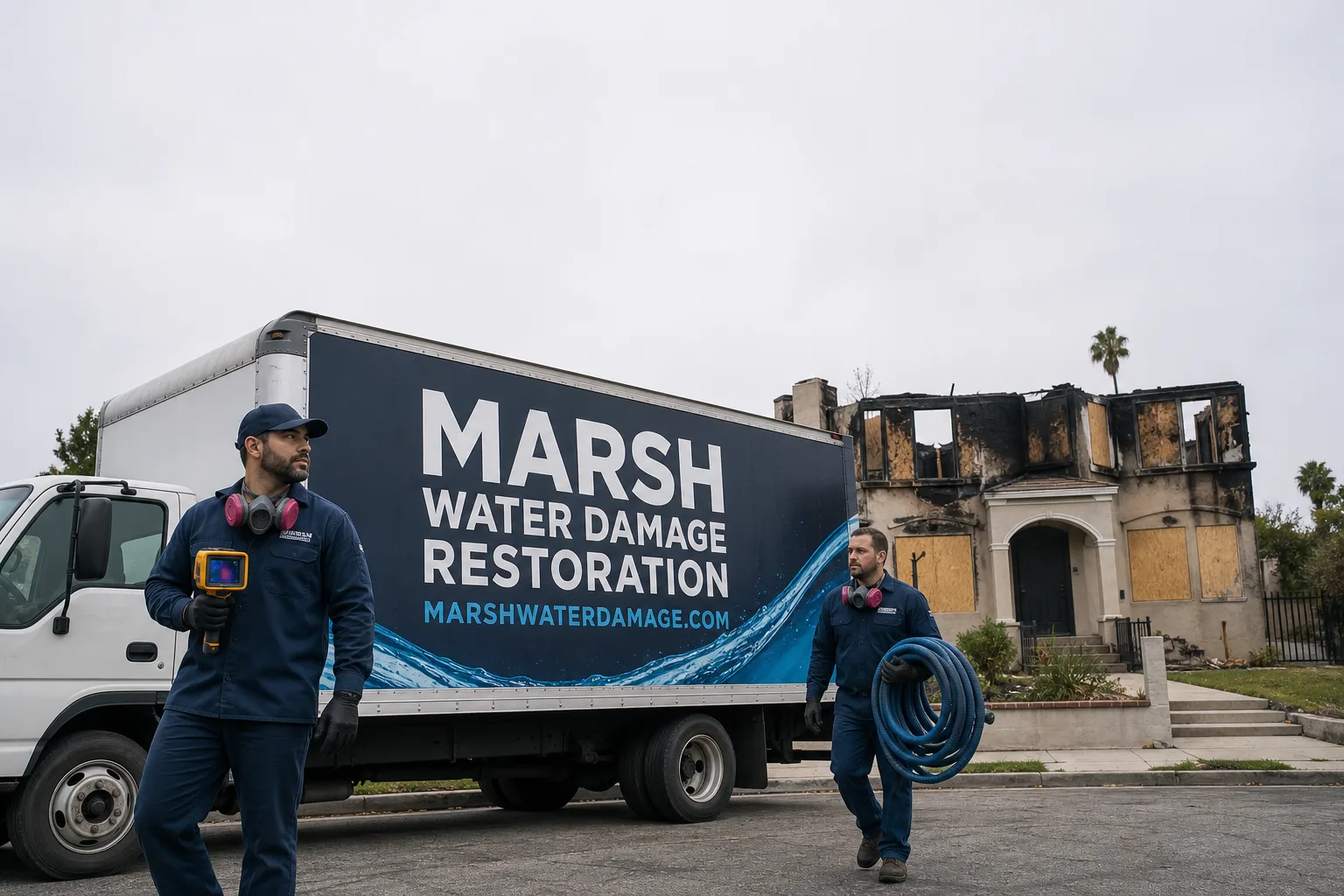
Free visual inspection and a written scope of work before any mitigation begins - photos, moisture readings, and drying logs go in your claim file
The scope we write is the scope we bill. Anything new gets shown to you, in writing, before we touch it.






 Before
 After
After Before
 After
After Before
 After
AfterFast, Reliable Water Damage Restoration Across Arrochar
Water damage restoration in Arrochar typically runs between $1,800 and $7,500 for most residential jobs, with emergency extraction alone starting around $450 and full structural drying with equipment placement averaging $3,200 to $5,800 depending on square footage. We respond to Arrochar calls within 60 to 90 minutes, because when bay water, a burst pipe, or a failed basement sump hits a cape cod or two-family home on Lily Pond Avenue or Major Avenue, every hour of standing water pushes moisture deeper into stud bays and slab edges. Call (910) 613-6568 and a live person answers, not a voicemail. We know this neighborhood’s post-Sandy building stock, its FEMA AE-zone permit requirements, and the difference between a surface cleanup and a cavity that has been wet for a decade.
What makes Arrochar different from anywhere else we work is the water itself. Lower New York Bay is at your doorstep, and the flat, low-lying streets between Father Capodanno Boulevard and the Verrazzano approach channel storm surge directly into crawl spaces and first-floor slab edges. Homes here were built in the 1940s through 1960s, before flood zone construction standards, and many still sit below base flood elevation. That means a nor’easter that barely registers elsewhere puts several inches of saltwater into finish basements and garages here. Saltwater behaves differently than freshwater from a burst supply line. It corrodes faster, it wicks further into masonry, and it leaves a lasting residue that keeps pulling moisture from the air long after the visible puddle is gone.
Why Marsh Water Damage Restoration Is Arrochar’s Preferred Water Damage Restoration Company
We have worked on blocks throughout Arrochar, from the attached two-family homes along Major Avenue to the bungalows and cape cods near the Staten Island Railway corridor and the blocks east of Hylan Boulevard. The work here is not generic. A routine water call on a post-Sandy renovation often opens up into something bigger: hidden mold colonies behind new drywall, corroded romex in stud bays, and slab edges that have been wicking bay water for years. Our crews expect that. We bring containment, air movers, dehumidifiers, and moisture logging on every job, not just the obvious ones, because we know what previous cosmetic repairs concealed.
Every technician who comes to your door in Arrochar is background-checked, identity-verified, and sent to you by name and photo before the visit. At the door they show a photo ID badge. That is the Threshold Verified standard, and it is non-negotiable on every job we run. The person who shows up is the person we told you was coming. For homeowners who are often home alone, parents with young kids, and older residents, that single fact removes half the anxiety of dealing with water damage in the first place.
Our Water Damage Restoration team uses Dri-Eaz dehumidifiers, XPOWER air movers, and Injectidry drying systems, the same professional-grade equipment large commercial losses run on. Tobias Reyner, who leads our restoration operations, holds the IICRC, RIA, and IFA credentials and has spent years on Staten Island flood losses specifically. That matters here because Arrochar’s damage profile is not like inland boroughs. It is saltwater, it is surge, and it is structural in ways a bathroom leak is not.
Flood Damage Restoration in Arrochar
Flood damage restoration in Arrochar means dealing with Category 3 water, the kind that carries sewage, bay sediment, and whatever the surge picked up along the way. A nor’easter that pushes Lower New York Bay over the seawall and into a finished basement on Major Avenue is not a clean-water event, and treating it like one is the most expensive mistake a homeowner can make-that is why many residents rely on our Storm Damage Restoration in Arrochar for proper Category 3 handling. Porous materials such as drywall, insulation, carpet pad, and upholstered furniture that absorbed Category 3 water must be removed, not dried. Then we dry the structure itself. Mold colonizes within 24 to 48 hours, so speed is genuinely structural, not a sales tactic.
Post-Sandy Cavity Remediation
On a cape cod block off Lily Pond Avenue, our tech pulled baseboard in a finished basement after a fall nor’easter and found wet drywall backed by a hidden post-Sandy mold colony and corroded wiring inside the stud bays. We set containment, ran XPOWER air movers and a Dri-Eaz dehumidifier, logged moisture readings daily, and used Injectidry to dry the cavities without a full tear-out. The homeowner’s flood insurance adjuster accepted our drying logs and pre-loss condition photos once we showed the previous cosmetic repair had trapped moisture for a decade. That is what flood restoration in Arrochar frequently is: not just this storm’s water, but the unfinished business of 2012.
FEMA AE-Zone Compliance
Most major flood restoration projects in Arrochar sit inside FEMA AE flood zones, which means permit requirements govern what can be repaired, what must be elevated, and what documentation the city and your insurer expect. We coordinate with your flood insurance adjuster directly, provide photo documentation of pre-loss conditions and drying progress, and produce the kind of drying logs and scopes that survive scrutiny. If you are in a Build It Back home or an elevated rebuild, we know what the elevation certificate implies and what it does not.
Flood restoration in Arrochar typically runs $4,200 to $12,000 for a finished basement event involving Category 3 water, depending on how much porous material must be removed and how much structural drying the stud cavities require. The written price comes before we start, not after demo opens the walls.
Water Damage Cleanup in Arrochar
Water damage cleanup in Arrochar covers the urgent first response: extraction, removal of saturated porous materials, sanitizing hard surfaces, and setting up drying equipment so the structure does not continue absorbing water. Most Arrochar homeowners call us within the first hour or two of noticing the problem, often right after a nor’easter recedes or a supply line lets go in a finished basement off Hylan Boulevard. The first thing we do is stop the source, whether that means shutting a valve, sealing a breach, or containing the intrusion point. Then we map the moisture with meters so we know exactly where the water traveled, not just where it is visible.
Saltwater Slab-Edge Extraction
In un-elevated Arrochar homes whose slab edges sit below base flood elevation, bay water wicks directly into the bottom plates of wood-framed walls. Standard drying without sealing the source chases the problem in circles. We treat the slab edge as the source, not the symptom, and dry the wall cavities from the inside using positive-pressure systems. This is the difference between a basement that is dry for a week and one that stays dry.
Two-Family and Attached Home Coordination
Arrochar’s two-family attached homes share party walls, which means one flooded side wicks into the neighbor’s stud bays if left alone. Water damage cleanup in those structures involves documenting adjacent-unit moisture levels, coordinating with both owners, and drying the shared wall as a single unit. That is not something a one-size-fits-all crew does. It is standard on our Water Damage Restoration in Arrochar jobs.
Water damage cleanup in Arrochar typically runs $1,800 to $4,500 before structural drying equipment is set, with Category 1 clean-water extraction on the lower end and Category 3 surge cleanup on the higher end. We give you that range in writing before any work starts.
Trusted Brands We Service in Arrochar
We service homes across Arrochar regardless of what equipment or building materials are already in place. Whether you have a 1950s cape cod with original framing or a post-Sandy elevated rebuild with modern insulation, our techs arrive with the right parts and the right knowledge. We carry local stock for common Arrochar water damage jobs, from replacement sump pump discharge lines to moisture barriers for slab edges, which means shorter turnaround when a nor’easter has every contractor on Staten Island handling multiple loss sites at once. Our drying fleet includes Dri-Eaz dehumidifiers, Phoenix air movers, and XPOWER ventilation, so the same equipment we use on a two-family flood on Major Avenue is what you get on a basement sump failure off Lily Pond Avenue. We do not split our service tiers by address.
Common Water Damage Restoration Problems We See in Arrochar Homes
- Cosmetic post-Sandy repairs hiding active mold. New drywall and flooring installed over wet stud bays after 2012 looks fine until moisture returns, at which point the mold colony behind it blooms. A routine water call opens the wall and reveals a decade-old problem that was never dried, only covered.
- Saltwater-compromised slab edges that keep wicking. Un-elevated homes whose foundations sit below base flood elevation absorb bay water through the slab perimeter on every nor’easter, even when the floor itself never puddles. The wall cavities stay damp at the bottom plate, feeding mold and rotting framing slowly enough to miss for years.
- Category 3 surge misclassified as Category 2. Storm-surge water carrying harbor sediment and sewage is routinely treated as clean or grey water by homeowners and generic crews. Porous materials that should be removed get dried instead, and mold colonizes inside the wall within 24 to 48 hours.
- Corroded electrical in stud bays. Saltwater exposure accelerates corrosion on romex, junction boxes, and outlet connections in ways freshwater does not. We regularly find electrical that passed a visual inspection but is deteriorating inside wall cavities that were never properly dried after Sandy.
Pricing for Water Damage Restoration in Arrochar, NY
You should know what you are walking into before anyone shows up. Emergency water extraction in Arrochar runs $450 to $900 for a standard basement or single-room event. Structural drying with equipment placement, including dehumidifiers and air movers, typically lands between $2,800 and $5,500 for a finished basement. Full flood restoration involving Category 3 water, porous material removal, sanitizing, and cavity drying runs $4,200 to $12,000 depending on square footage and how much must be removed. What moves the number is the category of water, the amount of drywall and insulation that must come out, whether slab-edge sealing is required, and whether post-Sandy concealed damage gets uncovered. Every job gets a written price before any work begins. Call (910) 613-6568 for a free estimate and a straight answer on what your specific situation will cost.
We Also Serve Cities Near Arrochar
Our crews serve Arrochar and the surrounding boroughs. If you are in Brooklyn, Queens, Manhattan, or The Bronx and dealing with water damage from a burst pipe, coastal flooding, or a failed sump, we will come out. Coastal surge and century-old plumbing do not respect borough lines, and our dispatch coordinates across the same metro area we have worked since 2005.
Serving Arrochar, NY - Our Local Coverage Area
We’re based in the Arrochar area and know this community well. Use the map below to see our service coverage - if you’re nearby, we can almost certainly help.
FAQs About Water Damage Restoration in Arrochar
If the water came from Lower New York Bay surge, it is Category 3, which means it carried sewage, harbor sediment, and whatever was in the streets, and any porous material it touched must be removed rather than dried. Category 2 is grey water from washing machines or sump failures without sewage. It matters because drying Category 3 materials instead of removing them leaves pathogens and mold food inside your walls. We test and classify the water on site and explain what that means for your specific basement before any equipment goes in. Call (910) 613-6568 and we will walk you through what we are seeing.
The short answer is you usually cannot tell from the surface, which is why we run moisture meters and thermal imaging on any Arrochar home with a post-2012 renovation history, even when the visible drywall looks fine. We check the stud bay moisture content at the bottom plates, the area most likely to have wicked saltwater before the cosmetic repair covered it. If the meters show elevated moisture, we can do a small inspection opening, document what is behind the drywall, and give you a written scope before any full remediation starts. In Arrochar specifically, we treat any post-Sandy cosmetic renovation as a probable concealment until proven otherwise.
For most structural repairs, including wall cavity drying that opens framing, slab work, and any electrical or mechanical replacement, yes, a FEMA AE-zone flood permit is typically required by the NYC Department of Buildings. Cosmetic surface cleanup and emergency extraction generally do not require one, but the moment we are opening walls or touching the structure, we pull the paperwork. We handle permit coordination and elevation certificate documentation so you are not left trying to navigate the city system alone. If your home is an un-elevated original, the permit path is different than an elevated rebuild, and we will tell you which applies before work starts.
In a two-family attached home, cleanup starts with extraction and moisture mapping on the affected side, then we meter the party wall to determine whether water has wicked into the adjacent unit. If it has, we dry the shared wall as a single structure, coordinate with both owners, and document everything so an insurance claim on one side does not get tangled with the other. Containment is set to isolate the work area, saturated porous materials come out, hard surfaces get sanitized, and drying equipment runs until our moisture logs show the stud bays are back to acceptable levels. The whole process in Arrochar typically takes three to seven days for a moderate basement event.
It keeps flooding because your slab edge sits at or below base flood elevation, and Lower New York Bay pushes water into the bottom of your foundation walls during every nor’easter and even some high tides with onshore wind. This is a structural reality of the un-elevated, pre-FEMA housing stock that makes up most of Arrochar. Unless the slab edge is sealed or the structure is elevated, every moderate coastal event will reintroduce water into the same finished spaces. What we can do is make sure the water that does get in does not stay: proper extraction, cavity drying, and slab-edge treatment so the recurring event does not become a permanent mold and rot problem.
Call (910) 613-6568 now for a free estimate. A live person answers, and we’ll give you a written price before any work starts in your Arrochar home.
Written by Tobias Reyner, Owner at Marsh Water Damage Restoration, leading restoration operations across Staten Island and the New York metro since 2005.