
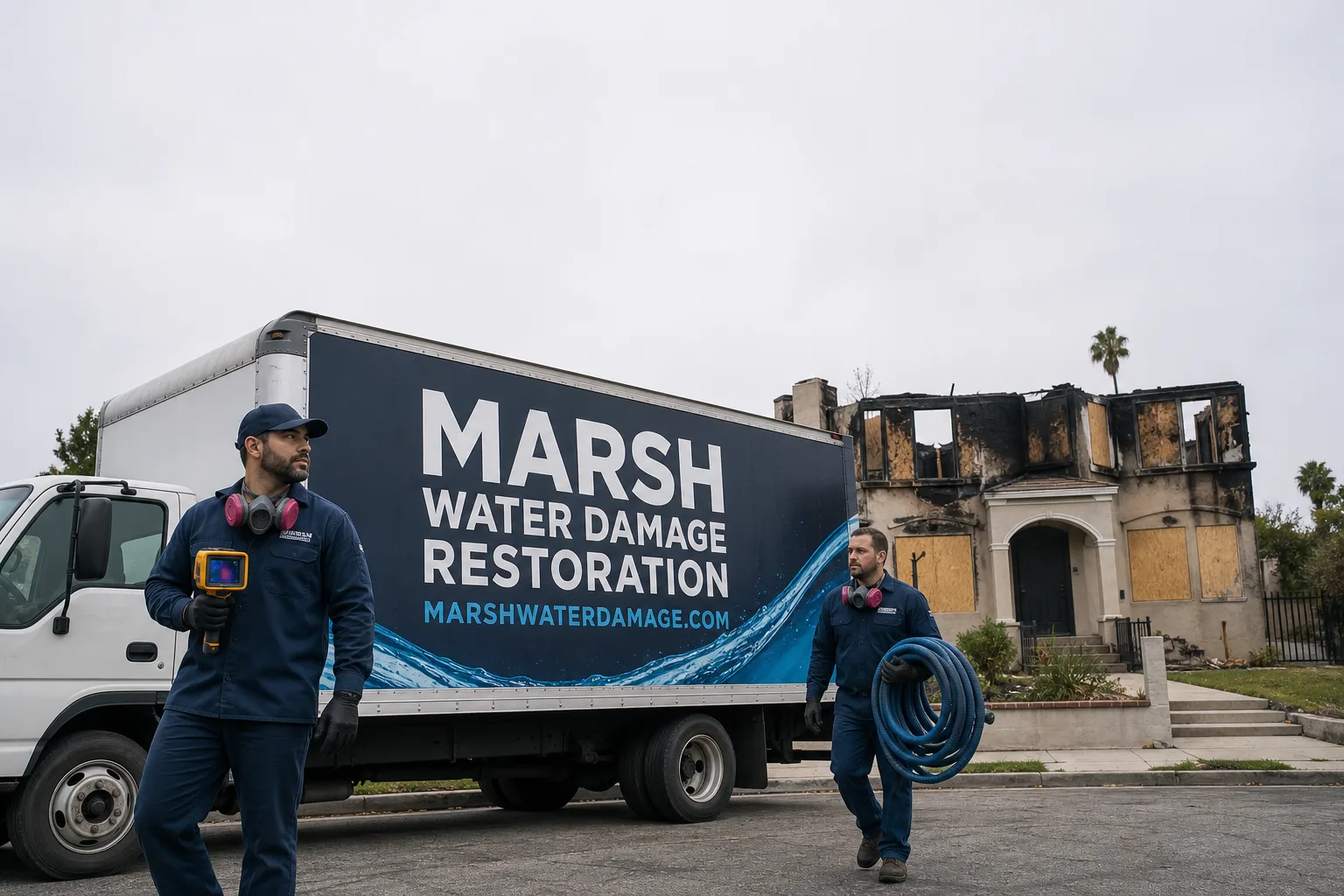
Free visual inspection and a written scope of work before any mitigation begins - photos, moisture readings, and drying logs go in your claim file
The scope we write is the scope we bill. Anything new gets shown to you, in writing, before we touch it.






 Before
 After
After Before
 After
After Before
 After
AfterFast, Reliable Mold Remediation Across Briarwood
Mold remediation in Briarwood usually costs between $1,800 and $6,500 depending on how far the growth has spread behind walls and under flooring, and a crew can typically be on-site within 90 minutes. We know this neighborhood’s specific problem well: the flat Jamaica-corridor blocks drain into Queens’ combined sewer system, so most basement mold calls here start as raw sewage backflow, not a plumbing leak. That changes how the job gets scoped, priced, and billed to insurance. If you’re seeing black spots on baseboards, smelling must in a finished basement, or noticing warped drywall after a storm, call us at (910) 613-6568 and we’ll walk you through what we’re likely to find before we even ring your bell.
This page covers what mold remediation actually costs in Briarwood, why sewage classification matters to your claim, how we work around tight semi-detached access, and what to expect from the first phone call to the final air-quality check.
Key Takeaways
- Response time to Briarwood: usually 60 – 90 minutes for emergency calls, 24 hours for scheduled assessments.
- Typical mold remediation cost: $1,800 – $6,500 in Briarwood depending on square footage affected and Category classification.
- The local issue: most Briarwood basement mold starts as a combined-sewer backup, which means Category 3 biohazard protocols and a sewer-backup rider on your insurance matter more here than almost anywhere else in Queens.
- Trust factor: every Marsh tech is background-checked, identity-verified, and sent to you by name and photo before the visit. You will know exactly who is at your door.
- Guarantee: a written scope and price before anything gets cut, plus our 365-Day Done Right Promise on every job.
Why Marsh Water Damage Restoration Is Briarwood’s Preferred Mold Remediation Company
Briarwood homeowners call us for a specific reason: we already know what’s behind the walls of these 1920s – 1940s brick-and-stucco semi-detached homes before we walk in. Plaster-and-lath construction holds moisture differently than modern drywall. Original cast-iron floor drains from the 1930s connect directly to a combined sewer system that backs up during heavy rain. Finished basements were never designed to exclude groundwater. All of this matters when you’re deciding whether a mold problem is a small spot treatment or a full containment job.
Tobias Reyner, who leads our restoration team, has worked enough Briarwood jobs to know that the fastest way to lose a homeowner’s trust is to under-scope a sewage-related mold issue. That’s why every assessment here starts with classification before pricing. We don’t cut drywall until we know the water source, the contamination category, and what your insurer will actually cover. That protects your health and your claim.
Our techs are IICRC, RIA, and IFA credentialed, and they carry commercial-grade equipment from Phoenix, XPOWER, and Injectidry, the same gear used on large commercial losses, applied to residential jobs. The Threshold Verified standard means you receive a name, photo, and background-check confirmation before anyone arrives. When the doorbell rings, the person standing there matches the photo you were sent. That’s non-negotiable for us, because we know the second anxiety homeowners carry when water or mold shows up: not just the damage, but the stranger at the door.
Black Mold Removal in Briarwood
Black mold removal in Briarwood is a specialized job that starts with identifying whether you’re dealing with Stachybotrys, the toxic black mold that grows on cellulose materials after prolonged water exposure, or a less dangerous dark mold that simply looks alarming. This distinction matters because the remediation protocol changes: Stachybotrys requires full containment with 6-mil poly barriers, negative air pressure, HEPA air scrubbing, and controlled removal of affected drywall, insulation, and plaster. In Briarwood’s older semi-detached homes, black mold most often appears in finished basements after a sewer backup or slow groundwater seep through original foundation walls.
A typical black mold removal job in a Briarwood finished basement runs $2,500 – $7,500 depending on how far the growth has traveled behind furred-out walls and whether the cast-iron floor drains were involved. If you smell a persistent musty odor near the base of a basement wall or behind furniture, don’t wait. Mold colonies reach the point where they release visible spores into the air within 10 – 14 days of a water event in Briarwood’s humidity. Call (910) 613-6568 and we’ll tell you over the phone whether this sounds like surface mold or something deeper.
When a Briarwood Homeowner Needs This
You need professional black mold removal, not a bleach spray, when the growth covers more than 10 square feet, when it’s growing behind baseboards or inside wall cavities, or when the source was sewage. Bleach doesn’t kill mold roots in porous materials like plaster and drywall. It bleaches the surface while the colony keeps growing underneath, which is a common and expensive mistake in Briarwood basements where the original plaster-and-lath wicks moisture upward.
What the Job Actually Involves
We set containment before we touch anything. Negative air pressure prevents spores from spreading to the rest of the house while we remove affected materials. Then we treat exposed framing with antimicrobial agents, run commercial dehumidifiers and air movers until the cavity meets dry standard on a pin meter, and finish with HEPA air scrubbing. You get a written scope and a written price before any wall is opened.
Mold Removal Contractor in Briarwood
Hiring a mold removal contractor in Briarwood means finding someone who understands that these homes are dense, attached, and old. Tight alley clearances between semi-detached properties limit equipment access. Rolling-code garage door openers and security systems mean we coordinate entry before we arrive. And the combined-sewer reality means we’re almost never dealing with clean water. A mold removal contractor in Briarwood has to be prepared for Category 3 biohazard work on a call that, in a neighboring borough, might have been scoped as simple water intrusion.
Most residential mold removal jobs in Briarwood run $1,800 – $6,500. Smaller jobs, like a contained under-sink cabinet that grew mold from a slow plumbing leak, can land in the $800 – $1,500 range. Larger jobs, like a full finished-basement remediation with multiple rooms and subfloor removal, can exceed $8,000. The variables are square footage, contamination category, and whether asbestos abatement is required on older plaster or vinyl flooring, which is a real possibility in houses built in the 1920s – 1940s.
Working Around Briarwood’s Tight Access
We’ve done basement remediations on small residential streets near Hoover Avenue where the only access was a narrow side alley and a basement bulkhead. Our crew sizes, equipment staging, and containment setup are planned around that reality before we arrive. You won’t have a truck parked across your neighbor’s driveway or a hose running through the front hallway of a rental unit unless we’ve both agreed that’s the only path in.
Written Scope Before Work Starts
We put the scope in writing. What gets removed, what gets treated, what gets replaced, what the drying target is, and what the total price will be. No change orders after demo begins, no “we found more once we opened the wall” surprise billing. If we find more mold than the initial moisture mapping suggested, we show you the pin-meter readings, the photos, and the revised scope before proceeding. The price is agreed before the work continues.
Trusted Brands We Service in Briarwood
Briarwood homeowners run dehumidifiers, air purifiers, and basement ventilation systems from every major brand, and the mold problems we respond to are rarely about the equipment. They’re about the conditions: drainage failures, sewer backflow, and groundwater pushing through old foundation walls. That said, we regularly work around and integrate with residential systems, including standalone dehumidifiers and HVAC-linked air handlers, and we stock common replacement filters, drain-line fittings, and antimicrobial treatments locally so we’re not waiting on a parts order from across the river. If your equipment has been running nonstop since the last storm and the musty smell still won’t go away, the problem is behind the wall, not in the machine. Call us at (910) 613-6568.
Common Mold Remediation Problems We See in Briarwood Homes
- Combined-sewer backflow misclassified as clean water. Because Briarwood’s flat Jamaica-corridor blocks drain into Queens’ combined sewer system, what looks like stormwater in a basement is often raw sewage. Treating it as Category 1 or 2 skips biohazard containment and creates a health hazard, and it’s also the top billing dispute we see when the adjuster reviews the loss category.
- Mold hidden behind plaster-and-lath and furred-out walls. These 1920s – 1940s semi-detached homes were built with materials that wick moisture vertically. A pin meter on the surface can miss saturated plaster 24 inches up the wall. We routinely find mold on a second pass that was invisible during the walkthrough.
- Original cast-iron floor drains backing up silently. The 1930s-era drains under many Briarwood basements connect directly to the combined sewer. During heavy rain, they can back up without any visible plumbing leak, leaving a slow, persistent moisture source that fuels ongoing mold growth behind finished walls.
- The unpermitted rental unit complication. A high proportion of Briarwood basements have been informally converted into rental units. When mold remediation displaces a tenant, the scope has to account for NYC DOB compliance, tenant access, and the landlord’s disclosure obligations. This is a neighborhood reality that changes how the job gets scheduled and documented.
Pricing for Mold Remediation in Briarwood, NY
Here’s what you can expect to pay for mold remediation in Briarwood based on what we’ve seen in this neighborhood:
- Spot treatment (under 10 sq ft, no wall penetration): $800 – $1,500
- Contained room remediation with air scrubbing: $1,800 – $4,000
- Full finished-basement remediation with drywall and floor removal: $4,500 – $8,000+
- Black mold (Stachybotrys) remediation with full containment: $2,500 – $7,500
- Post-remediation air quality testing: $350 – $700
The biggest cost driver in Briarwood is the contamination category. A Category 3 sewage-backup mold job requires full PPE, containment, antimicrobial treatment on exposed framing, and more aggressive material removal than a Category 1 clean-water job. The second driver is hidden mold: if moisture mapping shows saturated plaster-and-lath behind a furred-out wall, the removal area grows. Every estimate comes with a written scope and a written price before any work starts. Estimates are free. Call (910) 613-6568 for an exact quote.
We Also Serve Cities Near Briarwood
We handle mold remediation throughout the surrounding boroughs, including Brooklyn, Queens, Manhattan, and The Bronx. If you’re managing a property in one of those areas, or if you’re a Briarwood landlord with units across borough lines, our team can coordinate the work. Learn more about local service specifics on our Briarwood page, or call directly to schedule an assessment.
Serving Briarwood, NY - Our Local Coverage Area
We’re based in the Briarwood area and know this community well. Use the map below to see our service coverage - if you’re nearby, we can almost certainly help.
FAQs About Mold Remediation in Briarwood
Because most basement flooding in Briarwood is caused by combined-sewer overflow during heavy rain, not by a broken pipe or surface water. The water coming up through your floor drain or foundation walls is often Category 3 sewage, and your insurance claim needs to reflect the correct loss category. We document the water source, take photos, and note the sewer-backup classification before any remediation begins, which is the single most important step for getting your claim approved. Call (910) 613-6568 and we’ll walk you through what your policy covers.
Mold can begin colonizing within 24 – 48 hours after water intrusion in a Briarwood basement, especially during Queens’ humid summer months. The window is shorter here than in drier inland areas because of the Jamaica Bay watershed’s persistent humidity and the slow surface drainage caused by heavy clay subsoil. If your basement took on water from the last heavy rain and you can already smell must or see discoloration, you’re past the prevention window and into the remediation window.
Yes. We plan equipment staging and containment setup around the specific access at your property before we arrive. Tight side alleys, basement bulkheads, shared driveways, and security-focused entry systems are all normal for Briarwood jobs. Send us a photo of your access path when you schedule, and we’ll confirm the equipment footprint and entry plan before the crew gets there.
For finished basements in Briarwood’s older semi-detached homes, the scope usually includes containment with 6-mil poly, negative air pressure, moisture mapping with a pin meter, removal of affected drywall and insulation, antimicrobial treatment on exposed framing, and drying with commercial dehumidifiers and air movers until the cavity reaches dry standard. If the source was sewage backflow, the scope also includes full biohazard PPE and more aggressive material removal. We provide a written scope and price before any wall is opened.
Yes, it changes documentation and scheduling. We’ll photograph everything, document the water source and contamination category, and coordinate access with your tenant. NYC DOB compliance issues are yours to resolve with the city, but our scope and billing will be transparent about what was removed and why, which matters if you’re filing an insurance claim or dealing with a tenant displacement. Call (910) 613-6568 to talk through your specific situation.
Call Marsh Water Damage Restoration in Briarwood
If you’ve got mold, a musty smell, or water that came in during the last storm, call us at (910) 613-6568. A live person answers 24/7. We’ll ask a few questions about what you’re seeing, give you a straight answer about what it likely costs, and schedule a time for a written assessment. Before anyone arrives, you’ll get the tech’s name and photo. When you open the door, that’s exactly who will be standing there.
Written by Tobias Reyner, Owner at Marsh Water Damage Restoration, serving Briarwood and the surrounding New York City area since 2005.