

Free visual inspection and a written scope of work before any mitigation begins - photos, moisture readings, and drying logs go in your claim file
The scope we write is the scope we bill. Anything new gets shown to you, in writing, before we touch it.






 Before
 After
After Before
 After
After Before
 After
AfterFast, Reliable Mold Remediation Across Lower Manhattan
Mold remediation in Lower Manhattan typically costs between $1,800 and $6,500 for a contained removal, depending on square footage and whether below-grade spaces are involved. Most jobs are scoped within 24 to 48 hours of the first call, and we dispatch crews from our New York City office directly into every Lower Manhattan neighborhood, from Battery Park City to the South Street Seaport. If you’re seeing visible growth, smelling something damp and stale, or dealing with the aftermath of a storm-surge leak, call (910) 613-6568 and a live person answers, day or night. We walk the scope with you in writing before any containment goes up.
Key Takeaways:
- Lower Manhattan sits on landfill and fill in places like Battery Park City, which behaves differently under saturation than bedrock-anchored buildings further north.
- Saltwater flooding from nor’easters and events like Sandy demands a remediation protocol that freshwater drying simply doesn’t cover.
- Mold can re-emerge weeks after surfaces feel dry in below-grade spaces here, so a moisture-management plan matters as much as the removal itself.
- Every job gets a written price before work starts and a 365-Day Done Right Promise on the repair.
Why Marsh Water Damage Restoration Is Lower Manhattan’s Preferred Mold Remediation Company
We’ve worked in Lower Manhattan long enough to know that the Financial District high-rise is not the same job as the TriBeCa cast-iron loft, and neither one is the same as a Federal-era brick mercantile building at the Seaport. Each building type has its own framing, facade, and below-grade behavior, and scoping them all with the same checklist is exactly how mold comes back. Our reputation in this part of the city is built on doing the opposite: we scope to the building, not to the brochure.
Every technician who arrives at a Lower Manhattan address is background-checked, identity-verified, and sent to you by name and photo before the visit. That’s the Threshold Verified standard, and it isn’t optional. When the tech knocks, they show a photo ID badge at the door. Every time. Tobias Reyner, who leads our technical team, holds the team to IICRC, RIA, and IFA credentials and commercial-grade equipment standards on every residential job.
Mold Remediation Services in Lower Manhattan
Mold Remediation Services in a Lower Manhattan building means more than removing visible growth. It means identifying the moisture pathway that fed the colony, containing the affected area under negative air pressure, removing contaminated porous materials, treating the remaining structure, and then drying to a standard that holds. In buildings on landfill substrate, that last part is where the work either succeeds or quietly fails. A typical mold remediation services scope in Lower Manhattan runs $2,200 to $5,800, with below-grade spaces and saltwater intrusion pushing toward the upper end. We write the scope and the price before work begins, and you sign it before we cut anything open.
Saltwater-Specific Remediation
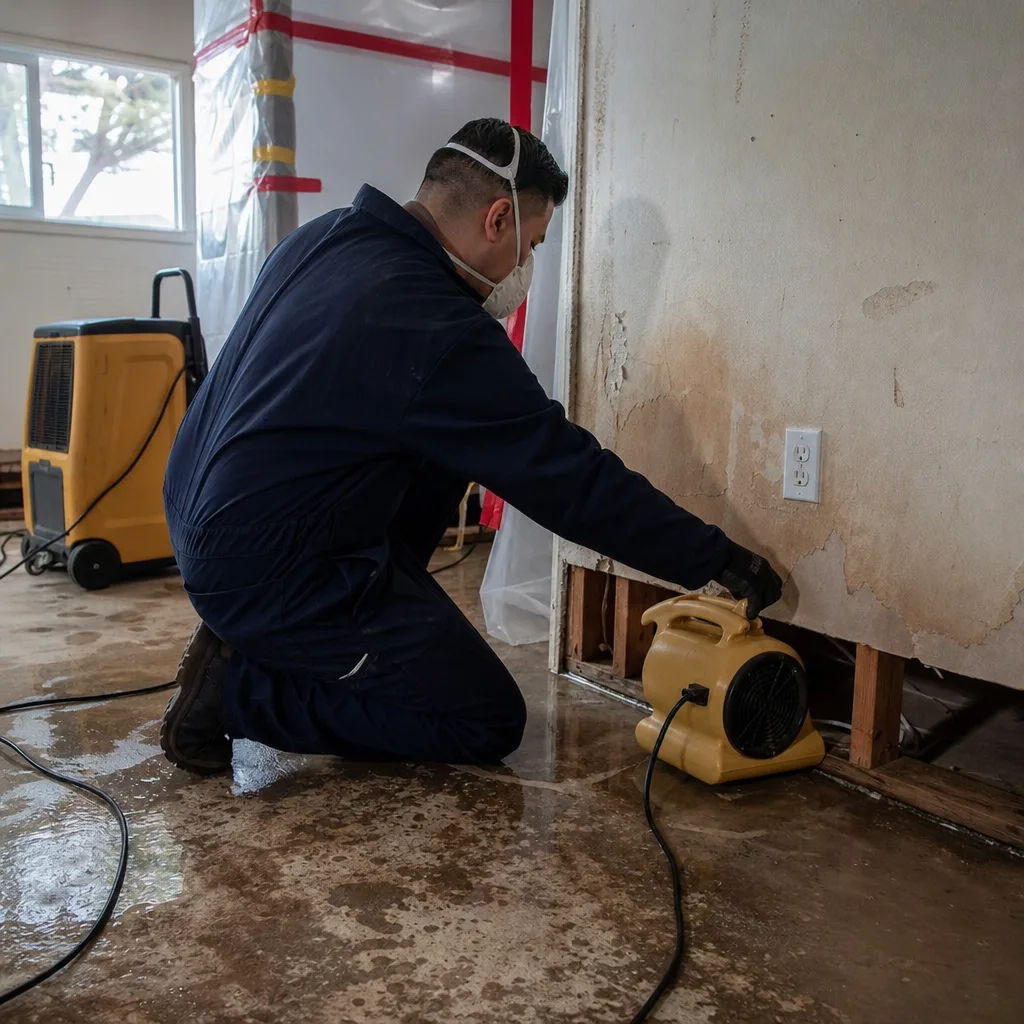
Harbor water is not freshwater. It carries salts that keep corroding steel framing, concrete reinforcement, and electrical components long after the visible moisture is gone. Our crews treat Category 3 saltwater intrusion as a materially different job, with antimicrobial treatment on affected framing and a drying plan that accounts for what the salts leave behind. This is a protocol we’ve refined specifically for Lower Manhattan’s storm-surge history.
Below-Grade Containment and Drying
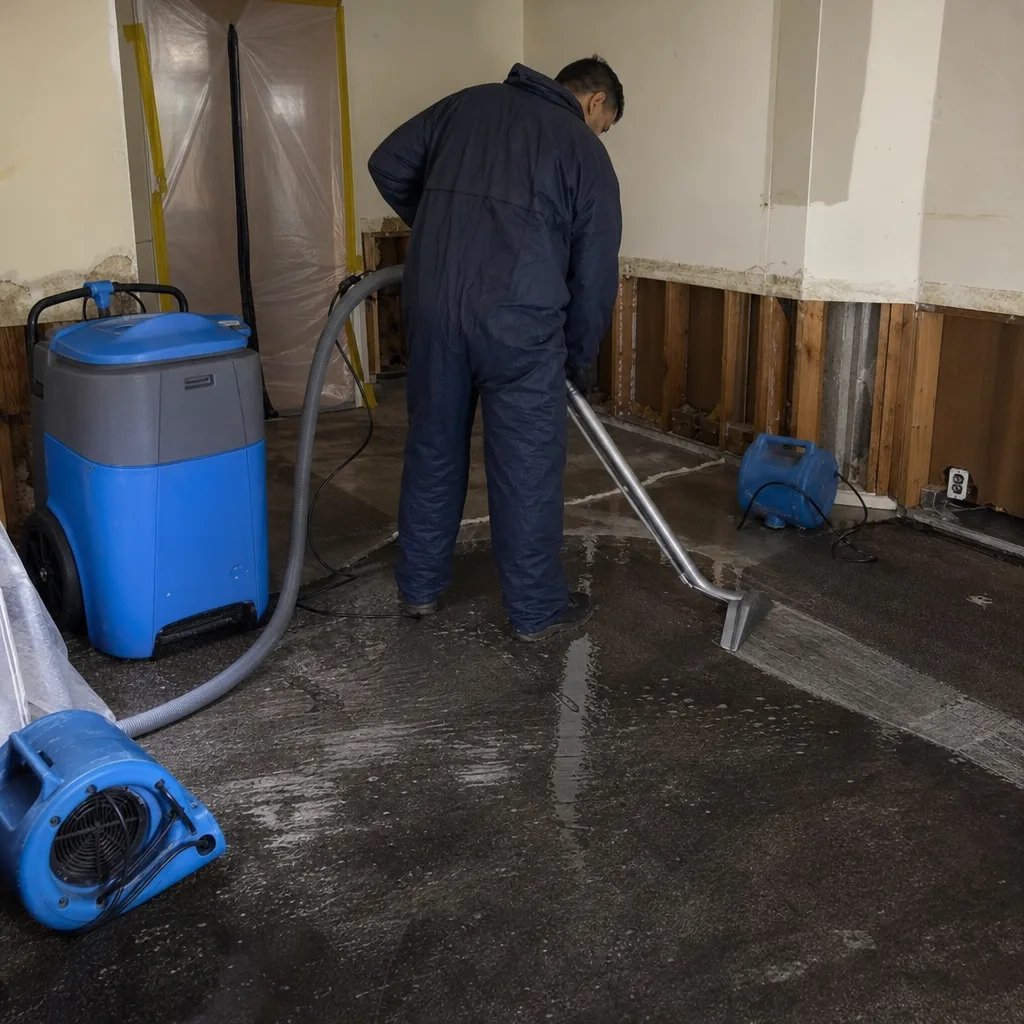
Battery Park City and Seaport basements often sit below the flood line, and the fill beneath them transmits water unpredictably. We set containment, run Phoenix and Injectidry dehumidification with air movers, and log moisture readings over time rather than calling the job dry on the first pass. That documentation matters when hydrostatic pressure re-wets a wall two weeks later.
What happens when you call
- 1
A real person answersNo phone trees - you reach a local pro.
- 2
You get an upfront price rangeHonest numbers before anyone is dispatched.
- 3
A background-checked tech heads outLicensed & insured, dispatched right away.
- 4
You approve before work beginsNothing starts until you say go.
Professional Mold Removal in Lower Manhattan
Professional Mold Removal in Lower Manhattan homes and commercial spaces requires handling contaminated material without spreading spores through occupied units, and that’s a bigger concern here than almost anywhere else in the city. Older Seaport buildings and converted lofts share walls, mechanical chases, and sometimes elevator shafts with neighbors, so containment discipline is not a formality. A typical professional mold removal job in this area runs $1,800 to $5,500 for contained removal of affected drywall, insulation, or flooring. We review the scope, the containment plan, and the written price before work starts.
Containment in Multi-Unit Buildings
In a converted loft or high-rise, mold spores travel through shared air pathways. We build sealed containment, run HEPA-filtered negative air, and keep the affected zone under pressure so what we remove doesn’t end up in the apartment next door. This is standard on every job, not an add-on for difficult buildings.
Post-Removal Verification
After removal, we don’t rely on a visual check and call it done. We take moisture readings on framing and below-grade surfaces, compare them against the drying log, and document the numbers. If something doesn’t hold, we address it under the 365-Day Done Right Promise before it becomes a recurring problem.
Trusted Brands We Service in Lower Manhattan
We run our drying and extraction with equipment from Phoenix, Injectidry, and B-Air, the same platforms used on large commercial losses. For Lower Manhattan customers, that matters because the gear has to handle saturated masonry, below-grade concrete, and tight mechanical spaces in buildings where access is limited. We keep replacement parts and drying accessories on hand so we’re not waiting on a shipment when a Seaport basement or Battery Park City utility room needs a dehumidifier swapped mid-job.
Common Mold Remediation Problems We See in Lower Manhattan Homes
- Saltwater intrusion treated as a freshwater leak. Crews dry surfaces, the mold looks gone, and then the salts keep attacking steel and concrete behind the wall. You need a scope that acknowledges what harbor water leaves behind, not just that it got wet.
- Battery Park City re-wetting cycles. The landfill substrate below buildings holds water differently than bedrock, and hydrostatic pressure can push moisture back through below-grade walls weeks after drying. Surface moisture mapping alone won’t catch it, and mold returns.
- Wind-driven rain during nor’easters. Exterior door and window openings that aren’t sealed and reinforced let water back in after remediation is complete. The 24 to 48 hour mold clock restarts, and the previous work is wasted.
- Shared below-grade infrastructure. Underground concourses, parking decks, and loading docks below the flood line sustained the worst of the Sandy damage, and moisture travels through them into adjacent buildings. A remediation plan that ignores the shared footprint is incomplete.
We were called to a South Street Seaport Federal-era brick building off Fulton Street after a nor’easter pushed storm-surge harbor water into the basement, then receded and left Category 3 black water behind. Our techs extracted the standing water, set containment, and ran Injectidry and Phoenix dehumidification with air movers. But because that building sits on fill, and not bedrock, moisture readings on the below-grade masonry kept creeping back up weeks after the surfaces felt dry. We documented the cycle with drying logs, applied antimicrobial treatment to the affected framing, and wrote a scope that added a permanent vapor-management detail so the mold wouldn’t come back on the next tidal surge. For buildings in this area, Lower Manhattan Water Damage Restoration expertise is essential to address these recurring moisture issues properly.
Pricing for Mold Remediation in Lower Manhattan, NY
We give honest ranges because we think a homeowner should know the rough number before the first phone call. Basic contained mold removal in a single room of a Lower Manhattan apartment typically starts around $1,800. A larger below-grade space with saltwater intrusion, multiple rooms, or framing that needs antimicrobial treatment and vapor-management detailing will run $4,000 to $6,500. What moves the number is the square footage, how much of it is below grade, and whether the moisture source is still active. We quote the job in writing before work starts, and that number doesn’t shift unless you approve a change in scope. Call (910) 613-6568 for a free estimate.
Line-item pricing for common Lower Manhattan scopes:
- Containment setup with HEPA-negative air: $600 – $1,200 per affected zone
- Removal and disposal of contaminated drywall: $5 – $9 per square foot
- Antimicrobial treatment on exposed framing: $0.75 – $1.50 per square foot
- Below-grade drying with Phoenix and Injectidry equipment: $1,200 – $3,000 depending on square footage and duration
- Vapor-management detail for landfill substrate conditions: $800 – $2,500 depending on access and material
We Also Serve Cities Near Lower Manhattan
Our crews regularly cross the bridges and tunnels from Lower Manhattan into Brooklyn, Queens, Manhattan, and The Bronx. If you’re across the East River or up-island and dealing with mold after a storm or leak, we bring the same written scope, the same equipment, and the same Mold Remediation standards to your building. You can learn more about our local coverage at Mold Remediation in Lower Manhattan. Call us and we’ll tell you the response time to your neighborhood, straight up.
Serving Lower Manhattan, NY - Our Local Coverage Area
We’re based in the Lower Manhattan area and know this community well. Use the map below to see our service coverage - if you’re nearby, we can almost certainly help.
FAQs About Mold Remediation in Lower Manhattan
Saltwater flooding leaves behind salts that keep corroding steel framing, concrete reinforcement, and electrical components after the visible moisture is gone, so remediation has to include antimicrobial treatment and drying standardization that a freshwater job doesn’t require. The scope is materially different, and the price reflects the additional materials and labor. If you’ve had storm-surge water in your building, tell us that on the call so we can send the right team and the right scope. Call (910) 613-6568 for an honest assessment.
Yes, and this is the most common call we get from Battery Park City. The landfill substrate beneath the buildings holds and transmits water differently than Manhattan bedrock, so hydrostatic pressure can push moisture back through below-grade walls and slabs weeks after the surface dries. The walls feel dry, but the moisture is behind them. A proper scope here needs below-grade moisture logging and a vapor-management plan, not just a surface treatment. If mold returned after a previous remediation, ask for drying documentation from the first contractor.
Check the gaskets, the threshold seals, and the frame anchors on every exterior door before a storm, because wind-driven rain through a failed seal restarts the 24 to 48 hour mold clock after remediation is complete. On Federal-era brick buildings, the door frames are often original timber set into masonry, and the seal between them fails quietly. Reinforcing those openings with proper gaskets and rated doors for coastal wind exposure is a pre-storm priority in the Seaport specifically. We can assess the openings and recommend whether the existing door is adequate before the next surge.
Mold can start growing within 24 to 48 hours after water intrusion in Lower Manhattan’s climate, and that clock starts as soon as the water arrives, not when you discover it. Saltwater slows some microbial growth but accelerates the corrosive attack on building materials, so the remediation need is still urgent. Call (910) 613-6568 and we’ll get a crew to you with containment and extraction started quickly.
The equipment platform is the same, Phoenix, Injectidry, and B-Air, but the configuration and the drying plan change with the building. A high-rise concrete and steel building dries differently than a Seaport brick structure on fill, and the below-grade moisture behavior is not the same. Our techs set the equipment based on psychrometric readings, which means measuring the moisture in the air and materials, not just running air movers and hoping. The equipment is commercial-grade; the plan is specific to the building.
Call Marsh Water Damage Restoration for Mold Remediation in Lower Manhattan
If you’re dealing with mold after a storm, a leak, or a slow moisture problem you can’t find, call us. A live person answers at (910) 613-6568, 24 hours a day, every day, including holidays. We’ll ask questions about your building, your neighborhood, and what you’re seeing, then get a technician scheduled with a name, a photo, and a written scope before anyone starts work. Lower Manhattan’s landfill geology, saltwater history, and 19th-century building stock mean this is not a place for a generic mold job. We treat it that way, and our Mold Remediation team is ready when you call.
Written by Tobias Reyner, restoration lead at Marsh Water Damage Restoration, serving Lower Manhattan with mold and water damage expertise since 2011.