
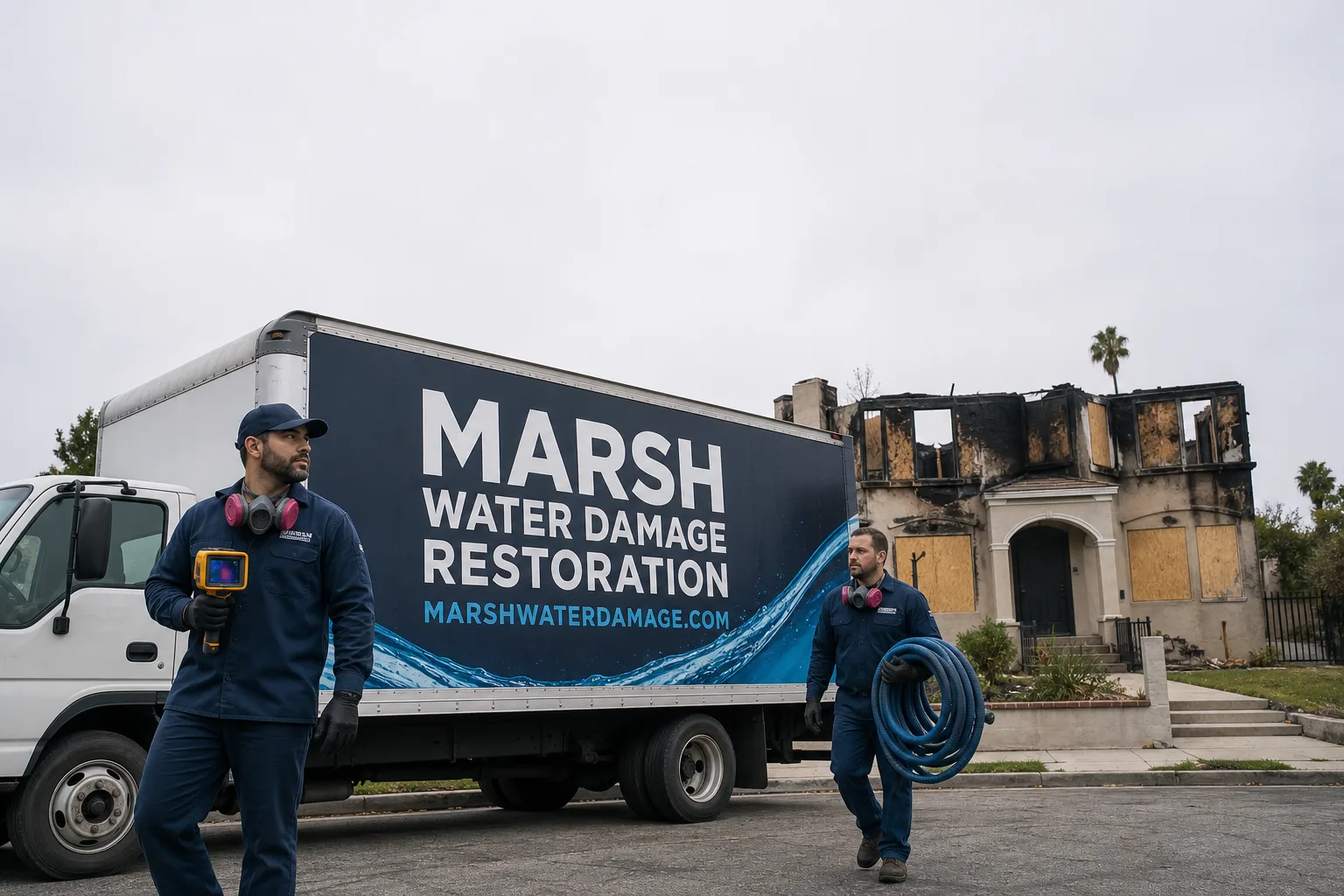
Free visual inspection and a written scope of work before any mitigation begins - photos, moisture readings, and drying logs go in your claim file
The scope we write is the scope we bill. Anything new gets shown to you, in writing, before we touch it.






 Before
 After
After Before
 After
After Before
 After
AfterFast, Reliable Water Damage Restoration Across Massapequa Park
Water damage in Massapequa Park rarely looks like the textbook photo. Here, it’s bay water coming up through the slab on Lake Shore Drive, or a nor’easter pushing the canal over its banks into a 1954 split-level. Most residential water extractions in Massapequa Park run between $1,200 and $4,500 before drying equipment is set, depending on how much of the lower level took on water and whether it’s clean water or category 3 surge water. If you’re standing in a wet basement right now, call (910) 613-6568 and a live person answers, day or night. We know the canal streets, the 1950s Cape Cods, and what salt water does to a subfloor that’s been there since Eisenhower was president.
Our Water Damage Restoration team serves the full village, from the homes off Park Boulevard up to the north side near Sunrise Highway. We respond to Massapequa Park calls fast because we understand what happens when tidal surge sits in a slab foundation for even 12 hours. The flat coastal topography here means water doesn’t drain away. It stays. And what it does to original 1950s building materials is a problem most generalist crews don’t catch until the mold is already behind the drywall.
Why Marsh Water Damage Restoration Is Massapequa Park’s Preferred Water Damage Restoration Company
We’ve been restoring homes since 2005 as part of the Threshold Group family, and the homes we see in Massapequa Park have a particular character. They were built fast, between the late 1940s and early 1960s, with materials that hold moisture far longer than modern construction. A Cape Cod on the south end with original subflooring and minimal wall insulation doesn’t dry in three days. It dries in five to seven, sometimes longer when the bay air keeps the relative humidity pinned above 70 percent. Contractors who don’t understand that will hand you a drywall patch and a bill while the framing behind it is still wicking salt water.
Every technician we send into Massapequa Park is background-checked, identity-verified, uniformed, and photo-badged under the Threshold Verified standard. Before our tech pulls up to your house, you’ll have their name and photo on your phone. At the door, they show a photo ID badge. Every time. We do this because we know the second anxiety that comes with water damage isn’t the water. It’s opening your door to a stranger. We remove that uncertainty before the knock, not after.
Our team holds IICRC, RIA, and IFA credentials, and we run drying equipment from Dri-Eaz, Phoenix, and XPOWER. That’s the same gear large commercial restoration firms deploy on hospital and office losses, applied to a split-level on the canal side of Massapequa Park. And every job gets a written price before any work starts, a written guarantee on every repair, and a free second visit if the repair fails, all backed by our 365-Day Done Right Promise. These are printed commitments on every work order, not promotional language.
Flooded Basement in Massapequa Park
A flooded basement in Massapequa Park is usually not a burst pipe story. It’s a nor’easter or tropical system pushing water over the canal banks and into the lower level, which is why a flooded basement here runs $1,800 to $5,500 depending on square footage, water category, and whether the original 1950s subfloor has to come out. The south-end canal streets carry category 3 water, not clean water, which changes everything about how we treat the space and what we can dry in place versus remove.
Salt Water and Category 3 Drying
Canal water carries salt, silt, and contaminants. That’s a category 3 classification, which means porous materials like the original subfloor and wall insulation must come out rather than be dried. We don’t make that call lightly, and we document it thoroughly with psychrometric readings (measuring the moisture in the air) and moisture-content logs for every affected surface. This documentation matters for your flood-insurance claim, and we photograph everything before, during, and after.
Subfloor and Structural Drying on Canal Streets
On the south-end streets near Lake Shore Drive, we’re often not the first crew to touch a home. Post-Sandy repairs were sometimes completed with new drywall over partially saturated framing. When that happens, what looks like a fresh leak on the surface turns out to be a decade-old mold colony inside a wall cavity. We open those cavities carefully, document what’s actually there, and write the scope with your adjuster in mind so the restoration matches what the flood actually did.
Water Extraction in Massapequa Park
Water extraction in Massapequa Park starts with getting standing water out before it migrates into adjacent rooms. A typical extraction for a single flooded lower level runs $900 to $2,800, with the spread depending on how much water entered, how long it’s been sitting, and whether we’re pulling from a finished space or a raw crawlspace. Extraction has to begin fast because the same slabs that took on water during Sandy, and again in the nor’easters after, don’t need another few hours of saturation to start wicking moisture into drywall.
Garage and Slab Extraction
On canal-side properties, the garage is usually part of the loss even when the door still opens. Salt air attacks garage-door hardware first, so by the time a flood reaches the garage, the springs and hinges are often already corroding. We check the slab, the wall cavities behind the door tracks, and the opener hardware while extraction is running. If the torsion springs are rusted, that’s a corrosion source holding moisture against the framing, and it gets addressed in the same drying plan, not after it’s already caused more problems.
Documenting Category 3 Water for Your Adjuster
Your flood-insurance claim depends on what’s documented, not what’s assumed. We use photo documentation of every affected surface, moisture-content readings in writing, and a drying log that tracks the structure day by day. This is particularly important in Massapequa Park where the Village’s Flood Hazard maps put hundreds of homes in zones that require this level of proof for a claim to move. We’re familiar with what adjusters look for on canal-street surge losses, and we write our scopes to match that reality.
Trusted Brands We Service in Massapequa Park
We service and repair residential water damage with equipment from Dri-Eaz, Phoenix, and XPOWER, the brands restoration professionals use on large commercial losses. For Massapequa Park homeowners, that means the drying equipment we set in your basement is the same specification a hospital or office building would get. We carry a full complement of meters, air movers, and dehumidifiers suited to Long Island’s coastal humidity, not the kind of gear meant for dry inland air. If you’ve had a previous restoration that left your home damp behind the drywall, our techs will catch it when they open the affected areas, and we’ll tell you plainly what’s there.
Common Water Damage Restoration Problems We See in Massapequa Park Homes
- Salt water classification mistakes. Bay-driven surge water gets treated like a clean-water loss by crews that don’t know the canal streets, leaving contaminated materials inside the home. We classify canal water as category 3 and remove anything porous it touched, because drying it in place leaves salt and contaminants behind.
- Corroded garage-door hardware wicking moisture into framing. In the salt air near the Great South Bay, torsion springs, hinges, and opener chains rust years faster than inland hardware. That rust holds moisture against wall cavities and becomes a secondary damage source long after the flood recedes.
- Incomplete drying from prior restorations. Homes that saw work after Sandy sometimes received new drywall over partially saturated framing. A new leak opens up those old cavities and reveals mold colonies that have been encapsulated for years, requiring full tear-out rather than surface treatment.
- 1950s materials that hold moisture far longer. Original subfloors and minimal wall insulation in post-WWII Massapequa Park homes don’t behave like modern construction. Drying times run longer, and the margin for error is smaller if a crew pulls equipment too early.
Pricing for Water Damage Restoration in Massapequa Park, NY
Most residential water extractions in Massapequa Park run $1,200 to $4,500. A flooded basement on the canal side typically lands between $1,800 and $5,500 once tear-out and antimicrobial treatment are included. Water extraction alone, without the drying phase, runs $900 to $2,800. What moves the number is square footage, water category, how long the water sat, and whether original 1950s materials need removal. We give you a written price before any work starts, and it doesn’t balloon after demo begins. If you want an exact number for your house, call (910) 613-6568 for a free estimate.
We Also Serve Cities Near Massapequa Park
While this page focuses on Massapequa Park, our crews also handle water damage restoration in Massapequa, Amityville, Seaford, and Copiague. The same canal surge dynamics affect those South Shore communities, and our teams are familiar with the housing stock and flood patterns across the area.
Serving Massapequa Park, NY - Our Local Coverage Area
We’re based in the Massapequa Park area and know this community well. Use the map below to see our service coverage - if you’re nearby, we can almost certainly help.
FAQs About Water Damage Restoration in Massapequa Park
Yes. Canal water in Massapequa Park is category 3 water, which carries salt, silt, and contaminants. Porous materials like original subflooring and insulation must be removed, not dried in place, and the remaining structure needs antimicrobial treatment. A regular pipe leak is usually category 1 or 2 and can often be dried without tear-out. If you’ve had bay water in your lower level, call (910) 613-6568 and we’ll tell you what has to come out versus what can stay.
Because you’re closer to the Great South Bay. Salt air in Massapequa Park’s coastal zone attacks torsion springs, hinges, rollers, and opener chains years faster than the same hardware would corrode a few miles north. That rust isn’t just a garage-door problem, it’s a moisture source that keeps wicking water into adjacent framing. We include garage hardware in our drying and corrosion inspections on canal-side jobs for this reason.
We look for it deliberately. On homes that had post-Sandy repairs, we routinely find new drywall installed over partially saturated framing. When we open a wall cavity for a new loss, that old moisture and any mold it produced gets documented and included in the scope. You won’t be surprised later by a separate mold claim because we photograph and log everything when we first expose it.
In coastal Long Island humidity, mold can begin forming within 48 to 72 hours on wet drywall, carpet, and insulation. Massapequa Park’s summer humidity shortens that window. We recommend extraction and drying begin the same day water enters, which is why our dispatch for Massapequa Park is fast and why a live person answers the phone 24/7 at (910) 613-6568.
A canal-street flood scope in Massapequa Park covers extraction, removal of category 3-contaminated porous materials, antimicrobial treatment of the remaining structure, structural drying with professional equipment, corrosion assessment of garage-door and mechanical hardware, and a written drying log for your insurance claim. We walk you through the whole scope before work starts, in writing, and the price is set then.
If you have water in your basement, garage, or crawlspace right now, call (910) 613-6568. A live person answers, we’ll tell you what’s happening and what it will cost, and we’ll send a Threshold Verified technician whose name and photo you’ll have before they arrive. Written price before work starts. Written guarantee on every repair. Free second visit if it’s not right, for a full year.
Written by Tobias Reyner, Owner at Marsh Water Damage Restoration, serving Massapequa Park since 2005.